Academic Accommodations: What You Need to Know for Fair Testing and Learning
When we talk about academic accommodations, adjustments made to tests, learning environments, or materials to ensure equal access for students with disabilities. Also known as testing accommodations, they’re not special treatment—they’re legal requirements under the ADA, the Americans with Disabilities Act, a federal law that bans discrimination based on disability. Without them, students with dyslexia, ADHD, visual impairments, or chronic health conditions face unfair barriers—even if they know the material inside out.
These accommodations aren’t one-size-fits-all. They range from extra time on exams to screen readers, quiet testing rooms, or modified assignment formats. What matters isn’t the form, but the outcome: does the student have the same chance to show what they know? WCAG standards, the Web Content Accessibility Guidelines that define how digital content should be made accessible guide how online courses, quizzes, and learning platforms must be built. If your course uses PDFs without alt text, videos without captions, or a clunky LMS that doesn’t work with voice navigation, you’re not just being inconvenient—you’re breaking the law.
It’s not just about students, either. Instructors, course designers, and certification providers all have a role. If you’re building an online course, your accessible testing, the practice of designing assessments that can be completed fairly by learners with different abilities isn’t optional. It’s part of your responsibility. And if you’re a learner, you don’t need to prove you’re "disabled enough" to ask for help. The process should be simple, respectful, and focused on what you need—not on your diagnosis.
Real academic accommodations don’t lower standards—they remove artificial obstacles. A student with dyslexia isn’t getting an easier test—they’re getting the same test in a format they can read. A student with anxiety isn’t being excused from deadlines—they’re being given flexible timing so their condition doesn’t sabotage their performance. The goal isn’t to give anyone an advantage. It’s to make sure everyone starts on the same line.
The posts below cover exactly this: how institutions and educators are making testing fair, how platforms like Moodle and Canvas are being adapted, and what legal risks come from ignoring accessibility. You’ll find practical guides on setting up accessible slide decks, designing exams that work for everyone, and understanding what your rights are under the law. No theory. No fluff. Just what works.
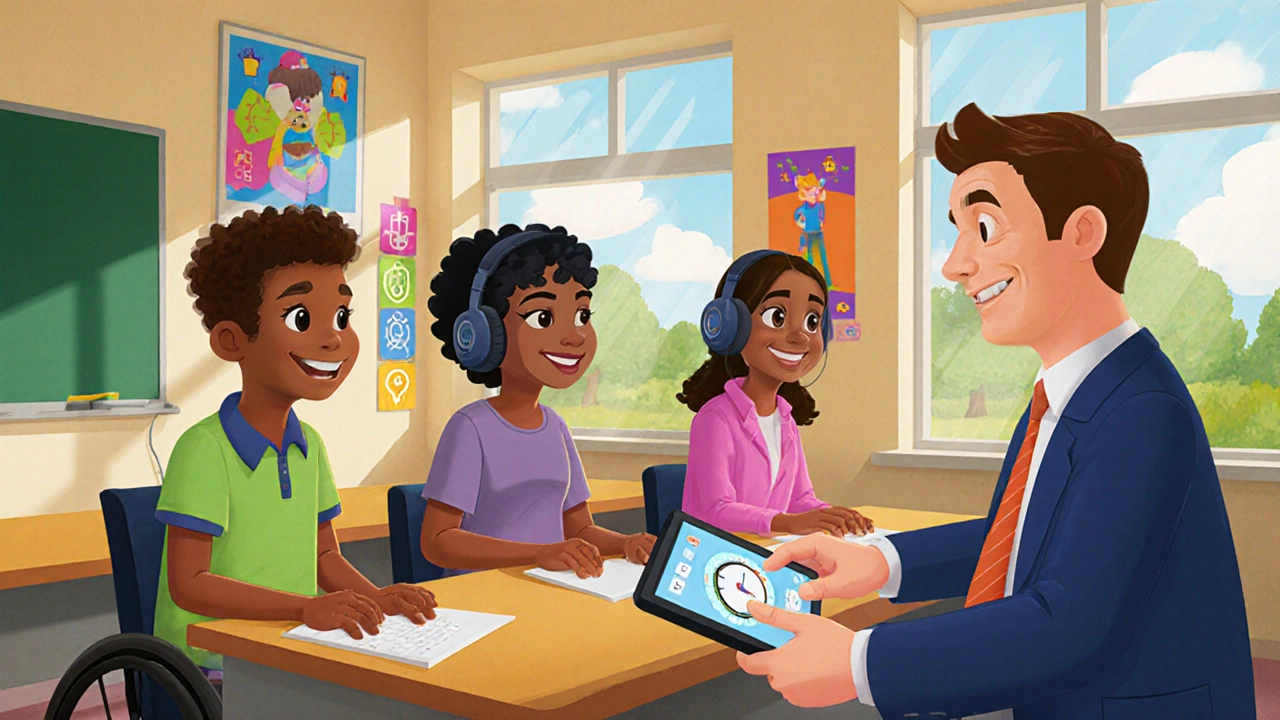
Disability Accommodation Policies and Procedures for Courses
Learn how to implement disability accommodations in courses legally and effectively. Understand common accommodations, instructor responsibilities, and how to design inclusive learning experiences that meet ADA and Section 504 requirements.