Language Learning Assessment: How to Measure Real Progress in Language Skills
When you're learning a new language, language learning assessment, the process of measuring actual communication ability, not just memorized rules. Also known as language proficiency evaluation, it's what tells you whether you can order coffee in Tokyo, negotiate a contract in Berlin, or understand a joke in Madrid—not just recite verb conjugations. Most tests focus on grammar and vocabulary, but real fluency happens when you can read the room, adjust your tone, and respond naturally. That’s why the best assessments look beyond multiple-choice questions and include listening to real conversations, handling unexpected situations, and understanding cultural cues.
That’s where cultural context in language learning, the unspoken rules of when, how, and why people say things in different societies. Also known as pragmatics, it’s the missing piece in most classrooms. You can know every word for "sorry" in Japanese, but if you use it the wrong way with your boss, it can backfire. Similarly, language testing, structured evaluations designed to measure speaking, listening, reading, and writing in real-world settings. Also known as language proficiency exams, it’s not just about passing—it’s about proving you can function. Tests like CEFR levels or TOEFL give you a benchmark, but they don’t tell you if you can handle a surprise phone call from a landlord or read a street sign in a foreign city. That’s why modern assessments are shifting toward performance-based tasks: role-playing job interviews, summarizing a podcast, or writing a text message that sounds natural.
And it’s not just learners who need better assessments. Teachers, course designers, and even employers are starting to ask: Does this test actually predict success? A 2023 study from the University of Cambridge found that learners who passed traditional exams but struggled in real conversations were 70% more likely to quit using the language within a year. Meanwhile, those assessed through interactive, context-rich tasks kept using the language because they felt confident—not just certified.
What you’ll find in this collection isn’t another checklist of grammar rules. These are real tools, stories, and methods used by educators and learners who’ve moved past flashcards and memorization. You’ll see how to design assessments that catch true understanding, how to use feedback to build confidence, and why a person who can’t pass a written test might still be the best conversationalist in the room. This isn’t about grading. It’s about growth.
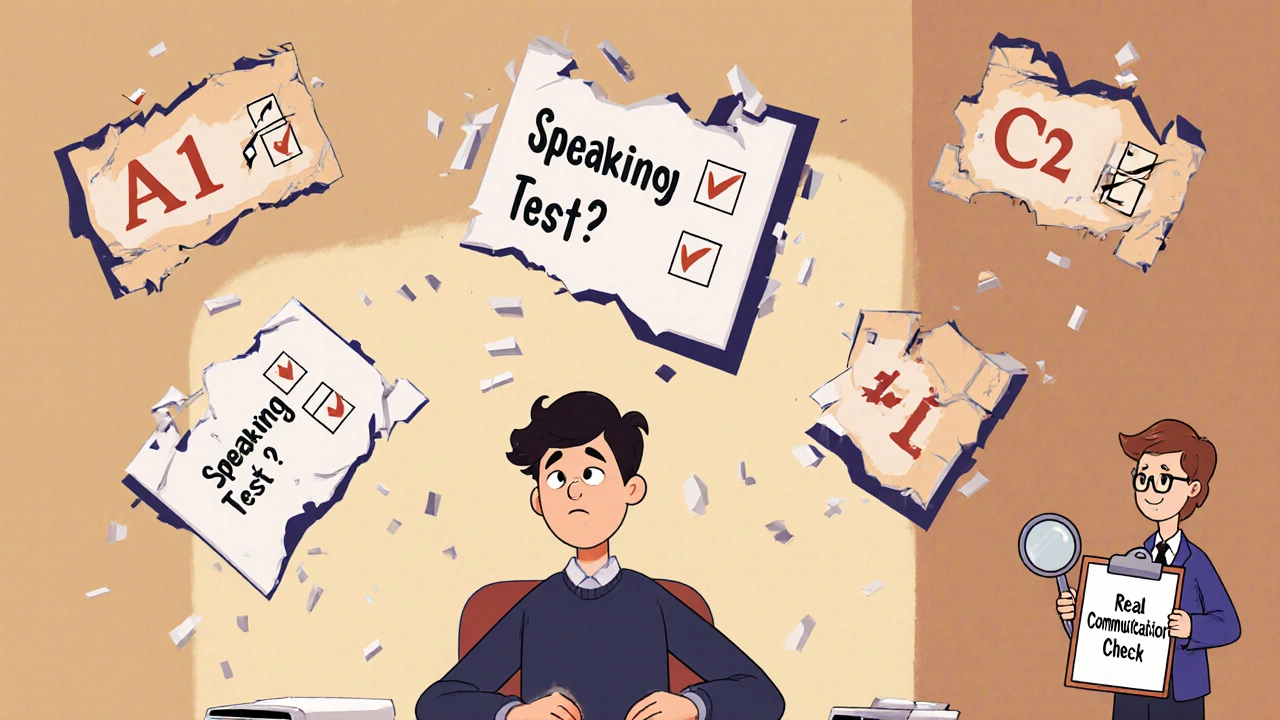
Placement Tests for Language Courses: How to Accurately Assess CEFR Levels
Learn how CEFR placement tests accurately determine your language level and avoid the common mistakes that lead to wrong class placements. Find out what makes a good test-and what to avoid.