Language Proficiency Test: What You Need to Know to Pass and Why It Matters
When you take a language proficiency test, a standardized assessment that measures your ability to understand and use a language in real-life situations. Also known as language certification, it's not just a formality—it's often the gatekeeper to jobs, visas, and education abroad. Many people think passing means memorizing vocabulary or mastering verb conjugations. But the real test is whether you can navigate a job interview in English, understand a doctor’s instructions in Spanish, or negotiate a contract in Mandarin without freezing up.
What most tests don’t tell you is that cultural context, the unspoken rules of how language is used in different societies matters just as much as grammar. A native speaker might say "Can you pass the salt?"—but in some cultures, that’s considered rude. A certification exam, a formal test used to validate language skills for professional or academic purposes like IELTS or TOEFL doesn’t just grade your sentences—it watches how you respond to tone, formality, and even silence. That’s why international providers now design exams with real-world scenarios: ordering coffee in a Tokyo café, asking for directions in a Berlin subway, or explaining a project to a team in Toronto.
And here’s the thing: if you’re aiming for a job in finance, tech, or healthcare, your language score might be the difference between getting hired or getting ignored. Companies don’t just want people who can write essays—they want people who can speak up in meetings, write clear emails, and build trust across borders. That’s why internationalization, the process of adapting content and assessments to work across languages and cultures is no longer optional for certification bodies. They’re removing biased idioms, testing practical communication over academic writing, and making sure your test reflects what you’ll actually do on the job.
You’ll find posts here that break down exactly how these tests work behind the scenes—how they’re built, what they leave out, and how to prepare without burning out. You’ll see how culture shapes what’s considered "correct," how companies use test scores to make hiring decisions, and why some people pass the test but still can’t hold a conversation. There’s no fluff. Just what you need to know to turn a language test from a hurdle into a stepping stone.
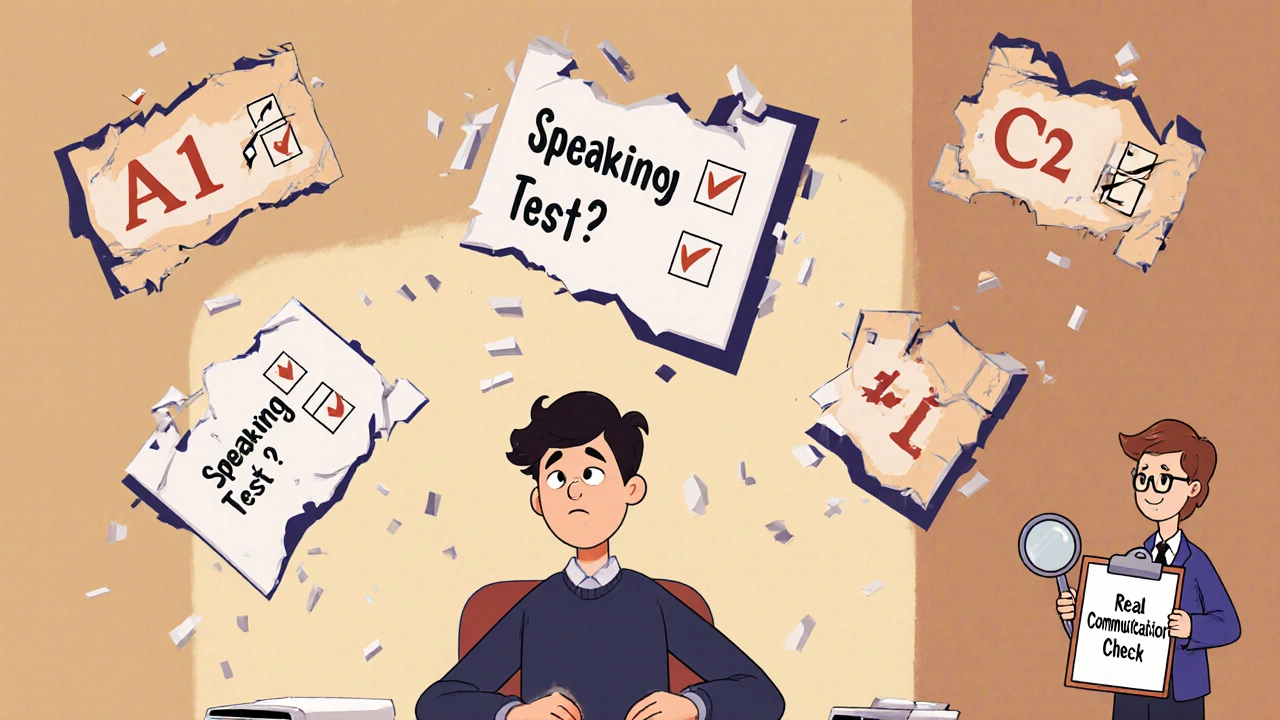
Placement Tests for Language Courses: How to Accurately Assess CEFR Levels
Learn how CEFR placement tests accurately determine your language level and avoid the common mistakes that lead to wrong class placements. Find out what makes a good test-and what to avoid.