Training Partnership Compliance: What You Need to Know to Stay Legal and Trusted
When you partner with another organization to deliver your training—whether it’s a corporate client, a university, or an online platform—you’re not just sharing content. You’re entering a legal relationship that requires training partnership compliance, the set of rules and standards that ensure your courses are delivered legally, ethically, and fairly when shared with external partners. Also known as course licensing compliance, it covers everything from copyright and data protection to accessibility and instructor accountability. Skip this, and you risk lawsuits, lost revenue, or worse—your reputation.
Good compliance isn’t about paperwork. It’s about trust. If you license your course to a company, you need to make sure they follow your terms. That means knowing what corporate training licensing, the process of selling or granting rights to use your course content to businesses for employee training actually requires under contract law. It also means understanding instructor liability, the legal responsibility you carry when teaching others, especially if something goes wrong during training. One wrong step—like letting a partner use your materials without permission or failing to provide required accommodations—can open you up to a claim. And it’s not just about big companies. Even small partnerships with schools or freelancers need clear rules around data use, branding, and student privacy.
Then there’s accessibility. If your course is used by any public institution or employer in the U.S., you must meet ADA compliance, the legal requirement that digital learning materials be usable by people with disabilities. That’s not optional. It means captions for videos, screen-reader-friendly slides, and clear navigation—not just a checkbox. The same goes for international partners who follow WCAG or other global standards. You can’t just say your course is "accessible." You have to prove it. And if you’re selling to schools or government agencies, you’ll need documentation showing how you meet those rules.
What you’ll find below isn’t theory. These are real, tested guides from people who’ve been sued, fined, or had their courses stolen—and fixed it. You’ll learn how to draft a licensing agreement that protects you, how to set up security logging to track misuse, how to handle DMCA takedowns when your content gets copied, and how to design courses that meet ADA and Section 504 rules without overcomplicating things. You’ll see how to use multi-factor authentication in your LMS to block unauthorized access, how to build nurture sequences that turn partners into loyal clients, and how to avoid the most common compliance traps that cost trainers thousands.
This isn’t about being perfect. It’s about being prepared. If you’re sharing your training with anyone outside your own team, you need to know the rules. The posts here give you exactly what you need to do it right—without hiring a lawyer.
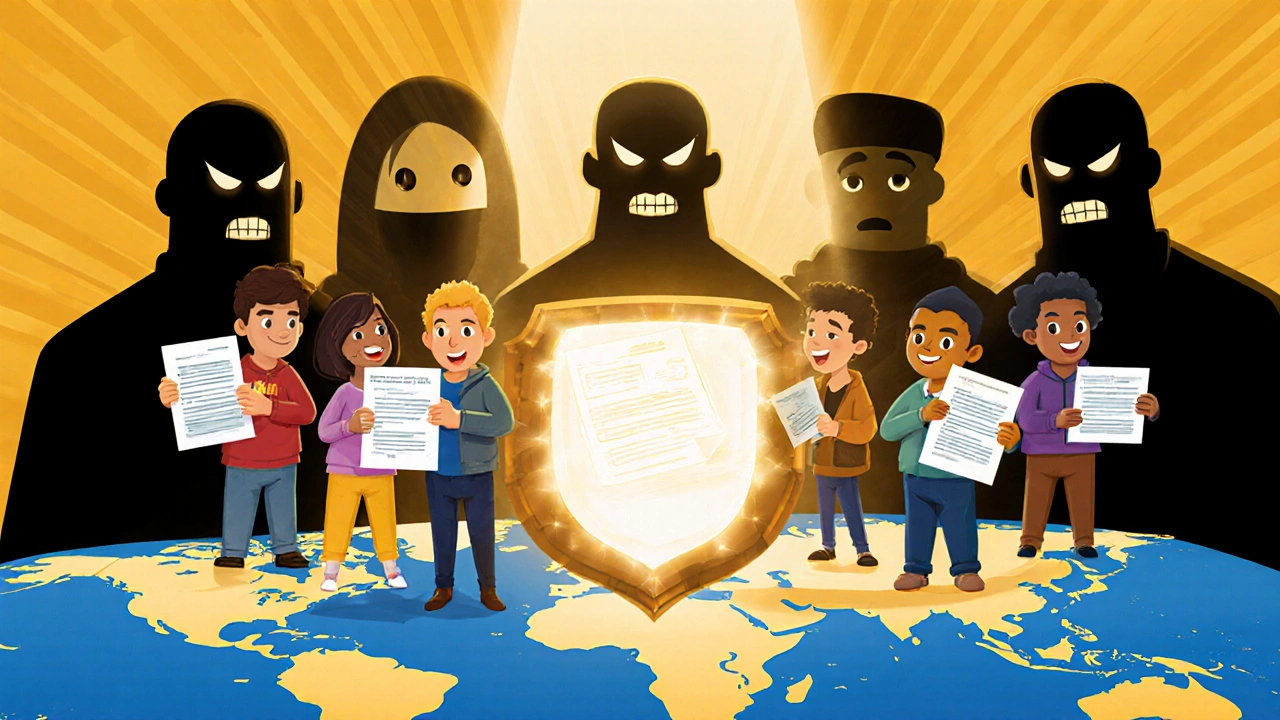
Legal Agreements for International Training Partnerships: What You Must Know
International training partnerships require detailed legal agreements to protect your program, students, and compliance. Learn the seven essential clauses and common mistakes to avoid when working across borders.