Arts and Humanities Online Courses: Best Platforms & Pedagogy for 2026
 May, 27 2026
Imagine a student in a rural area with severe anxiety who loves literature but cannot sit through a traditional lecture. Or a veteran with PTSD who finds comfort in the structured creativity of digital art therapy. For these special populations, online arts and humanities courses are not just a convenience; they are often the only viable path to education and personal growth. The landscape of learning has shifted dramatically by 2026. It is no longer about simply recording a professor talking for an hour. It is about designing experiences that respect cognitive differences, physical limitations, and emotional needs.
The intersection of Arts and Humanities academic disciplines focused on human culture, expression, and critical thinking and Online Pedagogy the method and practice of teaching online learners requires a delicate balance. You need platforms that offer robust accessibility features and instructional designs that foster genuine engagement without causing burnout. This guide breaks down how to choose the right platform, what pedagogical strategies actually work for neurodivergent and marginalized learners, and how to make these subjects accessible to everyone.
Why Special Populations Need Different Approaches
When we talk about "special populations" in education, we are referring to groups that face unique barriers to standard learning models. This includes students with Neurodiversity variations in the human brain regarding sociability, learning, attention, mood, and other mental functions such as ADHD, autism, or dyslexia. It also covers individuals with chronic illnesses, veterans with trauma, older adults returning to school, and those from low-income backgrounds with unreliable internet access.
Traditional arts education often relies on synchronous attendance-being in a studio at a specific time, participating in live debates, or completing large collaborative projects under strict deadlines. For a student with social anxiety or sensory processing disorder, this environment can be paralyzing rather than inspiring. Online learning removes the physical barrier, but it introduces new ones if not designed correctly. A poorly made video course can be just as exclusionary as a rigid classroom. The key is intentional design that prioritizes flexibility, clarity, and multiple modes of interaction.
Top Platforms for Arts and Humanities in 2026
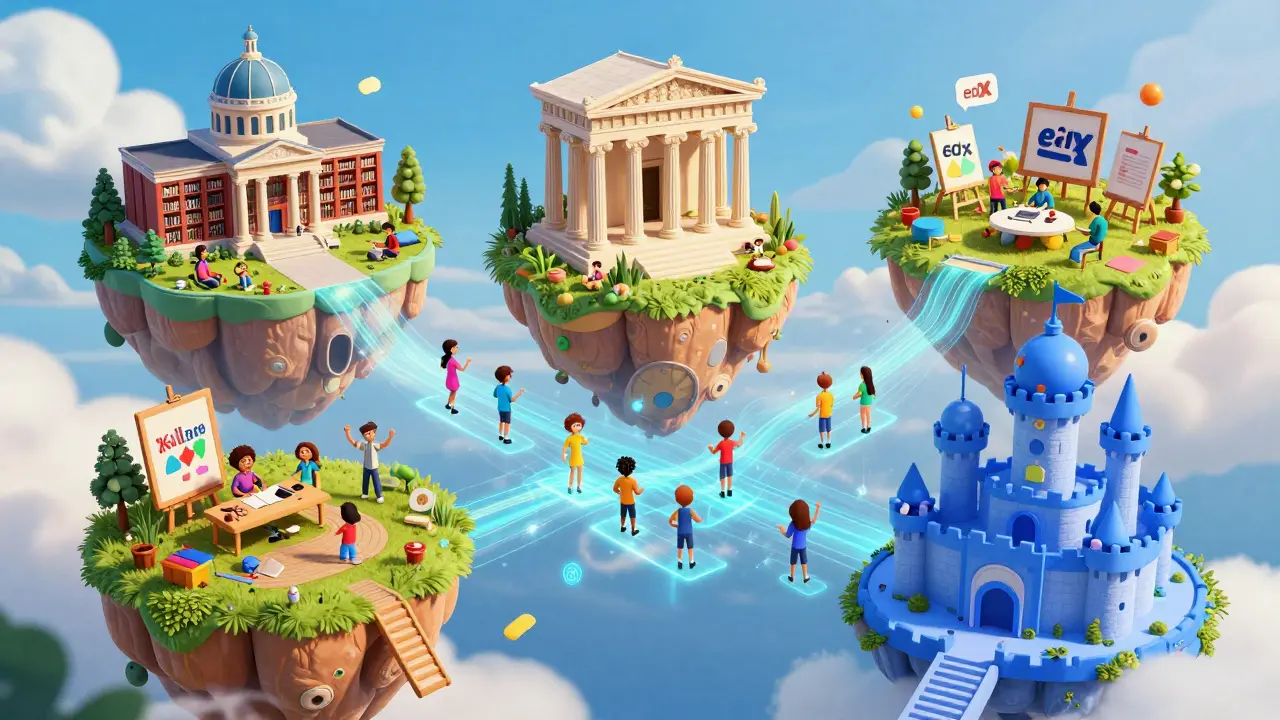
Not all platforms are created equal when it comes to accessibility and depth. While some focus on quick certifications, others provide the rich, nuanced content required for humanities studies. Here is how the major players stack up for learners with diverse needs.
| Platform | Best For | Accessibility Features | Pedagogical Style |
|---|---|---|---|
| Coursera global online learning platform founded by Stanford professors | Academic rigor, university partnerships | High (auto-captions, screen reader support) | Structured, self-paced with optional deadlines |
| edX non-profit online learning platform founded by Harvard and MIT | Humanities theory, history, philosophy | Very High (WCAG 2.1 AA compliant) | Discussion-heavy, peer-reviewed assignments |
| Skillshare community-based platform for creative classes | Creative skills, hands-on arts projects | Moderate (user-dependent quality) | Project-based, informal, community-driven |
| Khan Academy non-profit educational organization offering free lessons | Foundational knowledge, K-12 to early college | Excellent (fully accessible interface) | Micro-learning, gamified progress tracking |
Coursera remains a top choice for those seeking accredited certificates in humanities. Its partnership with universities like Yale and University of Michigan means you get high-quality content on topics like "The Science of Well-Being" or "Introduction to Psychology." For students with executive function challenges, the ability to switch between fixed-deadline and self-paced modes is crucial. It reduces the stress of missing a deadline while maintaining structure.
edX excels in pure humanities. If you are interested in philosophy, ancient history, or literature, edX offers deep dives that respect the complexity of the subject matter. Their discussion forums are moderated more strictly, which can create a safer space for students who might feel overwhelmed by unmoderated social media-style interactions.
Skillshare takes a different approach. It is less about academic theory and more about doing. For someone with ADHD who struggles with long lectures, Skillshare’s short, project-based videos can be a game-changer. However, accessibility varies because instructors upload their own content. Users must check for captions and clear audio before enrolling.
Pedagogy That Works: Teaching Methods for Diverse Learners
Choosing the right platform is only half the battle. How the course is taught matters even more. Effective pedagogy for special populations relies on Universal Design for Learning (UDL) framework aimed at improving and optimizing teaching and learning for all people based on scientific insights into how humans learn. UDL suggests providing multiple means of engagement, representation, and action.
- Multiple Means of Representation: Don't just rely on text. Use videos with transcripts, audio podcasts, and interactive infographics. A student with dyslexia might struggle with a dense reading assignment but thrive with an audio lecture they can listen to at 1.5x speed.
- Multiple Means of Engagement: Allow choices in how students demonstrate learning. Instead of a mandatory essay, let them submit a video analysis, a podcast episode, or a visual storyboard. This is particularly effective for arts students who think visually.
- Multiple Means of Action and Expression: Reduce cognitive load by breaking tasks into smaller steps. Provide clear rubrics upfront. For students with anxiety, knowing exactly what is expected reduces panic and improves performance.
Another critical strategy is asynchronous communication. Live webinars can be stressful for non-native speakers or those with hearing impairments who rely on real-time captioning that may lag. Recorded sessions with accurate transcripts allow these students to engage at their own pace. Discussion boards should have clear guidelines to prevent harassment and encourage respectful debate, creating a safe container for vulnerable discussions common in humanities.
Accessibility Features to Look For
When evaluating a course, do not assume it is accessible. Check for these specific features:
- Screen Reader Compatibility: Can you navigate the site using only a keyboard? Are images properly tagged with alt text?
- Caption Quality: Auto-generated captions are helpful but often inaccurate, especially for specialized terminology in arts and humanities. Look for human-edited captions.
- Color Contrast: Poor contrast makes text hard to read for those with visual impairments or light sensitivity.
- Downloadable Materials: Being able to download readings and videos allows students with slow internet connections to study offline. This is vital for learners in remote areas or with data caps.
In 2026, most major platforms comply with WCAG 2.1 standards, but individual course creators sometimes overlook these details. Always preview the first module before committing to a paid certificate.

Overcoming Common Barriers
Even with the best tools, barriers exist. One major issue is digital fatigue. Students with chronic pain or mental health challenges may find staring at a screen exhausting. Encourage micro-learning sessions-15 minutes of focused study followed by a break. Another barrier is isolation. Humanities thrive on community. Seek out courses that offer small group projects or mentorship opportunities. Platforms like MasterClass subscription service featuring classes taught by celebrities and experts offer inspiration but lack interaction. Combine them with local meetups or online study groups to build connection.
Financial constraints also play a role. Many special populations face economic instability. Look for financial aid options. Both Coursera and edX offer generous financial aid programs for those who qualify. Khan Academy remains completely free, making it an excellent starting point for foundational knowledge.
Next Steps for Learners
If you are ready to start, begin by identifying your specific learning style and needs. Do you need quiet, independent study? Or do you thrive on feedback? Choose a platform that aligns with that preference. Start with a free audit mode to test the water. Pay attention to how the content feels. Does it overwhelm you? Is it engaging? Trust your instincts. Education is a personal journey, and the right course will feel supportive, not punishing.
Are online arts degrees respected by employers?
Yes, increasingly so. In 2026, many employers value the self-discipline and digital literacy demonstrated by completing rigorous online programs. Accredited institutions like Arizona State University or University of London offer fully online degrees in arts and humanities that hold the same weight as their on-campus counterparts. Focus on accreditation rather than delivery method.
Which platform is best for students with ADHD?
Platforms with flexible pacing and interactive elements tend to work best. Coursera's self-paced option allows students to move quickly through familiar material and spend more time on challenging concepts. Skillshare's short, project-based format can help maintain interest. Avoid courses with heavy, long-form reading requirements unless you have strong coping strategies.
Can I get a certificate for free?
You can audit many courses for free on Coursera and edX, which gives you access to lectures and readings. However, certificates usually require payment. But both platforms offer financial aid applications that are often approved for students demonstrating financial need. Khan Academy provides free certificates for many of its courses.
How do I handle technical difficulties during a course?
Most platforms have dedicated support teams. Before starting, note the contact information for technical help. Join community forums where other students share troubleshooting tips. If you have intermittent internet, download materials whenever possible. Communicate with instructors early if you anticipate issues; they are often willing to extend deadlines for legitimate reasons.
Is online learning suitable for older adults?
Absolutely. Online learning offers unparalleled flexibility for seniors. Many platforms offer larger font options and simplified navigation. Courses in history, literature, and music appreciation are particularly popular among older learners. Look for communities specifically geared towards lifelong learners to combat isolation and build peer networks.
Shivam Mogha
May 28, 2026 AT 13:00Good breakdown of the platforms.
mani kandan
May 30, 2026 AT 05:54The distinction between Coursera and Skillshare is crucial here because one caters to academic rigor while the other embraces creative chaos which suits different neurotypes perfectly
I have noticed that many veterans struggle with the rigid structure of traditional humanities courses so this flexible approach is a game changer for mental health recovery through art
Rahul Borole
May 30, 2026 AT 18:47It is imperative that we recognize the transformative power of accessible education in our modern society
The integration of Universal Design for Learning principles ensures that no student is left behind due to arbitrary pedagogical constraints
We must advocate for these standards across all educational institutions to foster an inclusive environment for all learners regardless of their background or abilities
Sheetal Srivastava
May 31, 2026 AT 21:28You are fundamentally misunderstanding the epistemological framework of digital pedagogy when you suggest that simple platform accessibility equates to genuine intellectual engagement
The hegemony of corporate ed-tech platforms like Coursera imposes a neoliberal curriculum that strips the humanities of their critical radical potential reducing complex philosophical discourse to digestible micro-credentials for the gig economy workforce
True accessibility requires dismantling the structural barriers of capitalist academia not just adding captions to videos produced by privileged instructors who have never experienced systemic marginalization
Bhavishya Kumar
May 31, 2026 AT 23:13Your argument contains several logical fallacies and lacks proper citation
The claim that online learning inherently reduces critical thinking is unsupported by current meta-analyses on remote education outcomes
Please refrain from using overly complex jargon to mask weak arguments as it detracts from the clarity of your point regarding platform selection
ujjwal fouzdar
June 1, 2026 AT 03:04We are merely shadows dancing on the cave wall of digital illusion mistaking pixels for truth
Is the screen a mirror reflecting our fragmented souls or a window into a simulated reality where knowledge is commodified and sold back to us in bite-sized packets of dopamine
The true tragedy is not the lack of access but the abundance of noise drowning out the silent scream of the human spirit seeking meaning in a void of endless scrolling
Anand Pandit
June 1, 2026 AT 13:57I really appreciate how this post highlights the importance of flexibility for students with anxiety
It is wonderful to see resources that prioritize mental well-being alongside academic achievement
Everyone deserves a chance to learn in a way that feels safe and supportive so keep up the great work sharing these insights
Reshma Jose
June 2, 2026 AT 01:35Skillshare is definitely hit or miss depending on the instructor quality
I have taken several courses there and some are fantastic while others feel like they were recorded in a bedroom with poor audio
But for quick creative projects it is hard to beat the variety available compared to more formal platforms
rahul shrimali
June 2, 2026 AT 22:47Just start already dont overthink it pick a platform and dive in
Eka Prabha
June 4, 2026 AT 06:40This entire narrative is a construct designed to pacify the masses with false promises of empowerment through digital consumption
Big Tech wants you to believe that buying a certificate will solve your existential crisis while they harvest your data to sell targeted ads for self-help gurus
Wake up and realize that true knowledge cannot be downloaded it must be earned through suffering and isolation away from the corrupting influence of online communities
Bharat Patel
June 4, 2026 AT 13:07There is a profound beauty in the idea that art can heal trauma regardless of the medium used to deliver it
Whether through a screen or a canvas the human desire to create and connect remains constant
Let us embrace these tools as bridges rather than barriers to understanding each other deeper
Bhagyashri Zokarkar
June 5, 2026 AT 14:50i mean honestly who has time to read all this stuff when you could just watch a youtube video instead but i guess some people like to pretend they are smart by reading long articles about online courses which is kinda ironic since its about avoiding real life interaction anyway
and why does everyone think they need a degree to know what they like its so pretentious and exhausting trying to keep up with all these trends when i just want to paint my nails and ignore the world
OONAGH Ffrench
June 6, 2026 AT 15:36the key is intentionality not just technology
we often confuse accessibility with mere availability forgetting that true inclusion requires empathy and design thinking that prioritizes the marginalized user experience over convenience for the institution
it is a subtle but vital distinction that changes everything about how we approach education