Career Coaching in Bootcamps: Resumes, LinkedIn, and Outreach
 Jan, 26 2026
Most coding bootcamps promise a job after graduation. But what happens when you finish the course and still can’t get past the first screen? The problem isn’t your code. It’s your resume, your LinkedIn, and how you reach out to hiring managers. Bootcamps give you technical skills-but if they don’t teach you how to sell yourself, you’re left guessing what comes next.
Why Your Bootcamp Resume Isn’t Working
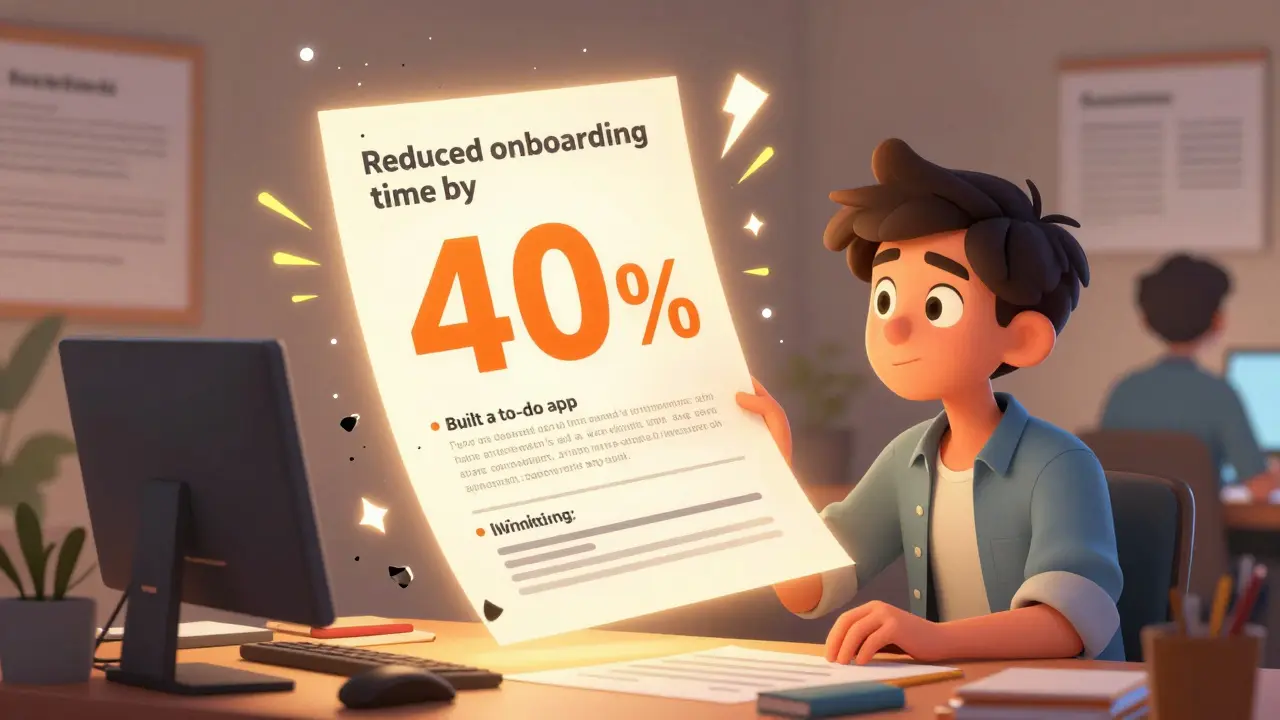
Your resume isn’t failing because you don’t know Python or JavaScript. It’s failing because it reads like a class project list. Hiring managers see hundreds of these every week: "Built a to-do app with React and Node.js." That’s not a win. That’s a footnote.What works? Focus on impact, not tools. Instead of saying you used React, say: "Reduced user onboarding time by 40% by rebuilding the frontend with React, cutting support tickets in the first month." That’s a story. That’s a result.
Bootcamps often push students to dump every project they built. Don’t. Pick three. One should be your strongest. One should show you can work in a team. One should solve a real problem-like helping a nonprofit manage donations or automating a repetitive task at a local business. Make sure each one has a metric. Numbers stick. Words fade.
Also, ditch the objective statement. No one cares that you want to "make a difference." They care that you shipped a product that saved 15 hours a week. Replace it with a 2-line summary: "Full-stack developer with 6 months of intensive bootcamp training. Built 3 production apps used by 500+ users. Passionate about clean UI and scalable backend systems."
LinkedIn Isn’t Just a Resume Copy-Paste
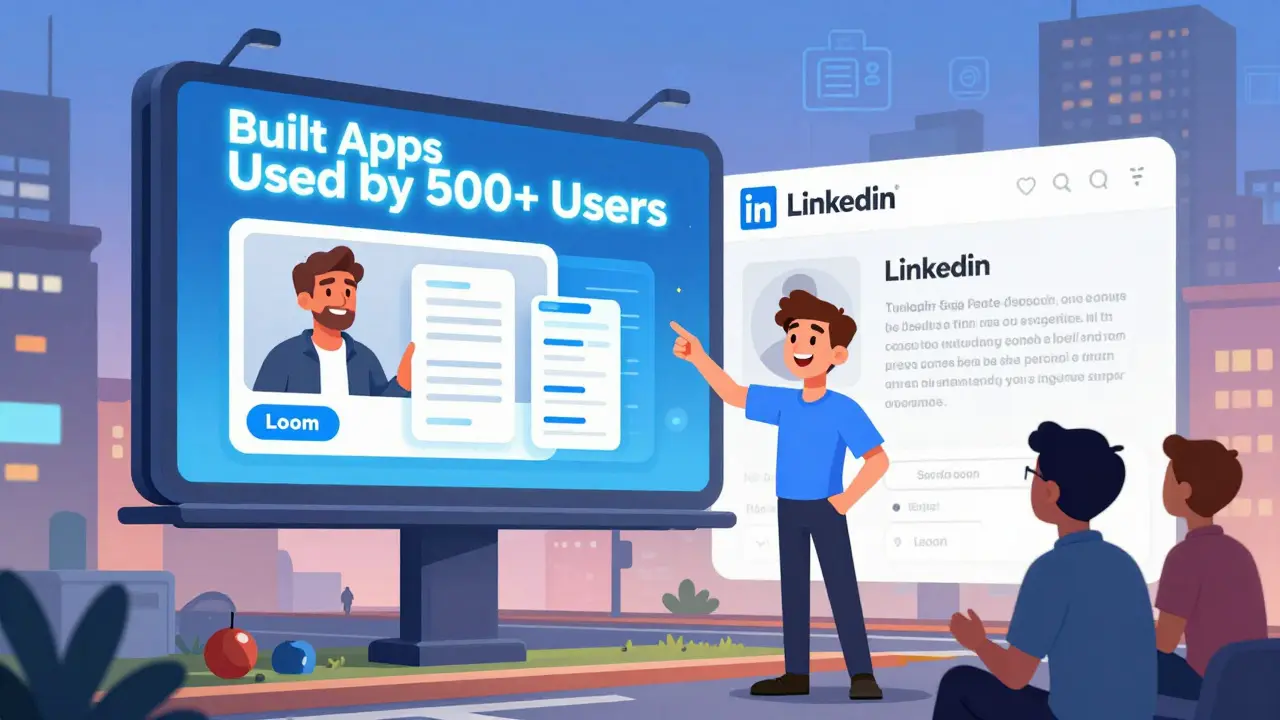
Your LinkedIn profile is your 24/7 salesperson. If it looks like a carbon copy of your resume, you’re wasting it.Start with your headline. Not "Aspiring Developer." Not "Bootcamp Graduate." Try: "Full-Stack Developer | Built Apps Used by 500+ Users | Open to Entry-Level Roles". That tells people what you do, what you’ve done, and what you want-all in 8 words.
Your About section needs personality. Don’t write: "I love coding and learning new technologies." That’s noise. Write: "I fix broken user flows. Last month, I redesigned a nonprofit’s donation form and increased conversions by 27%. I don’t just write code-I solve problems people actually care about." That’s human. That’s memorable.
Projects go under Featured, not buried in Experience. Upload live links. Add screenshots. Include a 30-second Loom video walking through your favorite project. Hiring managers will watch it. They won’t read your 10-line bullet point.
And don’t forget to turn on "Open to Work"-but only for specific roles. Select "Software Engineer," not "Any Job." And make sure your location is set to where you want to work. If you’re in Tempe and targeting remote jobs in Austin, say so. Clarity beats optimism.
Outreach Isn’t About Applying-It’s About Connecting
Applying to 50 jobs a week and getting zero replies? You’re doing it wrong.Top performers in bootcamps don’t spam applications. They send 5 targeted messages a week. Here’s how:
- Find a hiring manager or tech lead on LinkedIn. Look for titles like "Engineering Manager," "Head of Engineering," or "Senior Developer."
- Read their profile. Did they mention a product? A tech stack? A recent post about hiring? Use it.
- Send a short message: "Hi [Name], I saw you’re building [product] with [tech]. I just finished a bootcamp where I built a similar tool that improved [metric]. I’d love to hear how your team approaches [specific challenge]. No pressure to reply-but if you’re open to a quick chat, I’d appreciate 10 minutes."
That’s not begging. That’s showing curiosity. And it works. One bootcamp grad in Phoenix sent 12 of these messages. Got 4 replies. Got 2 interviews. Got a job at a health tech startup.
Don’t message recruiters unless you’ve done your homework. Recruiters get 200 messages a day. Engineers get 10. Go straight to the people who make the calls.
What Bootcamps Get Right-and What They Miss
Good bootcamps now offer career coaching. But not all of it is useful. Some just hand you a resume template. Others host a one-hour webinar on "How to Network." That’s not coaching. That’s a checklist.The best programs do three things:
- Review your resume line by line with real hiring managers-not instructors.
- Run mock outreach campaigns with real LinkedIn messages and track response rates.
- Connect you with alumni who are now working in roles you want. Not just any alumni. The ones who got hired in the last 6 months.
If your bootcamp doesn’t do that, don’t wait. Find your own mentors. Join local tech meetups. Go to free events at co-working spaces. Ask someone who hired a bootcamp grad last year: "What made that person stand out?"
One student from the Flatiron School in Phoenix asked 7 hiring managers that exact question. She got the same answer every time: "They didn’t just talk about code. They talked about the problem they solved and why it mattered."
Real Examples from Real Bootcamp Grads
Here’s what worked for three people who landed jobs after bootcamps:- Maya, 24, Grand Rapids: Changed her resume headline from "Junior Developer" to "Built a Local Food Bank Inventory System That Cut Waste by 30%". Got 3 interview calls in 4 days.
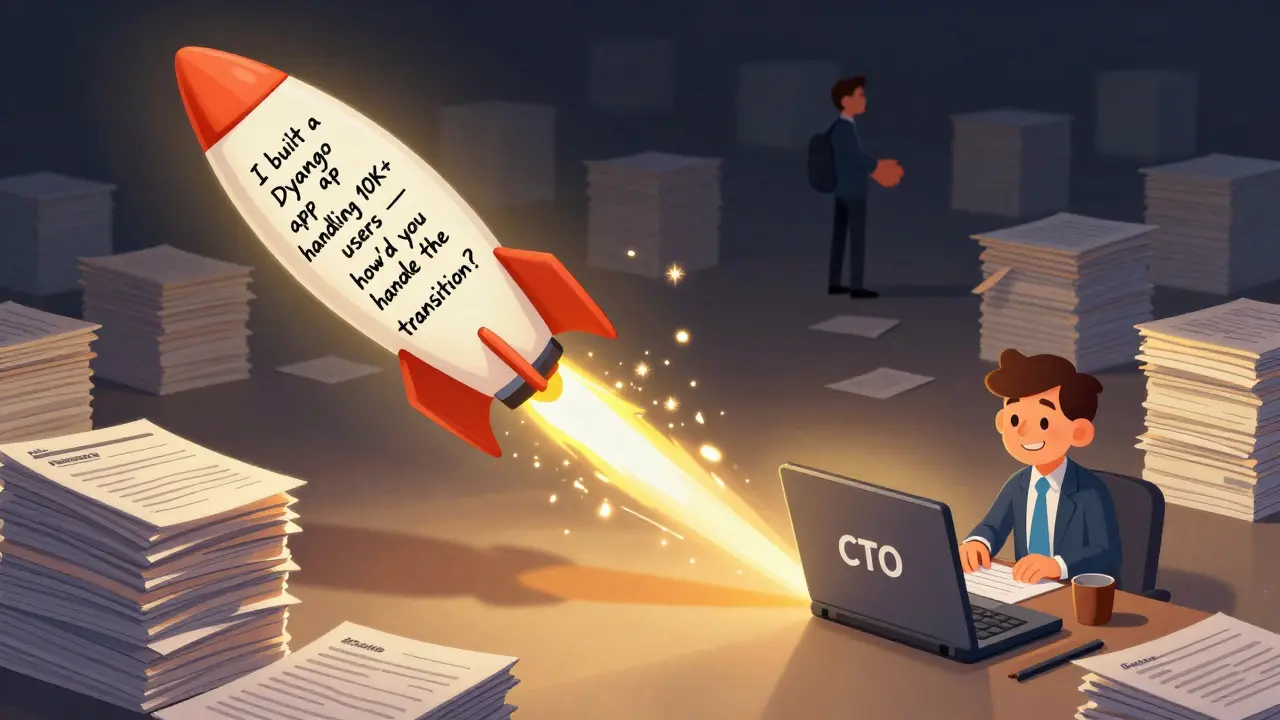
- Derek, 31, Austin: Sent a LinkedIn message to a CTO who posted about migrating from Ruby on Rails to Django. Derek said: "I just finished a Django project that handled 10K+ monthly users. I’d love to hear how you handled the transition." Got a call back. Hired 3 weeks later.
- Jamila, 28, Chicago: Made a 90-second video of her app demo, uploaded it to LinkedIn as a post, and tagged 3 local tech companies. One replied: "This is better than half the portfolios we’ve seen. Let’s talk."
They didn’t have Ivy League degrees. They didn’t have 5 years of experience. They just made their work visible-and made it matter.
What to Do Next
You don’t need another course. You don’t need another project. You need to fix three things:- Revise your resume using impact, not tools.
- Redo your LinkedIn headline and About section to sound like a person, not a job board.
- Send 5 personalized messages this week-not applications. To engineers. Not recruiters.
Do that, and you’re not just another bootcamp grad. You’re someone who got hired because you showed up differently.
Do bootcamps really help with job placement?
Some do, some don’t. The ones that guarantee jobs often just mean they’ll help you polish your resume and send out templates. Real job placement comes from coaching that focuses on real hiring behavior-like how to write messages that get replies, not just applications that get ignored. Look for bootcamps that share hiring data: what roles their grads got, who hired them, and what those employers said made the difference.
How long should my resume be if I’m a bootcamp grad?
One page. Always. Hiring managers spend about 6 seconds on a resume the first time they see it. If you’re listing every small project you did, you’re burying your best work. Pick 3 strong projects. Include metrics. Cut the rest. Your bootcamp training is your experience now-don’t treat it like a side hobby.
Should I use a template for my resume or LinkedIn?
Templates are a starting point, not an end. Using the same one as 50 other bootcamp grads makes you invisible. Customize every section to show what you uniquely solved. If your resume looks like it came from Canva’s "Developer Resume" pack, it won’t stand out. Add your own voice, your own numbers, your own story.
What’s the best way to follow up after sending a LinkedIn message?
Wait 5-7 days. Then send one short follow-up: "Hi [Name], just circling back on my note about [topic]. I know you’re busy-no need to reply unless you’re open to a quick chat. Either way, thanks for your time." That’s polite, low-pressure, and shows persistence without being pushy. Most replies come on the second try.
Is it okay to apply to jobs even if I don’t meet all the requirements?
Yes-if you meet the core ones. Most job posts list 8-10 requirements. Companies expect you to meet 6. If you know Python, have built real apps, and can explain your process, you’re qualified for entry-level roles even if you don’t have 3 years of React experience. The key is to show you can learn fast and ship results. That’s what they’re really hiring for.
Lissa Veldhuis
January 27, 2026 AT 01:52Wow so you just think slapping a metric on a to-do app makes you a developer now
Michael Jones
January 27, 2026 AT 17:58It’s not about the code it’s about the story behind it
People forget that tech is just a tool to solve human problems
If you can’t explain why your app matters you’re just another person with a GitHub repo
The real skill is making someone care
That’s what separates the job seekers from the hires
Bootcamps teach syntax not significance
And that’s the gap
Not the language
Not the framework
The meaning
Gabby Love
January 29, 2026 AT 06:22This is actually really helpful. I’ve been telling my students to drop the objective statement for months but nobody listens. The 2-line summary example is gold.
Jen Kay
January 30, 2026 AT 16:58How ironic that a post about ‘selling yourself’ is written like a corporate training manual.
But hey, at least it’s not another ‘build 10 projects and you’ll get hired’ meme.
selma souza
February 1, 2026 AT 14:43There is no such thing as ‘reducing onboarding time by 40%’ unless you have a baseline metric, a control group, and statistical significance. Otherwise it’s just marketing fluff.
Frank Piccolo
February 1, 2026 AT 18:20Look I get it. You wanna sound smart. But let’s be real-most bootcamp grads are just trying to get out of retail. You don’t need to turn your todo app into a TED Talk.
Companies hire for fit, not poetry.
And if you think a Loom video is gonna get you past HR, you’re gonna be disappointed.
James Boggs
February 3, 2026 AT 09:21Excellent breakdown. I’ve hired 12 bootcamp grads in the last year. The ones who stood out didn’t just list projects-they explained the problem they were solving and why it mattered to the user. Simple. Clear. Human.
allison berroteran
February 3, 2026 AT 13:07I’ve been thinking about this a lot lately. The real issue isn’t that bootcamps don’t teach outreach-it’s that the job market has become so impersonal that people forget you’re applying to humans, not algorithms. The hiring manager who reads your resume is tired, overwhelmed, and scrolling on their phone. If your profile doesn’t grab them in three seconds, it’s gone. The examples here-like Maya’s food bank project or Jamila’s video-are so powerful because they’re not about tech, they’re about care. That’s the thread. That’s what connects. And that’s what gets replies.
Barbara & Greg
February 5, 2026 AT 10:04It is deeply troubling that we have reduced the dignity of professional development to a series of performative metrics and LinkedIn gimmicks. One does not become a worthy engineer by optimizing conversion rates on donation forms. One becomes worthy through discipline, rigor, and a commitment to the craft-not by gamifying one’s career journey with 30-second videos and cherry-picked statistics.
There is a moral hazard here. We are teaching young people to lie through implication, to inflate impact, to manufacture narratives where none exist. This is not coaching. This is manipulation dressed as empowerment.
Let us not confuse visibility with virtue.
David Smith
February 6, 2026 AT 10:17Oh here we go. Another ‘you’re not trying hard enough’ lecture from someone who’s never hired anyone in their life.
I’ve seen 500+ resumes from bootcamps. 99% are the same. The ‘impact’ ones? They’re all written by the same 3 people who blog about this stuff.
Real hiring managers don’t care about your 27% conversion boost. They care if you show up on time, don’t cry when the server goes down, and don’t argue about Git workflows.
Stop pretending this is rocket science. It’s not.
Abert Canada
February 7, 2026 AT 08:50Man I’m from Canada and I’ve hired two bootcamp grads this year. One of them sent me a DM saying ‘I noticed your team uses GraphQL-I built a similar thing for a local clinic, here’s a quick demo.’
Got the job. No interview. Just a 5-minute call.
They didn’t have a degree. Didn’t have a portfolio site. Just a real message.
That’s all it takes.
Thabo mangena
February 9, 2026 AT 03:17As someone from South Africa who transitioned from teaching to software engineering via a bootcamp, I can confirm: the moment I stopped listing tools and started telling stories about how my code helped elderly patients track medication, I stopped getting ghosted.
It’s not about being perfect. It’s about being human.
Thank you for writing this.
Michael Thomas
February 9, 2026 AT 17:25Bootcamps are a scam. Real devs go to college. Or work at startups for 5 years. Or contribute to open source. This ‘impact’ nonsense is just woke corporate jargon. You want a job? Learn C++. Build a kernel. Then talk to me.
Xavier Lévesque
February 11, 2026 AT 01:40LOL. You think a Loom video is gonna get you hired? I’ve seen those. Half of them are just screen recordings with ‘epic music’ and shaky zooms.
Real engineers don’t do that. They push code. They fix bugs. They show up.
Stop trying to be a content creator. Be a developer.
Karl Fisher
February 12, 2026 AT 11:39They’re not teaching you to code-they’re teaching you to lie.
‘Reduced onboarding time by 40%’? Bro you built a todo app.
And now you’re supposed to believe that’s a ‘real product’?
Wake up. This is all a performance for recruiters who don’t know the difference between React and React Native.
They’re not hiring devs. They’re hiring TikTok influencers with a GitHub.
Buddy Faith
February 14, 2026 AT 09:09Bootcamps don’t help you get hired. They help you get debt and a LinkedIn profile that looks like a PowerPoint from 2012.
The real job market? It’s a rigged game. You need connections. Or family money. Or to be a white guy from Stanford.
None of this ‘impact’ crap matters if you don’t know the right people.
They’re just selling you hope so they can charge $15k.