Creating an Entrepreneurship Course from Scratch: A Practical Guide
 Feb, 3 2026
Why most entrepreneurship courses fail
Most entrepreneurship courses look the same: a lecture on SWOT analysis, a slide about the Lean Canvas, and a video of Elon Musk saying "fail fast." But if you’ve ever taught or taken one, you know it doesn’t stick. Why? Because entrepreneurship isn’t a theory-it’s a habit. You don’t learn to build a business by listening to a 45-minute talk. You learn by doing, failing, and trying again.
Take a real example: a community college in Ohio launched a course called "Startup 101." It had 12 weeks of lectures, a textbook, and a final pitch competition. Only 3 out of 40 students launched anything after the course. Meanwhile, a small nonprofit in Detroit ran a 6-week program where students spent every class day talking to real customers. 22 out of 25 students started a side hustle within 30 days. The difference? One taught concepts. The other taught action.
Start with the learner, not the curriculum
Before you write a single slide, ask: Who are these people? Are they college students with no money? Single parents working two jobs? Retirees with savings and a side idea? Their starting point changes everything.
Here’s what works: survey 50 people who might take your course. Ask them:
- What’s the one thing holding you back from starting something?
- What’s the smallest step you could take this week to test an idea?
- What’s the last business you bought from-and why?
You’ll find patterns. Maybe 70% are scared of spending money. Maybe 60% think they need a website before they can sell. That’s your starting point. Build your course around those real barriers, not textbook models.
Design for action, not theory
Forget the 10-module structure with "Foundations," "Strategy," and "Scaling." That’s for MBA programs. Real entrepreneurs need to move fast.
Here’s a working structure that actually gets results:
- Week 1: Find a problem people will pay for - Not "find your passion." Ask students to list 5 things they’re annoyed by in daily life. Then have them ask 10 strangers: "Would you pay $5 to fix this?"
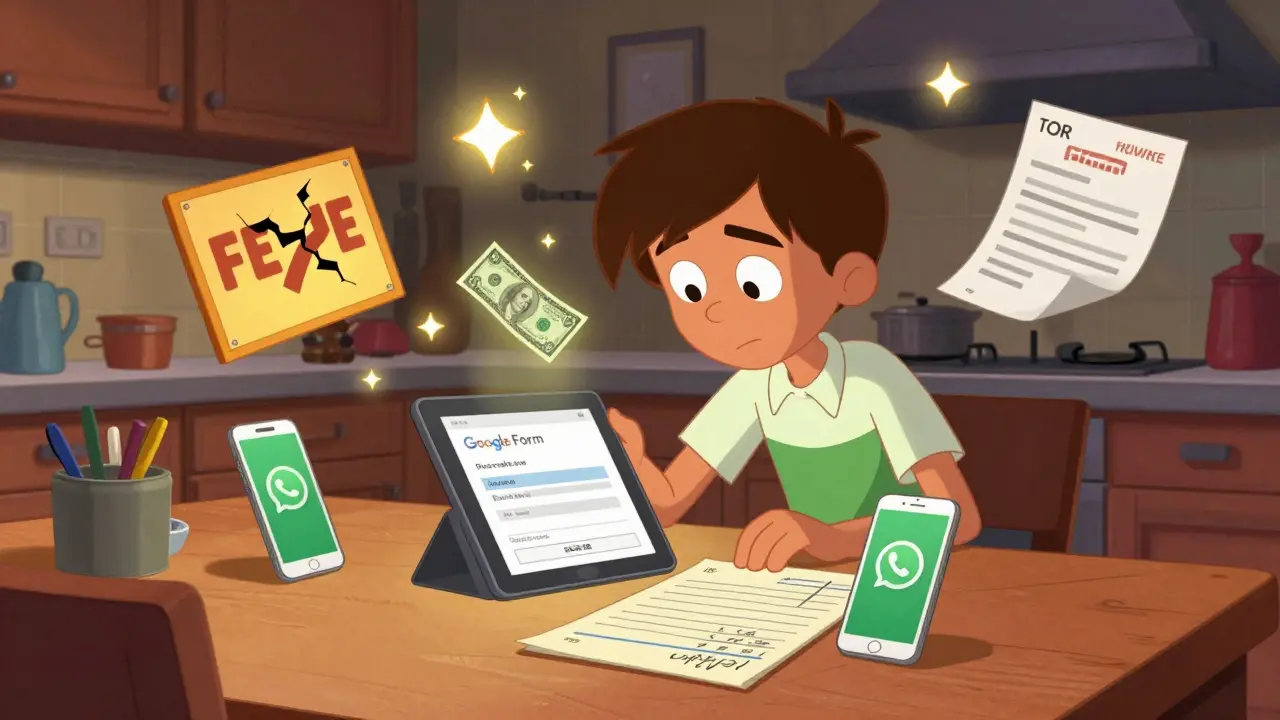
- Week 2: Build the dumbest version possible - No coding. No apps. Just a Google Form, a WhatsApp group, or a handwritten invoice. The goal: get $1 from someone before Week 3.
- Week 3: Talk to 10 customers - Not "pitch your idea." Ask: "What made you say yes?" and "What would make you say no?" Record their exact words.
- Week 4: Pick one thing to improve - Based on feedback, change one thing. Then try again. Repeat until someone pays twice.
- Week 5: Track your first $100 - Not revenue. Not users. Actual cash in hand. That’s your milestone.
- Week 6: Share your story - Not a polished pitch. Just: "Here’s what I tried. Here’s what broke. Here’s what worked."
This isn’t a course. It’s a bootcamp. And it’s built on real behavior, not theory.
Tools you actually need (and the ones you don’t)
You don’t need expensive software. You don’t need a fancy LMS. You need things that let people move fast.
- Google Forms - For customer interviews. Free, instant, works on any phone.
- PayPal or Cash App - For collecting $5 payments. No merchant accounts needed.
- Canva - For making simple flyers or service cards. No design skills required.
- Notion or Google Docs - To track feedback. One page. One person. One week.
Don’t waste time on:
- Business plan templates
- Financial projections for Year 3
- Slide decks with 50 bullet points
These are for investors. Your students aren’t raising money. They’re trying to make their first dollar.
Teach failure as data, not defeat
Every time a student comes back saying, "My idea flopped," that’s your win.
When someone runs a $5 lawn-mowing service and no one signs up, don’t say "Try harder." Say: "What did you learn? Did people say they didn’t need it? Or did they say they didn’t trust you?"
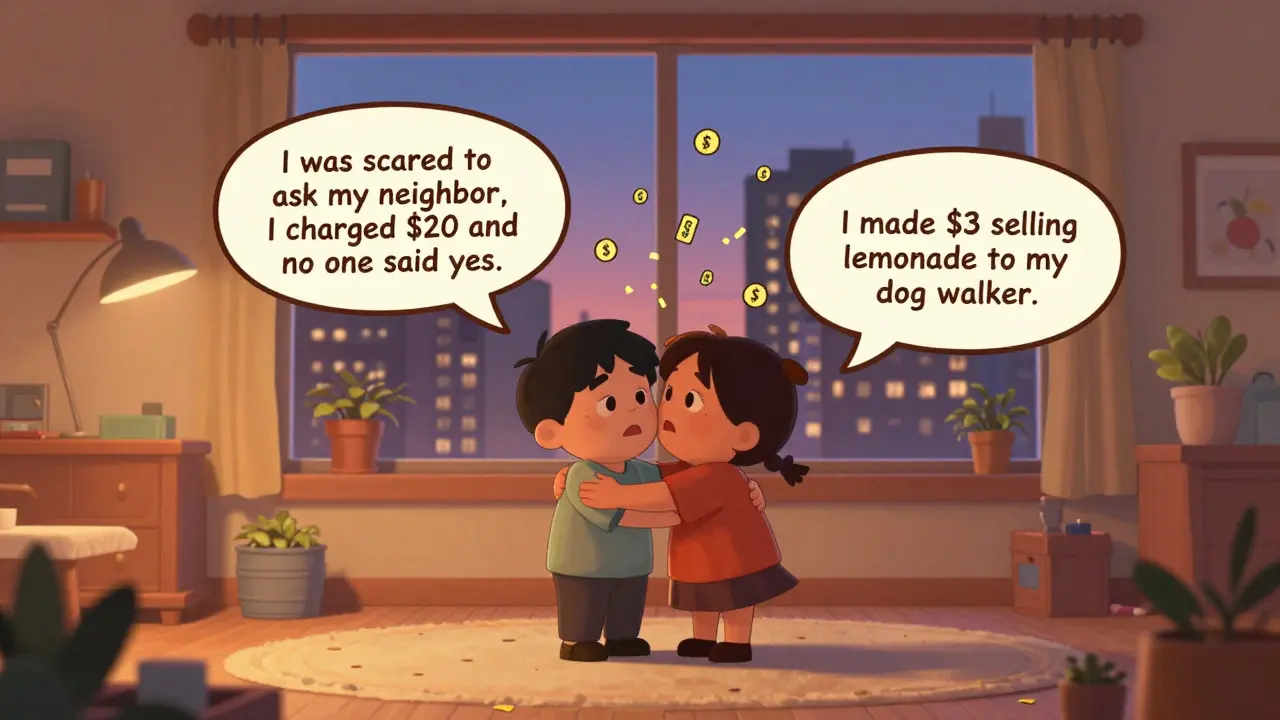
Keep a "Failure Log" in your course. Each student posts one thing that didn’t work-and what they learned. You’ll see patterns: "People didn’t trust me because I didn’t have a photo," or "I charged too much because I thought it had to be professional."
That’s real insight. That’s what sticks.
Build a community, not a classroom
Entrepreneurship is lonely. Most people quit because they feel alone.
Create a simple Slack or WhatsApp group for your students. Not for sharing wins. For sharing struggles. Post prompts like:
- "Who’s the one person you’re scared to ask for feedback?"
- "What’s the smallest thing you did this week that made someone say ‘yes’?"
- "What’s one thing you wish you’d done differently?"
Encourage replies. Don’t moderate. Don’t correct. Just let people talk. The best lessons come from peers, not lectures.
Measure success the right way
Don’t track completion rates. Don’t track grades. Track this:
- How many students made their first dollar?
- How many kept going after the course ended?
- How many told someone else, "You should try this"?
If 30% of your students launch something-even a side gig-you’ve succeeded. If 10% keep it going after 6 months, you’ve built something rare.
What to do next
Start small. Run a 4-week pilot with 10 people. Charge $20. Ask them to bring a real idea. Give them one task per week. Collect feedback. Adjust. Repeat.
You don’t need a degree in education to teach entrepreneurship. You just need to care more about what people do than what they know.
Mark Brantner
February 4, 2026 AT 02:51Kate Tran
February 4, 2026 AT 05:46Jim Sonntag
February 5, 2026 AT 00:27Jack Gifford
February 6, 2026 AT 16:07saravana kumar
February 8, 2026 AT 12:50Nathan Pena
February 10, 2026 AT 11:42Tamil selvan
February 12, 2026 AT 01:04Mbuyiselwa Cindi
February 12, 2026 AT 13:05Deepak Sungra
February 12, 2026 AT 21:19Sarah Meadows
February 13, 2026 AT 14:43VIRENDER KAUL
February 14, 2026 AT 10:01Mike Marciniak
February 15, 2026 AT 16:20amber hopman
February 16, 2026 AT 06:10