Credit Union and Banking Compliance Training Programs: A Complete Guide for 2026
 Jul, 28 2026
Imagine the phone ringing at your branch. It’s not a customer asking about mortgage rates. It’s an examiner from the Consumer Financial Protection Bureau (CFPB) or the Federal Reserve, dropping a bombshell: your institution failed to flag a suspicious transaction pattern three months ago. The fines aren’t just expensive; they damage trust that took decades to build. In the world of finance, ignorance of the law is no excuse, but more importantly, it’s incredibly costly.
For professionals in banking and credit unions, staying compliant isn't a checkbox exercise. It is the backbone of operational integrity. With regulations shifting constantly in 2026-from stricter anti-money laundering (AML) protocols to new digital privacy standards-your team needs more than a generic HR module. They need specialized, robust compliance training programs that actually stick.
The High Stakes of Financial Regulation
Why does this matter so much right now? Because the regulatory landscape has become a minefield. The Banks Secrecy Act (BSA), enacted in 1970, requires financial institutions to assist government agencies in detecting and preventing money laundering. Today, this translates into massive data analysis requirements. If your staff doesn't understand what triggers a Suspicious Activity Report (SAR), you are vulnerable.
Consider the Dodd-Frank Wall Street Reform and Consumer Protection Act. Passed after the 2008 crisis, it created the CFPB and gave regulators immense power to penalize non-compliance. In recent years, we’ve seen multi-million dollar penalties for failures in Fair Lending practices. This means if your loan officers unknowingly discriminate based on protected characteristics-even subtly through algorithmic bias-the bank pays the price.
Compliance training bridges the gap between complex legal text and daily operations. It transforms abstract rules into actionable behaviors for tellers, loan officers, and IT security teams.
Core Pillars of Banking and Credit Union Training
Not all compliance training is created equal. Effective programs focus on specific pillars that align with federal and state mandates. Here are the non-negotiables for any financial institution in 2026:
- Anti-Money Laundering (AML): This is the big one. Employees must recognize red flags like structuring deposits (breaking large amounts into smaller ones to avoid reporting thresholds) or unusual wire transfer patterns.
- Bank Secrecy Act (BSA): Closely tied to AML, this covers Currency Transaction Reports (CTRs) for cash transactions over $10,000.
- KYC (Know Your Customer): Verifying identity is crucial. Training must cover how to spot forged IDs and verify beneficial ownership for corporate accounts.
- Fair Lending & ECOA: The Equal Credit Opportunity Act prohibits discrimination. Training helps staff identify disparate impact in lending decisions.
- Privacy Regulations: Laws like GLBA (Gramm-Leach-Bliley Act) dictate how customer data is handled, stored, and shared.
A program that glosses over these areas is failing its primary job. Each pillar requires deep dives, not surface-level skimming.
Choosing the Right Training Format
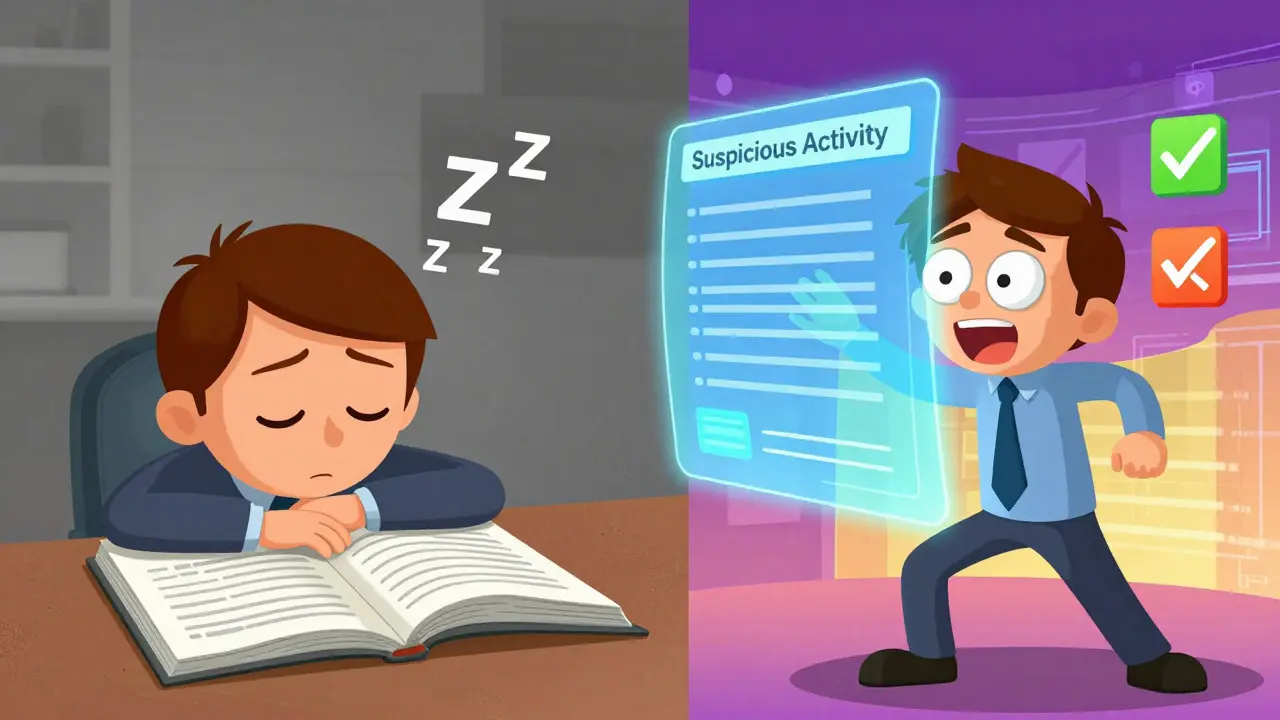
You might think sending everyone a PDF manual works. It doesn’t. Attention spans are short, and retention rates for passive reading hover around 10%. Modern compliance training uses active learning strategies. Let’s look at the most effective formats available today.
| Format | Best For | Engagement Level | Cost Efficiency |
|---|---|---|---|
| E-Learning Modules | Large distributed teams | Medium | High |
| Instructor-Led Workshops | Complex topics like AML | High | Low |
| Scenario-Based Simulations | Decision-making skills | Very High | Medium |
| Microlearning | Quick updates/reminders | Medium | High |
E-Learning Modules offer scalability. Platforms like LinkedIn Learning or specialized fintech ed-tech providers allow you to track completion rates easily. However, they can feel impersonal. To counter this, choose vendors that use interactive quizzes and branching scenarios where the user’s choice changes the outcome.
Instructor-Led Workshops remain gold standard for complex subjects. When discussing Beneficial Ownership rules, having an expert answer real-time questions prevents confusion. These sessions foster peer-to-peer learning, which reinforces concepts.
Scenario-Based Simulations are gaining traction. Imagine a virtual teller facing a customer trying to deposit five checks totaling $9,500. Does the employee ask why? Do they file a report? Simulation tools let employees practice without risking actual violations.
Credit Unions vs. Banks: Different Nuances
While banks and credit unions share many regulatory burdens, their structures differ, impacting training needs. Credit unions are member-owned cooperatives, often regulated by the National Credit Union Administration (NCUA). Banks fall under the OCC, FDIC, or Federal Reserve.
This distinction matters. NCUA guidelines emphasize member service and community focus alongside compliance. Training for credit union staff should highlight the "member-first" culture while maintaining strict adherence to Federal Trade Commission (FTC) rules regarding marketing disclosures. Bank training, conversely, might focus more heavily on shareholder risk management and broader systemic stability metrics.
Don't use a one-size-fits-all approach. Tailor content to reflect your institution's specific charter and regulatory body. A rural credit union faces different risks than a global commercial bank.
Implementing a Successful Program
Having the best courseware means nothing if implementation fails. Here is how to ensure your training sticks:
- Start with Onboarding: New hires should complete core compliance modules before touching live systems. Make it a gatekeeper step.
- Annual Refreshers Aren't Enough: Regulations change monthly. Implement quarterly micro-updates. A five-minute video on a new OFAC (Office of Foreign Assets Control) sanction list is more effective than a four-hour annual seminar.
- Tie to Performance Reviews: If compliance isn't part of KPIs, it gets deprioritized. Include quiz scores and scenario performance in annual evaluations.
- Use Real Data (Anonymized): Case studies from your own institution’s past near-misses resonate deeply. "Here’s how John almost missed a red flag last year" is powerful teaching.
- Leadership Buy-In: Executives must model compliance behavior. If the CEO skips training, everyone else will too.
Technology plays a huge role here. Learning Management Systems (LMS) integrated with your HR software can automate reminders and track certifications. Look for platforms that offer mobile-friendly content, as many staff work on tablets or phones during shifts.
Common Pitfalls to Avoid
Even well-intentioned programs fail due to common mistakes. Watch out for these:
- Jargon Overload: Using dense legal language confuses employees. Translate "Regulation CC" into "How to handle returned checks properly."
- Lack of Engagement: Dry, text-heavy slides lead to click-through fatigue. Use videos, animations, and gamification.
- Ignoring Cultural Context: Global banks must adapt training for local laws. A US-centric AML course won’t fully apply to a branch in Singapore without localization.
- No Feedback Loop: Ask employees what they found confusing. Iterate based on their input.
Remember, compliance is a mindset, not a task. Your goal is to create a culture where employees naturally question irregularities because they understand the 'why' behind the rules.
Future Trends in Compliance Education
As we move further into 2026, technology is reshaping compliance training. Artificial Intelligence is being used to personalize learning paths. If an employee struggles with KYC concepts, the AI system automatically assigns additional modules on identity verification.
Blockchain technology also introduces new complexities. Staff need training on decentralized finance (DeFi) risks and crypto-asset reporting requirements. The Financial Crimes Enforcement Network (FinCEN) has issued guidance on virtual currencies, making this a critical area for future-proofing your curriculum.
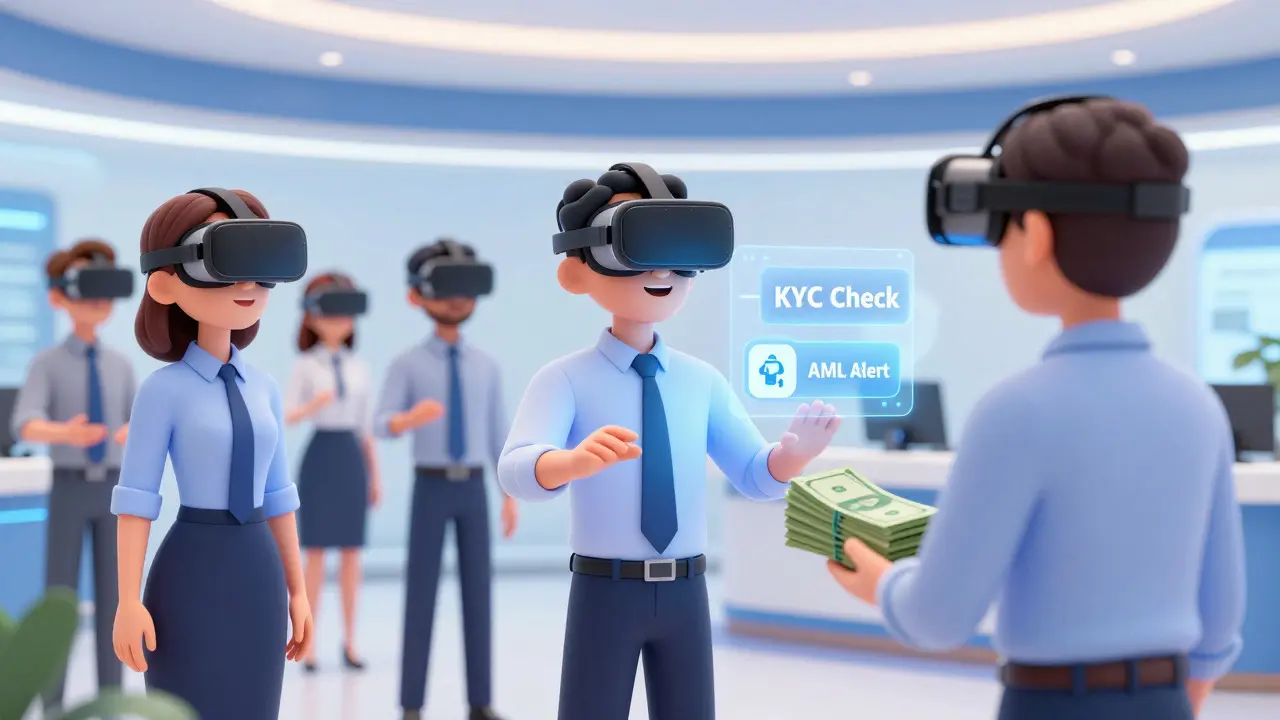
Virtual Reality (VR) is emerging for high-stakes simulations. Imagine walking through a virtual bank lobby in VR, interacting with actors playing suspicious customers. This immersive experience builds muscle memory for stress situations.
Staying ahead of these trends ensures your institution remains resilient against evolving threats. Compliance isn't static; your training shouldn't be either.
How often should banking compliance training be conducted?
While annual training is the minimum legal requirement for most regulations, best practices suggest quarterly updates for critical areas like AML and KYC. Monthly micro-learning sessions help reinforce key concepts without overwhelming staff.
What is the difference between BSA and AML training?
The Bank Secrecy Act (BSA) is the underlying legislation requiring records and reports. Anti-Money Laundering (AML) refers to the specific policies and procedures implemented to comply with the BSA. Training often combines both, covering the legal framework (BSA) and practical detection techniques (AML).
Do credit unions have different compliance requirements than banks?
Yes. Credit unions are primarily regulated by the NCUA, while banks may fall under the OCC, FDIC, or Federal Reserve. While core principles like AML and Fair Lending are similar, specific reporting forms, examination processes, and consumer protection nuances differ. Training must reflect these regulatory distinctions.
How can small banks afford comprehensive compliance training?
Small institutions can leverage cloud-based e-learning platforms that offer subscription models rather than large upfront costs. Many providers specialize in SME (Small and Medium Enterprise) packages. Additionally, sharing resources within credit union leagues or banking associations can reduce development expenses.
Is online compliance training legally sufficient?
Yes, provided the platform tracks attendance, completion, and comprehension via assessments. Regulators accept electronic records as long as they are auditable. Ensure your Learning Management System (LMS) generates detailed reports for examiners.
Tamara Miller
July 29, 2026 AT 10:04Oh, look at this. Another generic, soulless guide on how to keep the banks from eating us alive while they pretend to care about 'integrity'.
You really think a few e-learning modules are going to stop a multi-billion dollar institution from hiding their tracks? Please.
The whole system is rigged, and these training programs are just band-aids on a bullet wound. We need systemic change, not more corporate jargon about 'red flags' and 'suspicious activity'. It’s all a show for the regulators so they can sleep at night while the real crimes happen in the boardrooms.
Don’t get me started on the 'Fair Lending' part either. They talk a big game about discrimination, but we all know who gets approved and who doesn’t based on zip codes and skin color. It’s disgusting.
I suppose if you’re one of the sheeple working in the branch, clicking through the mandatory videos to get your paycheck, then by all means, celebrate this 'guide'. But for anyone with eyes open, it’s just noise.
Savara Gunn
July 30, 2026 AT 09:28I found the section on scenario-based simulations really interesting. It makes sense that practicing without risk helps build confidence. I’ve seen teams struggle with KYC when they haven’t handled a forged ID before, so having a safe space to make mistakes seems valuable.
It’s nice to see that microlearning is being taken seriously too. Short updates feel less overwhelming than the massive annual seminars we used to sit through. Hopefully, more institutions adopt this approach because retention does seem higher when the content is bite-sized.
Anthony Miller
August 1, 2026 AT 07:56pathetic
you people actually believe this fluff matters
the regulators are asleep at the wheel anyway
stop pretending compliance fixes culture
it never does
Jacob Baby Official
August 2, 2026 AT 09:10Let’s be honest here. This entire article is just fear-mongering designed to sell more expensive LMS platforms.
The idea that VR is the future of compliance training is absolute nonsense. You want to put a headset on a teller who is already stressed about meeting deposit targets? Good luck with that.
And don’t get me started on the AI personalization angle. That’s just data harvesting disguised as 'efficiency'. They want to track every click, every hesitation, every wrong answer to build a profile of your employees. It’s surveillance capitalism wrapped in a bow of 'compliance'.
The real issue isn’t training. It’s that the incentives are backwards. Banks are rewarded for speed and volume, not accuracy and caution. Until you fix the incentive structure, no amount of 'scenario-based simulation' will matter. The staff will still cut corners because management demands it.
This guide is a band-aid on a hemorrhage.
john randall
August 2, 2026 AT 09:22I work in a mid-sized credit union and we switched to quarterly micro-updates last year. Honestly, it was a relief. Nobody wants to spend four hours in a conference room listening to someone read slides. The five-minute videos on new OFAC lists are much easier to digest. We’ve noticed fewer errors in our CTR filings since we started doing this. It’s not perfect, but it’s better than what we had before.
Jeff Falcon
August 2, 2026 AT 11:14What I find most fascinating about this discussion is the sheer complexity involved in keeping up with all these regulations, especially when you consider that the definitions of things like 'beneficial ownership' can shift slightly depending on which regulatory body you are talking to, which creates a bit of a headache for compliance officers who are trying to create a unified training program that satisfies everyone.
For instance, the NCUA has its own specific nuances regarding member service that might not align perfectly with the OCC’s focus on shareholder risk, and trying to bridge that gap requires a lot of careful planning and communication between different departments within the organization.
I also think that the point about leadership buy-in is absolutely critical, because if the executives aren’t modeling the behavior they expect from their staff, then the whole program falls apart pretty quickly, and you end up with a situation where compliance is seen as a burden rather than a core value of the institution.
It’s a delicate balance, for sure, but I think using real-world case studies from within the organization, even if they are anonymized, can really help drive home the importance of these rules in a way that abstract legal text just can’t do.
Alyson Karson
August 4, 2026 AT 01:37LOL yeah right!!
like anyones gonna watch a video on GLBA privacy regs when they have actual customers waiting!
we just click through it fast and hope for the best lol
typical corporate BS
Chris Neal
August 5, 2026 AT 19:24Actually, the distinction between BSA and AML is often misunderstood. BSA is the statute; AML is the framework. Most people conflate them, but technically, you can be compliant with BSA reporting requirements while still having weak AML controls if your internal policies aren't robust enough to detect the laundering before it happens. It’s a nuance that many trainers miss, leading to superficial understanding among staff.
Vishnu Vardhan Reddy M S
August 7, 2026 AT 07:20Oh, wonderful! Another guide on how to make banking boring. Just what we needed. More rules, more fines, more stress. Can’t wait to see how this 'VR simulation' works. Bet it costs a fortune and breaks down after two uses. Typical tech solution looking for a problem that doesn’t exist.
Kyle Ware
August 8, 2026 AT 00:07One thing missing from this list is the importance of psychological safety. If employees are afraid to report a potential red flag because they might be blamed for slowing down business, no amount of training will help. Compliance needs to be supported by a culture where speaking up is encouraged, not punished. That’s often harder to train than spotting a fake ID.
Iva Grekova
August 8, 2026 AT 06:11I appreciate the emphasis on avoiding jargon overload. Translating 'Regulation CC' into plain English is such a simple step that makes a huge difference for new hires. It’s easy to forget that not everyone speaks 'legal', so making the material accessible is key to actually retaining the information. Glad to see that being highlighted.
Onyinyechi Nwosu
August 8, 2026 AT 06:28interesting perspective on the credit union vs bank dynamic
i always thought they were pretty much the same in terms of regulation
good to know ncuA has a different focus
michelle veluz
August 9, 2026 AT 23:27WAKE UP PEOPLE!!!
They are tracking EVERYTHING! Every click, every login, every transaction!
This 'compliance' stuff is just a cover for total surveillance! The CFPB isn’t protecting consumers, they are building a database to control us!
Why do you think they need all this data? To predict your behavior! To manipulate your spending! It’s all part of the grand plan to strip away our financial freedom!
Don’t let them trick you into thinking this is about 'safety'. It’s about CONTROL! And once they have your data, they own you!
Start questioning everything! Why do they need to know your beneficial ownership? Who benefits from knowing who owns your company?
It’s a conspiracy of epic proportions! And we are all just pawns in their game!