Data Loss Prevention (DLP) for eLearning Content and IP: A Complete Guide
 Jun, 12 2026
You spent months building that course. You hired experts, recorded high-quality video, designed custom assessments, and wrote proprietary frameworks. Then, overnight, your entire curriculum appears on a pirate site or gets uploaded to a public cloud storage bucket by a careless employee. This is not just an inconvenience; it is a direct hit to your revenue and brand reputation.
For eLearning providers, the threat landscape has shifted. It is no longer just about keeping hackers out of your login database. The bigger risk now is unauthorized data exfiltration. Your greatest asset-your intellectual property (IP)-is leaving your organization through email attachments, USB drives, screen captures, and unsecured APIs. This is where Data Loss Prevention (DLP) becomes non-negotiable.
DLP is not a single tool but a strategy combining people, processes, and technology to ensure sensitive information does not leave your corporate network without authorization. In the context of eLearning, this means protecting courseware, student records, and financial data from internal leaks and external breaches.
Why Standard Security Fails eLearning Providers
Most organizations rely on firewalls and antivirus software as their primary defense. These tools are excellent at stopping inbound attacks like ransomware or malware. However, they are notoriously blind to outbound threats. If a legitimate user with valid credentials decides to download your entire course library and email it to a competitor, standard security suites will likely let that happen because the action looks "normal" to the system.
eLearning platforms have unique vulnerabilities that traditional IT security often overlooks:
- High Volume of User-Generated Content: Students and instructors upload assignments, feedback, and media. This creates thousands of potential exit points for data leakage if not monitored.
- Third-Party Integrations: Most Learning Management Systems (LMS) connect with CRM tools, payment gateways, and analytics platforms via APIs. Each integration is a potential leak if data mapping is not strictly controlled.
- Remote Access Norms: With hybrid work models, employees access LMS databases from home networks, cafes, and mobile devices, increasing the surface area for interception or accidental sharing.
The core problem is that eLearning content is digital-native. It is easy to copy, paste, and distribute. Without specific controls designed to track and block this movement, your IP is essentially unprotected once it leaves your development environment.
Identifying What Needs Protection in eLearning
Before you can prevent data loss, you must define what constitutes sensitive data. In eLearning, this goes beyond credit card numbers. You need to categorize your assets based on their value and sensitivity.
| Data Category | Examples | Risk Level | Regulatory Impact |
|---|---|---|---|
| Proprietary Course Content | Video lectures, slide decks, assessment banks, proprietary methodologies | Critical (Revenue Loss) | Copyright Law, Trade Secrets |
| Student PII | Names, emails, addresses, dates of birth, government IDs | High (Legal Liability) | GDPR, FERPA, CCPA |
| Financial Data | Purchase history, subscription details, payment processor tokens | High (Fraud Risk) | PCI-DSS |
| Internal Analytics | User engagement metrics, churn rates, conversion funnels | Medium (Competitive Disadvantage) | Trade Secrets |
Notice that "Proprietary Course Content" sits at the top. While losing student data leads to fines, losing your unique course material leads to business failure. Competitors can replicate your success instantly if they get their hands on your source files. Therefore, your DLP strategy must prioritize content integrity alongside privacy compliance.
Core Components of an eLearning DLP Strategy
An effective DLP framework operates on three pillars: discovery, monitoring, and enforcement. You cannot protect what you cannot find, and you cannot stop leaks if you do not know when they are happening.
1. Data Discovery and Classification
This phase involves scanning your LMS, file servers, and cloud storage to identify where sensitive data lives. Many organizations are surprised to find terabytes of outdated course drafts or student records sitting in shared folders accessible to everyone. Modern DLP tools use pattern matching and machine learning to automatically tag files. For example, a tool might scan a document and flag it as "Confidential - Assessment Bank" based on its content structure and metadata.
2. Network Monitoring
Once data is classified, you need to monitor how it moves across your network. This involves inspecting email traffic, web uploads, and API calls. If an instructor tries to upload a large zip file containing video lessons to a personal Google Drive account, the DLP system should intercept this action. It analyzes the payload against your defined policies. If the content matches the signature of protected IP, the transfer is blocked or quarantined for review.
3. Endpoint Control
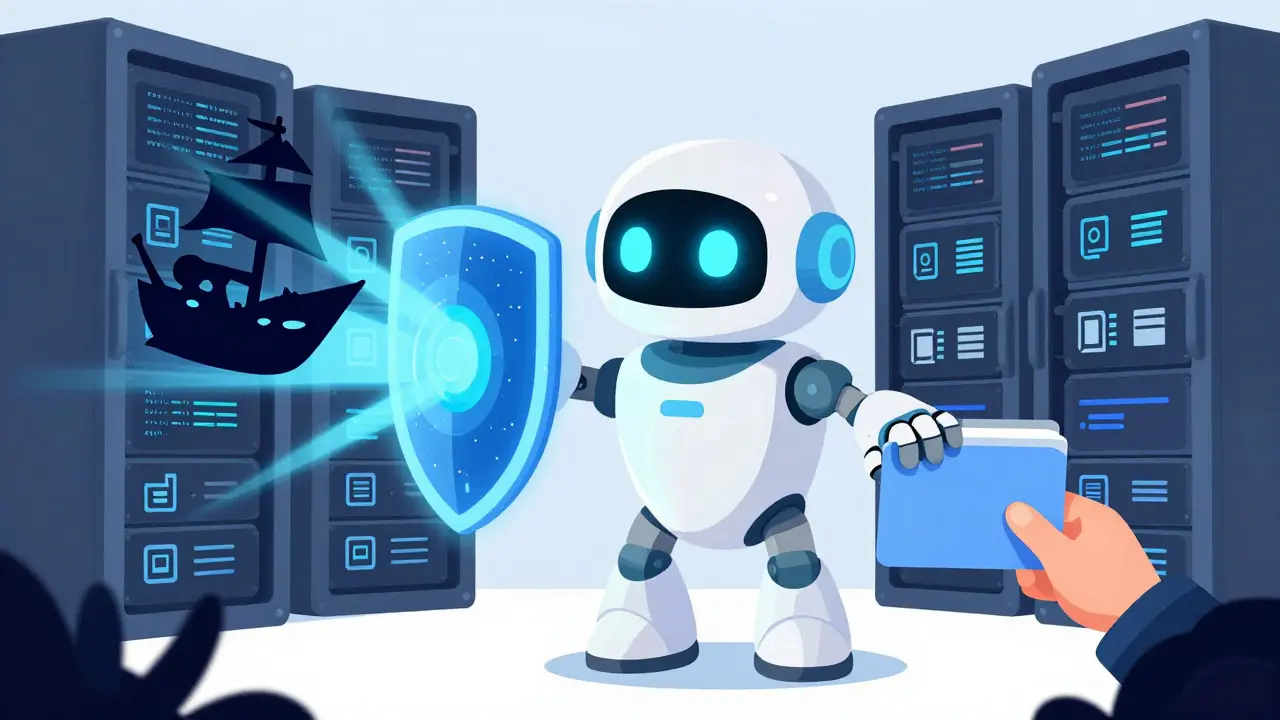
Data often leaves organizations through physical ports or local actions. Endpoint DLP agents installed on company laptops and desktops can restrict USB usage, disable printing of sensitive documents, or prevent copying text from secure applications to unauthorized destinations. For remote teams, this requires robust Mobile Device Management (MDM) integration to ensure company-owned devices adhere to the same strict policies as those in the office.
Implementing Technical Controls for Content Protection
Strategy is useless without execution. Here are the specific technical measures you should implement to safeguard your eLearning IP.
Digital Rights Management (DRM)
While DLP focuses on preventing data exfiltration, DRM focuses on controlling access after distribution. For video-heavy courses, consider using DRM solutions that encrypt content and bind playback to specific user accounts. This prevents users from downloading raw video files. Even if a file is stolen, it remains encrypted and unusable outside your authorized player. Technologies like Widevine or FairPlay are industry standards for this purpose.
Watermarking and Forensics
If someone takes a screenshot of your course material, DRM cannot stop them. However, dynamic watermarking can help. By overlaying the viewer’s name, email, or session ID onto the video or document in real-time, you create a deterrent. If that watermarked image appears on a forum or social media, you can trace it back to the source. This psychological barrier significantly reduces casual leaking among students and staff.
API Security and Tokenization
eLearning platforms rarely exist in isolation. They integrate with Zoom for live sessions, Slack for communication, and Salesforce for sales tracking. Each API connection is a potential data leak. Implement strict API governance. Use tokenization to replace sensitive data elements with non-sensitive equivalents during transmission. Ensure that third-party apps only receive the minimum data necessary to function (principle of least privilege). Regularly audit API logs for unusual data volume spikes that could indicate scraping or bulk export attempts.
The Human Factor: Training and Policy
Technology alone cannot solve human error. According to various industry reports, a significant percentage of data breaches involve insider threats, whether malicious or accidental. An employee might forward a sensitive contract to their personal email to "work on it over the weekend," unknowingly bypassing security protocols.
Your DLP program must include a comprehensive training component. Employees need to understand:
- What constitutes sensitive data: Clear definitions of IP vs. public information.
- Proper handling procedures: How to share files securely using approved channels rather than personal cloud services.
- Consequences of violations: Clear disciplinary actions for intentional leaks.
Create a culture of security awareness. When employees understand that protecting IP protects their jobs and the company's future, compliance improves naturally. Regular phishing simulations and data handling quizzes can keep these concepts fresh in their minds.
Compliance and Legal Considerations
In 2026, data privacy regulations are stricter than ever. Depending on your audience, you may be subject to multiple legal frameworks simultaneously.
If you serve students in the European Union, GDPR requires you to implement appropriate technical measures to protect personal data. A data breach involving student PII can result in fines up to 4% of global annual turnover. In the United States, FERPA protects the privacy of student education records, while state laws like CCPA give consumers rights over their personal information. Failure to demonstrate adequate DLP controls can be used as evidence of negligence in lawsuits.
Furthermore, intellectual property law protects your creative works. Registering your copyrights provides a legal basis for taking down infringing content and seeking damages. DLP logs can serve as crucial evidence in legal proceedings, showing exactly when and how data was accessed or transferred.
Choosing the Right DLP Solution
The market is flooded with security vendors. Not all DLP solutions are created equal, especially for eLearning environments. When evaluating vendors, look for these key capabilities:
- Context-Aware Policies: The ability to distinguish between a student submitting an assignment (allowed) and an employee exporting the entire question bank (blocked).
- Cloud Integration: Native support for major cloud providers (AWS, Azure, Google Cloud) and SaaS applications (Salesforce, Microsoft 365).
- False Positive Management: Robust tuning options to minimize blocking legitimate business activities. High false positive rates lead to alert fatigue and policy circumvention.
- Scalability: The solution must handle peak loads during course launches or exam periods without degrading performance.
Avoid solutions that require heavy customization out of the box. Look for pre-built templates for education and edtech sectors. This accelerates deployment and ensures best practices are baked into your initial configuration.
Next Steps for Implementation
Start with a data audit. Map out where your most valuable content lives and who has access to it. Define clear classification labels. Then, pilot a DLP solution with a small team, such as your instructional design department. Monitor the alerts, refine your policies, and gradually roll out to the rest of the organization. Remember, DLP is not a one-time project but an ongoing process of adaptation and improvement.
What is the difference between DLP and DRM?
Data Loss Prevention (DLP) focuses on preventing sensitive data from leaving your organization's network or systems. Digital Rights Management (DRM) focuses on controlling how content is used after it has been distributed. DLP stops the leak; DRM restricts the usage of leaked or distributed content.
Can DLP protect against screenshots?
Standard DLP cannot physically prevent a user from taking a screenshot. However, endpoint DLP agents can detect screenshot commands and block them or blur sensitive content. Additionally, dynamic watermarking helps trace screenshots back to the source user, acting as a strong deterrent.
How much does a DLP solution cost?
Costs vary widely based on deployment size and features. Cloud-based DLP solutions typically charge per user or per terabyte of data monitored. Small businesses might pay $5-$10 per user per month, while enterprise solutions can cost tens of thousands annually. Always factor in implementation and training costs.
Is DLP required for GDPR compliance?
While GDPR does not explicitly mandate DLP software, it requires organizations to implement "appropriate technical and organizational measures" to protect personal data. DLP is considered a best practice and often essential for demonstrating compliance during audits or after a breach investigation.
What are common false positives in eLearning DLP?
Common false positives include blocking legitimate student submissions that contain keywords similar to protected IP, or preventing instructors from sharing draft materials with collaborators. Tuning policies to recognize context, such as file type and destination, helps reduce these errors.
Bineesh Mathew
June 12, 2026 AT 08:38The modern digital landscape is a theater of shadows where our intellectual creations dance on the edge of oblivion. We pour our souls into these pixels, believing them to be ours, yet they are merely borrowed time in the cloud. To think that a firewall can stop the human desire to share, to leak, to destroy... it is naive at best and delusional at worst. The true enemy is not the hacker but the careless hand of the colleague who believes they are helping. We build cathedrals of code and content only to watch them crumble because we forgot to lock the back door. It is a tragedy of epic proportions when one realizes their life's work is just data waiting to be exfiltrated by someone with a USB drive and a grudge. The philosophy of ownership is dead; long live the surveillance state.
Oskar Falkenberg
June 13, 2026 AT 13:14hey there mate, i was reading through this and i must say its really interesting stuff about dlp and all that jazz. i mean, look at us, trying to protect our little bits of knowledge from being stolen left right and center, it makes you wonder if we should just give it all away for free instead of worrying so much about security protocols and such like things. but then again, if everyone did that who would pay the bills? so yeah, maybe having some kind of system to stop people from emailing your courseware to their mates is a good idea afterall, dontcha think?
Caitlin Donehue
June 15, 2026 AT 02:28i noticed how most companies treat security as an afterthought until something goes wrong. it seems like they only care about keeping hackers out rather than stopping their own employees from leaking data. i guess it makes sense since outbound threats are harder to see but still feels like a massive oversight in the industry.
Stephanie Frank
June 16, 2026 AT 05:59typical corporate fluff piece designed to sell expensive software to clueless managers. nobody actually implements half of this garbage because it slows down productivity to a crawl. you want to block screenshots? good luck getting your sales team to work without taking pics of contracts. you want to monitor every api call? enjoy your latency spikes and angry developers. the real issue is that elearning platforms are built by idiots who never thought about security in the first place so now they have to patch it with bandaids called dlp.
Patrick Dorion
June 18, 2026 AT 05:30the distinction between dlp and drm is crucial here and often misunderstood by non-tech stakeholders. dlp is about containment while drm is about usage rights. think of dlp as the vault door and drm as the handcuffs on the jewelry once it leaves the store. many edtech founders focus too much on one and ignore the other leading to gaps where content gets stolen via screen recording or unauthorized downloads. implementing both creates a layered defense that actually works in practice rather than just on paper.
Marissa Haque
June 19, 2026 AT 08:17oh my goodness!!! i cannot believe how many times i have seen course materials leaked online!! it is absolutely terrifying!!! every single time i think we are safe another breach happens!!! we need to take this seriously right now!!! please do not ignore this!!!
Keith Barker
June 19, 2026 AT 22:48data is power but also vulnerability. we create to share but sharing invites theft. the paradox of open knowledge vs proprietary value defines our era. perhaps the solution lies not in walls but in trust though trust is easily broken.
Lisa Puster
June 21, 2026 AT 14:11another american article full of jargon meant to confuse european readers. why should we care about your pci-dss when gdpr already covers everything you mentioned and more. your approach is overly complicated and typical of us tech bro culture where you try to solve simple problems with expensive tools. keep your watermarks and dynamic tracking we prefer privacy over paranoia.
Joe Walters
June 23, 2026 AT 01:19lol this guide is basically telling you to spy on your own employees which is kinda dystopian if you ask me. but hey if you wanna turn your office into a panopticon go ahead. just dont expect anyone to actually follow the rules when no ones looking. humans are inherently chaotic creatures and trying to control every byte of data is a fool errand. besides if your content is that valuable why is it even accessible to regular staff in the first place? sounds like poor management to me.
Robert Barakat
June 23, 2026 AT 04:05silence speaks volumes about the fragility of digital ownership. we build castles on sand expecting them to withstand the tide of information flow. perhaps the true lesson is that nothing is truly owned anymore only temporarily possessed.