Effective Grading and Assessment Strategies for Online Instruction
 Jan, 24 2026
Grading online isn’t just about assigning points. It’s about keeping students engaged, giving them meaningful feedback, and making sure their learning actually shows up in the numbers. If you’re teaching online, you’ve probably noticed that the same rubrics that worked in a classroom don’t always cut it when students are miles away and deadlines are flexible. The real challenge? Making assessment feel fair, clear, and helpful-not just administrative.
Start with clear expectations
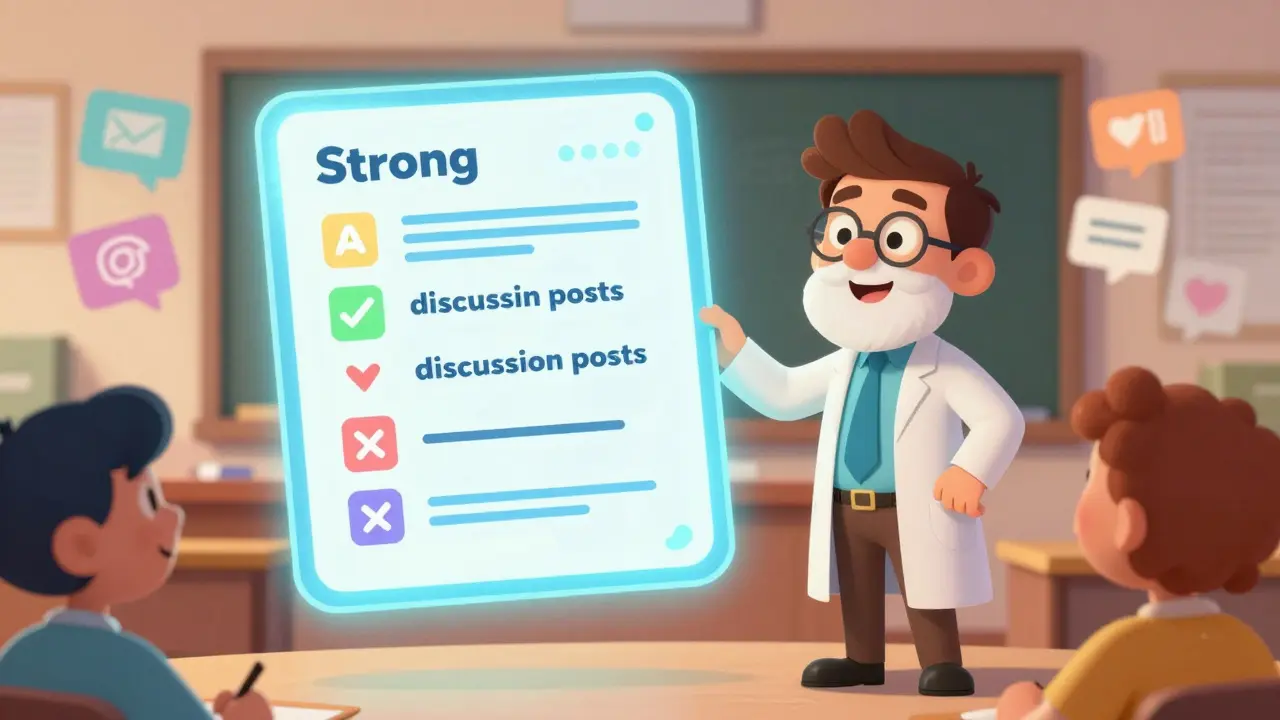
Students can’t perform well if they don’t know what good looks like. In a physical classroom, you can show a sample essay, demonstrate a lab procedure, or even glance at a neighbor’s work. Online? You have to build that visibility into the design.Use rubrics. Not the kind that look like legal documents. The kind that use plain language and specific examples. For example, instead of saying "Demonstrates critical thinking," say: "Identifies at least two opposing viewpoints in the discussion post and explains why each matters." That’s concrete. That’s measurable.
Share sample responses from past students (with permission). Highlight one that got an A, one that got a B, and one that needs work. Annotate them. Say why the A response stood out. What did it include that the others missed? This cuts down on confusion and reduces grading disputes later.
Use varied assessment types
Relying only on quizzes and final papers is a recipe for burnout-for you and your students. Online learners need multiple ways to show what they know.Try these:
- Discussion boards with peer responses: Require each student to post an original thought and reply to two classmates. Grade based on depth, not just word count. Did they build on someone else’s idea? Did they ask a follow-up question?
- Video reflections: Instead of a written journal, ask students to record a 3-minute video explaining how they applied a concept to their life or job. It’s harder to fake authenticity here.
- Mini-projects: A 10-minute podcast episode, a annotated infographic, or a TikTok-style summary of a theory. These are low-stakes but high-engagement.
- Self-assessments with instructor feedback: Ask students to grade their own work using your rubric, then explain their reasoning. Then you respond-not with a grade, but with a note: "You gave yourself a B because you missed the data source. I agree. Here’s where you could find it."
These methods reduce cheating, increase ownership, and give you richer data about what students really understand.
Feedback isn’t a grade
A grade is a label. Feedback is a roadmap. Students remember feedback far longer than they remember their score.Don’t write "Good job" or "Needs work." Be specific. Instead of saying "Your analysis is weak," say: "You described the theory well, but you didn’t connect it to the case study. Try asking: How would this model explain what happened in Example 3?"
Use audio feedback. It’s faster than typing and feels more personal. A 90-second voice note on a student’s submission can build more trust than a page of written comments. Tools like Mote or Loom make this easy.
Also, space out feedback. Don’t wait until the end of the term. Give feedback on the first discussion post. Then again on the third. Let students adjust before the final assignment. That’s how learning sticks.
Automate the boring stuff
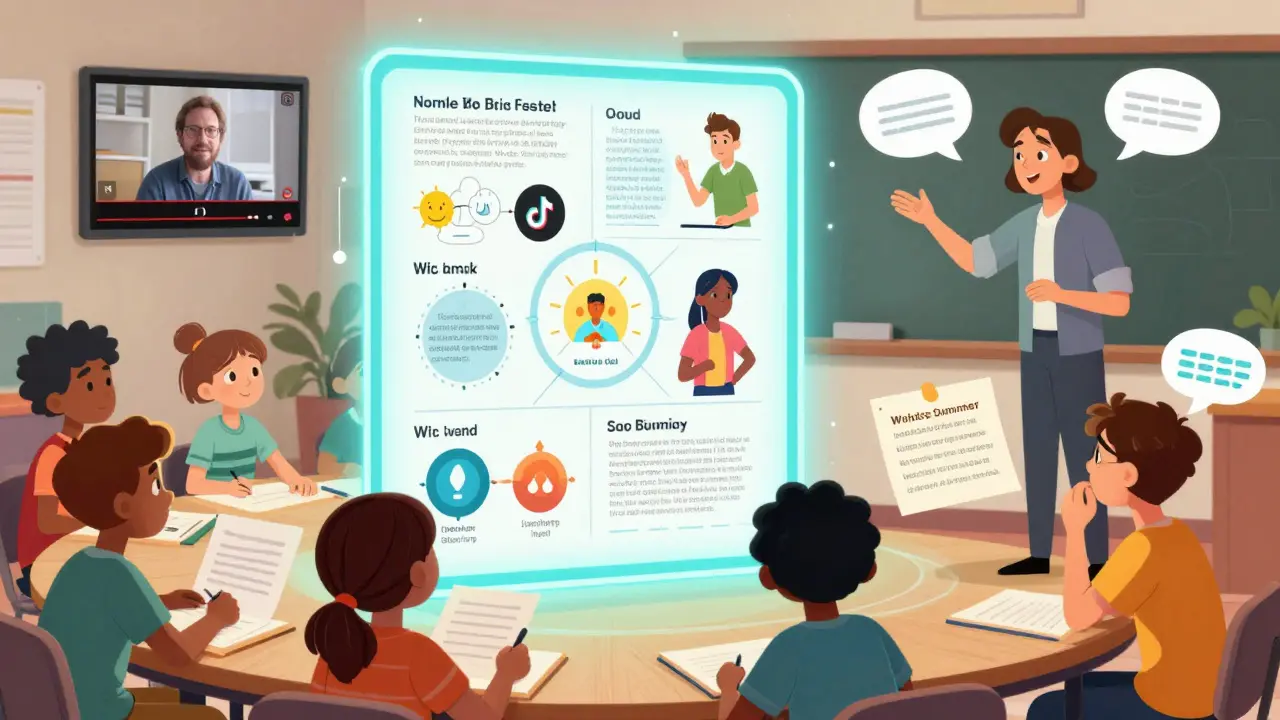
You don’t need to grade every multiple-choice question by hand. Use your LMS (Canvas, Moodle, Blackboard) to auto-grade those. Free up your time for the human stuff-analyzing essays, guiding discussions, responding to confusion.Set up automated feedback for quizzes. If a student misses a question on plagiarism, trigger a pop-up with a 2-minute video explaining how to cite properly. Turn mistakes into teachable moments, not just penalties.
Use templates for common feedback. Save phrases like: "You’re on the right track with your argument, but you need to support it with a source from the readings. Try page 42." Then just paste and tweak. Saves hours over a semester.
Watch for equity issues
Not every student has the same access. Some don’t have reliable internet. Others are working two jobs. Some are caring for kids. Your grading system shouldn’t punish them for that.Offer flexible deadlines. Not "late work accepted"-but "you can submit this by Friday if you need extra time, no penalty." Document it in your syllabus. It reduces stress and increases completion rates.
Don’t require cameras on. Some students feel unsafe or uncomfortable being on video. Let them submit written reflections instead. Offer alternative formats for every assignment.
Check your language. Avoid phrases like "as we discussed in class" when you’re teaching online. There is no "class"-there are individual learners in different time zones, with different backgrounds. Be inclusive in your wording.
Track trends, not just scores
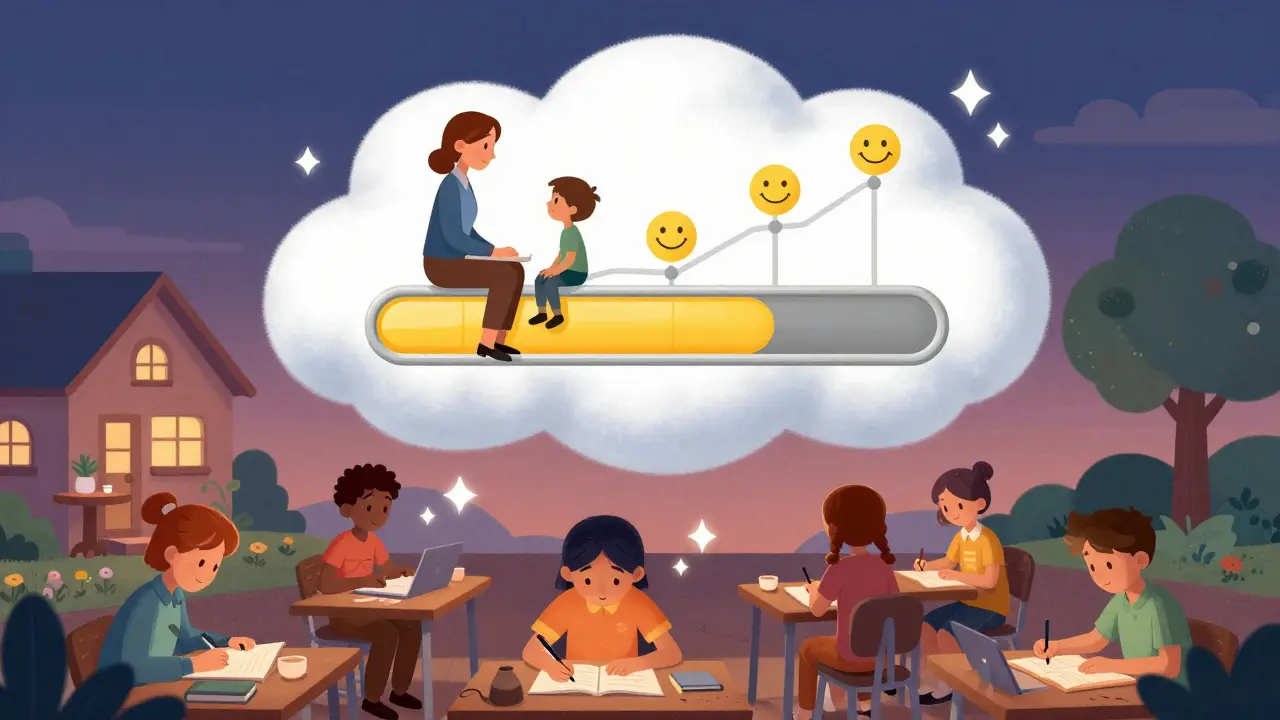
Don’t just look at grades. Look at patterns. Did half the class struggle with the same concept? Did students who participated in peer reviews score higher on the final project? Use your LMS analytics to find those connections.If 60% of students missed the same question on the quiz, revisit that topic in a short live session. Record it. Share it. That’s proactive teaching.
Keep a simple log: Note when students improve after feedback. Note who never responds to comments. Note who submits early every time. These patterns tell you more than a GPA ever could.
Let students help shape assessments
Ask them. At the midpoint of the course, run a quick poll: "What kind of assignment helped you learn the most?" "What felt like busywork?" "What feedback helped you improve?"One professor at Arizona State started letting students co-design a final project. They chose between writing a policy brief, creating a podcast, or building a website. The quality jumped. Engagement soared. And grading became easier because students were invested in their own work.
You don’t have to give them full control. But giving them a voice makes them partners in learning-not just recipients of grades.
Grading is teaching
Every time you grade, you’re teaching. Not just about content-but about how to think, how to improve, how to persist. The goal isn’t to sort students into A-F buckets. It’s to help them grow.When you shift from grading as judgment to grading as guidance, your workload doesn’t disappear-but it becomes more meaningful. Students feel seen. They try harder. They learn deeper.
Start small. Pick one assignment this week. Change how you give feedback. Use a rubric. Offer an audio comment. Let students submit in a new format. See what happens.
That’s how real change happens-not in big overhauls, but in small, consistent choices.
How do I prevent cheating in online assessments?
Cheating is often a sign of poor design, not poor students. Instead of relying on proctoring software-which can feel invasive and unreliable-focus on authentic assessments. Ask students to apply concepts to their own lives, analyze real-time events, or create original artifacts. When work is personal, it’s harder to copy. Also, use low-stakes quizzes with randomized questions and time limits to discourage last-minute Googling.
What’s the best way to give feedback to large classes?
Use batch feedback. Group students by common mistakes. Record one 3-minute video addressing the top three errors you saw across 30 papers. Upload it to your course. Students who made those mistakes will watch it. Others won’t need to. Also, create reusable comment banks in your LMS. Save phrases like "Needs more evidence from the readings" or "Strong analysis, but missing a counterargument." Then just paste and tweak.
Should I use letter grades in online courses?
Letter grades aren’t inherently bad, but they can shut down learning. Consider using a combination: give a letter grade for the final, but use mastery-based feedback throughout. For example, say "You’ve mastered Topic 1, still developing Topic 2." Students respond better to progress tracking than rankings. If you must use letters, tie them clearly to a rubric so students understand exactly what each grade means.
How often should I grade assignments in an online course?
Feedback should be timely, not necessarily instant. Aim to return graded work within 5-7 days. For weekly discussion posts, a quick comment (even just a few lines) by day 4 keeps students engaged. For major papers, 7 days is acceptable. The key is consistency. If students know they’ll get feedback by Friday, they plan around it. If it’s unpredictable, they lose motivation.
Can I grade participation fairly in online courses?
Yes, but not by counting posts. Grade quality, not quantity. Look for depth: Did they ask a thoughtful question? Did they build on someone else’s point? Did they cite course materials? Use a simple rubric: 1 point for a basic post, 2 for a good one, 3 for one that sparks discussion. Also, let students self-rate their participation once mid-term. Their self-assessment often aligns with your observations.
Kristina Kalolo
January 25, 2026 AT 03:12Using audio feedback changed everything for me. Students actually reply to it. I used to write pages of comments and get zero engagement. Now I record a 90-second voice note, and suddenly they’re asking follow-up questions. It’s weird how much more human it feels.
ravi kumar
January 25, 2026 AT 11:30Great post. I’ve been using peer review with rubrics for two semesters now. The drop in plagiarism is real. Students start caring about quality when they know their peers are grading too. No proctoring software needed.
Megan Blakeman
January 26, 2026 AT 10:17This is so true!! I love the idea of letting students co-design projects-it’s like giving them ownership instead of just handing out assignments. I tried it last term and my class went from ‘when’s this due?’ to ‘can we do more of this?’ I cried. Actually cried. Not even kidding. It’s the little things that make teaching worth it.
Akhil Bellam
January 27, 2026 AT 11:12Let’s be real-most of these ‘strategies’ are just lazy teaching dressed up as innovation. If your students can’t handle a traditional essay, maybe they shouldn’t be in college. Audio feedback? Cute. But if you can’t articulate feedback in writing, you’re not ready to teach. And don’t get me started on ‘flexible deadlines’-that’s just coddling. Real learning happens under pressure.
Amber Swartz
January 27, 2026 AT 22:49OMG I just had a meltdown last week because a student submitted a TikTok summary and I didn’t know how to grade it. Like… is this even academic? I’m not a content creator. I’m a professor. What even IS this world anymore? And now they’re all asking for ‘alternative formats’-like I’m running a Netflix studio, not a syllabus.
Robert Byrne
January 28, 2026 AT 12:03Stop using ‘as we discussed in class’ in online courses. That’s not just lazy-it’s exclusionary. You’re literally erasing half your students who joined late or are in different time zones. If you can’t rephrase that, you shouldn’t be teaching. I’ve seen this mistake in five different syllabi this semester. Fix it. Now.
Tia Muzdalifah
January 28, 2026 AT 13:18lol i just started letting students do voice memos instead of essays and now my inbox is full of them singing their analysis of the novel. one kid did it in a car with the windows down. i gave him an A. not because it was perfect, but because he cared. that’s what matters.
Zoe Hill
January 28, 2026 AT 23:32I love how you mentioned spacing out feedback-so many instructors wait until the end and then dump 20 assignments on students at once. I started giving feedback after the first discussion post and my students’ second posts were SO much better. It’s like magic. I used to think grading was a chore. Now I look forward to it.
Albert Navat
January 30, 2026 AT 08:45Auto-grading quizzes is fine, but if you’re not using learning analytics to track cognitive load patterns, you’re missing the point. The real value isn’t in the grade-it’s in the engagement heatmaps, the time-on-task metrics, the drop-off points before submission. If you can’t integrate that into your pedagogy, you’re just digitizing bureaucracy.
King Medoo
January 30, 2026 AT 22:04Grading is teaching. 🌟 I’ve been saying this for years. 🌟 Most educators treat grades like a tax-something you collect, not something you cultivate. 🌟 When you shift from judgment to guidance, you’re not just changing your workflow-you’re changing the soul of education. 🌟 I’ve seen students who failed the first quiz go on to lead class discussions because someone took the time to say, ‘I see your potential.’ 🌟 That’s not pedagogy. That’s love.
Rae Blackburn
January 31, 2026 AT 23:26They’re watching you. They know you’re using Loom. They know you’re using templates. They know you’re not really reading their work. This whole ‘personal feedback’ thing is a scam. The system is rigged. You’re just performing empathy so they don’t complain. I’ve seen the data. They’re all just gaming the system.
LeVar Trotter
February 1, 2026 AT 21:38One thing I’ve learned: equity isn’t about lowering standards-it’s about removing barriers. If a student can’t turn on their camera because they’re in a shelter, that’s not laziness. That’s survival. If you want to teach online, you have to design for humans, not idealized students. This post nails it.
Tyler Durden
February 3, 2026 AT 13:12Let me tell you-I used to hate grading. Hated it. Then I started using peer review with self-assessment. Students would grade themselves, then I’d give a one-line note like ‘You’re right, but here’s where you missed the mark.’ And guess what? They started showing up. Not because I graded harder. Because I trusted them. That’s the secret. Trust. Not rubrics. Not tech. Trust.
Aafreen Khan
February 3, 2026 AT 14:43audio feedback?? lmao who has time for that? i just use the same comment on every paper: ‘needs more sources’ and move on. also why are we letting students do tiktoks? next they’ll be submitting memes as thesis statements. this is education? i miss the old days when you just wrote an essay and shut up.
Pamela Watson
February 3, 2026 AT 23:45I tried letting students choose their own project format and now half of them are submitting Instagram reels. I don’t even know how to grade that. Do I count likes? Should I make them do a caption? I’m so confused. Also, my dean asked me why my grades are so low this semester. I think it’s because I’m being too nice.
Kristina Kalolo
February 4, 2026 AT 10:30That’s exactly why I started using audio feedback. I didn’t want to be the person who just says ‘needs more sources.’ I wanted to say, ‘You’re on the right track, but the data source you cited doesn’t support your claim. Try this article-it’s from the same journal and makes your point stronger.’ It takes 2 minutes. But it changes everything.