Employer Partnerships: How Bootcamps Build Hiring Pipelines
 Nov, 13 2026
You spent months grinding through code challenges, building projects at 2 AM, and probably questioning your life choices. You graduate, send out resumes, and hear... silence. Or worse, a generic rejection email that says "we went with another candidate." It’s frustrating, right? But here is the thing about coding bootcamps: the ones that actually get you hired aren't just teaching you Python or React; they are engineering a direct line to the companies hiring them.
This isn't magic. It's a business model called employer partnerships. When done right, these relationships turn a bootcamp from a simple school into a talent pipeline. If you're looking to switch careers or upskill, understanding how this machine works can save you six months of job hunting. Let's break down exactly how these pipelines function and why some schools crush it while others leave their grads stranded.
The Reality Check: Why Degrees Are Losing Ground
Think back ten years ago. A computer science degree was the golden ticket. Today? It’s still valuable, but it’s not the only door. Companies like Google, Apple, and IBM have dropped degree requirements for many technical roles. Why? Because traditional four-year programs often lag behind industry speed. By the time a university updates its curriculum, the framework everyone uses has already changed twice.
Bootcamps, on the other hand, move fast. They can pivot their entire curriculum in a semester if a new tool becomes essential. This agility makes them attractive to employers who need people ready to work now, not in two years. But speed alone doesn't guarantee a job. That's where the partnership comes in.
When a company partners with a bootcamp, they aren't doing charity. They are solving a specific pain point: the shortage of skilled labor. The average time-to-hire for a software engineer can stretch to 40+ days. A bootcamp partner can cut that down significantly by pre-vetting candidates. For the employer, it’s efficiency. For the student, it’s access.
Anatomy of a Hiring Pipeline
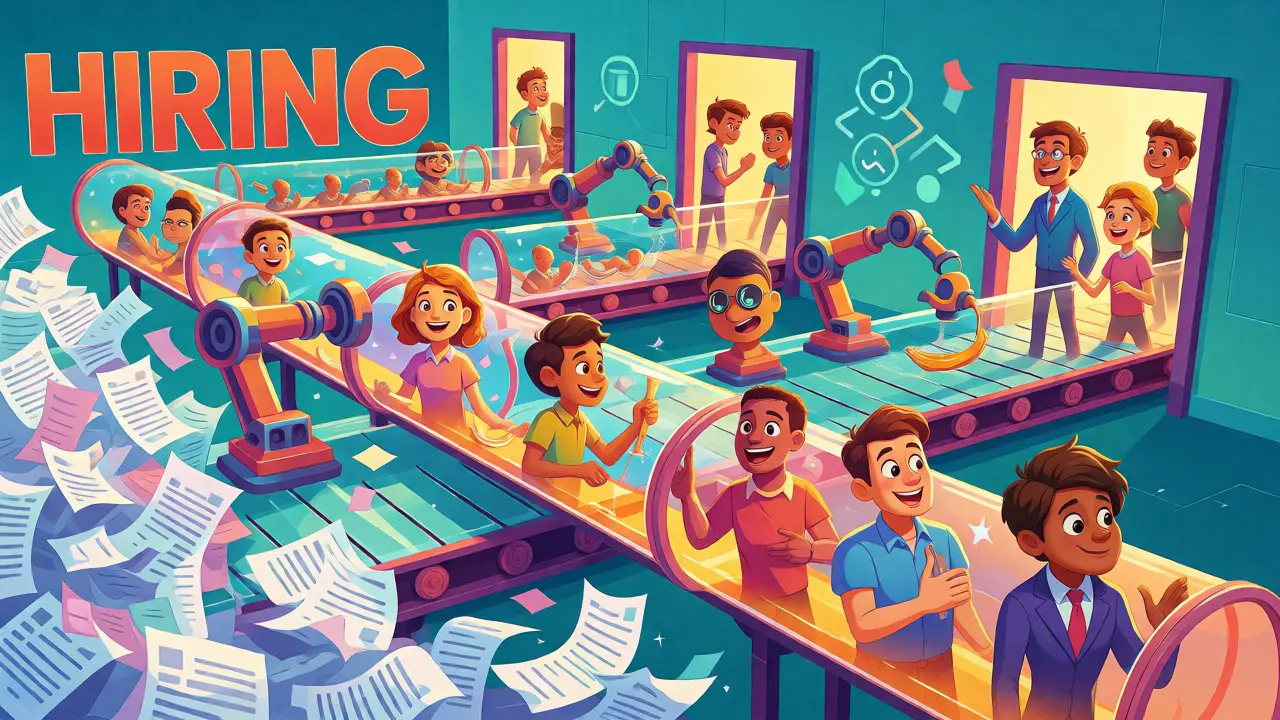
So, what does a "hiring pipeline" actually look like? It’s not just a resume database. It’s a structured flow of talent designed to reduce friction for both sides. Here is the typical lifecycle:
- Curriculum Co-Design: Top-tier partners sit down with bootcamp staff to define skills. If Company X needs developers proficient in AWS Lambda and TypeScript, the bootcamp ensures those are core modules, not electives.
- Early Engagement: Students don't wait until graduation to meet employers. Partners might host guest lectures, hackathons, or capstone project reviews during the course. This lets recruiters see students in action before they even apply.
- Pre-Vetting: The bootcamp filters candidates based on technical assessments and soft skills. Employers receive a shortlist of "job-ready" graduates, saving them hours of screening unqualified applicants.
- Interview Acceleration: Many partnerships include guaranteed interview slots. Instead of fighting through an Applicant Tracking System (ATS) black hole, graduates go straight to a hiring manager.
This structure benefits everyone. The bootcamp gets high placement rates (which helps marketing). The employer gets vetted talent. The student gets a foot in the door.
Types of Employer Partnerships
Not all partnerships are created equal. Some are deep integrations; others are loose associations. Knowing the difference matters when you're choosing a program.
| Partnership Type | Depth of Integration | Student Benefit | Employer Commitment |
|---|---|---|---|
| Hiring Partner Network | Low | Access to job board; occasional referrals. | Passive. May hire if profile fits. |
| Preferred Vendor Status | Medium | Resume priority; faster screening process. | Moderate. Agrees to review top N% of grads. |
| Guaranteed Interview Program | High | Contractual promise of interviews upon graduation. | High. Dedicates resources to interviewing cohort. |
| Custom Cohort / Sponsorship | Very High | Job secured before graduation; tailored training. | Very High. Pays tuition or reserves seats exclusively. |
The "Hiring Partner Network" is the most common but least impactful. It’s basically a directory. If you want real results, look for schools offering Guaranteed Interviews or Custom Cohorts. These require significant trust between the school and the company, which usually means the school has a proven track record of producing competent devs.
How Schools Vet Candidates (And Why It Matters)
You might wonder: "If I'm smart and motivated, why do I need a middleman?" Because hiring managers are overwhelmed. They don't have time to test every applicant's coding skills. Bootcamps act as a quality control filter.
Reputable programs use rigorous exit exams. They don't just give you a certificate because you attended class. They require you to pass live coding challenges, complete complex projects, and demonstrate communication skills. When a partner receives your resume, they know you’ve already passed these hurdles. This "pre-qualification" is worth gold in a crowded market.
Consider the difference between applying cold and applying through a pipeline. In a cold application, you’re one of 500 resumes. Through a pipeline, you’re one of five recommended candidates. Your odds skyrocket. Plus, the recommendation carries weight. It’s an endorsement from an educator who knows your work ethic.
Red Flags: When Partnerships Are Just Marketing Fluff
Be careful. Some bootcamps slap logos on their website without having any real relationship with those companies. How do you spot the fakes?
- Vague Language: If they say "partners with leading tech companies" but don't name them, be skeptical. Ask for specific names and recent success stories.
- No Data Transparency: Legitimate schools publish audited outcome reports. If they hide their placement rates or average salary data, they might be hiding low numbers.
- One-Way Traffic: True partnerships involve two-way communication. Do employers provide feedback on curriculum? Do they participate in career fairs? If it feels like a one-way street (school pushes, employer ignores), it’s weak.
- Outdated Logos: Check if the listed partners are actively hiring. Sometimes schools list companies that stopped hiring junior devs three years ago.
A good rule of thumb: Ask admissions, "Can I speak to a recent grad who got hired through a partner?" If they hesitate, run.

The Role of Soft Skills in Technical Hiring
Here is something nobody tells you: technical skills get you the interview; soft skills get you the job. Employers partnering with bootcamps know this. That’s why modern curricula emphasize teamwork, agile methodologies, and communication.
In a professional setting, you aren't coding in a vacuum. You’re collaborating with product managers, designers, and other engineers. Bootcamps simulate this environment through group projects and stand-up meetings. When a hiring manager sees that you can explain a technical concept to a non-technical stakeholder, you stand out against self-taught developers who might struggle with collaboration.
Partnerships allow employers to assess these traits early. During capstone presentations, recruiters watch how you handle questions, defend design choices, and accept feedback. It’s a holistic view of your potential that a multiple-choice test can’t provide.
Negotiating Your Path: What Should You Look For?
If you are evaluating bootcamps, focus on the strength of their employer network. Don't just ask "Do you have jobs?" Ask "Who hires from here?" and "What is the retention rate of those hires?"
Retention is key. If a bootcamp places people quickly but they quit after three months, the pipeline is broken. High retention means the training matched the job expectations. Also, look for geographic relevance. If you live in Tempe, Arizona, a bootcamp with strong ties to Phoenix tech hubs (like Intel or local startups) is more valuable than one with connections to San Francisco, unless you plan to relocate.
Finally, consider the cost-benefit analysis. Programs with strong employer partnerships often charge higher tuition. Is it worth it? Usually, yes. The reduced time-to-hire saves you money on lost wages. If you spend six months job hunting versus one month, that’s a significant financial difference.
The Future of Tech Hiring Pipelines
We are moving toward a skills-based economy. AI tools are changing how we code, but they aren't replacing the need for human problem-solvers. In fact, they are increasing the demand for developers who can leverage these tools effectively.
Expect employer partnerships to become even tighter. We will likely see more "earn-while-you-learn" models where companies sponsor students in exchange for a work commitment. This reduces risk for the student and guarantees talent for the employer. It’s a win-win scenario that is gaining traction in 2026.
For you, the aspiring developer, this means the barrier to entry is lower than ever, provided you choose the right vehicle. Don't just buy education; buy access to a network. Find a program that understands the game, plays it well, and has the receipts to prove it.
Are bootcamp job guarantees legitimate?
Yes, but read the fine print. Most "guarantees" are conditional. You typically must attend all classes, pass all assignments, and apply to a certain number of jobs per week. If you meet these criteria and don't get hired within a set timeframe (usually 6-12 months), you may receive a refund or continue learning for free. It’s not a cash-back lottery ticket; it’s a performance contract.
How do employer partnerships affect my salary?
Strong partnerships often lead to higher starting salaries. Because the bootcamp pre-vets your skills, employers perceive less risk in hiring you. Additionally, competitive bidding among partner companies can drive up offers. On average, bootcamp grads in high-demand areas report starting salaries comparable to CS graduates, though this varies heavily by location and role.
Do I need a CS degree if I attend a bootcamp with employer partners?
No. Many tech companies now prioritize portfolios and practical skills over degrees. However, some large enterprises or highly specialized fields (like machine learning research) may still prefer formal education. For web development, mobile app development, and DevOps roles, a strong bootcamp portfolio and partnership-backed recommendation are often sufficient.
What happens if I drop out of the program?
If you drop out, you generally lose access to the employer pipeline. Most partnerships require completion of the full curriculum to qualify for interviews or referrals. Some schools offer partial refunds or transfer options, but the job placement benefit is tied to graduating. Always check the withdrawal policy before enrolling.
How important is networking compared to the partnership itself?
Both are crucial. The partnership opens the door, but your networking skills walk you through it. Use the events and introductions provided by the bootcamp to build genuine relationships with recruiters and alumni. A warm introduction from a fellow grad is often more powerful than a cold resume submission, even within a partnered company.