Government-Recognized Certifications: Your Guide to Legitimate Training Programs in 2026
 Feb, 4 2026
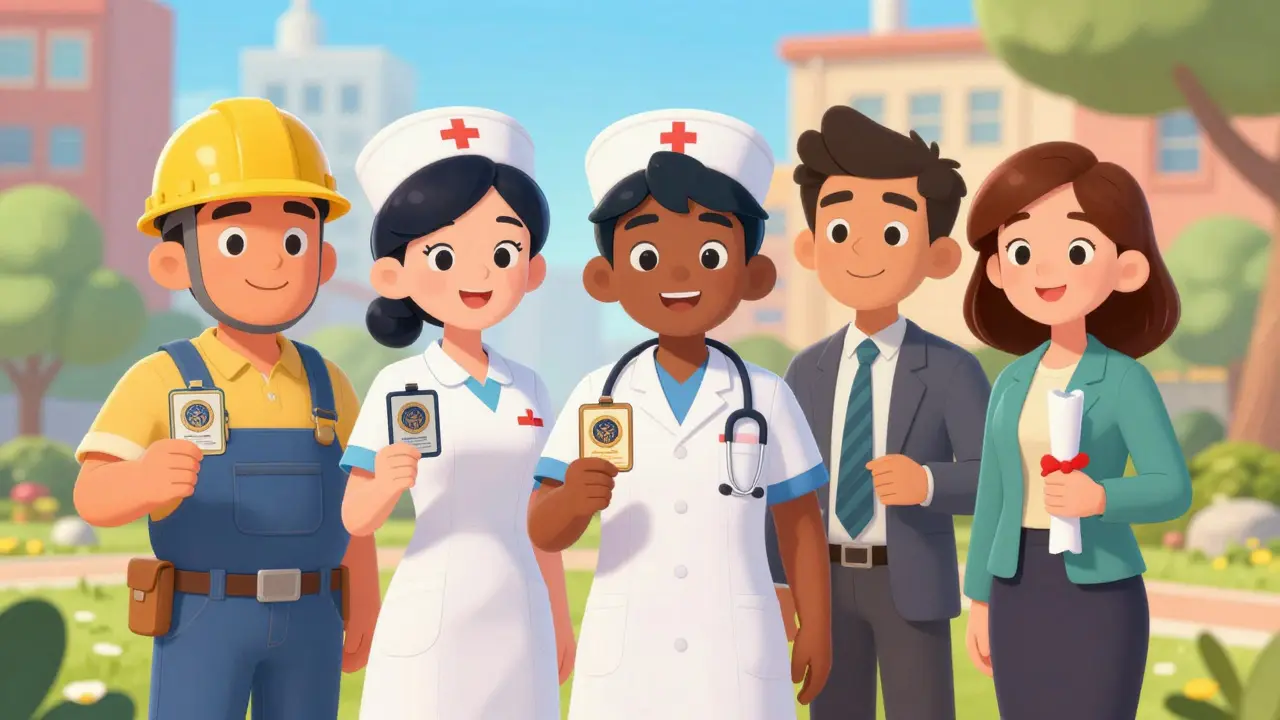
Over 10 million U.S. workers hold government certifications-without them, many jobs simply aren't legal. Think healthcare, construction, or teaching. But how do you know which certifications are real? And why do they matter? Let's cut through the confusion.
What Are Government-Recognized Certifications?
OSHA (Occupational Safety and Health Administration) is a federal agency under the U.S. Department of Labor that sets safety standards for workplaces. Its certifications for construction workers are mandatory in many states.
Government-recognized certifications are credentials approved or regulated by federal or state agencies. Unlike private certifications (which companies may offer), these are legally binding. For example, the Occupational Safety and Health Administration (OSHA) requires construction workers to complete safety training. Without that certification, you can't work on sites. Similarly, each state licenses teachers. If you don't have the state-issued teaching credential, you can't teach in public schools. These certifications exist to protect public safety and ensure professionals meet minimum standards.
Why Government Certifications Matter
Government certifications aren't just paperwork-they're lifelines. In healthcare, nurses must have state licenses to administer medication. Without it, they face fines or jail time. For contractors, OSHA training prevents workplace accidents. The U.S. Bureau of Labor Statistics says construction sites with certified workers have 30% fewer injuries. Employers also rely on these credentials to meet insurance requirements. If your business lacks proper certifications, you could lose contracts or face legal action.
How to Find Legitimate Training Programs
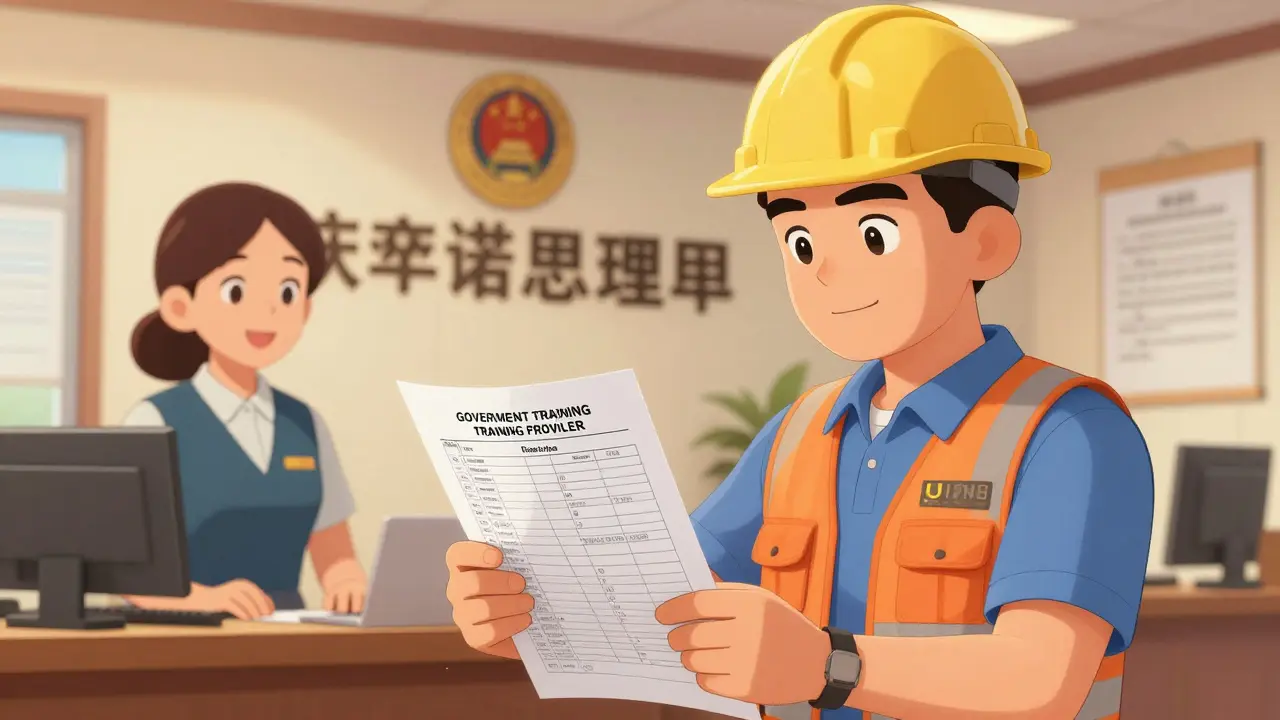
Finding a legitimate program starts with checking official sources. For federal certifications, visit the U.S. Department of Labor's website. For state-specific licenses, go to your state's licensing board. For example, if you're in Texas, the Texas Department of Licensing and Regulation lists all approved training providers. Avoid third-party sites that claim to offer 'government certification'-they're often scams. Instead, search for [state name] + 'professional licensing board'.
| Feature | Government-Recognized | Private Certification |
|---|---|---|
| Legal Authority | Issued or regulated by government agencies | Issued by private companies or professional organizations |
| Recognition | Required by law for certain jobs | Optional for industry standards |
| Verification | Check state licensing board or federal database | Check issuer's website |
| Cost | Varies, often $100-$500 | Often $50-$300 |
| Renewal | Required (e.g., CPA: 40 hours/year) | Varies (some have no renewal) |
Common Government-Recognized Certifications
Here's what real government certifications look like across fields. OSHA 10-hour and 30-hour cards for construction: issued by authorized trainers, not OSHA itself. Certified Public Accountant (CPA): requires state board approval after passing exams. Teaching credentials: each state has its own process-California's Commission on Teacher Credentialing, New York's Department of Education. Commercial driver's licenses (CDL): regulated by the Federal Motor Carrier Safety Administration. These examples show how government oversight ensures quality and safety.
Avoiding Certification Scams
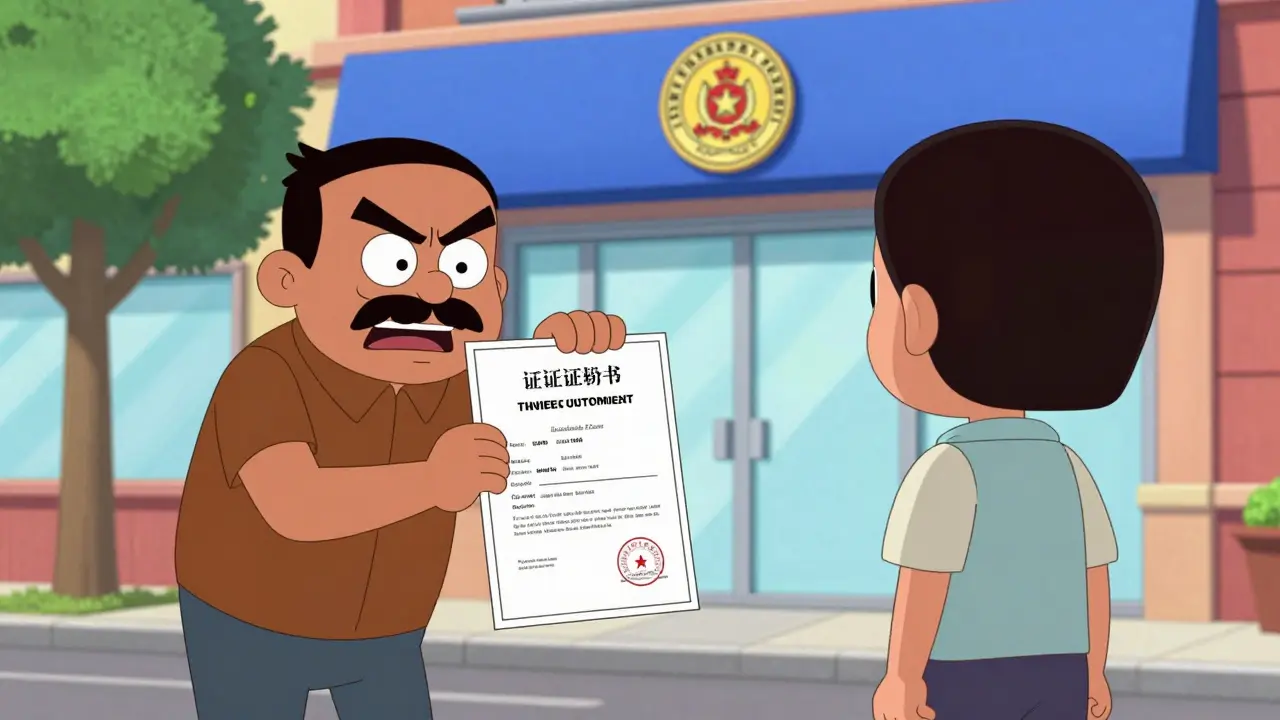
Scammers love targeting people seeking certifications. They promise quick, cheap credentials but deliver nothing. How to avoid them? Always verify the training provider. For OSHA, check the OSHA Training Institute Education Centers list. For CPA, confirm the state board approves the program. If a course costs $50 and claims to be 'government certified', it's likely fake. Legitimate programs often cost hundreds and require exams. Remember: government agencies don't sell certifications directly-they oversee third-party providers.
Steps to Obtain a Government Certification
Getting certified is straightforward. First, identify the exact credential needed for your job. For example, if you're a welder, check if your state requires American Welding Society certification (which is often government-recognized). Next, find an approved training provider. Then, complete the coursework and pass any exams. Finally, maintain your certification through continuing education. OSHA cards expire after five years; CPAs need 40 hours of annual training. Skipping renewal can cost you your license.
Are government certifications valid in all states?
Not always. CPA licenses are state-specific-you must apply in each state where you want to practice. OSHA cards are generally accepted nationwide, but some states like California require additional training. Always check local requirements before starting a program.
How long does it take to get a government-recognized certification?
It varies widely. OSHA 10-hour training takes 10 hours of coursework. CPA exams require 12-18 months of study and testing. Teaching credentials often need a bachelor's degree plus student teaching-about 4-5 years total. Always check the specific requirements for your field and state.
Can I get a government certification online?
Some government certifications can be earned online, but not all. OSHA 10-hour courses are available online through authorized providers. However, hands-on fields like nursing or welding require in-person training. Always verify if online options are approved by the relevant government agency before enrolling.
What happens if my certification expires?
You can't legally work in the role until you renew. Many government certifications require continuing education hours for renewal. For example, CPAs need 40 hours of annual training. If you miss the deadline, you may need to retake exams or pay fines. Always mark renewal dates on your calendar.
How do I verify if a certification program is legitimate?
Check the official government agency website. For OSHA, visit OSHA's training page. For CPA, contact your state's board of accountancy. For teaching licenses, check your state's education department. If the program isn't listed there, it's not legitimate. Never pay for a certification without verifying first.
Ashley Kuehnel
February 5, 2026 AT 23:29Government certifcations are vital for safety and legal work. Always check official sources before paying for training. My cousin got scammed by a fake OSHA cert online-$50 for nothing!
Always verify with your state's licencing board.
Patrick Tiernan
February 7, 2026 AT 11:54Government certifications are just bureaucratic nonsense
Colby Havard
February 8, 2026 AT 18:21The necessity of government-recognized certifications is a topic of profound societal importance. These credentials serve as a bulwark against incompetence and ensure public safety. However, the current system may be overly bureaucratic, creating unnecessary barriers for aspiring professionals.
It is imperative to balance regulatory rigor with accessibility.
Gareth Hobbs
February 10, 2026 AT 01:33Govt certifications? Ha! It's all a conspiracy to control the workforce. They're using 'safety' as an excuse to keep us subservient.
Always check the source-govt agencies are corrupt. They want to take your money and your freedom.
Remember: no one is watching you like they should. The system is rigged.
Zelda Breach
February 10, 2026 AT 13:20Oh, please. 'Govt agencies are corrupt'? That's the most baseless conspiracy theory I've heard. Government certifications exist for a reason-public safety. Without them, unqualified people could kill others.
Your 'conspiracy' nonsense is dangerous. Check the facts before spreading misinformation.
James Winter
February 11, 2026 AT 17:52Government certs are necessary. Without them, jobs aren't safe. Real Americans need these certifications. Stop complaining and get certified. It's simple.
Teja kumar Baliga
February 12, 2026 AT 21:41I agree that certifications are important for safety.
But let's make sure the process is accessible for everyone.
Many people struggle with the cost and time. Maybe more support would help.
We should all work together on this.
Alan Crierie
February 14, 2026 AT 12:34Government certifications are important for safety and standards.
But we should also support those who find the process difficult.
🤝 Let's make sure everyone has access to legitimate training.
Nicholas Zeitler
February 16, 2026 AT 01:31Yes, I agree. It's crucial to have certifications for safety, but we must also ensure that the training is affordable and accessible.
Let's work together to support those who need it most.
Thank you for the insight!
Tiffany Ho
February 16, 2026 AT 04:54Certifications keep us safe and legal. It's important to help others get certified. Let's all work together to make it easier for everyone.
k arnold
February 16, 2026 AT 22:12Oh sure, 'make it easier for everyone'-but then quality goes out the window. You can't just hand out certifications like candy. Some people need to work for it. Lazy thinking.
Patrick Bass
February 18, 2026 AT 04:20Government certifications serve a purpose. However, the system should be streamlined. Proper grammar and clarity are essential in official documents.
Tyler Springall
February 19, 2026 AT 07:51Streamlined? You mean watered down. Government certifications must remain strict. Otherwise, we risk lowering standards. This is not a game; it's about public safety. Your 'streamlined' idea is naive.