Grading and Assessment Policies for Online Programs: A Complete Guide
 Jun, 26 2026
Imagine spending weeks on a final project only to find out the grading criteria changed halfway through the semester. Or worse, submitting an exam that gets flagged by an automated system for 'suspicious behavior' because your cat walked across the keyboard. These aren't just hypothetical nightmares; they are real friction points in online education is a mode of learning delivered via internet-connected devices, allowing students to study remotely without physical classroom attendance. For instructors and administrators, defining clear grading and assessment policies isn't just about bureaucracy-it's the backbone of credibility in a digital environment.
In 2026, with hybrid models becoming the norm rather than the exception, the stakes are higher. Students demand transparency, institutions require compliance with accreditation standards, and educators need tools that measure actual learning, not just test-taking skills under surveillance. This guide breaks down how to build robust, fair, and legally sound assessment frameworks that work for everyone involved.
The Core Components of Fair Grading
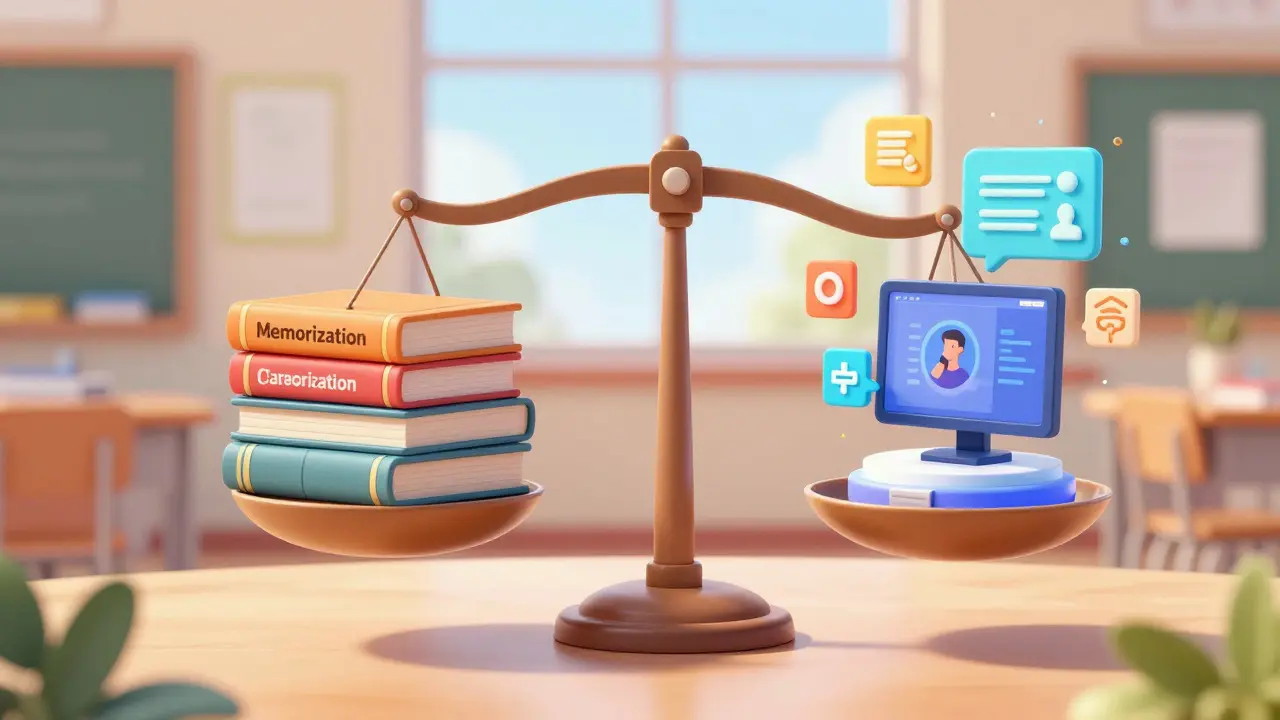
Fairness in online grading starts long before the first quiz is posted. It begins with alignment. If your course outcomes don't match your assessments, you have a broken policy from day one. The most effective programs use backward design: start with what students should be able to do, then create assessments that prove they can do it.
Consider the difference between a multiple-choice quiz and a case study analysis. One tests recall; the other tests application. In an online setting, where cheating is easier but also more detectable, shifting weight toward performance-based tasks reduces anxiety and increases validity. Here’s a simple breakdown of assessment types:
- Formative Assessments: Low-stakes checks like discussion board replies or draft submissions. These help students gauge their understanding without fear of failing.
- Summative Assessments: High-stakes evaluations like final exams or capstone projects. These determine the final grade and must be rigorously defended against integrity breaches.
- Authentic Assessments: Real-world tasks such as creating a marketing plan or coding a functional app. These are harder to cheat on and provide tangible evidence of skill.
When drafting your policy, explicitly state the weight of each category. Don’t leave it vague. Instead of saying "participation counts," specify "weekly forum posts contribute 15% to the final grade." Clarity prevents disputes later.
Maintaining Academic Integrity Without Paranoia
The elephant in the room is cheating. With AI writing assistants and browser-based search engines at our fingertips, traditional essay prompts are vulnerable. However, the solution isn’t necessarily stricter surveillance. It’s smarter design.
Many institutions now rely on proctoring software is digital monitoring tools used during online exams to detect unauthorized behavior through webcam, microphone, and screen activity tracking. Tools like ProctorU or Respondus LockDown Browser record student sessions and flag anomalies. While useful, these tools raise privacy concerns and can disproportionately affect students with limited bandwidth or shared living spaces. A balanced policy acknowledges this tension.
Instead of relying solely on tech, integrate human-centered strategies:
- Open-Book Exams: Design questions that require synthesis, not memorization. If students can look up facts, ask them to analyze conflicting sources.
- Oral Defenses: Require short video recordings where students explain their reasoning. It’s harder to fake understanding verbally.
- Process Portfolios: Grade the journey, not just the destination. Collect drafts, peer feedback, and reflection journals to show growth over time.
Your policy should clearly outline what constitutes plagiarism, contract cheating (paying someone to take a test), and AI misuse. Be specific about consequences. Vague warnings like "violations will be punished" are less effective than stating "first offense results in zero credit and mandatory ethics workshop; second offense leads to expulsion."
Technology and Accessibility in Assessment
Not all students experience online learning the same way. Some have high-speed fiber connections; others rely on spotty mobile data. Your grading policy must account for technical barriers to avoid penalizing students for infrastructure issues beyond their control.
Include a contingency plan for technology failures. What happens if a submission portal crashes five minutes before the deadline? A good policy allows for grace periods-typically 24 hours-for documented technical glitches. Require screenshots or error logs as proof, but don’t make the process overly burdensome.
Accessibility is equally critical. Under laws like the ADA in the United States, educational materials and assessments must be usable by people with disabilities. This means:
- Providing extended time for timed exams.
- Ensuring all multimedia content has captions and transcripts.
- Offering alternative formats for assignments (e.g., audio instead of written essays).
If your LMS (Learning Management System) doesn’t support these features natively, your policy should mandate instructor accommodations. Ignoring accessibility isn’t just unethical; it’s illegal.
| Method | Integrity Risk | Technical Requirement | Best For |
|---|---|---|---|
| Timed Multiple Choice | High | Low | Fact retention |
| Proctored Exam | Medium | High (Webcam/Mic) | Standardized testing |
| Case Study Analysis | Low | Medium | Critical thinking |
| Video Presentation | Very Low | High (Recording) | Communication skills |
Feedback Loops and Grade Appeals
A grade isn’t just a number; it’s communication. In face-to-face classes, students can ask, "Why did I lose points here?" Online, that conversation often disappears into the void. Your policy must establish a structured feedback loop.
Require instructors to provide detailed rubrics for every major assignment. Rubrics break down grading into measurable criteria-like "clarity of argument" or "use of evidence"-so students know exactly where they stand. Generic comments like "good job" or "needs improvement" are useless and invite appeals.
Equally important is the appeal process. Disagreements happen. Maybe an instructor misread a question, or a technical glitch caused a lost submission. Create a clear, step-by-step procedure for contesting grades:
- Student submits a formal request within seven days of grade posting.
- Instructor reviews the work and provides a written justification.
- If unresolved, the case escalates to a department chair or ombudsperson.
- Final decision is binding and documented.
This structure protects both parties. It prevents endless back-and-forth emails while ensuring students feel heard. Transparency builds trust, which is essential when you’re never in the same room.

Legal and Compliance Considerations
Grading policies aren’t just pedagogical choices; they’re legal documents. Institutions must comply with regional regulations regarding data privacy, non-discrimination, and consumer protection. In the U.S., FERPA (Family Educational Rights and Privacy Act) governs how student records are handled. Your policy should explicitly state how grades are stored, who has access, and how long records are retained.
Data privacy extends to assessment tools. If you use third-party apps for quizzes or plagiarism detection, ensure they comply with GDPR (if serving EU students) or CCPA (for California residents). Never store sensitive biometric data (like facial recognition scans from proctoring) without explicit consent and secure encryption.
Additionally, consider equity. Research shows that implicit bias can affect grading, especially in subjective assessments like essays. To mitigate this, some programs use blind grading-where student names are hidden until after the score is assigned. Including this practice in your policy demonstrates a commitment to fairness and reduces liability.
Implementing Consistency Across Courses
One of the biggest challenges in online programs is inconsistency. One professor might allow unlimited retakes on quizzes, while another gives only one chance. This creates confusion and perceptions of unfairness. Institutional policies should set baseline standards that all faculty follow, even if individual courses have variations.
Develop a central "Assessment Handbook" that outlines:
- Minimum response times for grading (e.g., within 10 business days).
- Standardized late-work penalties (e.g., 10% deduction per day).
- Required elements for syllabi (grading scale, contact info, resources).
Train faculty regularly. Technology changes fast, and so do best practices. Offer workshops on designing accessible exams or using new AI detection tools. When instructors feel supported, they’re more likely to adhere to policies consistently.
Finally, gather feedback. At the end of each term, survey students about their assessment experiences. Did they feel prepared? Was the workload manageable? Were the grades fair? Use this data to refine your policies annually. Static policies become obsolete quickly in the dynamic world of online education.
How often should online grading policies be reviewed?
Ideally, every academic year. Technology, student expectations, and legal requirements evolve rapidly. An annual review ensures your policies remain relevant, compliant, and effective.
Is it legal to use AI detectors for grading essays?
It depends on jurisdiction and tool accuracy. Many AI detectors produce false positives, particularly for non-native English speakers. Best practice is to use them as a flagging mechanism, not definitive proof, and always allow students to appeal.
What is the standard late penalty for online assignments?
There is no universal standard, but common practices include a 5-10% deduction per day late, capped at a certain percentage. Some institutions prefer a sliding scale or outright refusal after a set period. Clarity in the syllabus is key.
How can I prevent cheating without invasive proctoring?
Focus on authentic assessment. Use unique prompts, require oral defenses, or assign open-book exams that test application rather than memorization. Building a community of honor also discourages dishonesty.
Do online grades carry the same weight as in-person grades?
Yes, provided the program is accredited and follows rigorous assessment standards. Employers and graduate schools increasingly view online credentials as equivalent, especially from reputable institutions.