Gut Health and Microbiome Course Syllabus: A Complete Curriculum Guide
 Jul, 5 2026
Ever wonder why two people can eat the exact same meal but have completely different energy levels? The answer usually lies in their gut. As interest in Gut Health is the state of the digestive system's microbial ecosystem and its impact on overall wellness explodes, so does the demand for structured education. Whether you are a dietitian looking to update your certification, a wellness coach wanting to offer evidence-based advice, or a curious student, understanding how to build a robust syllabus is key.
This guide breaks down exactly what a comprehensive microbiome education course should look like. We will cover the essential modules, practical assignments, and learning outcomes that turn basic knowledge into actionable expertise. By the end, you’ll have a clear roadmap for creating or selecting a program that truly teaches the science behind the buzzwords.
Why Structure Matters in Microbiome Education
The field of Microbiome Science is the study of communities of microorganisms living in a particular environment, especially the human body moves fast. New studies drop weekly. Without a structured syllabus, learners often get lost in conflicting information about prebiotics, postbiotics, and fermented foods. A good course doesn't just list facts; it builds a framework.
Think of it like building a house. You need a solid foundation before you add the roof. In gut health education, that foundation is basic anatomy and physiology. Without understanding how the stomach acid works or what the small intestine actually does, discussing probiotic strains is meaningless. A well-designed syllabus ensures students master the basics before tackling complex topics like the gut-brain axis or personalized nutrition.
Module 1: Foundations of Digestive Anatomy
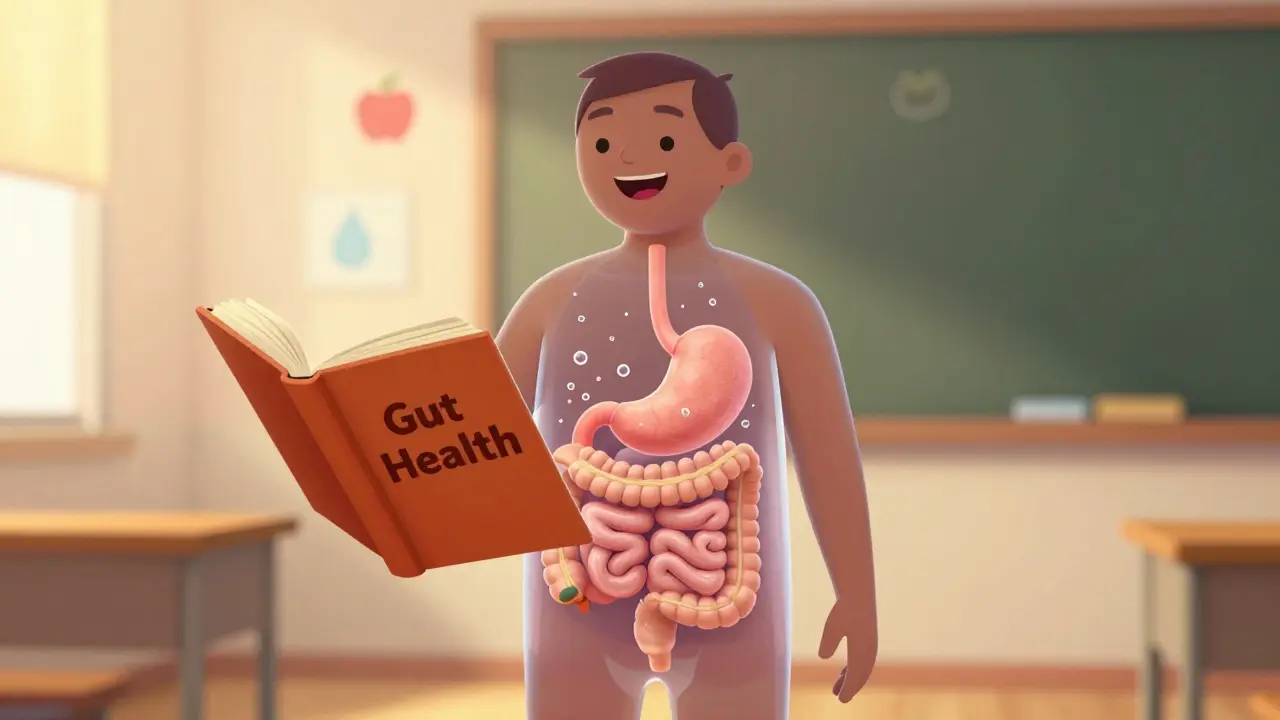
Every serious gut health course must start with the hardware. Students need to know the layout of the gastrointestinal (GI) tract. This module typically covers:
- The Mouth and Esophagus: Where digestion begins mechanically and chemically with saliva and enzymes.
- The Stomach: Understanding gastric acid (HCl) production and its role in killing pathogens.
- The Small Intestine: The primary site for nutrient absorption, featuring the duodenum, jejunum, and ileum.
- The Large Intestine (Colon): Water absorption and the home of the majority of gut bacteria.
A common pitfall here is skipping the immune system connection. About 70% of the body’s immune cells reside in the gut-associated lymphoid tissue (GALT). A strong syllabus links anatomy directly to immunity, showing students *why* a leaky gut might trigger systemic inflammation.
Module 2: Meet the Microbes
Once the anatomy is clear, we introduce the tenants: the microbes. This section defines the Human Microbiome is the collection of all microorganisms, including bacteria, viruses, fungi, and archaea, that live on and inside the human body. It’s crucial to distinguish between these groups.
| Microbe Type | Role in Gut | Key Examples |
|---|---|---|
| Bacteria | Digestion, vitamin synthesis, immune regulation | Lactobacillus, Bifidobacterium, Faecalibacterium prausnitzii |
| Fungi | Maintaining balance; overgrowth causes issues | Candida albicans, Saccharomyces boulardii |
| Viruses | Regulating bacterial populations via bacteriophages | Enteric phages |
| Archaea | Methane production, influencing motility | Methanobrevibacter smithii |
Students learn that not all bacteria are bad. Pathogenic strains like E. coli O157:H7 cause illness, while commensal strains help digest fiber. The concept of "dysbiosis"-an imbalance in microbial diversity-is introduced here as the root of many chronic conditions.
Module 3: Diet and the Microbiome
This is where theory meets practice. How does food change the gut? A robust syllabus dives deep into Prebiotics are non-digestible fibers that serve as food for beneficial gut bacteria versus Probiotics are live microorganisms that provide health benefits when consumed in adequate amounts.
Many courses make the mistake of treating probiotics as a magic bullet. A better approach teaches students to evaluate strain specificity. Taking Lactobacillus rhamnosus GG helps with antibiotic-associated diarrhea, but it might not help with IBS. The syllabus should include case studies comparing high-fiber diets (rich in resistant starches from cooled potatoes or green bananas) against low-fiber Western diets.
Practical assignment idea: Have students track their fiber intake for one week and map it against their reported bloating or energy levels. This connects data to personal experience.
Module 4: The Gut-Brain Axis
You can’t talk about gut health today without mentioning the brain. The Gut-Brain Axis is a bidirectional communication network linking the enteric nervous system of the gut with the central nervous system explains why stress causes stomachaches and why gut changes affect mood.
This module covers the vagus nerve, neurotransmitters like serotonin (90% of which is produced in the gut), and short-chain fatty acids (SCFAs) like butyrate. Butyrate isn’t just fuel for colon cells; it crosses the blood-brain barrier and reduces neuroinflammation. Students learn how dietary interventions can support mental health, bridging the gap between nutrition and psychology.
Module 5: Testing and Personalization
In 2026, at-home stool tests are common. A modern syllabus must address them critically. What do they measure? Usually, they look at diversity scores, pathogen presence, and inflammatory markers like calprotectin.
However, testing has limits. A single snapshot doesn’t show function. Does the bacteria *produce* butyrate, or is it just present? Educators teach students to interpret results cautiously, avoiding fear-mongering. They also explore emerging technologies like metabolomics, which measures what the microbes are actually doing chemically.

Assessment and Learning Outcomes
How do you know if the course worked? Good programs use varied assessments:
- Knowledge Checks: Quizzes on anatomical terms and bacterial functions.
- Case Studies: Analyzing a patient profile with IBS symptoms and designing a dietary intervention plan.
- Research Critique: Reading a recent peer-reviewed paper on probiotics and summarizing its methodology and flaws.
- Final Project: Creating a personalized gut-health protocol for a hypothetical client based on their lifestyle, diet, and stress levels.
These outcomes ensure students don’t just memorize facts but can apply them. For example, a student should be able to explain why someone with Small Intestinal Bacterial Overgrowth (SIBO) needs a different approach than someone with general dysbiosis.
Choosing the Right Course Format
Not all syllabi are created equal. When evaluating a gut health course, look for these red flags:
- No References: Claims backed by "ancient wisdom" alone lack scientific rigor.
- One-Size-Fits-All Protocols: Gut health is highly individual. Courses promising a single cure-all are misleading.
- Outdated Content: Microbiome science changes rapidly. Ensure the material references studies from the last 3-5 years.
Look for courses led by registered dietitians, gastroenterologists, or PhDs in microbiology. Their credentials signal that the content has been vetted by experts who understand both the biology and the clinical applications.
Next Steps for Learners
If you’re ready to dive deeper, start by auditing your current knowledge. Can you name the three main parts of the small intestine? Do you know the difference between a prebiotic and a probiotic? If not, begin with foundational anatomy modules. Once comfortable, move toward specialized topics like the gut-skin axis or microbiome impacts on autoimmune diseases.
Remember, education is a tool. Use it to empower yourself or your clients with clarity, not confusion. The goal isn’t to become obsessed with every bacteria count, but to understand the systems that keep us healthy.
What prerequisites do I need for a gut health course?
Most introductory courses require no prior medical degree. However, having a basic understanding of biology or nutrition helps. Advanced clinical courses may require a background in healthcare or a related field to interpret diagnostic data safely.
How long does it take to complete a microbiome syllabus?
It depends on the depth. A self-paced online module might take 10-15 hours total. A comprehensive certification program could span 8-12 weeks, including readings, videos, and practical assignments.
Is gut health education useful for non-health professionals?
Absolutely. Anyone interested in optimizing their own health, fitness trainers, chefs, and parents benefit from understanding how diet affects digestion and energy. It empowers better daily choices.
Do these courses teach how to treat specific diseases?
Reputable educational courses focus on prevention, support, and lifestyle factors. They do not replace medical treatment. Always consult a physician for diagnosing or treating conditions like Crohn’s disease or ulcerative colitis.
What is the most important topic in a gut health syllabus?
Dietary fiber and prebiotics. Since we cannot easily control our genetics or past antibiotic use, diet is the most powerful lever we have to shift our microbiome composition positively within days.
Stephanie Frank
July 7, 2026 AT 07:26another syllabus for people who think reading about bacteria fixes their lifestyle choices. the problem isn't that we don't know what a prebiotic is, it's that half of you are too lazy to eat vegetables and too scared to take actual probiotics. this guide is just corporate fluff for wellness influencers who want to sell courses instead of giving real advice. stop trying to gamify digestion.
Patrick Dorion
July 8, 2026 AT 14:14it is fascinating how we treat the microbiome as a separate entity rather than an extension of our own biology. the distinction between host and guest is largely semantic at this point. if we view the gut not as a digestive tube but as an external organ located internally, the entire framework of health shifts. we are not individuals; we are ecosystems walking around. this course structure seems to respect that complexity by starting with anatomy before jumping to trends.
Marissa Haque
July 10, 2026 AT 03:43OH MY GOD!!! This is exactly what I needed!!!!!! I have been so confused about all the conflicting info out there!!! Like one day it's fermented foods and the next day it's avoiding them because of histamines!!! The part about strain specificity is SO important!!! Most people just buy random probiotics and wonder why nothing changes!!! Thank you for breaking down the modules!!! It makes so much sense now!!!
Keith Barker
July 10, 2026 AT 14:34the body knows best yet we try to control every variable. eating fiber is simple but we complicate it with metrics and tests. nature does not need a syllabus. we just need to stop poisoning ourselves and let the microbes do their job. simplicity is the ultimate sophistication in health.
Lisa Puster
July 11, 2026 AT 06:12real science doesnt need a fancy syllabus or certification from some online guru. true gut health comes from traditional diets and hard work not from tracking your serotonin levels or buying expensive stool tests. this whole industry is a scam designed to keep weak people dependent on products they dont understand. american culture has forgotten how to eat real food and now we are trying to fix it with data points. pathetic.
Joe Walters
July 12, 2026 AT 10:30i mean look i get the vibe but like honestly who has time for a 12 week course on poop? its kinda wild that we are spending so much money on learning about our guts while ignoring the fact that stress kills us faster than bad bacteria. also the typo in my head says 'pro-biotics' but whatever. just eat dirt maybe? no wait thats gross. anyway great read tho very informative stuff.
Robert Barakat
July 13, 2026 AT 14:53the separation of mind and body is a false dichotomy. when we discuss the gut-brain axis we are merely acknowledging what ancient traditions knew instinctively. the modern obsession with isolating variables ignores the holistic truth. the gut is the seat of intuition. to study it mechanically is to miss its essence entirely.
Michael Richards
July 15, 2026 AT 14:25listen up. most of you are failing because you skip module one. you cannot optimize what you do not understand. if you do not know where the jejunum ends and the ileum begins you are guessing. stop taking shortcuts. discipline in education leads to results in health. do the work or stay sick.
Laura Davis
July 15, 2026 AT 19:03I am so glad someone finally laid this out clearly! We need to stop shaming people for seeking knowledge and start empowering them with facts! The immune system connection is huge and often overlooked! Let's support each other in learning these basics! You got this! Take it one module at a time! Your gut will thank you!
Lisa Nally
July 16, 2026 AT 04:07From a clinical perspective, the emphasis on metabolomics over mere taxonomic classification is critical. Most consumers are obsessed with diversity scores which are statistically noisy and clinically irrelevant without functional context. The inclusion of GALT physiology in Module 1 is non-negotiable for any rigorous curriculum. Without understanding mucosal immunity, interventions are merely shotguns in the dark. This syllabus appears to mitigate the common pedagogical error of prioritizing commercial probiotic marketing over physiological mechanism.