How to Build Employer Partnerships for Certification Adoption
 Jun, 6 2026
Most professional certifications sit on a shelf. You spend hundreds of dollars and dozens of hours studying, only to realize that hiring managers barely know the acronym. The problem isn’t your effort; it’s the disconnect between credential providers and the people who actually hire. If you want your certification to matter, you need employers to care about it. Building employer partnerships is the bridge between a piece of paper and a paycheck.
This shift is happening now. By 2026, more than half of all entry-level jobs require some form of post-secondary credential, but traditional degrees are becoming less relevant for specific technical roles. Employers are desperate for verified skills. They don't have time to test every candidate from scratch. A well-partnered certification acts as a pre-screening tool, saving them money and reducing risk. For certification bodies, this partnership model transforms a passive product into an active talent pipeline.
The Business Case for Employer Alignment
Why do companies ignore most certifications? Because they don’t solve a business problem. When you design a certification in a vacuum, you’re guessing what skills are valuable. When you partner with employers, you’re building based on real data. This alignment creates a feedback loop that benefits everyone involved.
For the employer, the value is clear: reduced recruitment costs. According to recent workforce studies, the average cost to fill a mid-level tech role can exceed $4,000. If a certification guarantees a baseline of competency, that cost drops significantly. For the learner, the value is employability. A certification backed by a consortium of major employers carries weight because those employers have signed off on its relevance. It’s not just a test; it’s a signal.
Consider the difference between a generic "Project Management" course and one co-designed with firms like Deloitte or Accenture. The latter includes case studies from actual client engagements, uses terminology that matches internal job descriptions, and tests scenarios that employees face daily. That specificity is what drives adoption. People don’t buy certificates; they buy career insurance.
Identifying the Right Industry Partners
Not all employers are created equal when it comes to partnerships. You need to target organizations that are actively hiring for the skills your certification covers. Start by mapping the ecosystem. Who are the top recruiters in this niche? Who publishes the job postings that mention these specific skills?
Look for three types of partners:
- High-Volume Recruiters: Large corporations or staffing agencies that hire frequently. They need scalable solutions for screening candidates.
- Industry Associations: Groups like the Project Management Institute (PMI) or CompTIA. These bodies already have trust and can amplify your reach.
- Emerging Tech Firms: Startups and scale-ups often lack formal HR structures and rely heavily on skill-based hiring. They are more agile and open to new credentialing models.
Avoid partnering with companies that have stagnant hiring needs. If a sector is shrinking, their interest in upskilling workers will be low. Focus on growth industries-cybersecurity, data analytics, renewable energy, and healthcare IT are currently seeing massive demand outstripping supply. In these fields, employers are willing to collaborate because they literally cannot find enough qualified staff.
Co-Creating Curriculum with Stakeholders
Once you’ve identified potential partners, the next step is collaboration. This isn’t about asking for a logo placement; it’s about inviting them into the design process. Create an advisory board composed of hiring managers, senior engineers, or department heads from partner organizations. Their job is to review the learning objectives and assessment criteria.
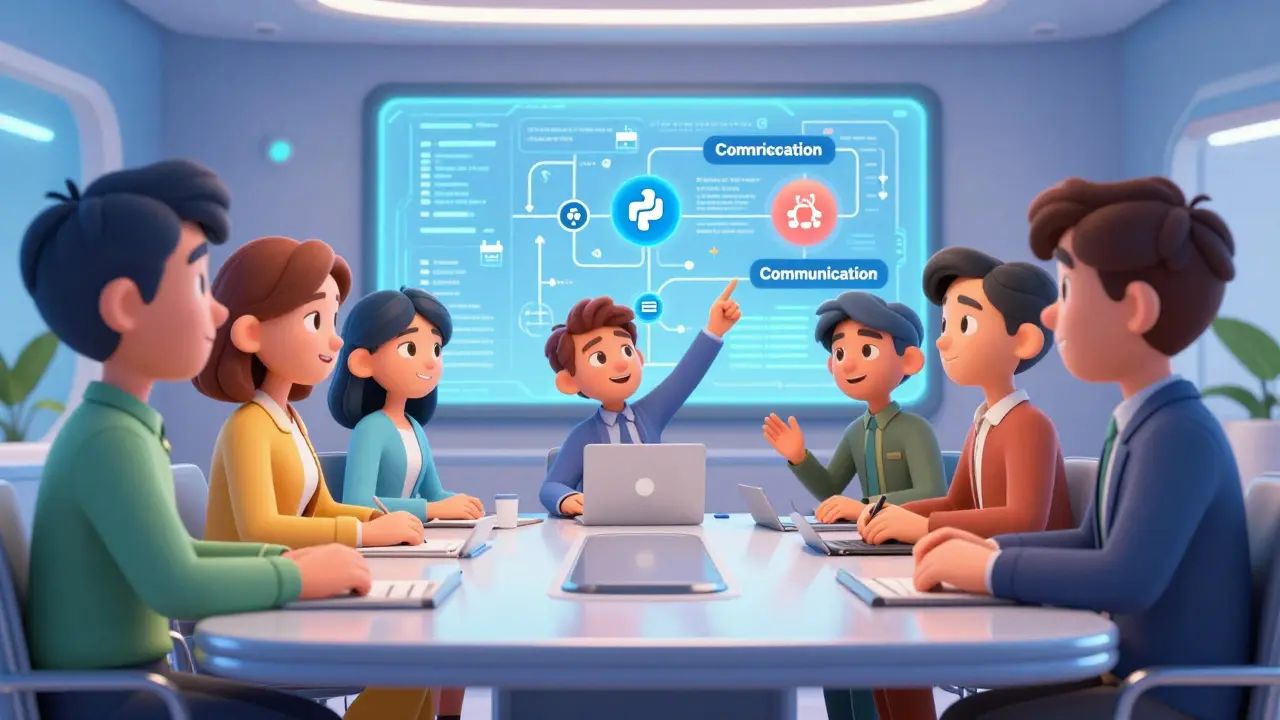
Ask them direct questions: "What does a junior employee look like on day one?" "What mistakes do new hires typically make?" "Which tools do you use daily?" Use their answers to shape the curriculum. If they say Python is essential, ensure the exam tests practical coding ability, not just theoretical knowledge. If they emphasize communication, include scenario-based questions that assess soft skills.
This approach ensures the certification reflects current industry standards. Technology changes fast. A curriculum designed two years ago might already be obsolete. With an active advisory board, you can update content quarterly or even monthly. This agility keeps the certification relevant and maintains employer confidence. When employers see their input reflected in the material, they become advocates rather than passive observers.
Incentivizing Participation and Recognition
Partnerships require mutual benefit. Employers won’t engage unless there’s a clear return on investment. One effective strategy is offering exclusive access to certified candidates. Create a talent pool or job board where only certified individuals apply. Charge a subscription fee or offer free access in exchange for other commitments, such as providing internship opportunities.
Another incentive is recognition. Feature partner logos prominently on your website, marketing materials, and certificate itself. Offer badges or digital credentials that employees can display on LinkedIn. Companies love showing they invest in professional development. Publicly acknowledging their partnership enhances their employer brand.
You can also provide discounted rates for their employees. If a company sends ten staff members to get certified, offer a bulk discount. This lowers the barrier to entry and encourages widespread adoption within the organization. Over time, this builds a culture of continuous learning, which benefits both the employer and the certification body.
| Model Type | Primary Benefit | Best For | Risk Level |
|---|---|---|---|
| Advisory Board | Curriculum Relevance | New Certifications | Low |
| Talent Pipeline | Hiring Efficiency | High-Demand Skills | Medium |
| Corporate Discount | Volume Adoption | Established Programs | Low |
| Co-Branding | Credibility Boost | Niche Industries | High |

Measuring Success and Iterating
How do you know if your partnerships are working? Track specific metrics. Monitor the employment rate of certified candidates six months after completion. Survey employers to ask if they found the certification useful in hiring decisions. Look at retention rates-are certified employees staying longer?
If the numbers are flat, dig deeper. Are the skills tested matching the job requirements? Is the marketing reaching the right audience? Use A/B testing on your messaging. Try different value propositions for different partner segments. Maybe one group cares about speed-to-hire, while another cares about diversity hiring.
Regularly revisit your advisory board. Share the data with them. Show them how many of their peers are using the certification. Celebrate successes together. If a partner company hires five certified candidates and sees improved performance, highlight that case study. Social proof is powerful. Other employers will follow suit when they see tangible results.
Overcoming Common Barriers
Building partnerships takes time and persistence. Expect rejection. Many HR departments are overwhelmed and hesitant to commit to new initiatives. To overcome this, start small. Offer a pilot program with no strings attached. Let them test the waters before signing a long-term agreement.
Another barrier is skepticism. Some employers view certifications as vanity projects. Combat this by focusing on outcomes, not inputs. Don’t talk about hours of study; talk about reduced onboarding time. Provide evidence from similar industries. Reference studies showing the correlation between specific credentials and job performance.
Legal and compliance issues can also slow things down. Ensure your partnership agreements clearly define intellectual property rights, data privacy obligations, and liability limits. Work with legal counsel early to avoid surprises later. Transparency builds trust, which is the foundation of any successful partnership.
How long does it take to build an employer partnership?
It typically takes 3 to 6 months to establish a meaningful partnership. Initial outreach and meetings may happen quickly, but aligning on curriculum details, legal agreements, and launch timelines requires careful coordination. Start early and maintain regular communication to keep momentum.
What should I offer employers in exchange for their participation?
Offer value that solves their pain points. This could include access to a vetted talent pool, discounted training for their employees, public recognition through co-branding, or insights into emerging skill trends. Tailor the offer to each company’s specific needs.
Can small businesses benefit from employer partnerships?
Yes, absolutely. Small businesses often have more flexible hiring processes and are eager to find skilled workers without extensive recruitment budgets. Partnering with local firms or niche industry players can create strong, loyal relationships that drive steady adoption.
How do I measure the ROI of employer partnerships?
Track metrics such as the number of hires from certified candidates, reduction in time-to-fill positions, employee retention rates, and satisfaction scores from both employers and learners. Regular surveys and data analysis help quantify the impact.
What if an employer wants to change the certification content?
Listen to their feedback but balance it with broader industry standards. An advisory board helps aggregate diverse perspectives. If multiple partners request similar changes, consider updating the curriculum. Maintain integrity by ensuring changes align with overall learning objectives.
Laura Davis
June 7, 2026 AT 15:41Oh my gosh, this is exactly what I have been screaming about for YEARS!!! Finally someone gets it!! The disconnect between HR and actual hiring managers is absolutely insane and it needs to stop RIGHT NOW! I am so tired of seeing people with these fancy certifications that mean absolutely NOTHING to the people who actually do the work. It is literally a waste of money and time if no one cares about the acronym! We need to bridge that gap immediately because the current system is broken beyond repair!
Keith Barker
June 9, 2026 AT 09:19the value of a credential is not intrinsic but relational
Lisa Puster
June 10, 2026 AT 00:56another american take on how to fix everything by partnering with more corporations because obviously that works out so well for everyone else right? typical. you think just because you get deloitte to nod at your test it suddenly has merit? please. most of these certifications are vanity projects designed to line the pockets of edtech scammers while real skills are ignored. employers dont care about your badge they care if you can do the job without holding their hand all day. stop trying to sell snake oil as career insurance.
Joe Walters
June 11, 2026 AT 01:26honestly this is such a copout article like yeah sure partner with employers but good luck getting any of those suits to actually read your email let alone sign off on curriculum changes lol i tried pitching a cybersecurity cert to three major banks last year and got ghosted every single time because their internal politics are a nightmare and nobody wants to take responsibility for endorsing an external vendor its just wishful thinking wrapped in corporate buzzwords
Michael Richards
June 12, 2026 AT 00:41You are missing the fundamental point here which is that certification bodies are failing because they refuse to adapt to market realities. Stop whining about ghosting and start delivering undeniable value. If your curriculum is obsolete before you even print the certificates then you deserve to be ignored. The solution is not to complain about HR departments being overwhelmed but to provide them with a turnkey solution that reduces their workload significantly. If you cannot articulate the ROI in terms of reduced time-to-fill then you are not ready to talk business. Get your act together or get out of the way.
Lisa Nally
June 12, 2026 AT 16:08I must interject with a rather significant observation regarding the pedagogical framework implied here. The notion that co-creation with stakeholders inherently leads to superior learning outcomes is a reductive oversimplification of complex educational dynamics. While industry alignment is certainly beneficial, we must consider the potential for curricular drift where immediate operational needs overshadow foundational theoretical competencies. Furthermore, the reliance on advisory boards composed of senior engineers often results in a bias towards incumbent technologies rather than emerging paradigms. One must question whether the 'agility' mentioned truly serves the long-term professional development of the learner or merely the short-term staffing requirements of the corporation. It is a delicate balance between vocational training and holistic education that few organizations manage to strike effectively without compromising academic integrity.
Edward Gilbreath
June 13, 2026 AT 23:26its all a scam to keep us busy while they make money. the whole certification industry is rigged by big tech to control the narrative on what skills are valuable. they want you to pay for tests that change every six months so you never catch up. just learn on your own and build a portfolio. nobody cares about your piece of paper anyway.
kimberly de Bruin
June 15, 2026 AT 01:32perhaps the issue lies not in the partnership model itself but in our collective misunderstanding of what constitutes legitimate knowledge validation in a digital age
Edward Nigma
June 15, 2026 AT 04:25actually this approach is fundamentally flawed because it assumes that employer preferences are static and universally applicable which they are not. furthermore the idea that small businesses benefit equally is laughable since they lack the resources to engage in such partnerships meaningfully. the entire premise relies on a level of corporate cooperation that simply does not exist in reality. most companies would rather hire underqualified candidates and train them internally than deal with the bureaucratic nightmare of third-party certification vendors. it is a pipe dream built on sand.
Robert Barakat
June 17, 2026 AT 01:44one might ponder whether the pursuit of external validation through certification is merely a symptom of a deeper societal anxiety regarding professional identity and worth in an increasingly precarious labor market
Marissa Haque
June 18, 2026 AT 17:26Wait wait wait!!! Are we really just going to ignore the part about measuring success?! That table was SO helpful!!! I literally saved it to my phone already!!! And the part about legal compliance?? Oh my god yes!!! So many people forget that and then get sued or something terrible!!! This article is basically a lifesaver for anyone trying to navigate this crazy world of professional development!!! Thank you so much for writing this because it makes me feel so much better about the future of hiring practices!!! Everyone should read this right now!!!