How to Create Credential Requirements and Assessments for Courses
 Feb, 25 2026
When you design a course, the real test isn’t whether students finish it - it’s whether they can prove they learned something meaningful. That’s where credential requirements and assessments come in. Too many courses hand out certificates like party favors, with no real standard behind them. But if you want your course to carry weight - whether for employers, institutions, or learners themselves - you need to build assessments that actually measure competence.
Start with What Learners Should Be Able to Do
Before you write a single quiz question or design a project, ask: what should learners be able to do after completing this course? This isn’t about memorizing facts. It’s about skills. Can they configure a firewall? Can they write a clear business proposal? Can they diagnose a common software bug?
These are called learning outcomes. They must be specific, observable, and measurable. Avoid vague phrases like "understand cybersecurity" or "learn project management." Instead, say: "Learners will identify three common attack vectors in a network diagram" or "Learners will create a Gantt chart with realistic deadlines and resource allocation."
Each outcome becomes the backbone of your assessment. If you can’t measure it, you can’t validate it. And if you can’t validate it, your credential doesn’t mean anything.
Match Assessments to the Skill Level
Not all skills are created equal. Some need simple recall. Others demand real-world application. Your assessment type should match the complexity of the outcome.
For basic knowledge - like naming software licenses or defining key terms - multiple-choice or true/false questions work fine. But if you want learners to demonstrate problem-solving, you need something deeper.
Here’s how to align assessment methods with skill depth:
- Recall (remember facts): Quizzes, flashcards, matching exercises
- Application (use knowledge in context): Case studies, simulations, short-answer scenarios
- Analysis (break down complex problems): Peer reviews, diagnostic tasks, error identification
- Creation (build something new): Capstone projects, portfolios, live demos
For example, a course on Excel for business analysts shouldn’t just ask, "What does VLOOKUP do?" It should give learners a messy spreadsheet and ask them to clean it, link data, and generate a summary report - then submit it for review.
Design Assessments That Can’t Be Gamed
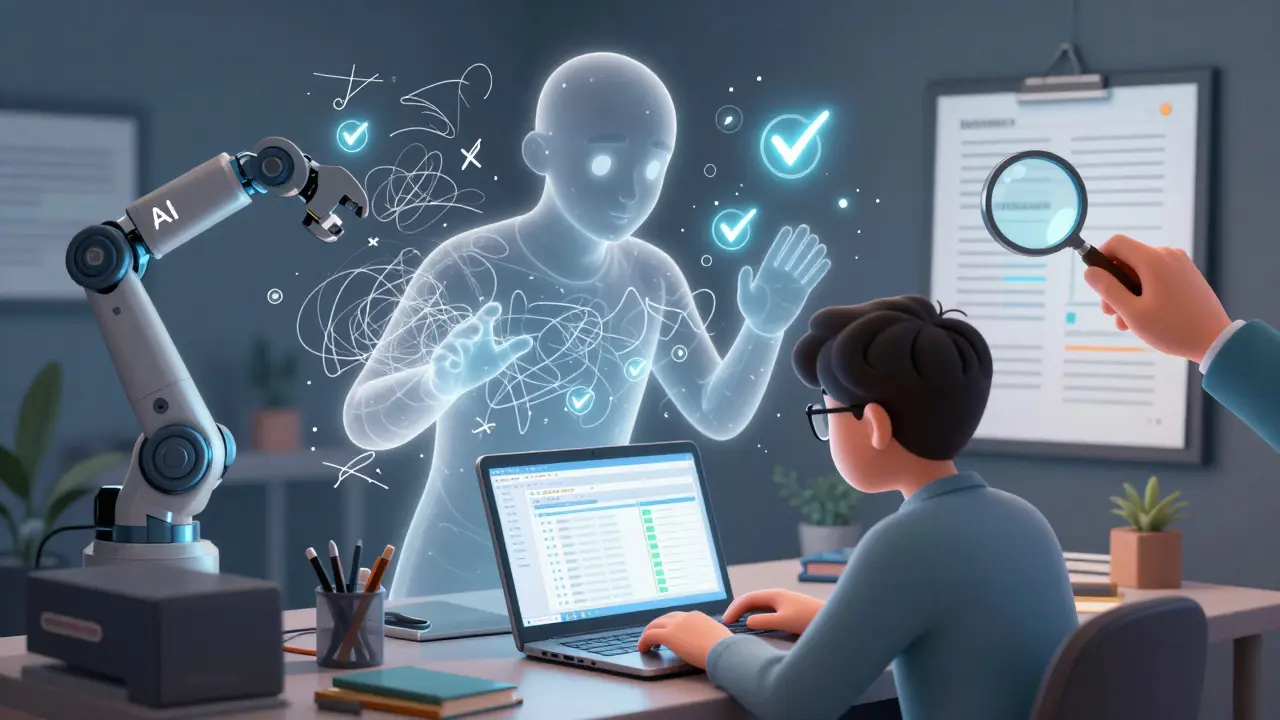
One of the biggest problems with online credentials is cheating. Learners use AI tools, copy-paste answers, or pay someone else to complete assignments. If your assessment is easy to fake, your credential loses value.
Here’s how to make assessments harder to cheat:
- Use randomized questions: Change the order, values, or context so answers can’t be reused
- Require timed, proctored tasks: Especially for high-stakes credentials
- Ask for process, not just product: "Show your steps" or "Explain why you chose this approach"
- Use open-ended, personalized prompts: "Based on your job role, describe how you’d apply this technique"
- Require submissions with timestamps and version history: Especially for coding, design, or writing tasks
Some platforms let you track cursor movement or require video submissions. These aren’t perfect, but they add friction - and friction deters dishonesty.
Set Clear Passing Standards
Passing a course shouldn’t mean "you showed up." It should mean "you met a standard."
Define what "competent" looks like. Is it 80% correct? Is it completing three out of five project milestones? Is it receiving positive feedback from two industry reviewers?
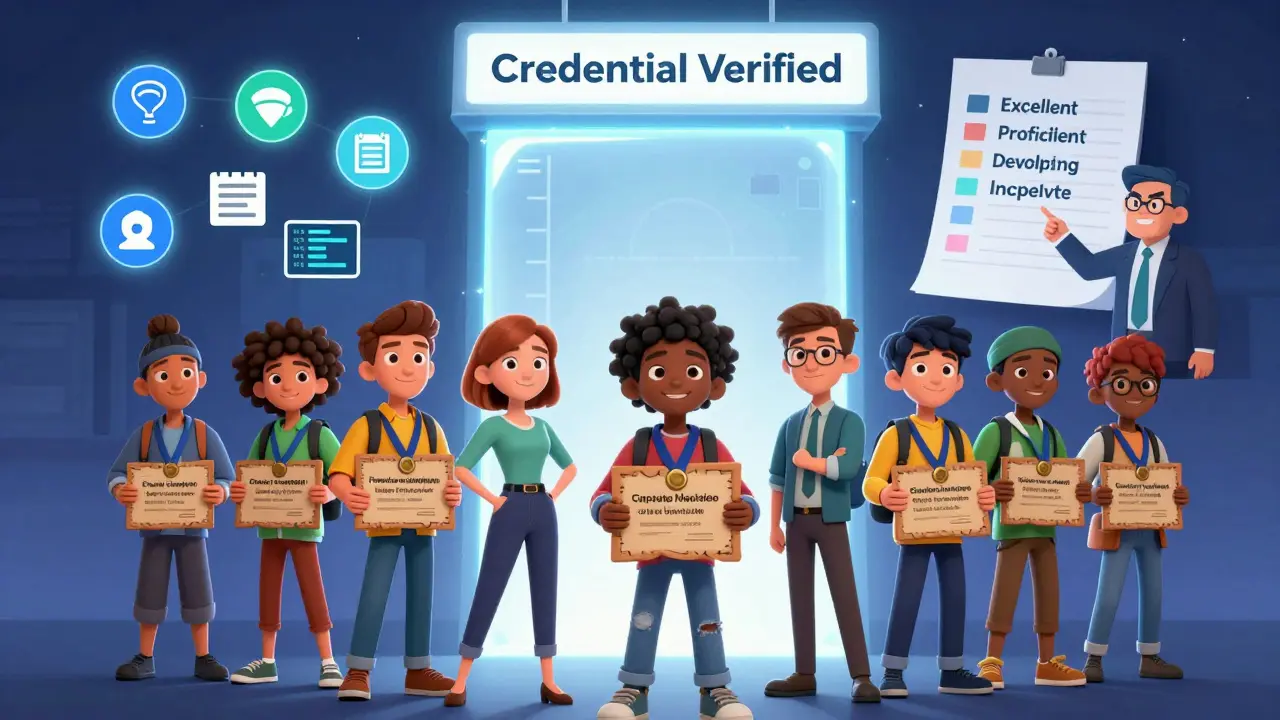
Use a rubric. It’s not just for teachers - it’s for learners too. A good rubric breaks down each assessment into clear criteria. For example:
| Criteria | Excellent (4) | Proficient (3) | Developing (2) | Incomplete (1) |
|---|---|---|---|---|
| Accuracy of Data Analysis | All calculations correct, insights clearly explained | Minor errors, but conclusions still valid | Significant errors, but effort is visible | Incorrect methods or no analysis provided |
| Clarity of Presentation | Logical flow, professional format, no jargon | Clear but includes minor formatting issues | Confusing structure, hard to follow | Disorganized or missing key sections |
| Real-World Relevance | Directly applies to job role, includes industry context | Applies to general scenario | Theoretical, no practical connection | No attempt to connect to real use case |
When learners see this before they start, they know exactly what’s expected. And when they submit, evaluators use the same standard. No guesswork. No favoritism.
Link Credentials to Real-World Validation
A certificate that says "Completed Python Course" means little. A credential that says "Completed Python Course - Verified by Industry Reviewer" means a lot.
Partner with employers, professional associations, or certification bodies. Let them help design the assessment. Let them review final projects. Let them endorse the credential.
For example, a digital marketing course could require learners to run a $50 Google Ads campaign and submit performance data. If the campaign meets a minimum ROI threshold (say, 3:1), the learner earns a badge co-branded with Google Skillshop.
This isn’t just about credibility - it’s about alignment. Employers hire based on outcomes, not course titles. Your credential should mirror what they’re looking for.
Use Technology to Automate, Not Replace
You don’t need to grade every project by hand. But you also shouldn’t hand everything off to AI.
Use automation for routine checks: code syntax, spelling, file formats, or quiz scoring. Use human review for judgment calls: creativity, communication, problem-solving depth.
For example, a coding course can use automated testing to check if a program runs and passes unit tests. But a human reviewer should assess whether the code is clean, well-documented, and scalable - things machines can’t judge well.
Tools like GitHub, LTI integrations, or learning record stores (LRS) can track progress and store evidence. But the final decision - whether someone earns the credential - should still involve human judgment.
Keep It Transparent and Verifiable
Anyone who sees your credential should be able to verify it. That means:
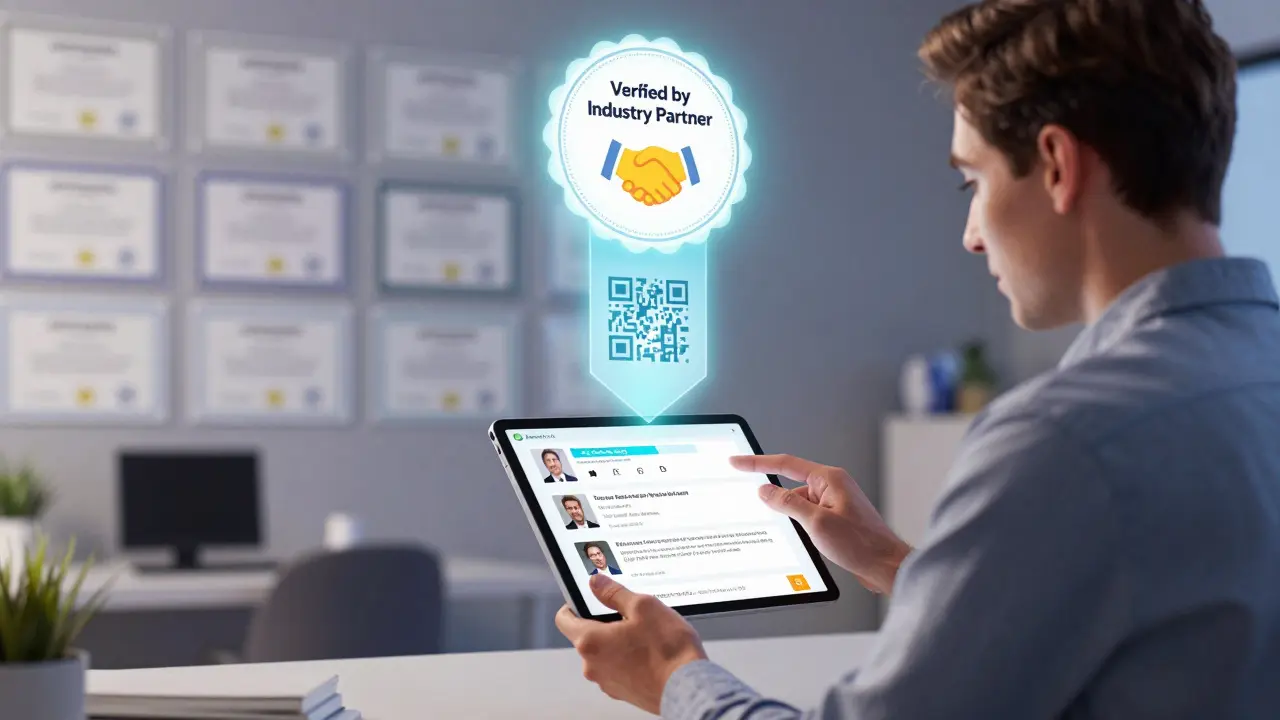
- Providing a unique ID or digital badge with a public URL
- Linking the credential to the exact assessment completed
- Stating the passing criteria clearly
- Allowing third parties (employers, schools) to validate without asking you
Platforms like Credly or Badgr make this easy. But even a simple PDF with a QR code linking to a verification page works. The key is: if someone doubts it, they can check.
Imagine a hiring manager sees a candidate’s credential. They click the link. They see the project, the rubric score, the reviewer’s note. That’s not a piece of paper. That’s proof.
Test and Improve
Your first version won’t be perfect. That’s okay.
Track completion rates, pass rates, and feedback. Ask learners: "Did this assessment truly reflect what you learned?" Ask employers: "Would you hire someone with this credential?"
Use that data. If 70% of learners fail the final project, maybe the task is too vague. If employers say they don’t trust the badge, maybe the assessment doesn’t match real work.
Update your assessments every 6-12 months. Remove outdated tools. Add new skills. Remove fluff. Keep it sharp.
Why This Matters
Credentials are the currency of learning. If yours are weak, learners won’t trust them. Employers won’t value them. And your course won’t stand out.
But if you build assessments that are fair, measurable, and tied to real skills - your credential becomes a signal. A signal that says: this person didn’t just click through. They proved they can do the work.
What’s the difference between a course completion certificate and a credential?
A completion certificate just says someone finished the course. A credential says they met a defined standard of competence. Credentials require assessments, clear criteria, and verification. Completion certificates often don’t.
Can I use AI to grade my assessments?
You can use AI for basic checks - like grammar, code syntax, or quiz scoring. But for anything that requires judgment - creativity, communication, problem-solving - you need human reviewers. AI can’t reliably tell if someone truly understands a concept or just copied a good answer.
How do I prevent learners from cheating on projects?
Require personalized, context-specific work. Instead of "Write an essay on climate change," ask "Explain how climate policy affects your local industry." Use randomized data, timed submissions, and require process documentation. Add peer reviews and video explanations to increase authenticity.
Should I charge extra for verified credentials?
It depends. If your credential requires human review, proctoring, or industry validation, then yes - the extra cost covers the verification process. But if you’re just adding a PDF, don’t charge more. Learners can spot empty value. Charge for real effort, not just branding.
What’s the minimum standard for a credible credential?
Three things: clear learning outcomes, a measurable assessment tied to those outcomes, and a way to verify the result. If you can’t answer "How do we know they learned this?" with a specific example, your credential isn’t credible.
Amy P
February 26, 2026 AT 11:29Ashley Kuehnel
February 27, 2026 AT 06:44adam smith
March 1, 2026 AT 06:10Mongezi Mkhwanazi
March 2, 2026 AT 04:14Teja kumar Baliga
March 3, 2026 AT 11:06k arnold
March 4, 2026 AT 20:07Tiffany Ho
March 5, 2026 AT 10:05michael Melanson
March 5, 2026 AT 18:10lucia burton
March 6, 2026 AT 14:17Denise Young
March 8, 2026 AT 06:29Sam Rittenhouse
March 9, 2026 AT 17:07Peter Reynolds
March 11, 2026 AT 16:20Fred Edwords
March 12, 2026 AT 22:59