How to Price Your Online Course for Maximum Profitability
 Aug, 24 2026
You’ve spent months building the ultimate guide, recording high-quality video lessons, and creating downloadable resources. But when you hit “publish,” a cold sweat breaks out: what do you charge? If you set the price too low, you signal that your content is worth less than it actually is. If you set it too high, your sales funnel dries up. The sweet spot isn’t about guessing; it’s about understanding the psychology of your buyer and the hard data behind your production costs.
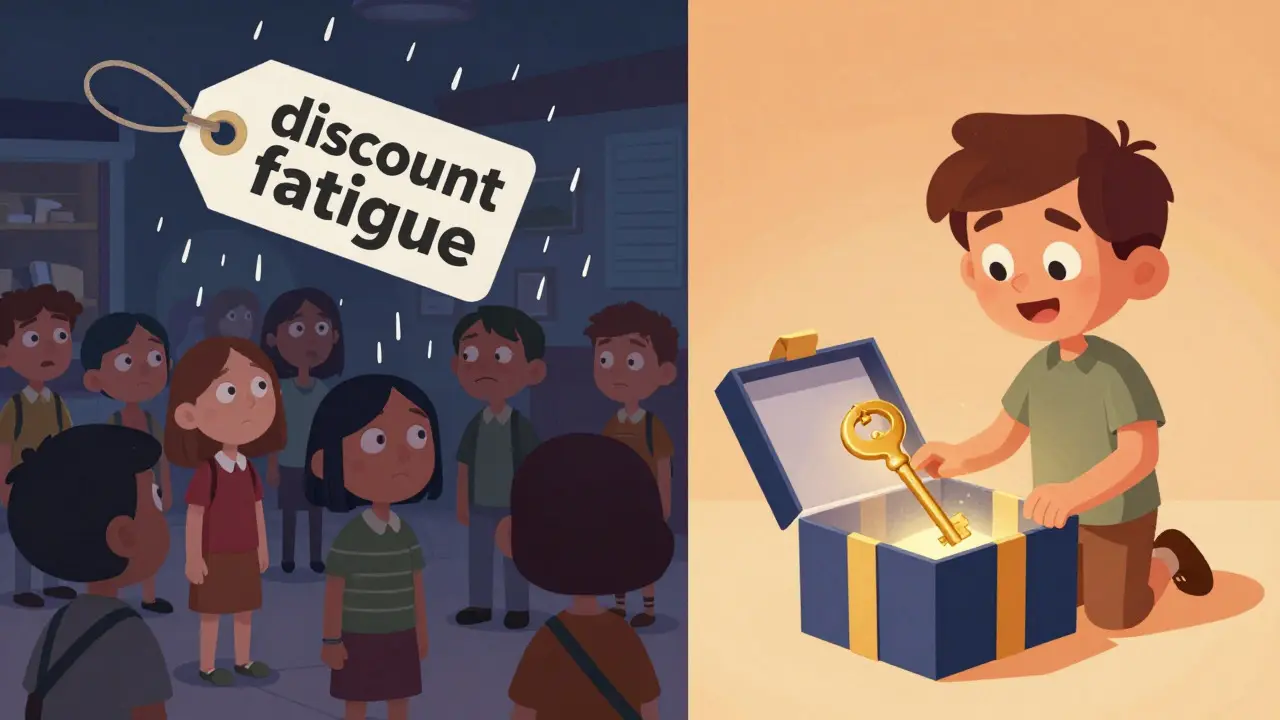
Most creators make the mistake of pricing based on what they *feel* like charging or simply copying their competitors. That approach leaves money on the table or burns out your audience with discount fatigue. To maximize profitability, you need a strategy that balances perceived value, market positioning, and actual revenue per student. This guide breaks down the exact frameworks, psychological triggers, and calculation methods to help you find that number with confidence.
The Core Components of Course Pricing
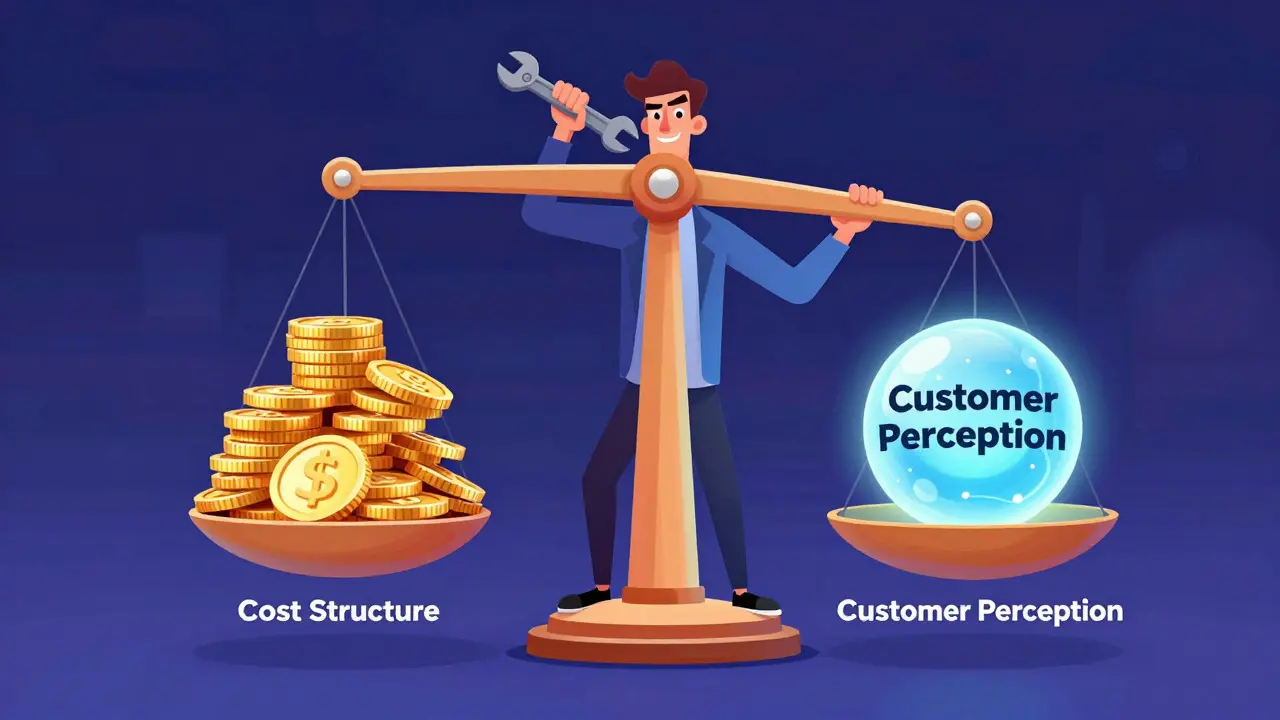
Before you pick a number, you need to understand what makes up the value equation. Pricing isn't just about covering your expenses; it's about capturing the value you deliver. There are three main pillars supporting any successful price point: cost structure, competitor landscape, and customer perception.
Cost Structure is the floor of your pricing. It includes direct costs like hosting fees, payment processing charges (typically 2.9% + $0.30 per transaction), and marketing spend. Indirect costs include your time, which many creators undervalue. If you spend 50 hours creating a course and your hourly rate is $50, your baseline investment is already $2,500. You don't need to recoup this immediately, but it sets a minimum threshold for sustainability.
Competitor Landscape provides context. Are you entering a saturated market where everyone sells $19 templates, or a niche B2B space where executives pay $2,000 for specialized training? Look at the top three competitors in your specific niche. Don't just look at their price; look at their packaging. Do they offer lifetime access? Certification? Community support? These features justify higher price points.
Customer Perception is the ceiling. How much is your solution worth to the student? If your course helps a freelancer land a $5,000 client, a $500 price tag feels like a bargain. If it helps a hobbyist learn basic watercolor painting, $500 might feel steep. The gap between these two perceptions is where your pricing strategy lives.
Choosing Your Pricing Model
Not all courses are created equal, and different business goals require different pricing structures. Here are the four most common models and when to use them.
- One-Time Purchase: Best for evergreen content with clear outcomes. It creates immediate cash flow but requires constant new lead generation to maintain revenue. Ideal for skill-based courses like coding or design.
- Subscription/Membership: Best for ongoing education, community-driven learning, or rapidly changing topics like digital marketing trends. It provides predictable recurring revenue (MRR) but requires consistent content updates to retain members.
- Tiered Pricing: Offers multiple entry points (e.g., Basic, Pro, Premium). This leverages the "middle option" bias, where buyers tend to choose the middle tier even if the premium option offers better value. Great for maximizing average order value.
- Freemium/Lead Magnet: A free mini-course or audit that upsells into a paid program. High volume, low conversion rate, but excellent for building an email list and establishing trust before asking for payment.
The Psychology of Price Anchoring
Humans don't evaluate prices in isolation; we evaluate them relative to other numbers. This is called Price Anchoring. When you present a high price first, subsequent lower prices seem reasonable by comparison.
For example, if you sell a course for $297, it stands alone. But if you show a "Workshop Bundle" for $497 and then your standard course for $297, the $297 option suddenly looks like a smart deal. You can also anchor against the cost of failure. If hiring a consultant costs $5,000 and your course costs $500, you’re not selling a course; you’re selling a 90% discount on professional expertise.
Another powerful tactic is Charm Pricing. Ending prices in 9 (like $499 instead of $500) subtly signals a bargain to the subconscious mind. However, for high-ticket items over $1,000, round numbers often convey more prestige and simplicity. A $2,000 executive coaching package feels more premium than a $1,997 one.
Calculating Your Break-Even Point
Profitability isn't just about revenue; it's about margin. You need to know exactly how many students you need to sell to cover your fixed and variable costs. Let’s break down the math using a realistic scenario.
Imagine you spend $1,000 on a course creation tool and $500 on video editing software for a project. Your monthly hosting fee is $50. Your goal is to earn $5,000 profit in the first month after launch.
- Total Fixed Costs: $1,000 (tools) + $500 (editing) = $1,500.
- Variable Costs per Student: Payment processing is roughly 3%. If you charge $200, the fee is $6. Hosting bandwidth is negligible for digital goods, so let's assume $0. Total variable cost per student is ~$6.
- Target Profit: $5,000.
- Required Revenue: Fixed Costs ($1,500) + Target Profit ($5,000) = $6,500.
- Net Revenue per Student: Price ($200) - Variable Cost ($6) = $194.
- Students Needed: $6,500 / $194 ≈ 34 students.
If you only have an email list of 1,000 subscribers, you need a 3.4% conversion rate to hit your target. Industry standards for warm lists range from 2% to 5%. If your list is smaller, say 500 people, you’d need a 6.8% conversion rate, which is aggressive. In that case, raising the price to $300 reduces the required student count to roughly 22, making the goal more achievable while increasing total revenue.
Strategic Discounts and Launch Windows
Discounts are a double-edged sword. Used correctly, they create urgency. Used poorly, they train your audience to wait for a sale. The key is Launch Window Strategy. Instead of perpetual discounts, create a specific period (usually 7-14 days) where the price is lower or bonuses are included.
During this window, communicate scarcity clearly. "The price increases to $497 on Friday" is more effective than "Get 20% off today." After the window closes, hold the price steady for at least 3-6 months. Frequent price fluctuations erode trust and make it harder to measure the true demand for your product at its full value.
| Strategy | Best For Audience Size | Typical Price Range | Primary Goal |
|---|---|---|---|
| Low-Ticket One-Time | Cold Traffic / Large Lists | $27 - $97 | Volume & Lead Generation |
| Mid-Tier Tiered | Warm Leads / Niche Audiences | $197 - $497 | Profit Optimization |
| High-Ticket Cohort | Small, Highly Engaged List | $1,000 - $5,000+ | Maximized Lifetime Value |
| Subscription | Ongoing Interest / Community | $20 - $100/month | Recurring Revenue Stability |
Testing and Optimizing Your Price
Pricing is an experiment, not a permanent decision. Once you have launched, use your Learning Management System (LMS) analytics to track behavior. Look at your cart abandonment rate. If it’s above 70%, your price might be too high, or your checkout process is too complex. If it’s below 30%, you might be underpricing.
A/B testing is the gold standard here. Create two versions of your sales page. Version A offers the course for $297. Version B offers it for $397 with an extra bonus module. Run traffic to both for two weeks. Compare the total revenue generated, not just the number of sales. Often, the higher-priced version wins because it attracts more qualified buyers who are less likely to refund or complain, resulting in higher net profitability despite fewer total transactions.
Remember, the goal isn't to sell to everyone. It's to sell to the right people at a price that reflects the transformation they receive. When you align your price with the value you deliver, profitability becomes a natural byproduct of serving your customers well.
Should I match my competitors' prices?
Only if you are competing on identical features and target the same demographic. If your course offers more support, better outcomes, or a faster path to results, price higher. If you are newer and lack social proof, start slightly lower to build reviews, then raise the price once you have testimonials.
Is it bad to discount my course frequently?
Yes, frequent discounts train customers to wait for a sale. Limit discounts to specific launch windows or seasonal events (like Black Friday). Keep your regular price stable for at least 3 months to establish it as the "real" value.
What is the ideal price point for a beginner creator?
For beginners with a small audience, $47 to $97 is a safe starting range for a self-paced course. It’s low enough to reduce purchase friction but high enough to filter out non-serious buyers. As you gain testimonials and authority, you can gradually increase prices to the $200-$500 range.
Does a higher price mean higher quality?
To consumers, yes. Higher prices often signal exclusivity, expert knowledge, or premium support. However, you must ensure the delivery matches the expectation. If you charge $1,000, your student experience, support responsiveness, and content clarity must be flawless to avoid refunds and negative reviews.
How do I handle objections about price?
Address the objection by reframing the cost as an investment. Use comparisons: "Less than the cost of one hour of a consultant's time" or "Cheaper than a single failed attempt without proper guidance." Provide payment plans (installments) to reduce the upfront cash burden without lowering the total value.