Hybrid Offer Pricing Models: Bundling Courses with Coaching
 Aug, 17 2026
You built a great course. You have clients who love your one-on-one coaching. But when you try to sell both together, the math gets messy. Do you discount the course? Charge a premium for the bundle? Or just guess?
Most educators get this wrong because they treat courses and coaching as separate products instead of a single ecosystem. When you bundle them, you aren't just adding two prices; you are creating a new product category called a Hybrid Offer is a combined package that integrates self-paced digital learning with high-touch human guidance to accelerate client outcomes. The price of this hybrid offer should reflect the total transformation, not just the sum of its parts.
Why Simple Addition Fails in Hybrid Offers
The biggest mistake creators make is calculating the price by adding the course fee to the hourly rate of coaching. If your course costs $500 and your coaching is $150 per hour, you might think a three-month bundle should be $950. It usually isn't.
Customers don't buy hours or modules; they buy results. A hybrid offer removes friction. The course provides the framework, while the coaching ensures execution. This combination reduces the time-to-value significantly compared to buying either alone. Because you are saving the client time and reducing their risk of failure, the perceived value skyrockets.
If you stick to simple addition, you leave money on the table. Research from the Association for Corporate Training suggests that blended learning environments increase knowledge retention by up to 60% compared to e-learning alone. That higher retention rate is worth a premium price tag.
Three Proven Pricing Structures
There are three main ways to structure these bundles. Each serves a different type of buyer and business goal.
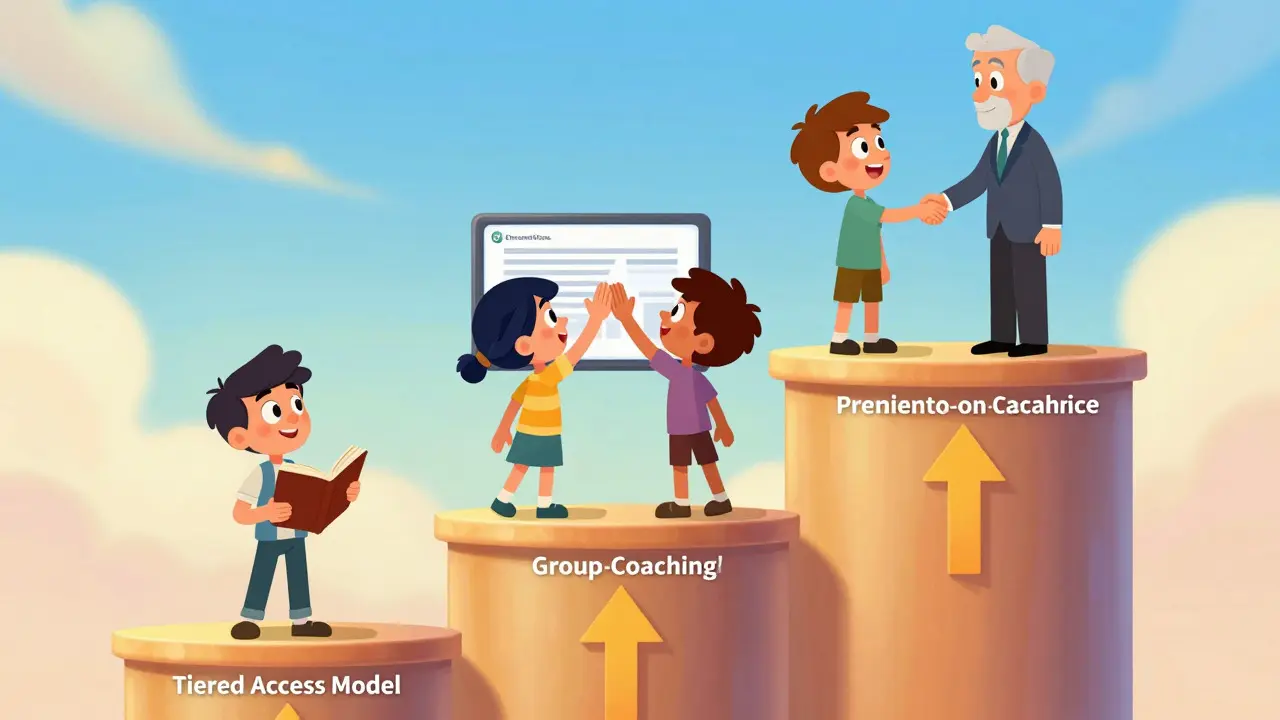
- The Tiered Access Model: This is the most common approach. You offer the course alone at a base price (e.g., $497). Then, you offer the "Course + 3 Group Coaching Calls" at a mid-tier price (e.g., $997). Finally, you offer "Course + 3 One-on-One Sessions" at a premium tier (e.g., $2,500). This allows customers to self-select based on their budget and need for support.
- The Outcome-Based Package: Here, you ignore the components entirely. You price the bundle based on the specific result it delivers. For example, if the promise is "Launch Your Newsletter in 30 Days," the price reflects the value of having a launched newsletter, not the cost of the video lessons. This works best when the outcome is tangible and measurable.
- The Subscription Membership: Instead of a one-time purchase, you charge a monthly fee that includes access to the course library plus a set number of coaching minutes each month. This creates recurring revenue and locks in long-term relationships. It’s ideal for ongoing skill development rather than one-off projects.
Calculating Your True Cost Basis
Before setting a price, you need to know your floor. Many creators forget that coaching has hidden costs that courses don't. While a course can be sold infinitely without extra labor, every coaching session consumes your finite time.
| Component | Fixed Costs | Variable Costs | Opportunity Cost |
|---|---|---|---|
| Digital Course | Platform fees, production costs | Payment processing (2-3%) | Low (automated delivery) |
| Group Coaching | Zoom/Scheduling tools | Time spent (2-4 hours/month) | Medium (limits scalability) |
| 1-on-1 Coaching | CRM/Client portal fees | Time spent (1-2 hours/client) | High (directly caps income ceiling) |
Let's say you spend 4 hours preparing for a group call and 1 hour delivering it. If you bill yourself an internal rate of $100/hour, that one call costs you $500 in labor. If you only have 10 spots, your break-even point for that month is $5,000 in revenue just to cover the coaching labor, before counting the course hosting fees. Ignoring this opportunity cost leads to burnout and underpricing.
Value Anchoring and Perceived Worth
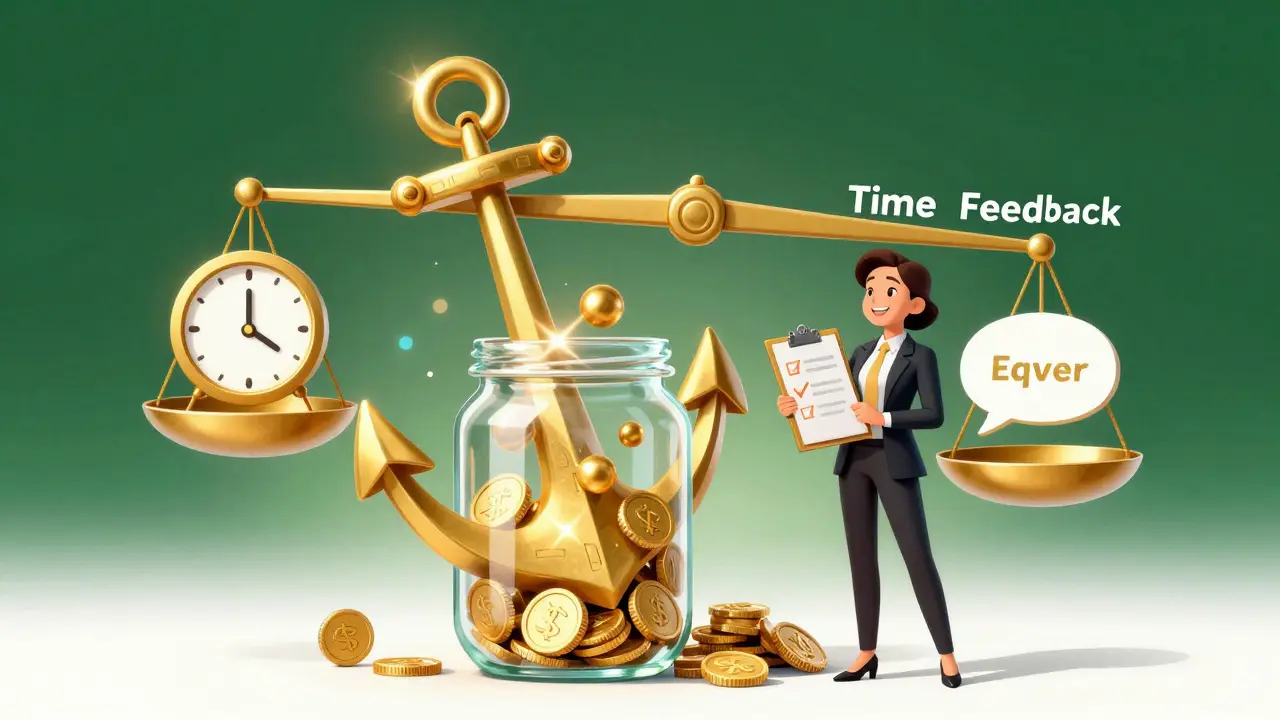
How do you justify a $2,500 price tag for a course that sells for $500 elsewhere? You use value anchoring.
When presenting the hybrid offer, never list the components separately first. Instead, highlight the total value of the transformation. Break down the value of the outcome:
- Value of saved time: 20 hours x $50/hour = $1,000
- Value of avoided mistakes: Potential loss prevention = $500
- Value of expert feedback: Industry standard consulting rates = $1,500
Total Value Proposition: $3,000. Now, offering the package for $2,500 feels like a bargain, even though your cost basis is much lower. This psychological framing shifts the conversation from "price" to "value."
Common Pitfalls to Avoid
Even with the right model, execution errors can kill conversion rates.
- Overcomplicating the Choice: Don't offer five different bundle variations. Stick to three tiers maximum. Decision paralysis kills sales.
- Mismatched Expectations: If the course promises "mastery" but the coaching is limited to Q&A, clients will feel shortchanged. Align the depth of the content with the level of support provided.
- Ignoring Refund Policies: Hybrid offers are harder to refund than pure digital products because of the service component. Clearly define what happens if a client cancels after attending two coaching sessions. A pro-rated refund policy protects both parties.
Testing and Optimizing Your Price
Your initial price is a hypothesis, not a fact. Launch with a conservative price point and monitor two key metrics: conversion rate and customer lifetime value (CLV).
- Week 1-2: Track how many visitors buy the bundle vs. the standalone course. If bundle adoption is low, the price gap might be too steep.
- Month 2: Survey buyers. Ask them why they chose the bundle. If they mention "accountability," emphasize that in future marketing. If they mention "convenience," highlight the time-saving aspect.
- Quarter 1 Review: If you are hitting capacity limits on 1-on-1 slots, raise the price by 10-15%. Higher prices often attract more serious clients, improving quality and reducing churn.
Remember, pricing is dynamic. As your reputation grows and your case studies stack up, the value of your coaching increases. Your hybrid offer price should evolve with your expertise.
Should I discount the course when bundling it with coaching?
Generally, no. Keep the course price stable to maintain its perceived value. Instead, create a discount on the *bundle* relative to the sum of the individual parts. For example, if the course is $500 and coaching is $1,000, price the bundle at $1,200 (a $300 savings) rather than lowering the course price to $300. This preserves the anchor value of the course.
How many coaching sessions are enough for a hybrid offer?
It depends on the complexity of the topic. For skill acquisition, 3-4 group calls over 6 weeks is standard. For high-stakes business implementation, 3-5 one-on-one sessions spaced out over 3 months work best. The key is to match the frequency to the client's pace of implementation, not just your availability.
Is it better to sell the bundle upfront or upsell coaching later?
Selling the bundle upfront captures higher immediate revenue and filters for serious buyers. Upselling later has a lower conversion rate (typically 10-20%) but requires less upfront commitment from the customer. If your margin is thin, go with the upfront bundle. If you want to maximize volume of course sales, start with the course and upsell coaching to engaged users.
How do I handle clients who finish the course but skip the coaching?
Design the course so that key breakthroughs require external input. For example, include assignments that explicitly state, "Submit this for review in our next coaching call." This creates a natural dependency on the service component, reducing the likelihood of skipping the coaching phase.
Does the platform matter for pricing hybrid offers?
Yes, indirectly. Platforms like Kajabi or Teachable allow for complex order bumps and bundles, making it easier to present tiered options. However, the pricing psychology remains the same regardless of the tool. Choose a platform that supports automated scheduling integration to reduce the administrative burden of managing the coaching component.