Micro-Rewards and Streaks: How to Build Lasting Learning Habits
 Jun, 1 2026
Think about the last time you tried to learn something new. Maybe it was a language on Duolingo, a coding skill on Codecademy, or even just reading more books. You started with high energy, but by week three, the motivation faded. Why? Because human brains are wired for immediate feedback, not delayed gratification. This is where micro-rewards and learning streaks come in. These aren't just cute UI elements; they are psychological triggers designed to hack your brain's reward system.
In this guide, we’ll break down how these nudges work, why they’re effective, and how you can apply them to build habits that actually stick. Whether you're an educator designing a course or a learner trying to stay consistent, understanding the mechanics behind these tools is key.
The Psychology Behind Micro-Rewards
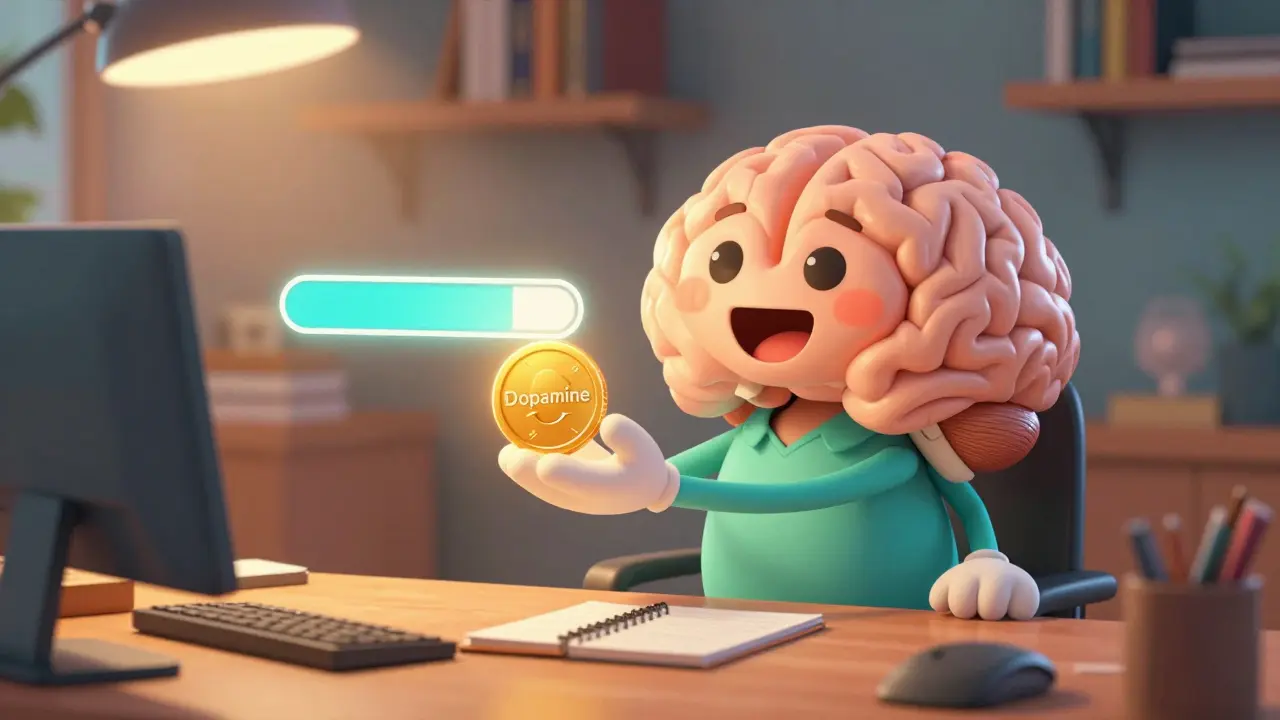
To understand micro-rewards, we first need to look at dopamine. Dopamine isn't just the "pleasure chemical"; it’s the molecule of *more*. It drives us to seek out rewards and repeat behaviors that lead to those rewards. In traditional education, rewards are often distant-getting a good grade at the end of a semester, or passing a certification exam months from now. That gap is too wide for our primal brains to handle consistently.
Micro-rewards bridge that gap. They are small, frequent acknowledgments of progress. Think of them as breadcrumbs leading you through a forest. Each crumb tells you, "You're on the right path." When you complete a short quiz, earn a badge, or see a progress bar fill up by 10%, your brain releases a tiny hit of dopamine. This reinforces the behavior, making you more likely to return the next day.
Research in behavioral psychology supports this. Studies show that variable rewards (where you don't always know exactly what you'll get) can be even more powerful than fixed rewards. This is why slot machines are so addictive, and why some apps randomize their bonus points. However, in learning contexts, consistency matters more than surprise. The goal is to build a routine, not an addiction.
- Immediate Feedback: Let users know instantly when they’ve done something right.
- Tangible Progress: Use visual cues like progress bars or checkmarks.
- Low Effort, High Impact: The reward should feel earned but not exhausting.
Why Streaks Are So Powerful (And Dangerous)
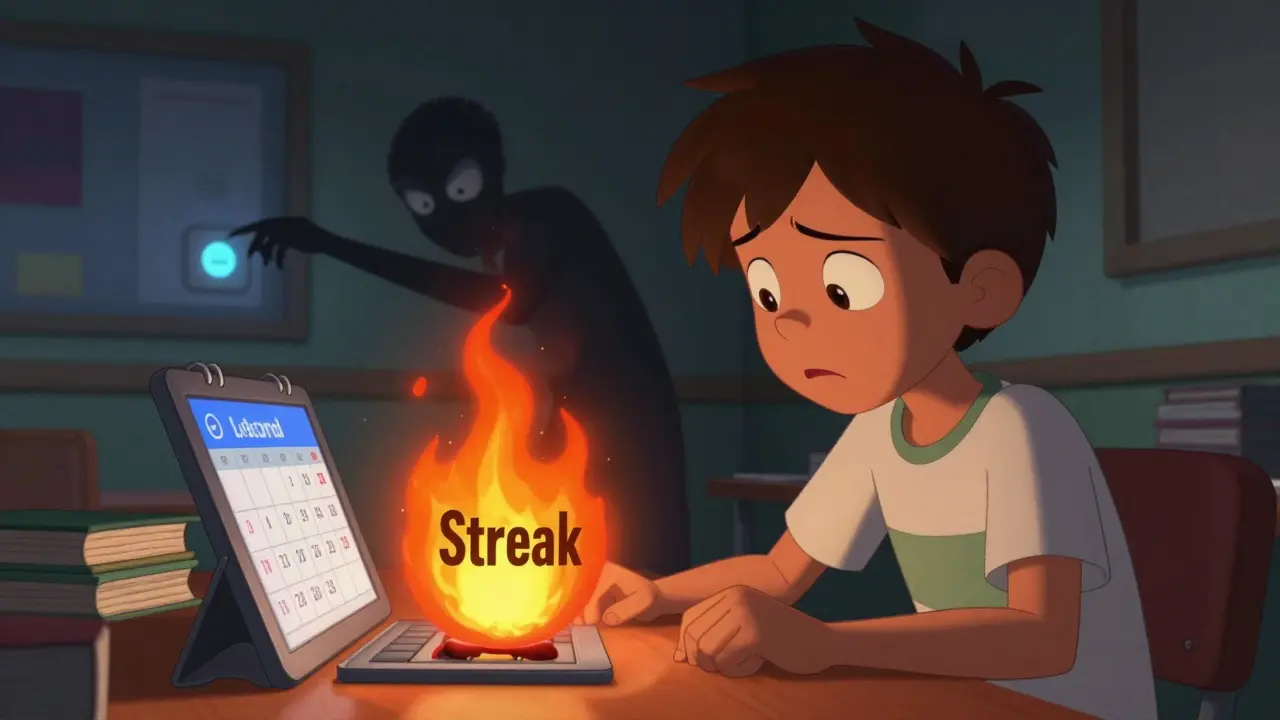
If micro-rewards are the fuel, streaks are the engine. A streak is simply a count of consecutive days you’ve engaged with a platform. Seeing a number like "45 Days" creates a sense of momentum. Breaking that streak feels like a loss. Psychologists call this the "endowment effect"-we value things more highly once we own them or have invested effort into them.
When you have a 30-day streak, skipping a day doesn’t just mean missing one lesson; it means losing the identity of someone who is "consistent." This fear of loss is a stronger motivator than the desire for gain. Apps like Duolingo use this masterfully. Their owl mascot sends guilt-inducing notifications if you miss a day, leveraging social pressure and personal pride to keep you coming back.
However, streaks have a dark side. They can encourage mindless engagement. Have you ever clicked through a lesson without really paying attention, just to keep the flame alive? That’s called "gaming the system," and it defeats the purpose of learning. To avoid this, platforms must ensure that maintaining a streak requires actual cognitive effort, not just a button press.
| Mechanism | Psychological Trigger | Best For | Risk |
|---|---|---|---|
| Micro-Rewards | Dopamine release | Short-term engagement | Becoming expected/boring |
| Streaks | Loss aversion | Long-term retention | Mindless participation |
| Badges | Social status | Achievement recognition | Credential inflation |
Designing Effective Nudges Without Manipulation
As designers and educators, we have a responsibility to use these tools ethically. The line between helpful nudge and manipulative trick is thin. Ethical gamification focuses on empowering the user, not exploiting their weaknesses. Here’s how to strike that balance.
First, make the connection between the action and the reward clear. If a user earns points, explain why. "You earned 10 points for completing the module on Python basics." This reinforces the learning objective. Second, allow for flexibility. Life happens. People get sick, travel, or have emergencies. Rigid streak systems punish life events, which leads to frustration and churn. Consider implementing "streak freezes" or allowing users to recover missed days by completing extra tasks later.
Third, focus on intrinsic motivation over extrinsic. Extrinsic motivators (points, badges) work well to start a habit, but they fade over time. Intrinsic motivators (curiosity, mastery, autonomy) sustain long-term engagement. Design your rewards to highlight how much the user has improved. Show them their past answers versus their current ones. Celebrate their growth, not just their attendance.
- Transparency: Be open about how points are calculated.
- Flexibility: Allow recovery from missed days.
- Meaning: Connect rewards to real-world skills.
Real-World Examples of Successful Implementation
Let’s look at how major platforms use these strategies. Duolingo is the poster child for streaks. Their entire business model relies on daily engagement. But notice how they combine streaks with micro-rewards: hearts (lives), XP (experience points), and leagues. Each layer targets a different psychological need. Hearts create scarcity, XP provides progress tracking, and leagues add social competition.
Headspace, a meditation app, uses a simpler approach. They offer a daily quote and a calm animation when you complete a session. The reward isn't flashy; it's soothing. This aligns with the product’s goal of reducing stress. If Headspace used loud confetti and aggressive pop-ups, it would contradict its brand message.
In corporate training, platforms like LinkedIn Learning use completion certificates and profile badges. These are valuable because they translate directly to professional capital. Users aren't just earning points; they're building their resume. This makes the reward tangible and relevant outside the app.

Common Pitfalls to Avoid
Even well-intentioned designs can fail. One common mistake is over-gamifying. If every click triggers a sound effect and a point notification, users become desensitized. The novelty wears off quickly, and the noise becomes annoying. Less is often more. Reserve big celebrations for major milestones.
Another pitfall is ignoring individual differences. Not everyone is motivated by competition. Some learners prefer solo journeys. Offering multiple paths to engagement-such as collaborative goals or personal bests-ensures inclusivity. Finally, don't neglect the quality of the content itself. No amount of gamification can save a boring or poorly structured course. Gamification enhances learning; it doesn't replace it.
How to Apply This to Your Own Learning
You don’t need an app to benefit from these principles. You can design your own micro-reward system. Start by breaking large goals into tiny steps. Want to read a book? Commit to five pages a day. After each session, give yourself a small treat-a cup of coffee, a short walk, or checking social media for ten minutes. Pair the desired behavior with an immediate pleasure.
Track your streaks manually. Use a calendar or a habit-tracking app. The act of marking an X on a calendar is a form of self-reward. It provides visual proof of your commitment. And remember, if you slip up, don’t quit. Just restart. Perfection is the enemy of progress. Consistency beats intensity every time.
What is the difference between micro-rewards and macro-rewards?
Micro-rewards are small, frequent incentives given immediately after a specific action, such as earning points for finishing a quiz. Macro-rewards are larger, less frequent incentives tied to significant achievements, like receiving a certificate upon completing a full course. Micro-rewards maintain daily engagement, while macro-rewards provide long-term goals.
Do streaks actually improve learning outcomes?
Streaks primarily improve consistency and retention rates, which indirectly support learning by ensuring regular exposure to material. However, studies suggest that if streaks encourage mindless clicking without deep processing, they may not enhance actual knowledge acquisition. The key is linking streak maintenance to meaningful engagement.
Is gamification appropriate for serious professional development?
Yes, but it must be implemented subtly. In professional settings, focus on progress visualization, peer recognition, and skill-based badges rather than childish animations or excessive points. The goal is to reinforce competence and career advancement, not entertainment.
How do I prevent burnout from constant gamified notifications?
Allow users to customize their notification preferences. Provide options to mute non-essential alerts and set quiet hours. Additionally, design rewards that are informative rather than intrusive. For example, a weekly summary email is less disruptive than daily push notifications demanding attention.
Can micro-rewards be used in traditional classroom settings?
Absolutely. Teachers can use verbal praise, stickers, or small privileges as micro-rewards for completed assignments or good behavior. The key is immediacy and specificity. Instead of saying "Good job," say "Great job using evidence to support your argument." This reinforces the specific skill being taught.
Stephanie Frank
June 1, 2026 AT 08:53Let's cut the fluff. This whole 'dopamine hack' narrative is just corporate speak for addiction engineering. You're not building habits, you're training rats in a Skinner box with better UI.
Andrea Alonzo
June 1, 2026 AT 18:12I really appreciate that this article acknowledges the potential downsides of streaks because it feels so validating to hear that my guilt over breaking a 30-day chain isn't just me being weak or lazy but rather a designed psychological response that can actually be counterproductive if we aren't mindful about how we engage with these tools on a daily basis and I think we need more empathy for ourselves when life gets in the way of our perfect schedules because perfection is such an impossible standard to maintain consistently without burning out completely.
Bineesh Mathew
June 1, 2026 AT 21:01The commodification of attention is the true tragedy of our age. We are no longer students; we are data points in a vast algorithmic farm, herded by digital carrots and sticks until our minds are as fragmented as the notifications that plague our devices. To call this 'learning' is a profound insult to the Socratic method and the deep, contemplative silence required for genuine intellectual growth.
Oskar Falkenberg
June 3, 2026 AT 17:23i totally get what ur saying about the dopamine hits but like honestly i feel like most apps just make it too easy to game the system like ive been using duolingo for years and sometimes i just click through stuff just to keep the streak alive which defeats the purpose right? but then again maybe thats just me being lazy lol anyway i think the part about intrinsic motivation is key because if u dont actually care about the subject matter all those badges mean nothing in the long run
Joe Walters
June 5, 2026 AT 03:13Look, I've tried every app under the sun and they all suck eventually. The 'streak freeze' feature is basically admitting their model is broken. Why do I need a freeze? Because the design is flawed from day one. It's not about learning, it's about retention metrics for shareholders. Don't let them fool you into thinking this is educational innovation, it's behavioral manipulation wrapped in pastel colors.
Lisa Nally
June 5, 2026 AT 13:33While the article touches upon the neurochemical basis of habit formation, it fails to adequately address the cognitive load implications of constant micro-feedback loops. From a pedagogical standpoint, extrinsic motivators often undermine intrinsic interest, a phenomenon well-documented in self-determination theory. The suggestion that 'consistency beats intensity' is reductive; deep work requires sustained, uninterrupted focus, which is antithetical to the gamified interruption cycle described here.
Edward Gilbreath
June 7, 2026 AT 03:05they want you addicted so they can sell your data. its always been about the data bro. wake up.
Jeanne Abrahams
June 7, 2026 AT 19:13Oh, darling, please. You think a little owl mascot is going to save your career? In South Africa, we learn by surviving, not by clicking buttons for imaginary gold stars. But sure, keep chasing your digital breadcrumbs while the real world burns.
Laura Davis
June 8, 2026 AT 04:19YES! Finally someone said it! We need to stop beating ourselves up for missing a day! Life happens!!! If you have a bad day, take a break! Your worth is not determined by a number on a screen!!! Let's support each other in building healthy habits that actually serve us and not stress us out!!!
Marissa Haque
June 8, 2026 AT 19:46I am absolutely obsessed with the idea of pairing small tasks with immediate rewards!! It sounds so simple yet so effective!! I have been trying to read more and I love the idea of having a cup of coffee after just five pages!! It makes the task feel less daunting and more manageable!! Who else is going to try this???
Lisa Puster
June 8, 2026 AT 20:30this is typical american consumerist garbage. we don't need gamification we need discipline. real men and women don't need badges to tell them they did something right. the weakness of modern society is evident in its reliance on external validation for basic tasks.
Robert Barakat
June 10, 2026 AT 01:30The essence of learning lies in the struggle, not the reward. By smoothing the path with micro-rewards, we remove the friction that creates neural density. A smooth road leads nowhere interesting.
Michael Richards
June 10, 2026 AT 21:23You are all missing the point. Discipline is a muscle. If you rely on streaks, you are weak. Stop making excuses and just do the work. No badges needed.
Keith Barker
June 11, 2026 AT 06:21the void stares back at you through the progress bar. we are all just ghosts in the machine seeking validation from silicon gods.
Caitlin Donehue
June 12, 2026 AT 17:14I guess it works for some people but I usually just quit after two weeks anyway.