Personalization and Adaptive Learning Adoption: Market Update 2026
 Nov, 28 2026
You know that feeling when you buy a new pair of running shoes, and the salesperson tries to sell you a size 10 because it’s what they have on the shelf? It doesn’t matter if your foot is a size 9.5 or a 11; the box says 10, so you get 10. For decades, this was exactly how education worked. One curriculum, one pace, one test for everyone. But as we stand here in late 2026, the shelves are finally changing. We aren't just talking about buying better shoes anymore; we're talking about shoes that reshape themselves while you walk.
This shift isn't some distant sci-fi dream. It’s happening right now in classrooms from Tempe to Tokyo. The buzzword used to be "personalized learning," which sounded nice but often meant little more than letting students pick their own book club title. Today, we’re seeing the real deal: adaptive learning systems that actually adjust the difficulty, content, and path based on how you think and where you stumble. If you’re an educator, a parent, or someone building tech for schools, understanding where this market stands today is critical. It’s no longer about whether these tools work; it’s about who is adopting them, why some fail, and what the next five years look like.
The Shift From Static to Dynamic Content
Let’s be honest. Traditional learning management systems (LMS) were basically digital filing cabinets. You uploaded a PDF, added a quiz, and hoped for the best. The problem with static content is that it assumes every student starts at the same baseline. They don’t. Some kids grasp fractions in ten minutes; others need three weeks and a visual aid. When you force everyone through the same funnel, you bore the fast learners and overwhelm the slow ones. Both drop out mentally long before they drop out physically.
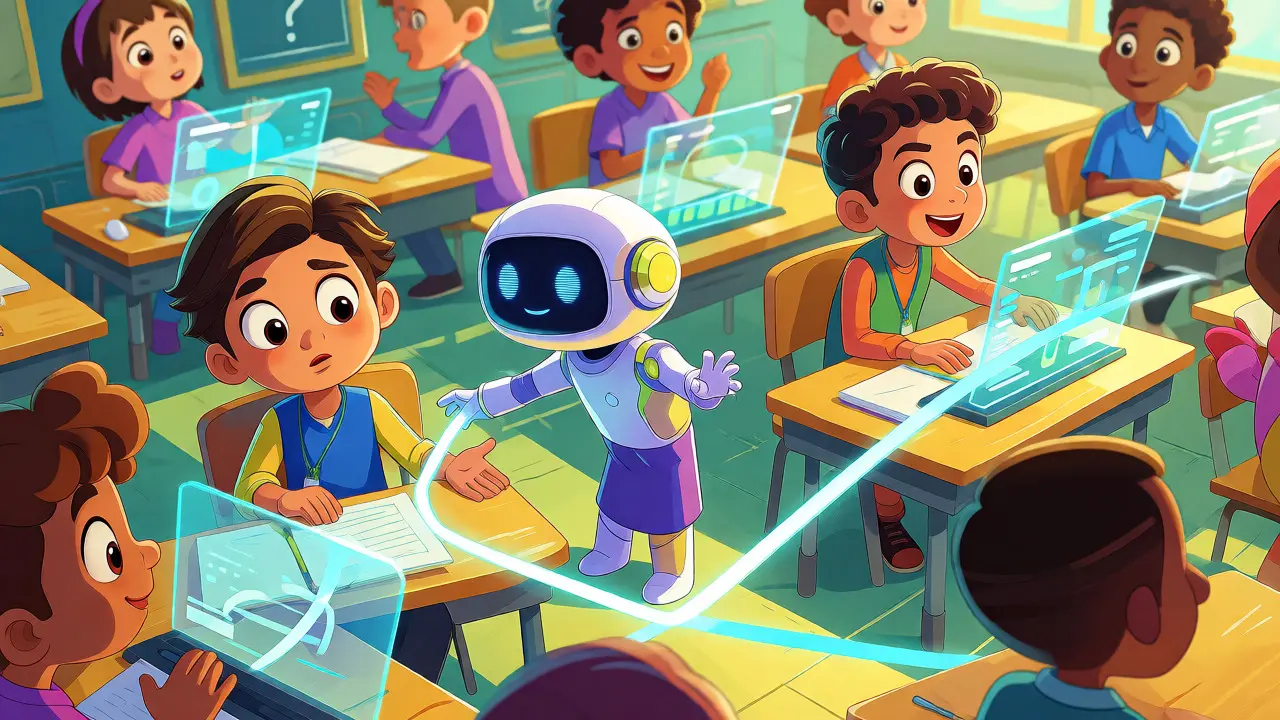
Adaptive learning platforms solve this by using algorithms to map knowledge gaps in real time. Think of it like GPS navigation for your brain. If you miss a turn (get a question wrong), the system doesn’t just say "wrong"; it reroutes you back to the previous concept to reinforce it before trying again. This isn't magic. It’s built on machine learning models trained on millions of student interactions. In 2026, these models are significantly smarter than they were even two years ago. They can detect not just *what* you got wrong, but *why*. Did you make a calculation error? Or did you misunderstand the underlying principle? The feedback loop is tighter, faster, and far more human-like.
We’ve seen massive adoption in higher education first, particularly in STEM subjects like calculus and chemistry. Why? Because math is hierarchical. You can’t do algebra without arithmetic. Adaptive systems thrive in structured environments. But the trend has spilled over into humanities and professional development too. Imagine learning Spanish not by memorizing lists, but by having an AI tutor that notices you consistently confuse masculine and feminine nouns, then creates custom exercises targeting exactly that weakness until it disappears.
Who Is Buying and Why?
If you look at the spending data from the last eighteen months, a clear pattern emerges. Universities are still the biggest buyers, but the motivation has shifted. Five years ago, they bought adaptive tools to improve retention rates-keeping students enrolled so tuition checks kept coming. Now, they’re buying them for workforce readiness. Employers are complaining that graduates lack practical skills, even if they have degrees. Adaptive platforms promise to bridge that gap by focusing on competency rather than seat time.
Corporate training is the second-largest sector. Companies like Amazon and IBM have been piloting internal adaptive platforms for years. By 2026, this is standard practice for large enterprises. Why? Because corporate training budgets are under scrutiny. CFOs want proof that training dollars yield results. An adaptive platform provides granular analytics. You can see exactly which employees mastered a compliance module and which ones struggled. This data allows managers to intervene precisely where needed, rather than sending everyone to another generic webinar.
K-12 districts are the laggards, largely due to budget constraints and infrastructure issues. However, federal grants in the US and similar funding mechanisms in Europe have accelerated adoption. Districts are moving away from one-size-fits-all textbooks toward subscription-based digital ecosystems. The key driver here isn't just academic performance; it's equity. Wealthy families could always afford tutors. Adaptive software democratizes that access, giving every student a personal tutor regardless of zip code.
Key Technologies Driving the Market
You might wonder what makes these systems tick. It’s not just one technology; it’s a stack. At the core is Knowledge Tracing, a technique originally developed by researchers at Carnegie Mellon University. This algorithm predicts the probability that a student knows a specific concept based on their past actions. It’s the engine behind most modern adaptive engines.
Layered on top of that is Natural Language Processing (NLP). Early adaptive systems only handled multiple-choice questions. Today’s NLP models can evaluate open-ended essays, short answers, and even voice responses. This opens up history, literature, and language arts to true adaptation. A student writing an essay on the Civil War gets feedback not just on grammar, but on argument structure and evidence usage, tailored to their current skill level.
Finally, there’s Learning Analytics Dashboards. These are the interfaces teachers use to monitor progress. The best dashboards in 2026 don’t just show red and green dots. They offer prescriptive insights. Instead of saying "Student A is failing," they say "Student A needs to review Module 3 before attempting Module 4." This saves teachers hours of manual grading and intervention planning.
| Feature | Rule-Based Systems | Machine Learning Models | Hybrid AI-Human Models |
|---|---|---|---|
| Customization Level | Low (Fixed paths) | High (Dynamic paths) | Very High (Context-aware) |
| Implementation Cost | Low | Medium | High |
| Data Requirement | Minimal | Massive datasets | Moderate + Expert input |
| Best Use Case | Compliance Training | STEM Subjects | Complex Skills & Leadership |
Pitfalls and Implementation Challenges
It’s not all smooth sailing. The graveyard of EdTech is filled with companies that promised miracles and delivered glitches. One major issue is the "black box" problem. Teachers often distrust algorithms they can’t explain. If a system recommends a remediation module, the teacher wants to know why. If the developer can’t explain the logic, the teacher ignores the recommendation. Transparency is becoming a key selling point. Vendors who provide interpretable AI models are winning contracts.
Data privacy is another minefield. With the EU’s GDPR and various state-level laws in the US, collecting behavioral data on minors is tricky. Parents are increasingly wary of how their children’s data is used. Successful vendors in 2026 are those who prioritize local data processing or anonymize data rigorously. If your platform leaks sensitive student info, you’re done. Reputation matters more than features.
Then there’s the integration headache. Schools already use dozens of tools. Adding another standalone app leads to "app fatigue." The winners are platforms that integrate seamlessly with existing LMS providers like Canvas or Blackboard. Single sign-on (SSO) and API compatibility are non-negotiable requirements for district-level purchases.
What’s Next: The Horizon for 2027 and Beyond
So, where does this go? We’re moving toward multimodal learning experiences. Text is being supplemented by video, audio, and interactive simulations. Your adaptive path won’t just change the text you read; it might switch to a video tutorial if the system detects you learn better visually. This aligns with research showing that multimodal input enhances retention.
We’re also seeing the rise of micro-credentials integrated directly into adaptive platforms. Instead of waiting four years for a degree, learners earn badges for mastering specific competencies. These badges are verifiable via blockchain, making them portable across employers. This shifts the focus from institutional prestige to demonstrable skill.
Finally, expect greater collaboration between humans and AI. The goal isn’t to replace teachers. It’s to free them from administrative drudgery so they can do what machines can’t: mentor, inspire, and provide emotional support. The most successful implementations treat AI as a teaching assistant, not the teacher.
Frequently Asked Questions
Is adaptive learning suitable for young children?
Yes, but with caution. For K-2 students, adaptive systems should supplement, not replace, social play and direct instruction. Young children benefit from immediate feedback, but they also need human interaction for social-emotional development. Look for platforms designed specifically for early childhood that emphasize gamification and simple interfaces.
How much does an adaptive learning platform cost?
Costs vary widely. Enterprise solutions for universities can run tens of thousands of dollars annually, depending on student count. Corporate licenses are often priced per active user. Smaller SaaS options for individual learners or small businesses might range from $20 to $100 per month. Many vendors offer tiered pricing based on feature sets and support levels.
Do teachers need special training to use these tools?
Basic familiarity helps, but deep technical training isn't always required. Most modern platforms are intuitive. However, effective use requires pedagogical training. Teachers need to learn how to interpret analytics and intervene appropriately. Professional development focused on data-driven instruction is crucial for maximizing ROI.
Can adaptive learning help students with disabilities?
Absolutely. Adaptive platforms excel at providing accommodations automatically. Students with dyslexia can toggle font settings and listen-to-text features. Those with ADHD benefit from shorter, segmented lessons. The system adjusts pacing, allowing students to take breaks or repeat sections without stigma.
What is the difference between personalization and adaptive learning?
Personalization is a broad term often referring to learner choice (e.g., picking topics). Adaptive learning is a subset that uses algorithms to dynamically alter content and difficulty based on performance. All adaptive learning is personalized, but not all personalization is adaptive. True adaptation happens in real-time without user input.