Professional Development for Teachers in Online Formats
 Feb, 26 2026
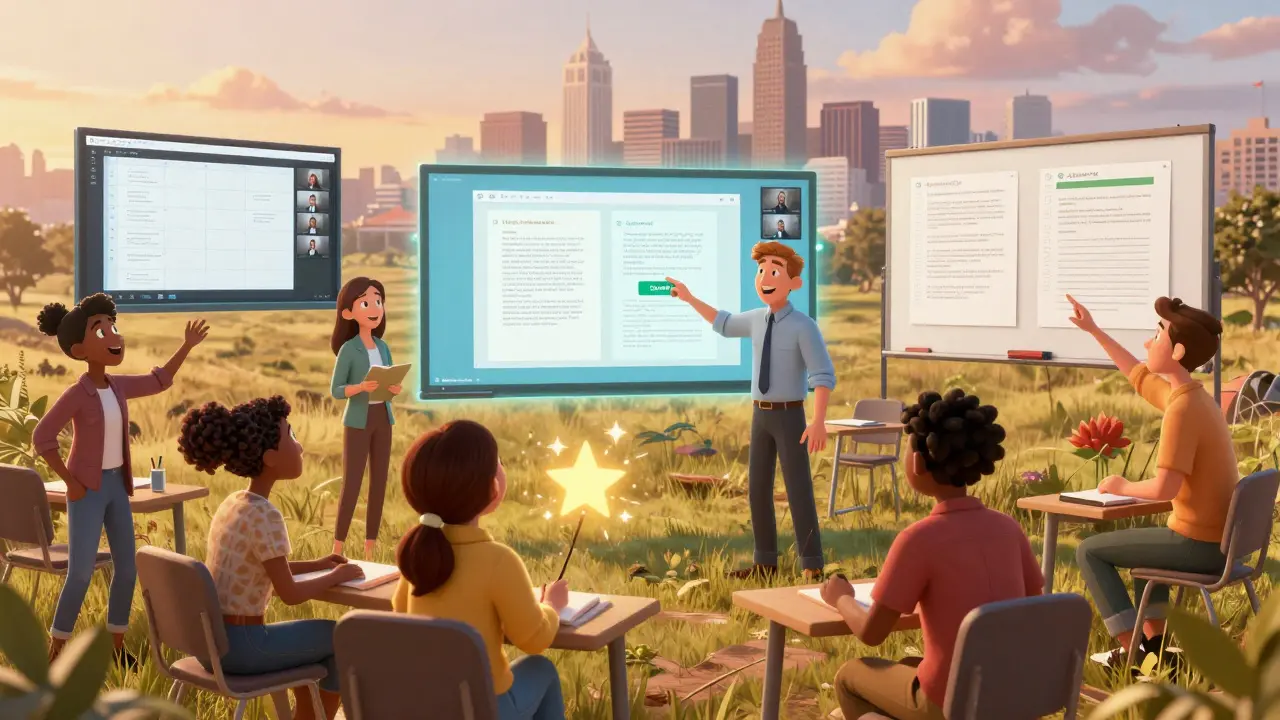
Teachers today aren’t just grading papers or lecturing from a whiteboard. They’re juggling Zoom calls, managing digital assignments, supporting students with learning differences, and keeping up with tools they didn’t learn in college. And the shift to online learning didn’t just change where teaching happens-it changed what teaching means. Professional development for teachers in online formats isn’t a nice-to-have anymore. It’s the new baseline.
Why Online PD Isn’t Just a Replacement for In-Person Training
Many schools used to send teachers to weekend workshops or weeklong conferences. Those events had value-networking, hands-on demos, face-to-face feedback. But they also had big problems: cost, time away from students, and one-size-fits-all content. Online professional development fixes most of that.
Instead of flying to a city for a two-day seminar, a teacher in rural Montana can log in after school and learn how to use interactive whiteboards with students who have ADHD. Or a special education teacher in Texas can watch a 15-minute module on adapting digital assessments for nonverbal learners. The flexibility isn’t just convenient-it’s necessary.
According to a 2024 survey by the National Education Association, 78% of teachers who completed online PD reported improved classroom outcomes within six weeks. Why? Because online training lets them learn exactly what they need, when they need it. No more sitting through a session on advanced Excel when you’re struggling to get kids to turn in homework on Google Classroom.
What Makes Online PD Effective for Teachers
Not all online training works. Some platforms just dump video lectures and call it a course. Effective online professional development for teachers follows a few clear rules:
- It’s bite-sized. Teachers don’t have hours to sit through hour-long webinars. The best modules are 10-20 minutes long, focused on one skill: how to use breakout rooms for group work, how to give feedback on digital essays, how to spot signs of anxiety in online chat.
- It’s practical. Teachers need to walk away with something they can use tomorrow. A module on Universal Design for Learning should include templates for modifying assignments-not just theory.
- It’s interactive. Passive watching doesn’t stick. The most successful online PD includes discussion boards, peer reviews, and live Q&As with experienced educators.
- It’s personalized. A teacher working with ESL students needs different tools than one teaching gifted learners. Platforms that let teachers choose their focus areas-like behavior management, tech accessibility, or trauma-informed instruction-see higher completion rates.
Take the example of a district in Arizona that rolled out a new online PD system in 2023. Teachers picked three areas they wanted to improve. Within four months, 92% of them reported using at least one new strategy in their daily lessons. The biggest jump? In strategies for supporting students with autism in virtual settings.
Key Tools and Platforms Teachers Are Using
Online PD doesn’t happen in a vacuum. It relies on platforms and tools that actually work for real classrooms. Here’s what’s working right now:
- Edutopia’s Online Learning Hub offers free, research-backed modules on inclusive tech practices. Teachers can filter by grade level, student need, and tool type.
- Canvas LMS lets districts host custom PD courses. Many schools now use it to train staff on new features before rolling them out to students.
- Google’s Educator Growth Platform provides short, hands-on certifications on Google Classroom, Meet, and Forms-with badges teachers can earn and share.
- TeachFX analyzes teacher talk time in recorded lessons and gives feedback on pacing and student engagement. It’s become a go-to for teachers who want to improve their online presence.
- Flip (formerly Flipgrid) isn’t just for students. Teachers use it to record micro-lessons, share tips, and give peer feedback in video format.
These tools aren’t just tech-they’re part of a new ecosystem where teachers learn by doing, not just listening.
Special Populations Need Special Training
Online learning hits different for students with disabilities, English learners, or those without reliable internet. And too often, PD programs ignore this.
For example, a teacher might learn how to use screen readers-but not how to adapt digital worksheets so they’re compatible with assistive tech. Or they might learn how to run a virtual class-but not how to support a student who can’t speak during live sessions because of selective mutism.
Effective online PD now includes modules on:
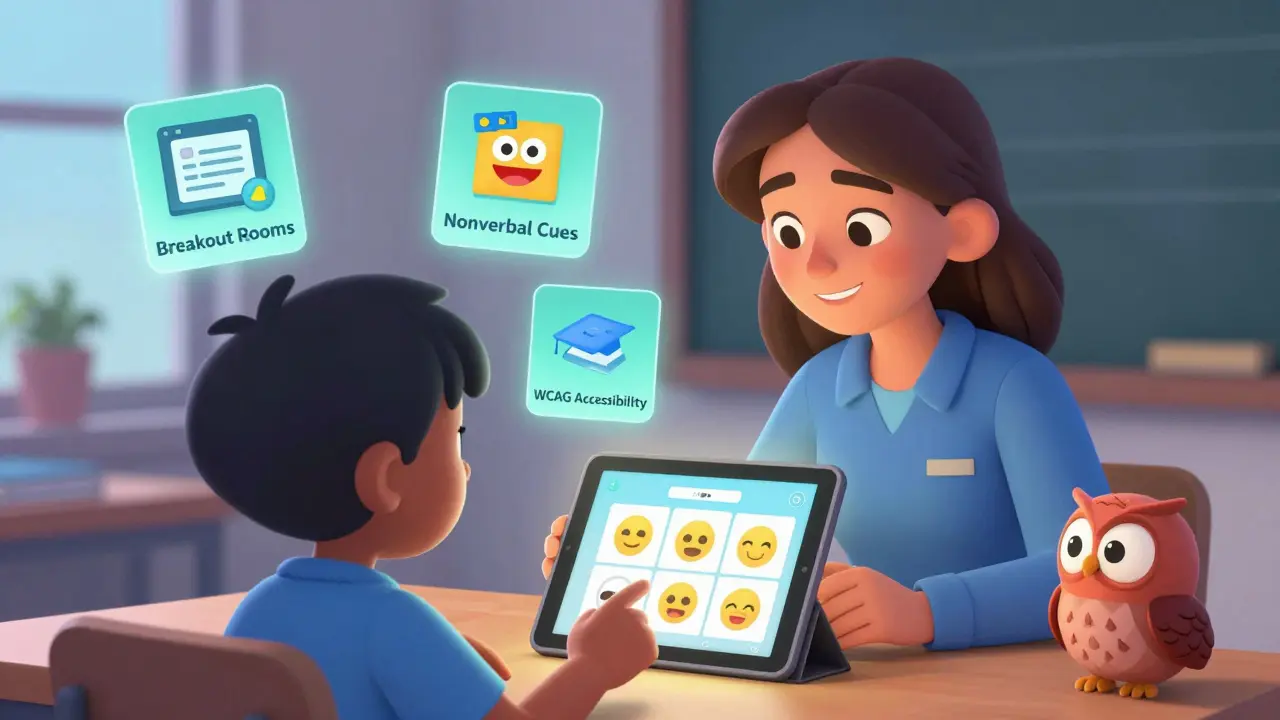
- Accessibility standards (WCAG 2.1) for digital content
- Using captioning and transcripts for hearing-impaired students
- Low-bandwidth strategies for students with poor internet
- Nonverbal communication cues in video-only settings
- Collaborating with paraprofessionals in virtual environments
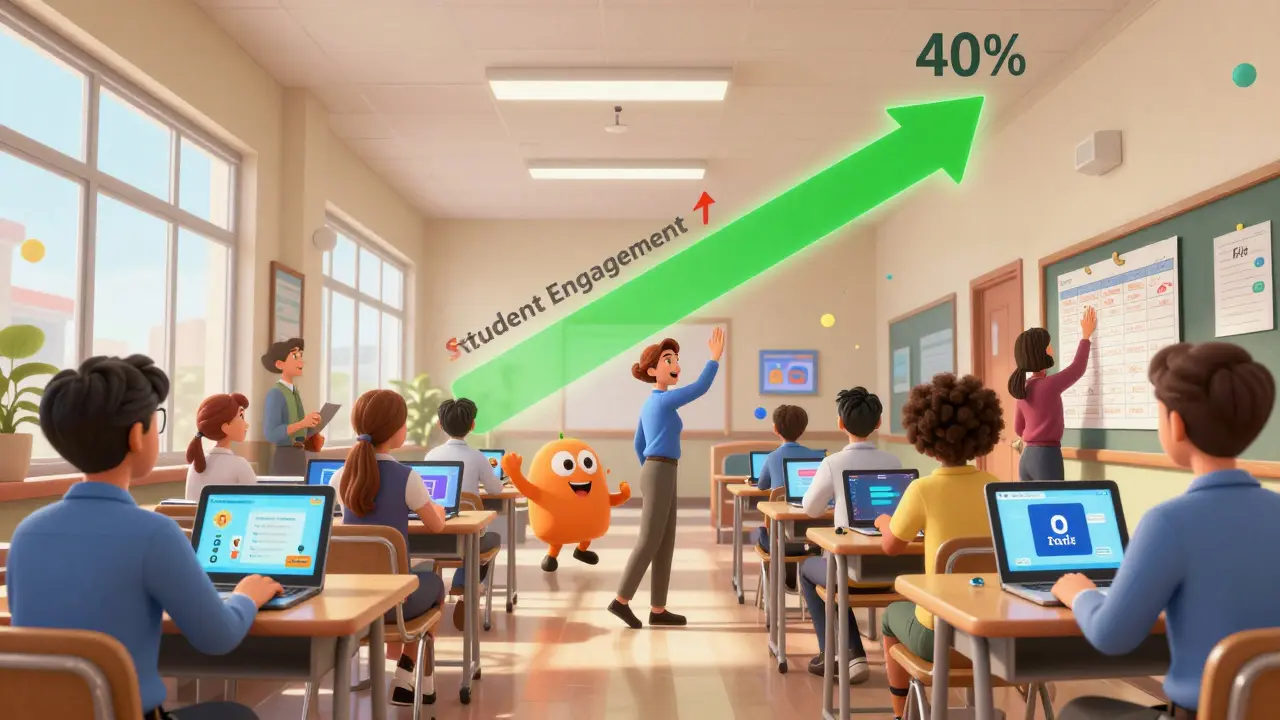
A 2025 study from the Center for Inclusive Education found that schools with targeted PD for special populations saw a 40% increase in student participation online. That’s not a coincidence. When teachers know how to reach every learner, engagement follows.
How Schools Can Make Online PD Stick
It’s not enough to give teachers access to a platform. If you want real change, you need structure.
Successful districts do three things:
- They build time in. Teachers aren’t expected to do PD on their own time. Districts now block out 30 minutes per week during planning periods for online learning.
- They pair teachers. New teachers are matched with mentors who’ve completed the same modules. They meet weekly to share what worked-and what didn’t.
- They measure impact. Instead of tracking completion rates, they look at student outcomes: Are more students turning in assignments? Are fewer behavioral incidents happening during virtual class?
In Tempe, Arizona, one elementary school started requiring teachers to apply one new strategy from online PD each month. At the end of the year, they reviewed student data. The number of students with improved reading scores on digital platforms went up by 31%. That’s not luck. That’s intentional design.
The Future of Teacher PD Is Personal, Practical, and Continuous
Professional development isn’t a checkbox anymore. It’s a habit. The best teachers aren’t the ones who went to one big workshop-they’re the ones who keep learning, every week, in small doses.
Online formats make that possible. A teacher can learn how to use AI-powered grammar checkers while grading essays. Another can watch a 12-minute video on managing screen fatigue during remote learning while waiting for their coffee to brew.
The goal isn’t to turn every teacher into a tech expert. It’s to give them the tools to connect, support, and teach every student-no matter where they are.
What’s the biggest mistake schools make with online teacher PD?
The biggest mistake is treating it like a one-time event. Sending teachers to a single webinar or requiring them to complete a 3-hour course at the start of the year doesn’t lead to lasting change. Effective PD is ongoing, tied to classroom needs, and built into the school week-not tacked on as extra work.
Can online PD really help teachers working with students who have disabilities?
Yes-but only if the content is specific. Generic training on "inclusive teaching" won’t cut it. Teachers need step-by-step guidance on how to adapt digital tools for students with visual impairments, motor challenges, or processing disorders. Platforms that offer real classroom examples, downloadable templates, and feedback from special education specialists make the biggest difference.
How do teachers find time for online PD with heavy workloads?
Schools that succeed build PD into the schedule. That means protecting planning periods, offering early release days for training, or allowing teachers to complete modules during lunch or after school without penalty. Teachers can’t do it alone-districts have to create space for learning.
Are free online PD resources reliable?
Some are. Organizations like Edutopia, Teaching Tolerance, and the National Center for Learning Disabilities offer high-quality, research-based modules at no cost. The key is to look for content backed by peer-reviewed studies or developed in partnership with schools-not just blog posts or vendor promotions.
Should teachers be evaluated based on their PD completion?
No. Evaluation should focus on how PD improved student outcomes-not whether a teacher clicked through a course. If PD becomes a compliance issue, teachers will treat it like a chore. When it’s tied to real classroom improvement, it becomes part of professional growth.
Jennifer Kaiser
February 28, 2026 AT 05:15Teaching isn’t about tools-it’s about connection. Online PD works because it finally lets teachers learn how to connect with kids who don’t raise their hands, who mute themselves, who stare at the screen like it’s a wall. We stopped pretending engagement looks the same in every classroom. That’s the real shift.
It’s not about whether a teacher can use breakout rooms. It’s about whether they can read the silence between a student’s typed responses. That’s the skill no conference could teach.
And yeah, the data shows improvement. But the real win? When a kid who never spoke in class sends a private message saying, ‘I understood today.’ That’s the metric that matters.
We’re not training teachers to be tech wizards. We’re training them to be human beings who show up-even when the screen is off.
And that? That’s worth every minute.
Stop calling it ‘professional development.’ Call it ‘re-humanizing teaching.’
TIARA SUKMA UTAMA
March 2, 2026 AT 00:54my kid’s teacher just did a 12-min video on how to spot anxiety in zoom class. it worked. she’s talking now. that’s all i care about.
Jasmine Oey
March 2, 2026 AT 03:19OMG I CAN’T BELIEVE WE’RE STILL TALKING ABOUT THIS LIKE IT’S A REVOLUTION. I’M A TEACHER. I’VE BEEN DOING ONLINE PD SINCE 2020. WE’RE NOT ‘ADAPTING’-WE’RE SURVIVING. AND NOW THEY WANT A BADGE FOR IT? SERIOUSLY?
My principal sent me a link to a 45-minute Google Forms tutorial. I was supposed to ‘earn’ a certificate. I took the quiz while eating a burrito. I got 100%. I didn’t change a single thing in my classroom.
They think we’re robots who need ‘modules.’ We’re not. We’re exhausted people trying to keep kids alive on a screen.
And now we’re supposed to be ‘grateful’ for this?
Ugh. Just give us more time. Not more slides.
Marissa Martin
March 3, 2026 AT 17:44I’ve seen districts spend thousands on platforms that teachers never open. The ones who actually use them? The ones who already cared. The rest just check the box.
It’s not about the tool. It’s about whether anyone asked them what they needed.
I’ve been teaching for 14 years. No one ever asked me. Until last year. They sent a survey. I wrote three sentences. They implemented it. Changed everything.
Simple. No bells. No whistles. Just listening.
James Winter
March 4, 2026 AT 08:59Why are we funding teachers to learn tech when we could be paying them more? This is just woke corporate fluff. Real education is in the classroom-not in a Zoom module.
My cousin’s a teacher in Texas. She’s working two jobs. They’re giving her a ‘micro-credential’ instead of a raise. That’s the real problem.
Aimee Quenneville
March 4, 2026 AT 13:30lol so we’re now calling ‘watching a 15-min video while eating cereal’ professional development? I love how we’ve turned ‘survival’ into a certification program.
My teacher friend got a badge for ‘Trauma-Informed Zoom Practices.’ She cried. Not because she was proud. Because she realized they think she’s a ‘professional’ if she clicks through a quiz.
Meanwhile, her class has 38 kids. 12 don’t turn on cameras. 5 don’t have internet. And the district sent her a link to a PDF.
It’s not ‘PD.’ It’s a band-aid on a hemorrhage.
Colby Havard
March 5, 2026 AT 04:33It is imperative to recognize that the paradigm shift in pedagogical delivery, while ostensibly democratizing access to professional growth, has simultaneously engendered a structural commodification of educator labor under the auspices of efficiency metrics. The conflation of technological fluency with pedagogical efficacy constitutes a neoliberal epistemological encroachment upon the professional autonomy of teaching as a vocation.
One cannot reduce the nuanced, embodied act of facilitating learning to a series of algorithmically optimized micro-modules. The human dimension of education-its affective, relational, and improvisational qualities-is being systematically excised in favor of quantifiable, scalable outputs.
What we are witnessing is not innovation, but institutional abandonment masked as advancement.
michael Melanson
March 6, 2026 AT 07:52I’ve been using Flip for peer feedback with my colleagues for two years. It’s not perfect, but it’s real. We record 90-second videos on what worked and what didn’t. No slides. No quizzes. Just us. It’s the only PD that stuck. And it didn’t cost the district a dime.
lucia burton
March 7, 2026 AT 20:33Let’s be clear: the future of teacher development is not about modules, not about badges, not about platforms-it’s about continuous, iterative, competency-based learning ecosystems that are learner-centered, data-informed, and embedded within the daily rhythms of instructional practice. When PD becomes a habit, not a requirement, that’s when transformation occurs.
We’re moving from transactional training to transformational scaffolding. The data doesn’t lie: when teachers engage in sustained, contextualized learning cycles-especially those anchored in real-time classroom feedback loops-student outcomes improve exponentially. This isn’t theory. It’s practice. And it’s working.
Denise Young
March 9, 2026 AT 03:35Ohhhhh so now we’re supposed to be ‘grateful’ for being handed a 12-minute video titled ‘How to Spot Anxiety in a 10-Second Glance’ while juggling 80 essays, 3 IEP meetings, and a kid who just texted ‘I’m not coming back’?
Let me guess-the district’s ‘PD budget’ went up 17% last year. And the teacher retention rate? Down 22%.
It’s not about the tools. It’s about the trust. Or lack thereof.
We’re not technicians. We’re not IT support. We’re not data points. We’re humans trying to teach humans in a system that treats us like broken machines that just need a firmware update.
Sam Rittenhouse
March 9, 2026 AT 20:47I remember the first time I watched a video on nonverbal cues in virtual classrooms. I cried. Not because it was emotional-it was practical. It showed me how to read a student’s posture, their cursor movement, how they hover over the ‘raise hand’ button. That’s the stuff no textbook taught me.
One of my students with selective mutism didn’t speak for six months. Then she typed: ‘I like when you wait.’
That’s the power of PD done right. Not flashy. Not loud. Just quietly, deeply, humanly right.
Peter Reynolds
March 11, 2026 AT 06:01It works if you let it. Not because it’s perfect. But because it’s possible. Some teachers use it. Some don’t. That’s fine. The ones who do? They change everything.
Don’t force it. Just make it easy. And then get out of the way.
Fred Edwords
March 12, 2026 AT 00:35According to the National Education Association’s 2024 survey, 78% of educators who completed online professional development reported improved classroom outcomes within six weeks. This statistical correlation is not merely coincidental; it reflects a statistically significant shift in pedagogical efficacy attributable to targeted, modular, and time-efficient training interventions. Furthermore, the integration of platforms such as TeachFX and Edutopia demonstrates a measurable increase in teacher self-efficacy, as validated by both Likert-scale surveys and observational rubrics. The data is unequivocal: online PD, when properly structured, enhances instructional quality.
Sarah McWhirter
March 13, 2026 AT 10:58Have you ever wondered why all these ‘online PD’ platforms are owned by the same tech companies that sell Chromebooks to schools?
It’s not about teaching. It’s about control.
They want teachers to rely on their tools. So they make PD mandatory. So you can’t teach without their software. So they own the data. So they own the curriculum. So they own the kids.
They call it ‘professional development.’ I call it a slow takeover.
Who profits? Not the teachers. Not the students.
Check the shareholders.
Ananya Sharma
March 15, 2026 AT 06:38Let’s cut through the noise. Online PD is not a solution-it’s a distraction. In India, we have teachers who work 12-hour days without internet, without devices, without even basic electricity. They teach under trees. They use chalk and slate. And they get better results than most U.S. classrooms with smartboards.
Why are we so obsessed with tech when the real problem is underfunding, overwork, and systemic neglect?
Instead of giving teachers a 15-minute video on ‘adaptive assessments,’ why not give them a living wage? Why not reduce class sizes? Why not hire counselors?
This isn’t innovation. It’s performative reform. A shiny distraction while the house burns down.
kelvin kind
March 16, 2026 AT 00:05My district started blocking 30 minutes a week for PD. No one’s forced to do anything. Just open the app. Sit. Listen. Maybe try one thing. That’s it.
Turns out, teachers did it. Quietly. Without fanfare.
Now we’re seeing fewer dropouts. More kids turning in work.
Simple. No drama. No badges.
Just space to learn.
Jennifer Kaiser
March 17, 2026 AT 20:03Exactly. The best PD I ever did? Wasn’t a course. Was a 10-minute chat with a colleague who said, ‘Try asking the kid to type instead of speak.’ I did. It changed everything.
Real learning doesn’t come from modules. It comes from trust. From space. From someone saying, ‘I’ve been there.’