Remote Proctoring Policies: Privacy, Security, and Fairness in Online Exams
 Jan, 10 2026
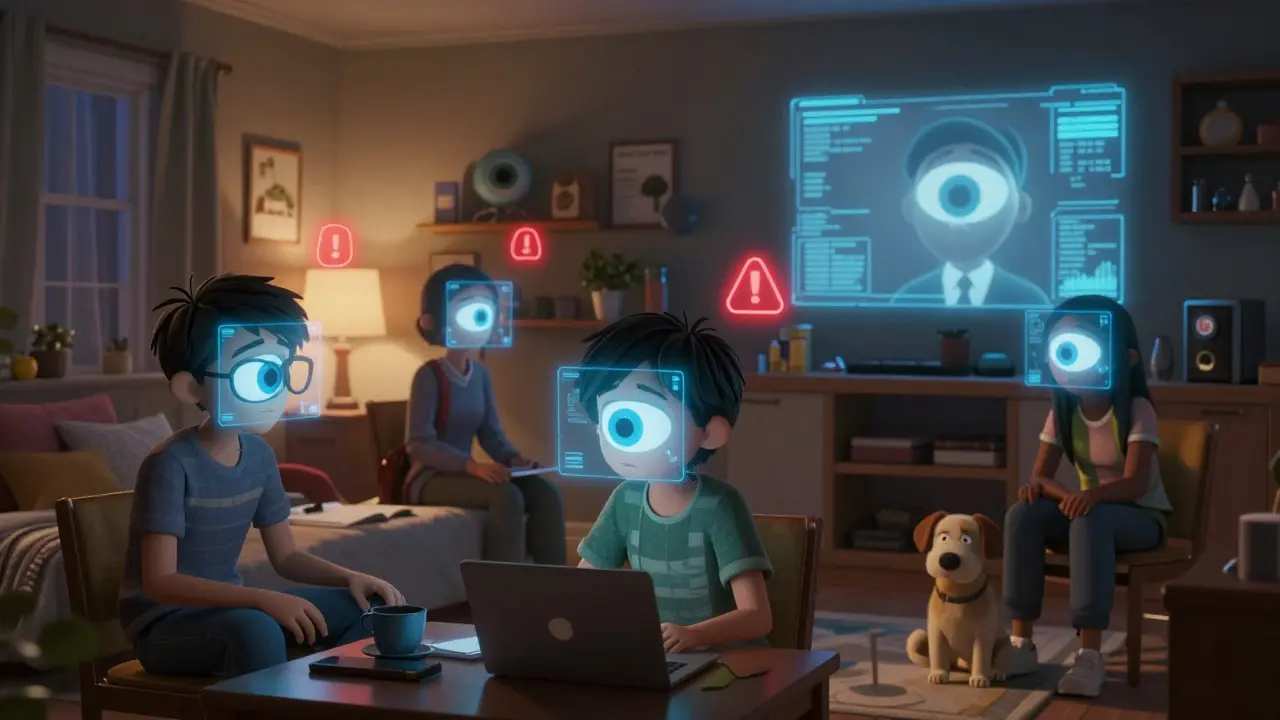
When you take an online exam, you’re not just being tested on what you know-you’re also being watched. Remote proctoring tools scan your room, track your eye movements, and record your keystrokes. For many students, it feels less like an assessment and more like surveillance. But behind the scenes, schools and certification bodies are trying to balance remote proctoring with fairness, privacy, and real security. It’s not a simple equation. And the choices they make right now will shape how education works for years to come.
How Remote Proctoring Actually Works
Remote proctoring isn’t one system-it’s a mix of tools. Some use AI to flag unusual behavior: a glance away from the screen, someone entering the room, or background noise. Others require live human proctors to watch dozens of screens at once. A few even force you to scan your ID, show your surroundings with a 360-degree camera sweep, and lock down your browser so you can’t open other tabs.
Companies like ProctorU, Examity, and Honorlock dominate this space. They all promise to prevent cheating. But their methods vary wildly. ProctorU uses live human monitors who can pause your exam if they see something odd. Honorlock runs on AI and only flags incidents for later review. That means some students get interrupted mid-test, while others aren’t noticed until after they’ve already finished.
Here’s the catch: none of these systems are perfect. A 2023 study from Stanford found that AI proctoring tools misidentified students of color as suspicious 35% more often than white students. Why? Because the algorithms were trained mostly on data from light-skinned individuals in well-lit rooms. If you wear glasses, have a medical condition that causes involuntary movement, or live in a noisy household, you’re more likely to be flagged-even if you’re doing nothing wrong.
Privacy: What Are They Really Seeing?
When you agree to remote proctoring, you’re giving up a lot. Most platforms record your entire session-video, audio, screen activity, even your mouse movements. Some store that data for months or years. A few even scan your home network to check for unauthorized devices.
Imagine this: you’re taking a final exam in your bedroom. Your little sibling walks in to ask for a snack. Your dog barks. Your roommate is studying in the background. Suddenly, your exam is paused. A human proctor writes a note: “Unauthorized person in room.” You didn’t cheat. But now you’re under review. Your transcript could be flagged. Your grade might be withheld.
And there’s no clear rule on who owns that data. Is it the school? The proctoring company? Can they sell it? Can they use it to train future AI models? In 2024, a lawsuit against Proctorio revealed the company had stored sensitive student data-including facial scans and audio recordings-on unsecured servers. That’s not a glitch. That’s a systemic risk.
Privacy laws like GDPR in Europe and CCPA in California say students have a right to know what’s collected and how it’s used. But in the U.S., most universities don’t require informed consent. You’re told: “If you want to take this exam, you must enable proctoring.” No alternatives. No opt-out.
Security: Is It Actually Stopping Cheating?
Proctoring companies claim they’ve cut cheating rates by 70% or more. But real data tells a different story.
A 2025 analysis of 12 major universities showed that cheating rates didn’t drop significantly after implementing AI proctoring. In fact, some schools saw an increase in students dropping courses or avoiding online exams altogether. Why? Because students who were worried about being falsely accused chose not to risk it.
And here’s the irony: the most effective cheaters aren’t caught by proctoring software. They use private tutors, pay someone to take the test for them, or access leaked answer keys. Proctoring tools only catch the clumsy ones-the ones who glance at their phone or whisper to a friend. That’s not security. That’s theater.
What’s worse? Some proctoring systems are vulnerable to hacking. In 2023, researchers at MIT showed they could bypass Honorlock’s browser lockdown using a simple script. They didn’t need to cheat-they just needed to know how the system worked. And if a student can do it, so can a criminal.
Real security comes from better test design: open-book exams, project-based assessments, oral defenses. But those take time. Proctoring software? It’s quick. It’s cheap. And it looks good on paper.

Fairness: Who Gets Punished?
Remote proctoring doesn’t treat everyone the same. It favors students with quiet homes, stable internet, good lighting, and no disabilities. It punishes those who don’t fit that mold.
Think about a student living in a multigenerational household. Their parent works nights. Their younger sibling sleeps in the same room. The camera catches movement. The AI flags it as “suspicious.” The student gets an academic integrity review. They have to submit a video explaining why their brother was in the room. They lose points. Their GPA drops.
Or consider a student with Tourette’s syndrome. Their tics-sudden head movements or vocalizations-are misread as signs of cheating. They’re flagged repeatedly. They stop taking online exams. They drop out.
And what about students in rural areas? If your internet cuts out during the exam, you’re penalized. If you don’t have a webcam, you’re told to buy one. If you can’t afford it? Too bad.
These aren’t edge cases. They’re the norm. A 2024 survey by the National Association of Student Financial Aid Administrators found that 42% of low-income students said they avoided online exams because they feared being flagged. That’s not just unfair. That’s exclusionary.
Alternatives That Actually Work
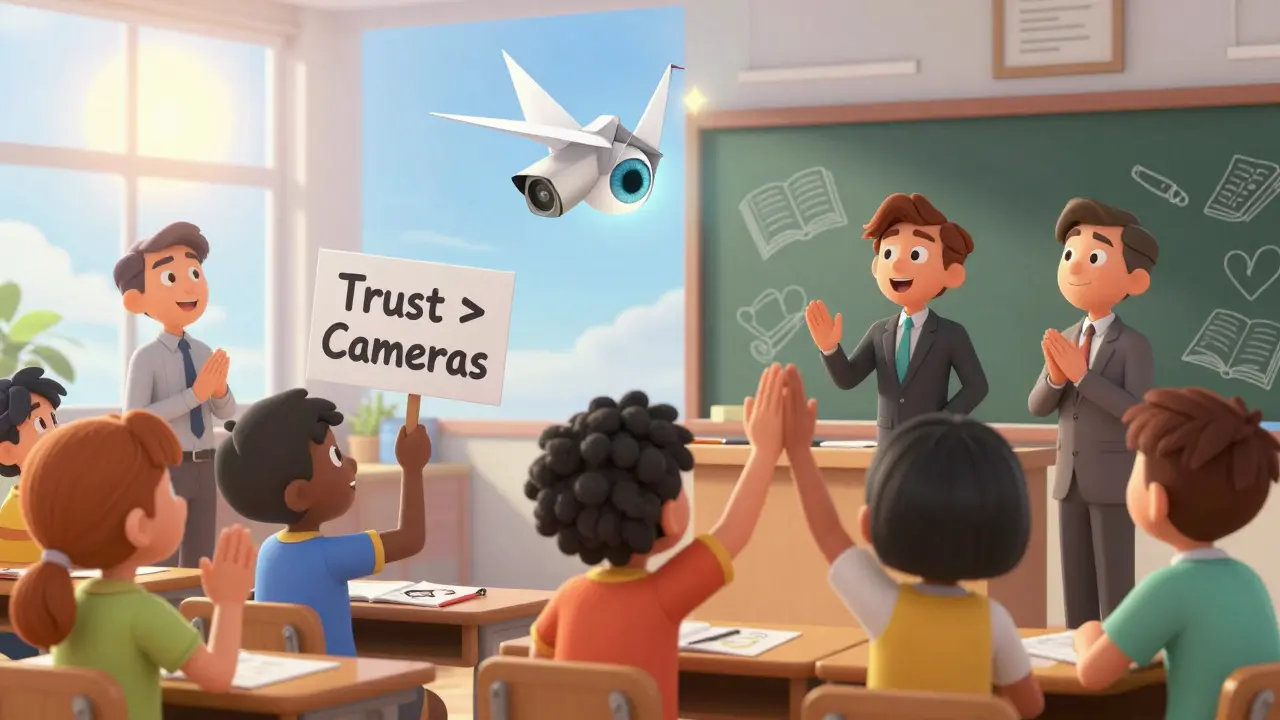
You don’t need cameras and AI to ensure academic integrity. You need trust-and better design.
Some schools are switching to honor codes. Students sign a pledge: “I will not cheat.” They’re given open-book, timed exams that test critical thinking, not memorization. At the University of Michigan, this approach reduced cheating by 28% over three years-without any surveillance.
Others use authentic assessments: essays based on personal experience, video presentations, peer reviews, or real-world problem-solving tasks. These can’t be outsourced. They can’t be Googled. And they’re harder to fake.
Then there’s asynchronous proctoring. Instead of watching you in real time, the system records your exam and reviews it later. Students get a 48-hour window to complete the test. That reduces stress. It gives people with irregular schedules a chance. And it cuts down on false flags.
And let’s not forget: some exams don’t need proctoring at all. If it’s a low-stakes quiz, why monitor it? If it’s a final project, why not grade it on process, not just output?
What Students and Institutions Can Do
If you’re a student:
- Ask your school: What data is collected? How long is it stored? Who has access?
- Request accommodations if you have a disability or live in a crowded space.
- Know your rights. In some states, you can legally refuse proctoring if it violates privacy laws.
If you’re an educator or administrator:
- Stop using proctoring as the default. Make it a last resort.
- Choose tools that let students delete their recordings after grading.
- Train staff to review flagged incidents with empathy, not suspicion.
- Pilot alternatives: honor codes, project-based exams, oral assessments.
The goal isn’t to catch cheaters. It’s to help learners grow. Surveillance doesn’t teach integrity. It teaches fear.
Frequently Asked Questions
Is remote proctoring legal?
Yes, in most places, as long as students are informed and consent is obtained. But in the U.S., many institutions skip proper consent, which violates state privacy laws like CCPA. In the EU, GDPR requires explicit, revocable consent-so schools must allow opt-outs. Always check your local regulations.
Can proctoring software see my other devices?
Some can. Tools like Proctorio and Respondus claim to scan your network for unauthorized devices. But this is often exaggerated. Most only monitor your browser and screen. If a proctoring tool asks you to disable your phone or unplug your tablet, it’s likely overreaching. Ask for their privacy policy.
What should I do if I’m falsely flagged?
Document everything: save your exam timestamp, record the reason given, and request a copy of your recording. Contact your instructor or academic integrity office immediately. Many schools have appeal processes. Don’t wait-delays can hurt your grade or standing.
Do all online courses use remote proctoring?
No. Many reputable programs-especially in graduate education and professional certification-avoid it entirely. Look for courses that use open-book exams, portfolio assessments, or live oral defenses. These are often more reliable and less invasive.
Can I refuse to use remote proctoring?
You can ask. In some cases, you can request an alternative assessment, especially if you have a documented disability, religious objection, or privacy concern. Under the Americans with Disabilities Act, schools must provide reasonable accommodations. If they refuse, you can file a complaint with your institution’s disability services office.
Aafreen Khan
January 11, 2026 AT 20:40Christina Kooiman
January 13, 2026 AT 08:53Michael Jones
January 14, 2026 AT 16:02Tyler Durden
January 15, 2026 AT 18:43Stephanie Serblowski
January 17, 2026 AT 17:10Addison Smart
January 18, 2026 AT 18:55allison berroteran
January 19, 2026 AT 11:50Lissa Veldhuis
January 21, 2026 AT 07:54michael T
January 22, 2026 AT 05:45David Smith
January 22, 2026 AT 08:16