Social Features in Gamified Learning Environments That Actually Work
 Jan, 29 2026
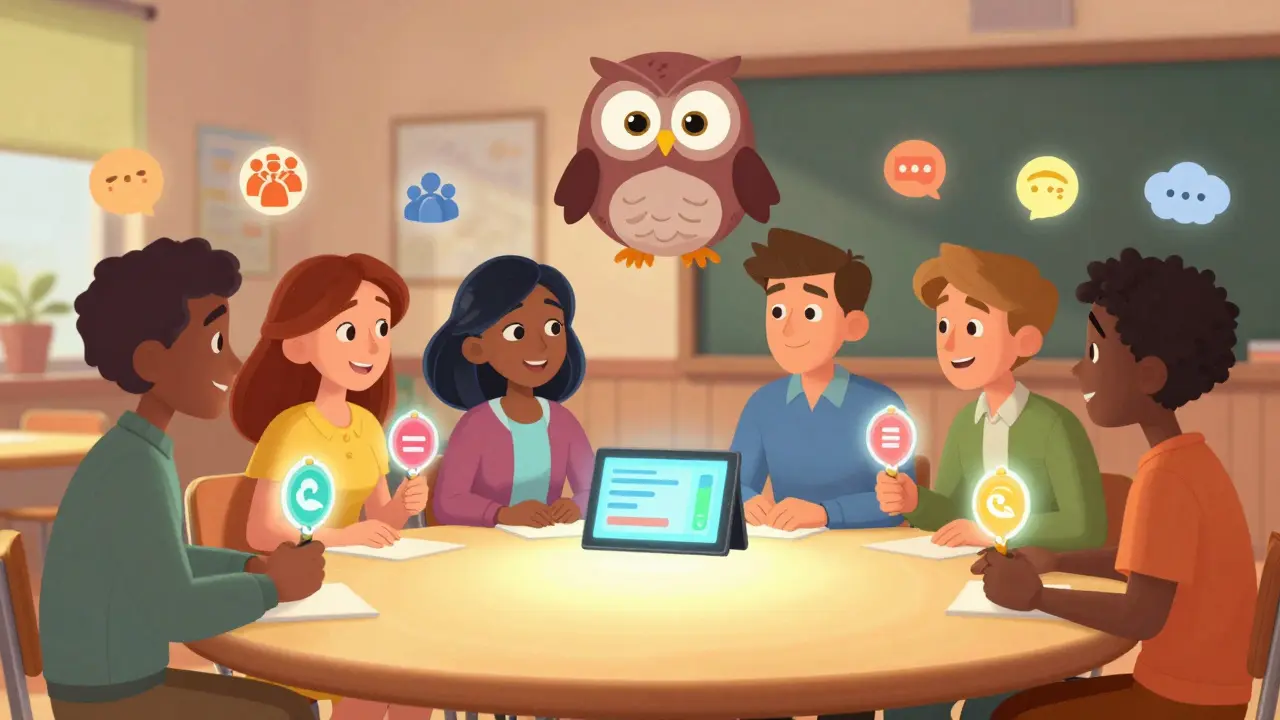
Think about the last time you stuck with a learning app because it felt like a game. Maybe you earned a badge. Maybe you climbed a leaderboard. But here’s the truth-those alone don’t keep people coming back. What really pulls learners in, keeps them engaged, and makes them actually learn is social features. Not just badges or points. Real human connection built into the learning experience.
Why Social Features Beat Solo Gamification
Most gamified learning platforms start with points, levels, and progress bars. They look flashy. They feel rewarding. But studies from Stanford’s Learning Analytics Lab show that learners who only interact with solo gamification drop off 68% faster than those who engage with social elements. Why? Because humans aren’t wired to learn in isolation. We learn by watching, comparing, competing, and collaborating.
Take Duolingo. It’s not the streak counter that makes people open the app every day. It’s seeing your friend’s streak. It’s the chatbot that says, “You’re behind-your buddy Maria just finished five lessons.” That tiny nudge from someone real triggers more action than any gold star ever could.
Five Social Features That Actually Drive Learning
Not all social features are created equal. Some feel forced. Others feel natural. Here are the five that consistently work across platforms-from corporate training to K-12 classrooms.
- Peer Accountability Groups - Instead of just showing a leaderboard, let learners form small teams of 3-5 people. Each group sets weekly goals. When someone falls behind, the group gets a gentle reminder: “Alex hasn’t completed the module yet. Can you help?” This isn’t about shaming. It’s about belonging. A 2025 study from MIT found learners in accountability groups completed 42% more content than solo learners.
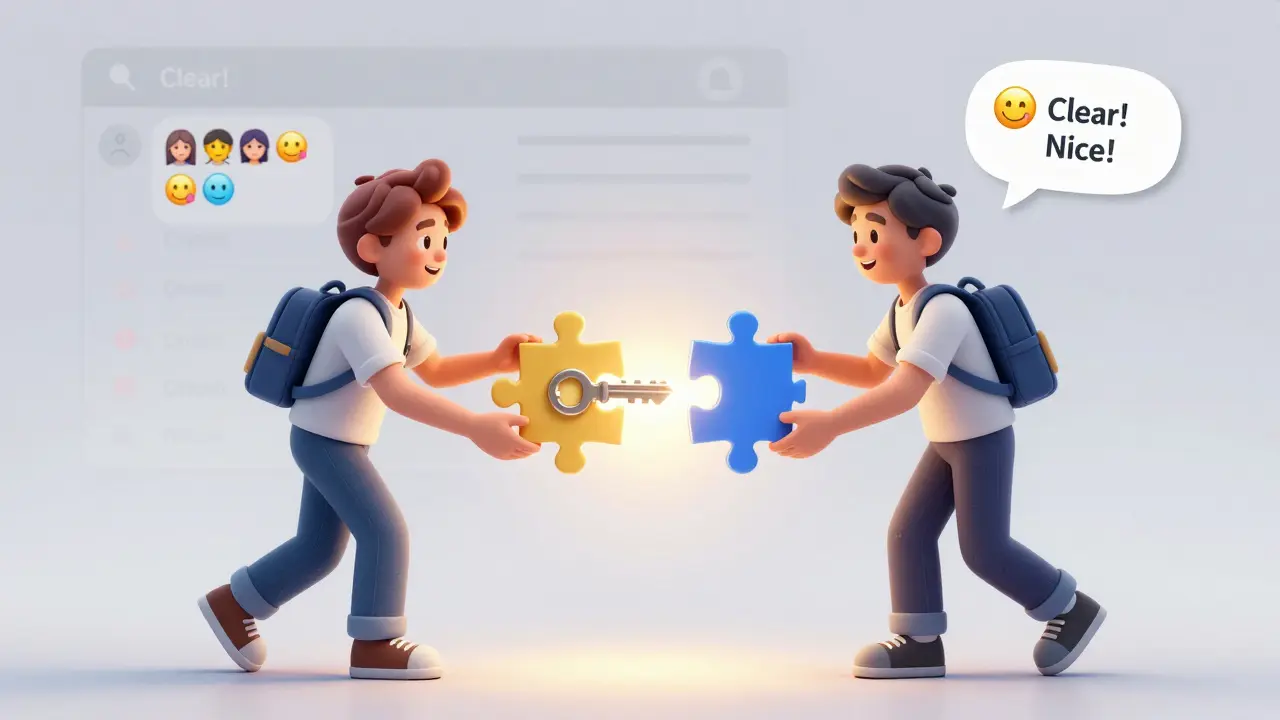
- Cooperative Challenges - Design tasks that require collaboration to win. For example, in a cybersecurity training module, two learners must exchange encrypted messages to unlock the next level. One can’t solve it alone. This forces communication, builds trust, and mirrors real-world teamwork. Platforms like Codecademy use this in their “Pair Programming” mode with great results.
- Real-Time Feedback Loops - Let learners give each other quick, structured feedback. Not “good job,” but “Your explanation of APIs was clearer than mine.” Tools like EdApp let users rate peers’ answers with emoji + one-word feedback. This builds a culture of constructive input, not just competition.
- Community Challenges - Weekly or monthly events where everyone works toward a shared goal. “This week, the whole class will unlock 10,000 XP together. If we hit it, we get a live Q&A with a industry pro.” These create momentum. One corporate training platform saw 73% participation in its monthly challenges-up from 22% when using solo quests.
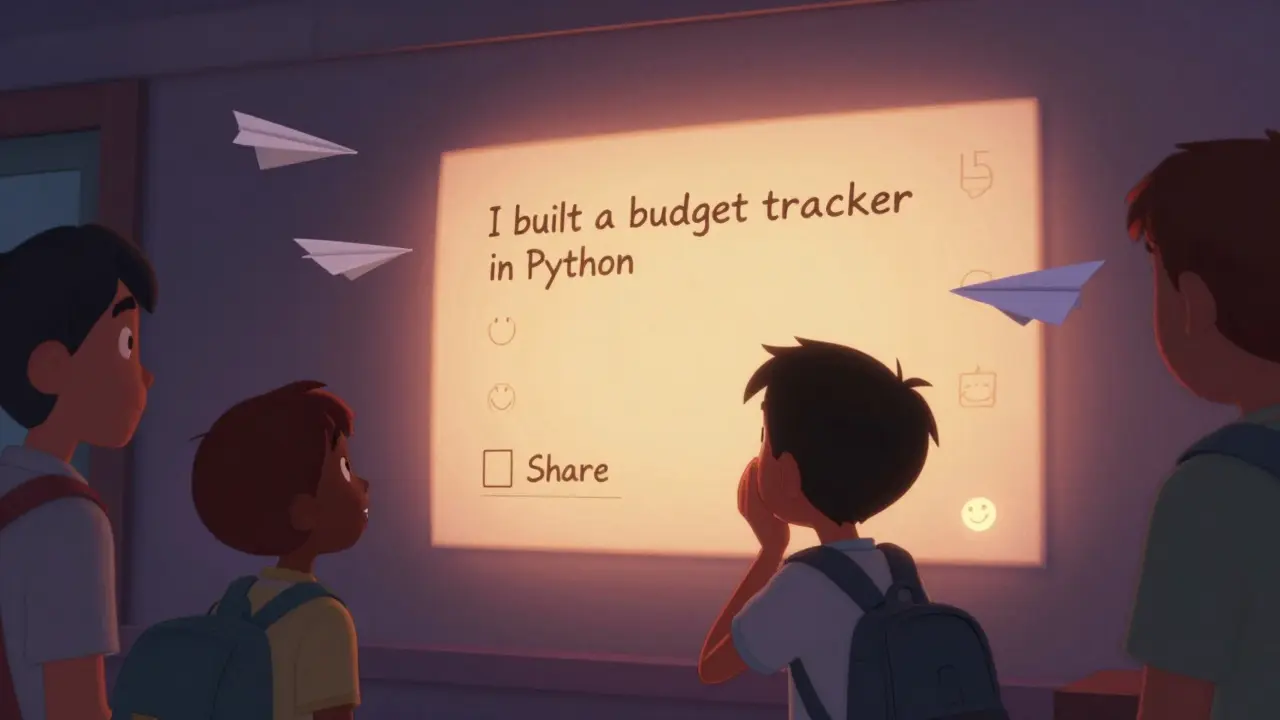
- Profile Sharing & Showcases - Let learners post their achievements, projects, or reflections to a feed. Not just “I earned 500 points,” but “I built a budget tracker in Python and here’s how I did it.” This turns learning into identity. People don’t just complete modules-they build a portfolio they’re proud to share.
What Doesn’t Work (And Why)
Not every social feature adds value. Some even backfire.
Public leaderboards that rank everyone from #1 to #500? They motivate the top 5%. Everyone else feels like a failure. A 2024 survey of 1,200 adult learners showed 61% avoided returning to platforms where they ranked below average.
Forced social chats? “Comment below with your thoughts!”-when no one replies? It feels empty. It’s not social. It’s performative.
And don’t just slap a chat box onto a course and call it “community.” Without structure, moderation, and purpose, it becomes noise.
Designing for Real Connection, Not Just Interaction
The best social features don’t feel like add-ons. They feel like natural parts of learning. Think of them like the rhythm of a conversation-not a broadcast.
Start small. Instead of launching a full forum, try a weekly “Tip of the Week” where learners submit one thing they learned. Pick one to feature. Others upvote. That’s it. In three weeks, you’ll have a culture of sharing.
Use anonymity wisely. Some learners won’t speak up if their name is public. Let them post feedback or questions anonymously at first. Gradually, as trust builds, invite them to use their real names.
And always tie social actions back to learning outcomes. If someone gives feedback, show them how it helped the other person improve. “Jamal used your tip about variable naming and passed his next quiz.” That’s the loop that keeps people engaged.
Real-World Examples That Got It Right
Here’s what works in practice:
- Coursera’s Peer-Reviewed Assignments - Learners grade each other’s projects using clear rubrics. Not just “good” or “bad.” They rate clarity, depth, and originality. This turns grading into a learning moment for both people.
- Khan Academy’s Study Groups - Users can join or create small groups with shared goals. The app sends reminders: “Your group has 2 members who haven’t finished today’s lesson.” No pressure. Just gentle nudges.
- LinkedIn Learning’s Skill Badges with Comments - When you earn a badge, you can share it. Others comment with questions or praise. It becomes a conversation starter, not just a trophy.
Notice the pattern? These aren’t about winning. They’re about growing together.
How to Start Implementing These Today
You don’t need a team of developers. Here’s how to begin:
- Choose one social feature to test. Start with peer accountability groups or weekly challenges.
- Set a clear goal: “We want 70% of learners to complete at least one group task this month.”
- Give learners a simple way to join. A button. A checkbox. A prompt: “Want to team up with someone?”
- Track participation, not just completion. Who’s talking? Who’s helping? Who’s falling silent?
- After two weeks, ask: “What made you keep going?” Listen. Adjust.
Don’t try to build the perfect social system. Build the smallest one that creates real connection. Then grow from there.
Final Thought: Learning Is a Team Sport
Technology can deliver content. But only people can make learning stick. Gamification without social features is like a basketball game with no teammates-everyone runs, no one passes, and the game ends in frustration.
The most effective learning platforms don’t just reward learners. They connect them. They make learning something you do with others, not just for yourself.
Do social features work for adult learners, or just kids?
They work even better for adults. Kids respond to rewards. Adults respond to purpose and belonging. A 2025 study of corporate training found that professionals in peer-led learning groups were 3x more likely to apply what they learned on the job than those who learned alone. Social features tap into the human need to contribute, be seen, and belong-something that doesn’t disappear after high school.
Can social features cause distractions or off-topic chatter?
Yes-if they’re not designed well. But the solution isn’t to remove them. It’s to guide them. Use clear prompts: “Share one thing you struggled with this week.” Add moderation tools so admins can gently redirect off-topic posts. Most learners want to stay on track. They just need a little structure to do it.
What if my learners aren’t social? Should I still try this?
Start with low-pressure options. Allow anonymous feedback. Offer opt-in groups. Don’t force interaction. Many learners who seem quiet are just waiting for the right reason to speak up. A simple prompt like “What’s one thing you learned that surprised you?” often unlocks more than a dozen replies-even from introverts.
Do I need a big platform to add social features?
No. You can start with a simple Google Form for weekly reflections, a shared Notion board for peer tips, or even a private WhatsApp group with structured prompts. The tech doesn’t matter. The intention does. If you create space for real human exchange, you’ve already built the core of a powerful learning community.
How do I measure if social features are working?
Look beyond completion rates. Track: How many learners interact with others? How often do they give or receive feedback? Do they mention peers in surveys? Are they returning after a break? One platform saw a 50% drop in dropouts after adding peer accountability groups-not because learners finished faster, but because they felt less alone.
Stop chasing the next shiny gamification gimmick. Focus on the quiet, powerful force that’s always worked: people helping people learn.
Kendall Storey
January 30, 2026 AT 22:59Peer accountability groups? Absolute game-changer. I’ve seen teams in corporate L&D go from 20% completion to 89% just by pairing folks up and giving them a shared goal. No leaderboard, no points-just ‘Hey, you said you’d finish this by Friday.’ Human accountability beats algorithmic nudges every time.
Megan Blakeman
January 31, 2026 AT 13:05This is so true!! I used to hate learning apps… until I joined a tiny group where we shared one thing we learned each week. I didn’t even know I needed it until I felt it. 😭 Now I’m hooked. People matter more than pixels.
Ashton Strong
January 31, 2026 AT 15:24While the empirical evidence presented is compelling, one must not overlook the foundational psychological principles underpinning social learning theory, as articulated by Bandura in 1977. The mechanisms described-peer accountability, cooperative challenges, and feedback loops-are not merely tactical enhancements; they are structural manifestations of observational learning and vicarious reinforcement.
It is imperative, therefore, that educational technologists do not treat these as feature toggles, but as epistemological frameworks. The transition from solitary gamification to socially embedded learning represents a paradigm shift in instructional design.
LeVar Trotter
January 31, 2026 AT 16:46Love this breakdown. Real talk-most platforms treat social features like a checkbox. ‘Oh, we have a forum!’ Nah. That’s not community. That’s a graveyard. The ones that work? They make you feel like you’re part of something that matters. Like when I helped someone debug their Python script and they came back two weeks later saying they got promoted. That’s the win.
Start small. One shared goal. One feedback prompt. One person who says ‘I’m with you.’ That’s all it takes.
Akhil Bellam
February 1, 2026 AT 04:45Ugh. Another ‘let’s all hold hands and learn’ fantasy. You think adults want to be in ‘peer groups’? Most people just want to get through the damn module without being forced to write a novel about their ‘learning journey.’ This is virtue signaling disguised as pedagogy.
And don’t even get me started on ‘anonymous feedback.’ That’s just a breeding ground for passive-aggressive nonsense. Real professionals don’t need coddling-they need clear objectives and consequences.
Amber Swartz
February 1, 2026 AT 19:00OMG I’m crying. This is exactly what I’ve been screaming into the void for years!!! People don’t care about badges-they care about being SEEN. I quit three apps because I felt like a ghost. Then I joined one with a weekly ‘tip share’ and now I’m addicted. I even told my boss about it. He’s like ‘WTF is this?’ and I’m like ‘THIS IS MY LIFE NOW.’
Robert Byrne
February 3, 2026 AT 05:45You say ‘peer accountability groups’-but did you define what ‘falling behind’ means? Is it 24 hours? 72? Is there a grace period? Are you tracking time-on-task or completion? And what about learners with disabilities or irregular schedules? You’re romanticizing collaboration without addressing equity. This isn’t a feature list-it’s a liability if implemented poorly.
Also, ‘gently remind’? That’s not a feature. That’s a euphemism for social pressure. You’re just hiding coercion behind warm language.
Tia Muzdalifah
February 3, 2026 AT 05:46sooo i tried the weekly tip thing on my work’s training thing and honestly? it worked. i didn’t think i’d say anything but then i wrote ‘i learned how to stop overthinking email replies’ and like 8 people replied with ‘SAME’ and i felt less alone. like, really. no badges, no leaderboards. just… people. weird how that works huh?
Zoe Hill
February 3, 2026 AT 10:53I love this so much!! I’m not great at tech stuff but when someone said ‘your explanation made me get it’ I cried a little. I didn’t know I could help someone else learn. I thought I was just… slow. Turns out I just needed someone to say ‘hey, your way works too.’
Albert Navat
February 4, 2026 AT 06:12Let’s be real-social features are just a workaround for bad content. If your course is actually good, people won’t need a buddy system to stay engaged. You’re treating symptoms, not the disease. And ‘community challenges’? That’s just FOMO wrapped in a bow. Stop trying to make learning feel like a TikTok trend.
King Medoo
February 4, 2026 AT 11:06Look. I’ve seen this before. Every 3 years, someone rediscovered that humans are social creatures. Congrats. 🎉 But here’s the truth: most people who ‘love’ social learning are just addicted to validation. They don’t care about the material-they care about the dopamine hit from a 👍 or a ‘nice job!’
And let’s not pretend anonymity is safe. It’s just a mask for trolls. You think ‘Tip of the Week’ won’t become a dumpster fire of half-baked opinions? It already has. In 2022. At my last job. I was there. I saw the screenshots.
Stop romanticizing chaos. Structure isn’t oppression. It’s the difference between a classroom and a Reddit thread.
Rae Blackburn
February 5, 2026 AT 10:31Who funds these ‘studies’? I bet it’s the same EdTech VC who wants you to stay on the app 20 minutes longer so they can sell your data. Social features aren’t about learning-they’re about engagement metrics. You’re being manipulated into thinking you’re connecting when you’re just feeding the algorithm.
Remember when Facebook said ‘it’s about community’? Same playbook.
Tyler Durden
February 6, 2026 AT 05:45My team tried peer groups last quarter. We had 12 people. 3 dropped out. 5 just lurked. 4 actually talked. But here’s the kicker-those 4? They all got certified. And they started mentoring others. No one forced them. No leaderboard. Just one person said ‘I’m stuck’ and another said ‘I was there last month.’ That’s it.
That’s the magic. Not the tech. Not the feature. The moment someone realizes they’re not alone.
ravi kumar
February 7, 2026 AT 04:08As someone from India, I can say this: our culture values group learning. But many platforms don’t adapt. They use American-style ‘teamwork’ that feels forced. In our context, quiet collaboration-like sharing notes silently, or helping without being asked-is more natural than public accountability. Don’t assume one-size-fits-all.
Barbara & Greg
February 8, 2026 AT 06:48It is regrettable that the author has chosen to conflate social interaction with pedagogical efficacy. The notion that learning is a ‘team sport’ is not only metaphorically incoherent but epistemologically unsound. Knowledge acquisition is an individual cognitive process; social features may facilitate retention, but they do not constitute learning itself.
One must question whether the elevation of ‘belonging’ as a primary educational objective dilutes the rigor of intellectual development. Are we educating minds-or constructing social media profiles?
Steven Hanton
February 8, 2026 AT 11:05Interesting perspective. I’m curious-how do you measure ‘real connection’ versus ‘performative interaction’? Is it the frequency of messages? The depth of feedback? Or the emotional tone? I’ve seen platforms where learners exchange 50 comments a day but never actually build trust. And others where one quiet ‘I struggled with this too’ changes everything.
Maybe the real metric isn’t ‘how many people talk’ but ‘how many feel safe enough to be vulnerable.’