Sports Medicine and Athletic Training: Course Curriculum Guide
 Jun, 16 2026
So, you want to work in the high-stakes world of sports. Maybe you picture yourself on the sidelines of an NFL game or helping a marathon runner recover from an injury. But before you can step onto that field, you need the right education. The path isn't just about knowing anatomy; it’s about understanding how the human body moves, breaks, and heals under extreme pressure.
If you are looking at sports medicine programs, you might be confused by the overlap with athletic training degrees. They sound similar, but they lead to very different careers. One is often a medical specialty for doctors, while the other is a distinct allied health profession focused on prevention and rehabilitation. Getting this curriculum right is your first step toward a career where every second counts.
The Foundation: Kinesiology and Exercise Science
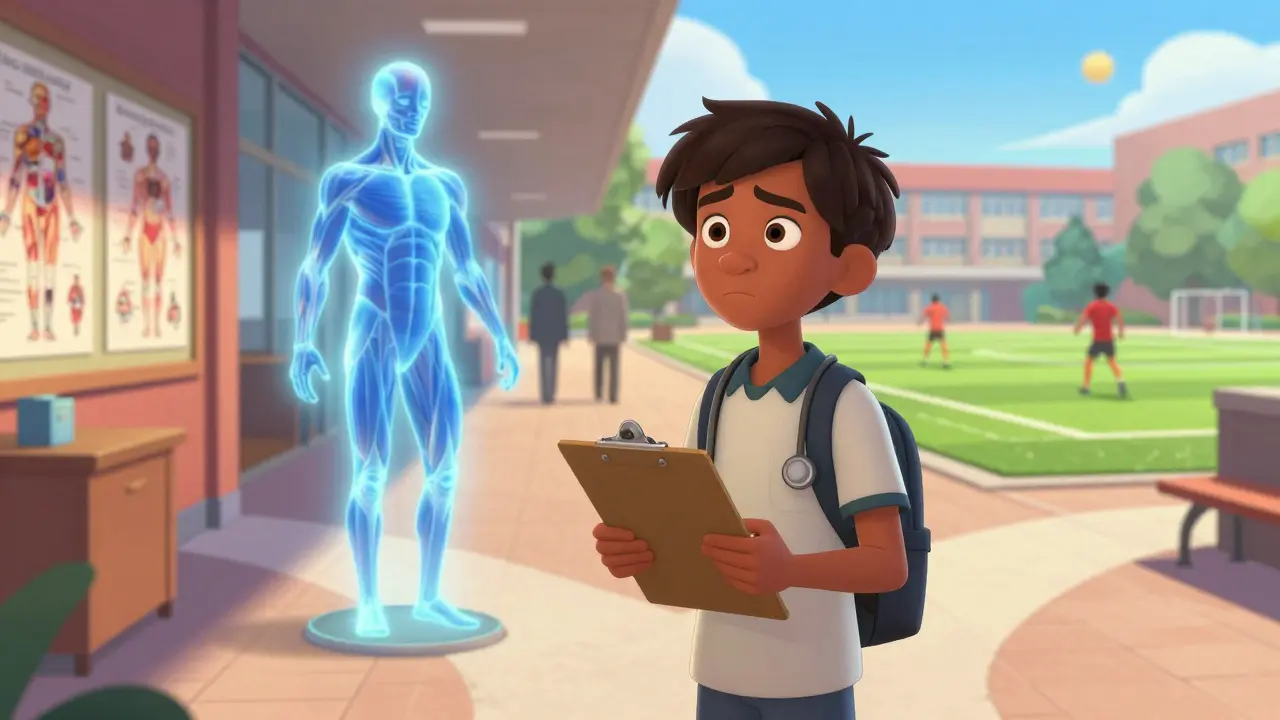
Before you touch a patient, you need to understand the machine. Most undergraduate programs start here. You aren’t just memorizing muscle names; you’re learning how force vectors affect joint stability. This phase usually includes heavy doses of general biology and chemistry, which are prerequisites for advanced coursework.
- Human Anatomy: Dissection labs are common. You’ll spend hours identifying tendons, ligaments, and nerves. Why? Because when an athlete tears an ACL, you need to know exactly what fibers were involved.
- Exercise Physiology: This course explores how the body responds to acute and chronic stress. You’ll learn about energy systems-like ATP-PCr and glycolysis-and how they fuel different types of sports.
- Biomechanics: Using physics principles to analyze movement. Think gait analysis or optimizing a pitcher’s throwing motion to reduce shoulder strain.
These classes are tough. They require a shift from passive reading to active problem-solving. If you struggle with spatial reasoning, anatomy will challenge you. But mastering these basics is non-negotiable for anyone entering the field.
Core Competencies: Injury Prevention and Management
Once you know how the body works, you learn how it breaks. This is the heart of the athletic training curriculum. Whether you are pursuing a Bachelor of Science in Athletic Training (BSAT) or a Master of Science in Athletic Training (MSAT), these core subjects remain consistent.
You will move from theory to practice quickly. Clinical rotations become a huge part of your schedule. Here is what those core modules look like:
- Pathophysiology: Understanding disease processes. How does inflammation progress? What happens at the cellular level during healing?
- Pharmacology: You won’t prescribe drugs, but you need to know them. Understanding NSAIDs, opioids, and anti-inflammatories helps you manage pain and recognize adverse reactions in athletes.
- Evaluation and Diagnosis: Learning special tests. You’ll practice orthopedic assessments to differentiate between a sprain and a fracture without relying solely on imaging.
- Emergency Care: CPR, AED use, and managing concussions on the field. This is life-or-death stuff. You’ll simulate cardiac arrest scenarios repeatedly until they become muscle memory.
The goal here is autonomy. In many settings, you are the first line of defense. Your ability to make quick, accurate decisions determines whether an athlete plays again next week or never plays again.
Clinical Rotations: Where Theory Meets Reality
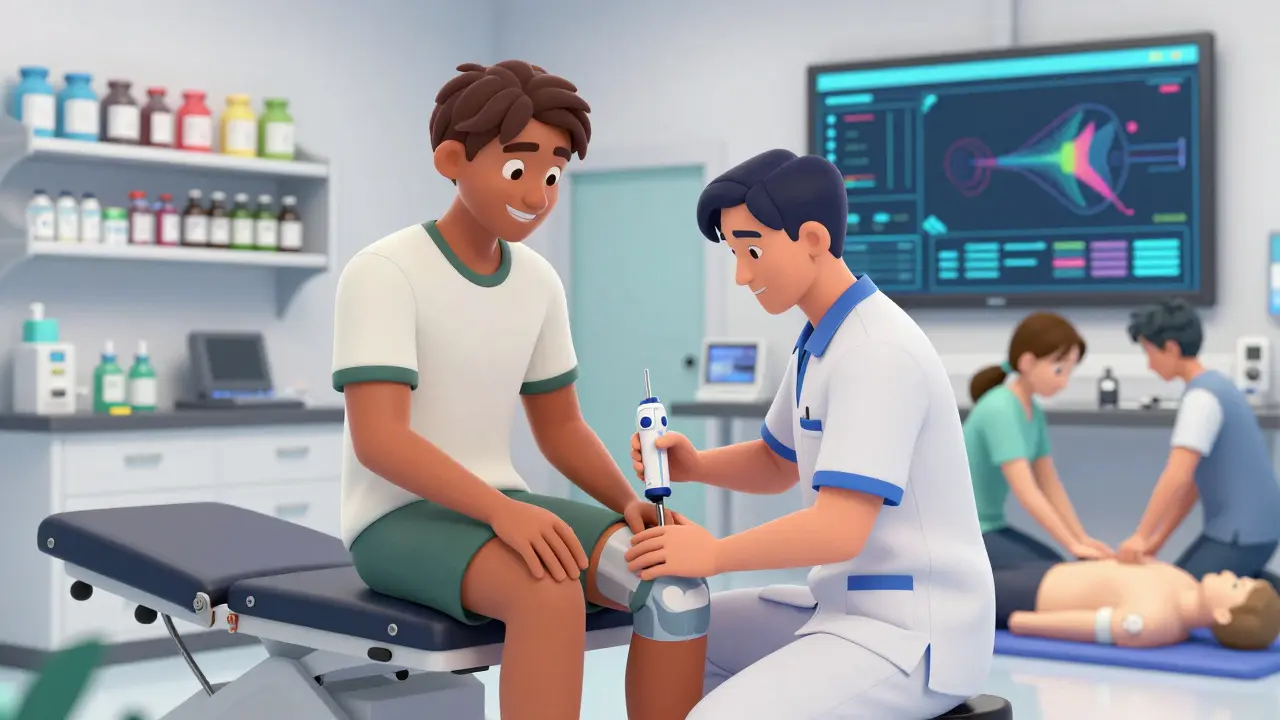
Books can teach you anatomy, but they can’t teach you bedside manner. Clinical rotations are the most critical part of any sports medicine curriculum. You’ll spend hundreds of hours in real-world settings, working under licensed mentors.
| Setting | Focus Area | Typical Patient Population |
|---|---|---|
| High School Sports | Injury prevention, taping, basic emergency care | Adolescent athletes, diverse sports |
| College Athletics (NCAA) | Advanced rehab, performance optimization | Elite student-athletes |
| Orthopedic Clinic | Post-surgical rehabilitation, manual therapy | General public, post-op patients |
| Professional Sports | High-performance recovery, travel logistics | Professional athletes |
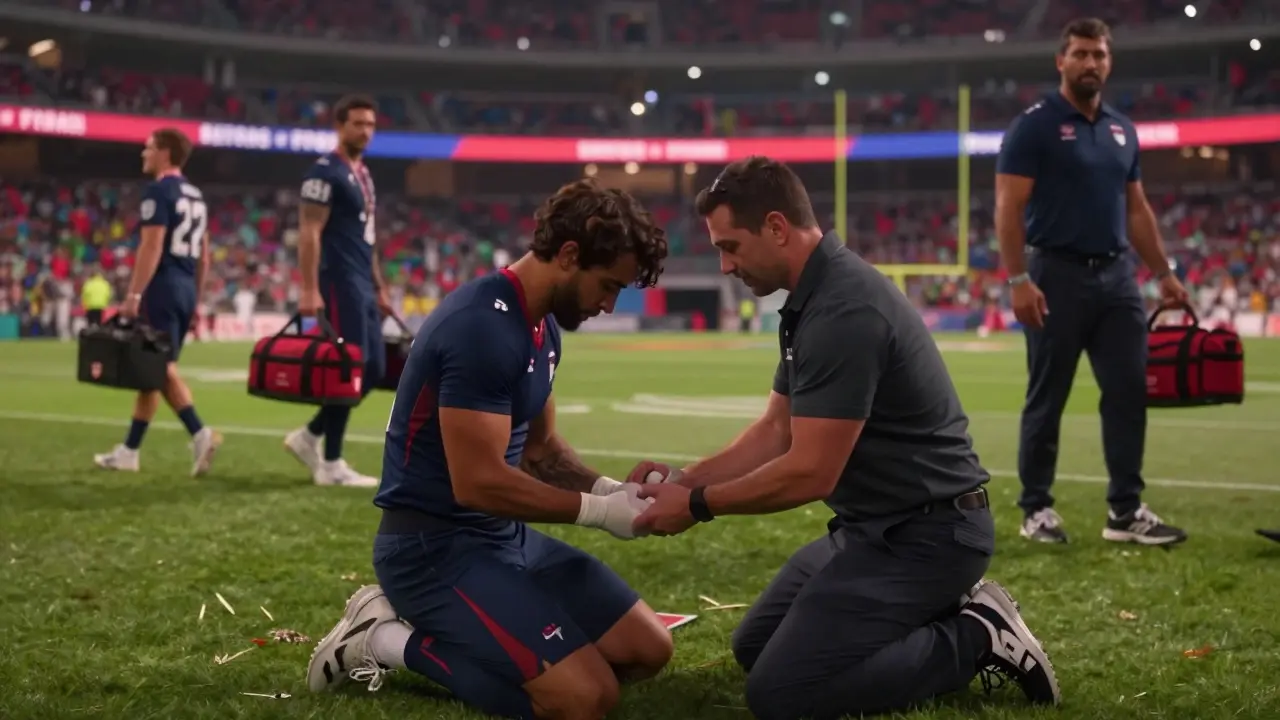
Each setting offers a different perspective. High school rotations teach you resourcefulness-you often have limited equipment and large teams. College rotations expose you to cutting-edge technology and intense competition for playing time. Orthopedic clinics provide depth in rehabilitation protocols. By rotating through these environments, you build a versatile skill set that makes you employable anywhere.
Specialized Topics: Nutrition and Mental Health
Modern sports medicine goes beyond muscles and bones. The holistic approach is now standard in top-tier curricula. You can’t treat an athlete effectively if you ignore their fuel source or their mental state.
Most programs include courses in:
- Sports Psychology: Learning how to help athletes cope with injury-induced depression, performance anxiety, and burnout. You’ll study techniques like visualization and goal setting.
- Nutrition for Athletes: Understanding hydration strategies, electrolyte balance, and timing of nutrient intake around workouts. You’ll learn to spot red flags for eating disorders, which are prevalent in weight-class and aesthetic sports.
- Concussion Management: A rapidly evolving field. You’ll study return-to-play protocols, cognitive testing tools, and the long-term effects of repetitive head trauma.
These topics reflect the changing landscape of healthcare. Today’s athletes demand comprehensive care. They want providers who understand their entire lifestyle, not just their injured knee.
Licensure and Certification Requirements
Graduating isn’t enough. To practice as an athletic trainer, you must pass the Board of Certification (BOC) exam. Your curriculum should align directly with BOC competencies. Many states also require licensure, which adds another layer of regulation.
Here is what you need to track:
- CAATE Accreditation: Ensure your program is accredited. Without it, you cannot sit for the BOC exam.
- Continuing Education Units (CEUs): Once certified, you must maintain your credentials. Some programs introduce CEU planning early so you know what resources are available.
- State Laws: Scope of practice varies by state. Some allow athletic trainers to diagnose independently; others require physician supervision. Your curriculum should highlight these legal boundaries.
Failing the BOC exam is rare for graduates of strong programs, but it happens. Look for schools with high first-time pass rates. That metric tells you everything you need to know about the quality of their preparation.
Choosing the Right Program
Not all sports medicine degrees are created equal. Some focus heavily on research, while others prioritize clinical skills. Ask yourself what kind of provider you want to be. Do you want to work in a hospital setting? Then a master’s degree with a clinical focus might be better. Do you want to stay in high school sports? A bachelor’s program with extensive secondary school rotations could suffice.
Visit campuses if you can. Talk to current students. Ask about faculty accessibility and clinic partnerships. The best curriculum is one that supports your learning style and connects you with mentors who believe in your potential. Remember, this career is built on relationships-with patients, coaches, and fellow healthcare professionals. Choose a program that fosters those connections from day one.
What is the difference between sports medicine and athletic training?
Sports medicine is typically a medical specialty for physicians (MDs or DOs) who diagnose and treat injuries, often performing surgery. Athletic training is an allied health profession where certified athletic trainers (ATCs) focus on prevention, emergency care, and rehabilitation. ATCs work closely with physicians but operate within a specific scope of practice centered on musculoskeletal health.
Do I need a master's degree to become an athletic trainer?
Yes. As of 2022, the entry-level degree for athletic training in the United States is a master’s degree. All accredited programs now offer either a standalone Master of Science in Athletic Training (MSAT) or a combined Bachelor’s/Master’s pathway. Bachelor’s-only programs no longer qualify graduates for the BOC certification exam.
How long does it take to complete a sports medicine curriculum?
If you enter a direct-entry master’s program after completing prerequisite undergraduate courses, it typically takes two years. Combined BS/MS programs usually take five years total. For medical doctors specializing in sports medicine, it requires four years of college, four years of medical school, three to five years of residency, and one year of fellowship.
What are the hardest classes in an athletic training program?
Students often cite Human Anatomy, Pathophysiology, and Biomechanics as the most challenging due to the volume of detailed information required. However, clinical evaluation courses are also stressful because they require applying theoretical knowledge to live patients under time pressure. Success depends on consistent study habits and active participation in lab sessions.
Can I work in sports medicine with just a bachelor's degree?
With a bachelor’s degree in kinesiology or exercise science, you can work in fitness centers, corporate wellness, or as a personal trainer. However, you cannot legally call yourself an "Athletic Trainer" or provide clinical rehabilitation services without certification. To work clinically in sports settings, you must complete an accredited master’s program and pass the BOC exam.
kimberly de Bruin
June 16, 2026 AT 10:11the body is just a machine waiting to break and we are the mechanics who pretend to understand the soul of movement while memorizing ligaments
Edward Nigma
June 18, 2026 AT 05:24You say it's tough but honestly most people fail because they lack discipline not intelligence. The curriculum is basic stuff if you actually read the textbooks instead of watching youtube videos. Stop complaining about anatomy labs.
Francis Laquerre
June 19, 2026 AT 15:08In Europe we have different standards for athletic training and often the integration with physical therapy is much more seamless than this American model suggests. It is fascinating how isolated these professions can feel here despite the shared goal of human performance optimization.
michael rome
June 21, 2026 AT 02:41I truly appreciate the detailed breakdown of the clinical rotations. It is vital that students understand the scope of practice in each setting. Please remember to prioritize your mental health during those intense semesters as burnout is a real threat to future practitioners.
Andrea Alonzo
June 21, 2026 AT 11:28It is so important to highlight the psychological aspects of injury recovery because when an athlete loses their identity through sport they often struggle with depression and anxiety which requires a compassionate approach from trainers who are willing to listen without judgment and provide resources for professional help rather than just focusing on the physical healing process which is only half the battle in modern sports medicine.
Saranya M.L.
June 22, 2026 AT 05:57The pedagogical framework outlined here is fundamentally flawed because it ignores the holistic Ayurvedic principles that have governed musculoskeletal health for millennia. You cannot claim expertise in sports medicine without understanding doshic imbalances and the role of diet in inflammation management which is clearly superior to the western pharmaceutical approach described in the pharmacology section.
om gman
June 22, 2026 AT 19:05oh look another guide telling us how to be doctors without going to med school. pathetic really. you think knowing a few fancy words like biomechanics makes you special? please. i've seen better diagnostics in a dog park.
Jeanne Abrahams
June 24, 2026 AT 05:55South African universities are laughing at this master's degree requirement because we produce competent practitioners with far less bureaucracy and significantly more practical field experience from day one. Your system is bloated and expensive for what amounts to glorified taping services.
Bineesh Mathew
June 25, 2026 AT 10:20The tragedy of modern athletic training is that it reduces the magnificent symphony of human motion to mere vectors and forces ignoring the spiritual agony of the broken limb which screams for redemption not just rehabilitation. We are treating the vessel but neglecting the divine spark within the athlete.
Oskar Falkenberg
June 26, 2026 AT 20:41i totally agree with the point about high school rotations being tough because you dont have any money for equipment but its also really rewarding because you get to see kids grow up and learn about their bodies for the first time which is pretty cool even if the facilities are sometimes just a gym floor with some tape rolls scattered around
Caitlin Donehue
June 28, 2026 AT 14:56i wonder if the concussion protocols mentioned are actually followed strictly by all coaches or if there is still pressure to return players too quickly despite the risks
Stephanie Frank
June 28, 2026 AT 21:45This entire post is a scam designed to sell overpriced degrees to desperate kids who want to work in sports. The reality is you will be underpaid overworked and treated like garbage by coaches who think you are just a glorified masseuse. Do yourself a favor and go into tech instead.
Patrick Dorion
June 29, 2026 AT 08:42From a philosophical standpoint, the distinction between prevention and treatment is artificial. They are two sides of the same coin. A good practitioner must embody both roles simultaneously, acting as a guardian of potential energy and a healer of kinetic damage. This duality is what makes the profession intellectually stimulating beyond the rote memorization of anatomy.
Marissa Haque
July 1, 2026 AT 05:00Oh my gosh!!! I am so excited to start my program next year!! The part about clinical rotations sounds absolutely amazing!!! I can't wait to meet my mentors and learn everything I can!!! This guide was so helpful!!!
Keith Barker
July 2, 2026 AT 23:48anatomy is hard but necessary
Lisa Puster
July 4, 2026 AT 10:18only americans would need such a long list of requirements to do something simple. european systems are far more efficient and produce better results with less waste of time and money. this is typical american bloat.
Joe Walters
July 5, 2026 AT 21:52lol yeah right like anyone can afford a masters degree these days. its a joke. the whole system is rigged against normal people who just want to help athletes. rich kids get the jobs and everyone else gets left behind. typical.