Course Levels: Understand Progression Paths in Trading Education
When you start learning to trade, course levels, structured stages of learning that guide you from basics to advanced strategies. Also known as skill tiers, they're not just about moving from Module 1 to Module 5—they're about building real, usable skills one step at a time. Most people think trading is about picking the right chart pattern or catching the next crypto surge. But without clear course levels, you’re just spinning wheels. You might learn how to read a candlestick, but if you don’t know how to manage risk before you place a trade, you’re setting yourself up to lose money—not gain experience.
Good course levels don’t just teach you tools—they teach you trading education, a systematic approach to learning market behavior, discipline, and decision-making under pressure. Think of it like learning to drive. You don’t start on the highway. You learn the pedals, then parking, then city traffic, then highways. Same with trading. Beginner levels focus on understanding markets, terminology, and basic order types. Intermediate levels add risk management, trade planning, and backtesting. Advanced levels? That’s where you build your edge—testing strategies under real conditions, refining your psychology, and learning how to scale without blowing up your account. The posts here cover all of it: from how to design a trading plan that keeps you disciplined, to how to avoid liquidations on leverage, to how to validate crypto strategies with real data—not wishful thinking.
What makes course levels work isn’t the number of videos or the length of the syllabus. It’s whether each step prepares you for the next. You’ll find posts here that show how to turn free courses into lead magnets, how to use learning analytics to spot where students get stuck, and how to design assignments that actually measure progress—not just completion. You’ll see how learning progression, the path a student takes from confusion to confidence in trading is built through microlearning, real-world simulations, and feedback loops—not just theory. And you’ll see how tools like virtual office hours, assignment rubrics, and video embedding in LMS platforms aren’t just tech features—they’re the scaffolding that holds the whole learning structure together.
There’s no magic shortcut. But there is a clear path. The posts below give you the map. Whether you’re just starting out or trying to level up your teaching, you’ll find practical guides that cut through the noise and show you exactly what works—in real trading classrooms, with real students, making real trades.
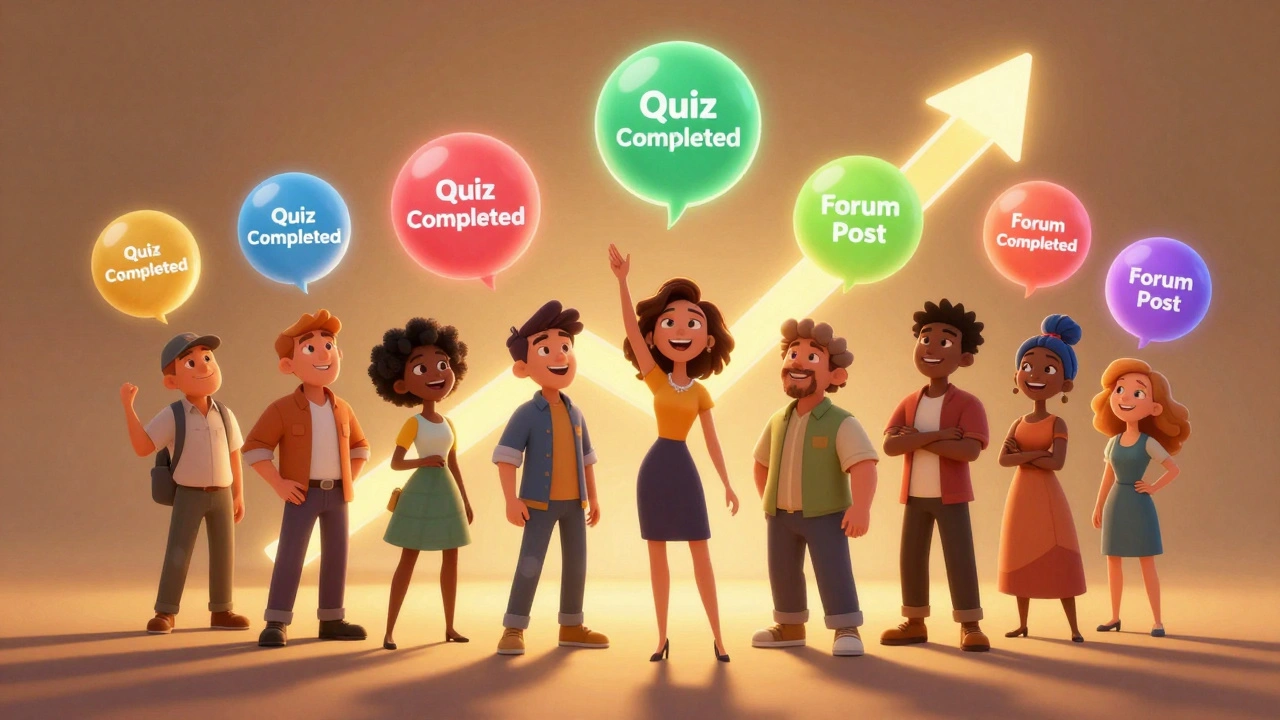
Recognition Systems: How Points, Levels, and Privileges Boost Engagement in Online Courses
Points, levels, and privileges transform online learning by making progress visible and rewarding. Learn how recognition systems boost completion rates, deepen engagement, and turn learners into active participants.