Language Localization in Education: Why It Matters for Online Learning
When you learn a language, you’re not just memorizing words—you’re learning how people think, react, and connect. Language localization, the process of adapting educational content to fit a learner’s cultural and linguistic environment. Also known as cultural adaptation in learning, it turns generic lessons into experiences that feel personal, relevant, and real. A lesson on business meetings in English might teach you how to say "Let’s touch base," but if you’re in Japan, that phrase won’t land the same way. Localization makes sure the meaning, tone, and even humor work for the person sitting in front of the screen—not just the textbook.
Good cultural context in learning, the integration of social norms, values, and communication styles into educational material. Also known as contextual language teaching, it isn’t optional—it’s essential. Think about how a phrase like "You’re fired" sounds in a Western corporate setting versus a collectivist culture where directness can feel harsh. Courses that ignore this risk confusing learners, lowering engagement, or even causing offense. And it’s not just about phrases. Dates, currency, examples, even colors in graphics matter. A chart showing "sales in Q4" means nothing if the learner’s calendar doesn’t use quarters. Localization fixes that.
It’s also tied to accessibility in courses, ensuring all learners, regardless of language or background, can fully understand and participate. Also known as inclusive education design, it overlaps with ADA compliance, multilingual interfaces, and plain-language instruction. A learner with limited English skills shouldn’t have to struggle through jargon just to pass a quiz. Localization means offering clear explanations, culturally familiar examples, and support that doesn’t assume prior knowledge of Western systems. This isn’t just nice—it’s necessary for fairness and effectiveness.
And it’s not just for non-native speakers. Even native English learners in different regions—say, a student in India versus one in Texas—need different examples, references, and pacing. Localization isn’t about making everything the same. It’s about making learning feel like it was made for you. That’s why posts in this collection cover everything from teaching social cues in language classes to designing slides that work across cultures, to setting up systems that track how learners from different backgrounds respond to content. You’ll find real strategies—not theory—for building courses that don’t just deliver information, but actually connect.
What you’ll find here are the tools, case studies, and practical fixes used by educators who’ve seen what happens when localization is ignored—and what happens when it’s done right. No fluff. No buzzwords. Just what works.
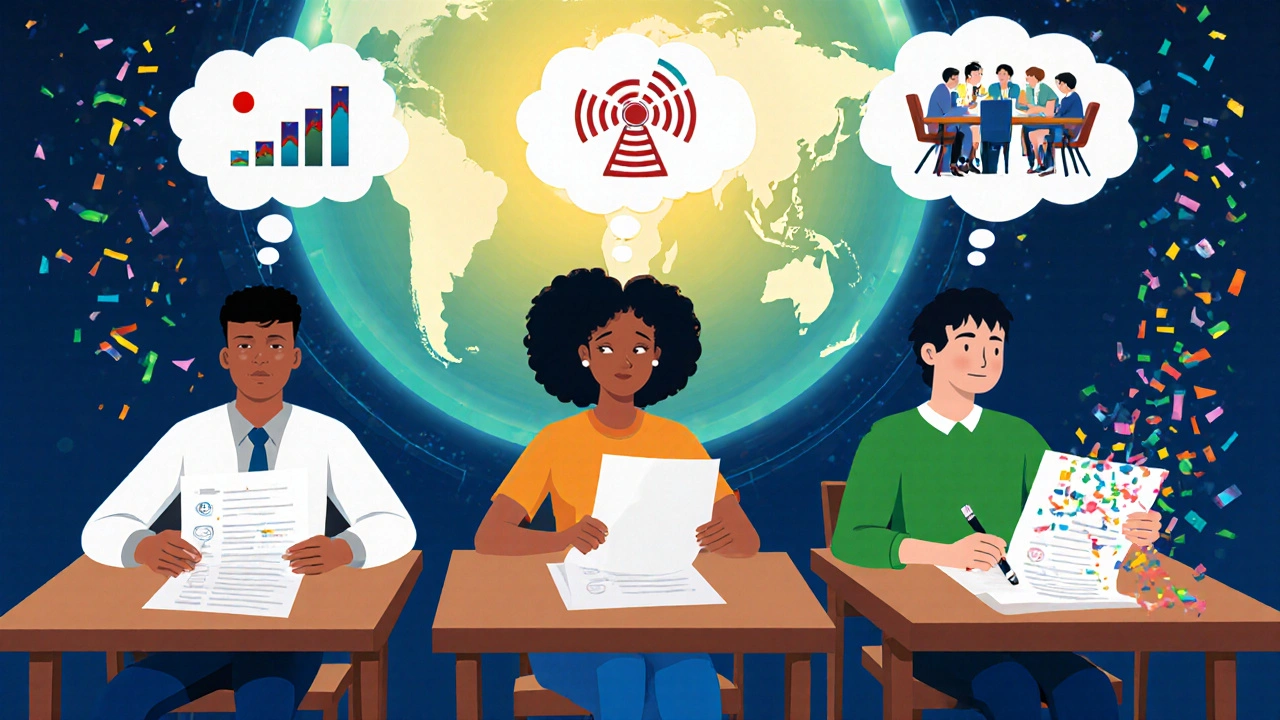
Internationalization of Certification Exams: Language and Culture
Internationalizing certification exams means more than translation-it requires adapting content to cultural norms and real-world contexts. Learn how global providers ensure fairness and accuracy across languages and regions.