Student Support in Online Learning: Tools, Tactics, and Real Solutions
When you're learning something new online, student support, the system of resources and human touchpoints that help learners stay on track and overcome obstacles. Also known as learner support, it's what turns a lonely screen into a guided journey. Most people think student support means replying to emails or posting FAQs. But the best programs do way more—they anticipate problems before they happen, spot disengaged learners early, and make people feel seen. Without it, even the best course content fails. Students quit not because it’s too hard, but because they feel lost.
Effective student retention, the ability to keep learners actively participating over time relies on three things: clear communication, timely feedback, and community. You can’t just throw a course at someone and hope they figure it out. They need to know who to ask, when to reach out, and that someone cares if they’re struggling. That’s why posts on inactive students, learners who enroll but stop interacting with course material matter. They show you how to spot the quiet dropouts—those who log in once and vanish—before they’re gone for good. And it’s not about nagging them. It’s about sending a simple, human message: "We noticed you haven’t logged in. Is everything okay?" That one gesture can bring someone back.
Then there’s learning platform, the digital environment where courses are delivered and student interactions are tracked. It’s not just a website—it’s the stage where support happens. A good platform makes it easy to ask questions, track progress, and get help without jumping through hoops. That’s why posts on LMS security, the measures that protect student data and privacy within learning systems and virtual classroom, a live, interactive online space for real-time teaching and learning are part of the same puzzle. If students don’t trust the system, or if it’s glitchy and confusing, support becomes impossible.
And let’s be real—support isn’t just about fixing problems. It’s about building confidence. Gamification, clear feedback loops, and peer communities all play a role. When someone earns a badge for finishing a module, or gets a personalized note from an instructor, it tells them: "You’re not just a number." That’s what keeps people going when motivation dips. The posts below cover exactly how to do this without sounding robotic or forced. You’ll find real tactics for handling course dropouts, designing feedback that sticks, setting up community rules that work, and using data to see who needs help before they quit.
What you’ll find here isn’t theory. It’s what works in 2025. From how to run a design critique that actually improves work, to how to make your slides accessible to everyone, to how to use escape rooms to boost engagement—every post ties back to one truth: students stay when they feel supported, not just instructed. Let’s get into it.
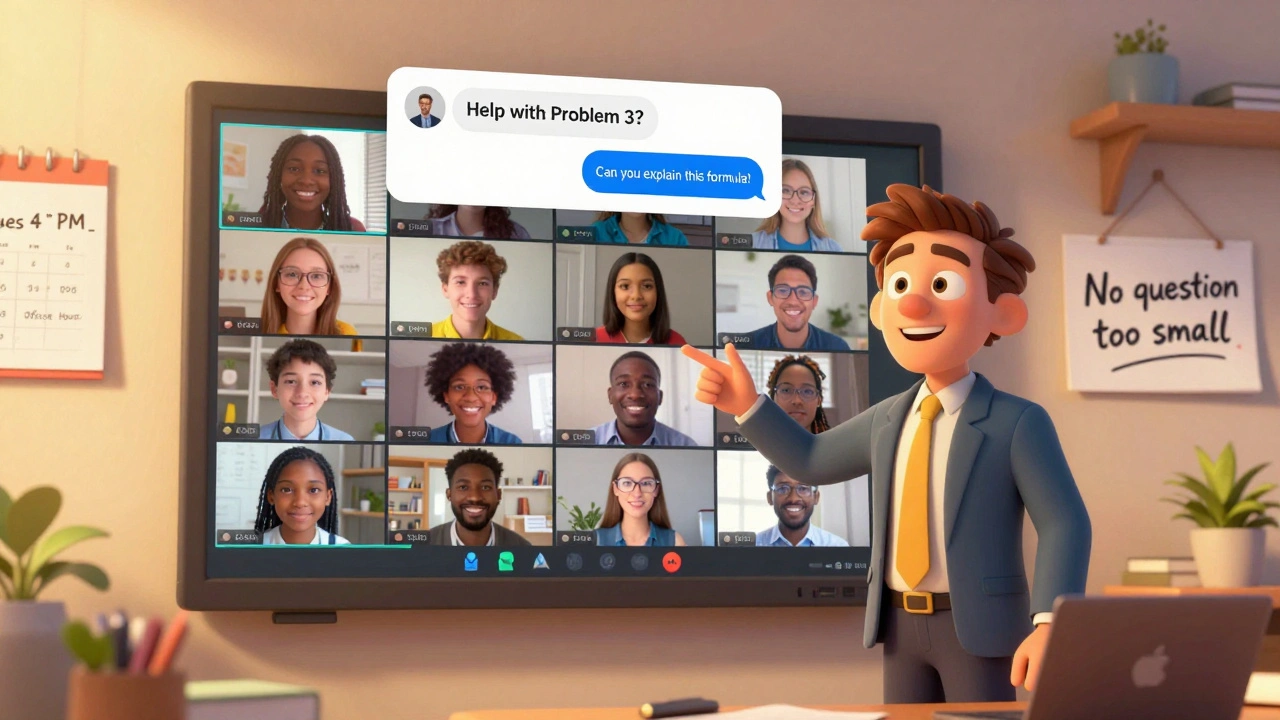
Virtual Office Hours: How to Set Up, Schedule, and Run Them Effectively
Virtual office hours are essential for student success in online courses. Learn how to set up, schedule, and run them effectively with proven strategies that boost engagement and retention.

How to Run Effective Study Groups and Peer Mentoring Programs
Study groups and peer mentoring programs boost academic success by turning isolation into collaboration. Learn how to structure them, build trust, choose the right people, and measure real results-not just attendance.