Adaptive Learning in Online Courses: How AI Adjusts to Student Pace and Level
 May, 14 2026
Imagine logging into an online course where the next lesson isn't just "Chapter 3" but a specific module designed exactly for what you struggled with yesterday. You don't sit through explanations of concepts you already mastered, nor do you get left behind when the class moves too fast. This is the promise of adaptive learning, which uses algorithms to tailor educational content to individual learners in real time. In 2026, this technology has moved from experimental pilot programs to a standard feature in many major learning management systems (LMS). For students, it means less frustration and more efficiency. For educators, it offers data-driven insights into who is struggling and why. But how does it actually work under the hood, and does it really deliver on its promises?
How Adaptive Learning Works
At its core, adaptive learning relies on continuous assessment. Unlike traditional online courses that might have a quiz at the end of a week's worth of material, adaptive platforms assess knowledge constantly. Every click, every correct answer, every hesitation before selecting an option sends data to the system's engine. This engine compares your performance against a vast dataset of other learners to determine your current proficiency level.
The process typically follows a feedback loop. First, the system presents a baseline question or task. Based on your response, it adjusts the difficulty of the next item. If you answer correctly, the next question becomes slightly harder, probing the limits of your understanding. If you struggle, the system steps back, offering remedial content or simpler questions to reinforce foundational concepts. This dynamic adjustment ensures you are always operating in your "zone of proximal development"-the sweet spot where learning is challenging but achievable.
- Data Collection: The platform tracks speed, accuracy, and patterns in errors.
- Algorithmic Analysis: Machine learning models interpret this data to map your knowledge state.
- Content Delivery: The LMS serves up the most relevant resources, videos, or practice problems.
- Feedback Loop: Your interaction with the new content updates your profile, refining future recommendations.
This isn't magic; it's sophisticated statistics applied to pedagogy. By removing the one-size-fits-all approach, these systems aim to maximize retention while minimizing wasted time.
Benefits for Students
The primary benefit for learners is autonomy over their pace. In a synchronous classroom or a rigid asynchronous course, everyone moves at the same speed regardless of their background. If you're strong in math, you might find yourself bored during basic arithmetic reviews. Conversely, if you're new to coding, you might drown when the instructor jumps straight into complex functions without covering syntax basics. Adaptive learning solves this mismatch.
Research suggests that personalized pacing leads to higher completion rates. When students aren't forced to re-watch lectures they've already understood, they save time. More importantly, they stay engaged. Boredom is a major cause of dropout in online education. By keeping the material appropriately challenging, adaptive systems maintain a state of flow. Additionally, immediate feedback reduces anxiety. Instead of waiting days for a grade, you know instantly if you've grasped a concept, allowing you to correct misconceptions before they solidify.
For non-traditional learners, such as working professionals balancing jobs and family, this flexibility is invaluable. They can spend extra time on difficult topics during quiet evenings and breeze through familiar material during lunch breaks, optimizing their limited study hours.
Advantages for Educators
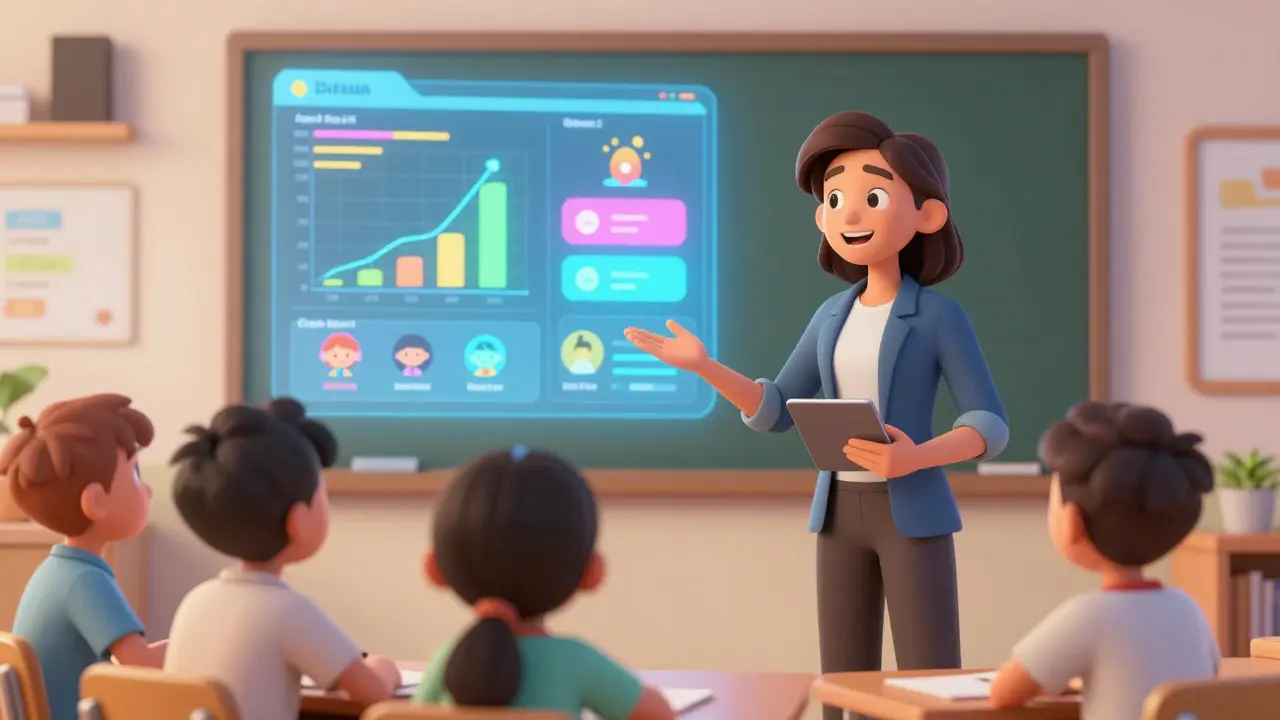
Instructors often worry that technology will replace them, but adaptive learning tools actually free up their time for high-value interactions. Instead of spending hours grading multiple-choice quizzes or trying to identify which students are falling behind by looking at aggregate scores, teachers receive detailed dashboards. These dashboards highlight specific knowledge gaps across the class. For example, an instructor might see that 40% of the cohort struggled with a particular statistical formula, prompting a targeted review session or the creation of a supplemental video.
This shift allows educators to move from being content deliverers to facilitators of learning. They can focus on mentorship, discussion, and complex problem-solving-areas where human intuition and empathy excel. Furthermore, adaptive systems reduce the administrative burden of differentiation. Teachers no longer need to manually create separate worksheets for advanced and struggling students; the software handles the scaffolding automatically.
| Feature | Traditional Online Course | Adaptive Learning Platform |
|---|---|---|
| Pacing | Fixed schedule for all students | Individualized based on mastery |
| Content Path | Linear and identical for everyone | Dynamic and branching |
| Feedback | Delayed (after assignments/quizzes) | Immediate and continuous |
| Instructor Role | Content delivery and grading | Mentorship and intervention |
| Data Insight | Aggregate scores only | Granular skill-level analytics |
Challenges and Limitations
Despite its advantages, adaptive learning is not a silver bullet. One significant challenge is the quality of the underlying content. An algorithm can only recommend what exists in the repository. If the remedial materials are poorly written or outdated, the adaptive experience will be frustrating rather than helpful. Content creators must ensure that every possible path through the curriculum is robust and pedagogically sound.
Another concern is the "black box" nature of some algorithms. Students and teachers may not understand why the system is recommending certain paths. Transparency is crucial for trust. If a student feels the system is unfairly labeling them as weak in a subject they actually understand, they may disengage. Therefore, best practices now include providing clear rationales for recommendations, such as "We noticed you missed two questions on X, so we're reviewing Y first."
Privacy is also a critical issue. Adaptive systems collect immense amounts of behavioral data. Institutions must adhere to strict data protection regulations, ensuring that student information is secure and used solely for educational purposes. Misuse of this data could lead to profiling or biased outcomes, particularly if the training data for the algorithms contains historical biases.
Implementation Strategies
For organizations looking to adopt adaptive learning, a phased approach works best. Start with a single course or subject area where the content is highly structured and objective, such as mathematics or language vocabulary. These subjects lend themselves well to algorithmic mapping because there are clear right and wrong answers.
- Audit Existing Content: Break down your curriculum into granular skills or competencies. This micro-structuring is essential for the algorithm to make precise adjustments.
- Select the Right Platform: Look for LMS solutions that offer open APIs, allowing you to integrate adaptive engines like Knewton Alta or ALEKS, or those built-in like Coursera's adaptive features.
- Pilot and Iterate: Run a small-scale pilot with a diverse group of students. Gather qualitative feedback on the user experience alongside quantitative data on learning outcomes.
- Train Educators: Ensure instructors understand how to interpret the data dashboards and intervene effectively when the system flags issues.
Remember, technology supports teaching; it doesn't replace it. The most successful implementations combine the efficiency of adaptive algorithms with the human touch of dedicated instructors.
The Future of Personalized Education
As artificial intelligence continues to evolve, adaptive learning will become even more nuanced. Future systems may incorporate multimodal data, analyzing facial expressions via webcam to detect confusion or boredom, or using voice analysis to gauge engagement levels during live sessions. Natural language processing will allow for more complex, open-ended assessments, moving beyond multiple-choice questions to evaluate writing and critical thinking skills adaptively.
We are also seeing a shift towards lifelong learning ecosystems. Adaptive platforms won't just be confined to academic courses but will extend to professional development and corporate training. As job markets change rapidly, workers will need to upskill continuously. Adaptive learning provides a scalable way to deliver personalized professional growth, ensuring employees acquire the exact skills needed for their roles without wasting time on irrelevant training.
Is adaptive learning suitable for all subjects?
It works best for subjects with clear, hierarchical structures like math, science, and language acquisition. Subjects that rely heavily on subjective interpretation, such as philosophy or creative arts, are harder to adapt algorithmically because there are fewer definitive "right" answers to track progress.
Does adaptive learning replace teachers?
No. It automates the delivery of content and assessment, freeing teachers to focus on mentorship, emotional support, and complex discussions. The human element remains crucial for motivation and deeper understanding.
How much data does an adaptive system collect?
It collects extensive behavioral data, including time spent on tasks, click patterns, error types, and sequence of actions. Institutions must ensure this data is anonymized and stored securely according to privacy laws like FERPA or GDPR.
Can students opt out of adaptive learning?
In many cases, yes, though it may limit their access to personalized resources. However, most modern platforms allow students to switch to a linear mode if they prefer a traditional structure, ensuring inclusivity for those who may feel anxious about algorithmic tracking.
What is the cost of implementing adaptive learning?
Costs vary widely. Some LMS providers offer basic adaptive features for free or included in subscription fees. Advanced enterprise solutions can be expensive due to licensing fees and the need for specialized content development. However, the long-term ROI often justifies the investment through improved completion rates and reduced instructor workload.