AI Tutoring Systems: Personalized Feedback at Scale for Courses
 Aug, 30 2026
Imagine grading 200 essays in a weekend. You’re exhausted, your coffee is cold, and by essay #150, every student sounds the same to you. Now imagine an AI Tutoring System that reads all 200 essays in seconds, flags specific grammatical errors, checks for thesis clarity, and even suggests relevant reading materials for each student individually. That’s not sci-fi; it’s happening right now in classrooms from Tempe to Tokyo.
The promise of Artificial Intelligence in Education isn’t just about replacing teachers with robots. It’s about solving the scaling problem. Human attention is finite. A professor can’t give deep, personalized feedback to 300 students simultaneously without burning out. AI tutoring systems bridge this gap, offering immediate, tailored guidance that adapts to each learner’s pace and style. But how do they actually work? And more importantly, are they good enough to trust with your students’ grades?
What Exactly Is an AI Tutoring System?
At its core, an Intelligent Tutoring System (ITS) is software designed to provide instruction and feedback in a way that mimics a human tutor. Unlike simple quiz apps that just say "right" or "wrong," modern ITS platforms use natural language processing (NLP) and machine learning models to understand context, intent, and nuance.
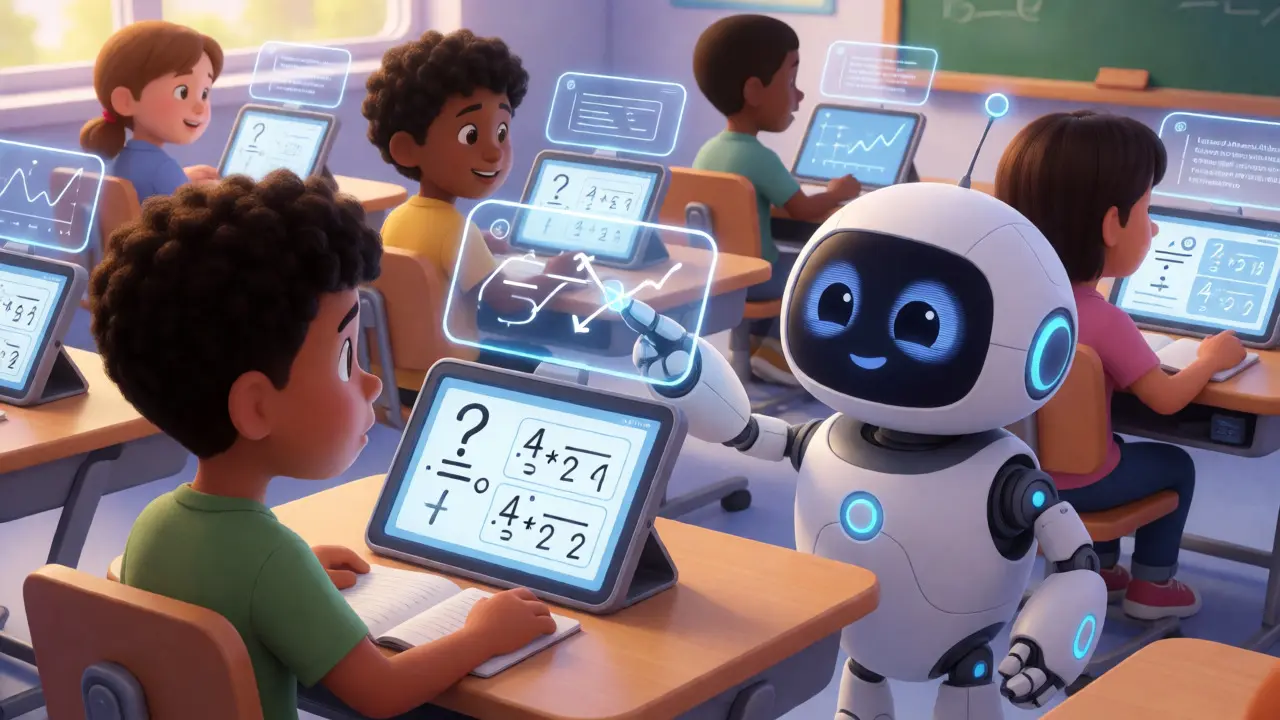
Think of it as a digital coach. If a student submits a math problem solution, the system doesn’t just check the final answer. It analyzes the steps taken. Did the student make a conceptual error in step three but calculate correctly afterward? The AI catches that. It knows where the logic broke down. This level of granularity was impossible to scale manually until recently.
These systems typically operate on three pillars:
- Student Modeling: Tracking what the student knows and doesn’t know.
- Domain Knowledge: Understanding the subject matter rules and facts.
- Pedagogical Module: Deciding the best next step-whether to hint, explain, or challenge.
The Mechanics of Personalized Feedback
How does the magic happen? It starts with data. When a student interacts with the platform, every click, pause, and error is logged. Over time, this builds a detailed profile. Let’s say you’re teaching an introductory Python course. Student A struggles with loops but grasps variables quickly. Student B has the opposite issue. An Adaptive Learning Algorithm detects these patterns and adjusts the curriculum in real-time.
For Student A, the system might serve up extra practice problems focused specifically on `for` and `while` loops, accompanied by visualizations of memory usage. For Student B, it might skip ahead to loop exercises while reinforcing variable assignment concepts through different examples. This isn’t just randomization; it’s targeted intervention based on predictive analytics.
The feedback itself has evolved beyond generic comments. Early computer-aided instruction gave canned responses like "Incorrect." Today’s AI generates dynamic explanations. If you write a sentence with a dangling modifier, the AI doesn’t just flag it; it explains why the modifier dangles and offers two rewritten versions. This turns correction into a learning moment rather than a penalty.
Benefits Beyond Convenience
Why should educators care? Sure, saving time is nice. But the pedagogical benefits are deeper. Immediate feedback is crucial for retention. Psychology research consistently shows that the shorter the delay between action and feedback, the better the learning outcome. Waiting a week for a graded paper often means the student has already forgotten their thought process. An AI tutor responds instantly, keeping the cognitive thread intact.
There’s also the equity angle. In large lecture halls, shy students rarely raise their hands. They suffer in silence, falling further behind. An AI interface provides a safe, judgment-free zone where students can ask "stupid" questions repeatedly without embarrassment. Studies from institutions using tools like Carnegie Learning’s MATHia have shown improved confidence levels among students who previously avoided seeking help.
Furthermore, these systems free up instructors to do what humans do best: mentorship. Instead of spending hours grading multiple-choice quizzes, professors can focus on facilitating discussions, guiding complex projects, and addressing emotional barriers to learning. The AI handles the routine; the human handles the relationship.
Choosing the Right Tool: A Comparison
Not all AI tutors are created equal. Some excel at STEM subjects where answers are binary. Others shine in humanities, where nuance matters. Here’s how some leading platforms stack up against common needs.
| Platform | Primary Focus | Feedback Type | Best For |
|---|---|---|---|
| Duolingo Max | Language Learning | Conversational Practice & Grammar Explanation | Beginner language learners needing low-stakes practice |
| Khan Academy | K-12 Math & Science | Hints, Step-by-Step Solutions, Mastery Tracking | Foundational skill building and self-paced review |
| Carnegie Learning | Advanced Math (Algebra II - Calculus) | Cognitive Coaching, Error Analysis | Schools wanting rigorous, standards-aligned math intervention |
| Turnitin Feedback Studio | Writing & Research | Grammar Checks, Similarity Reports, Peer Review Prompts | Higher education writing courses focusing on academic integrity and style |
Notice the distinction. Duolingo uses AI to simulate conversation partners, leveraging NLP to parse user input. Khan Academy relies more on rule-based hints combined with mastery tracking. Carnegie Learning digs deeper into cognitive science, modeling how students think about mathematical structures. Your choice depends entirely on your course goals.
Pitfalls and Limitations
Let’s be real: AI isn’t perfect. The biggest risk is over-reliance. Students might start treating the AI as a crutch, copying solutions without understanding the underlying logic. We call this "gaming the system." If the AI gives away too much information in the first hint, the student learns nothing.
Another issue is bias. Machine learning models are trained on historical data. If that data contains biases-say, favoring certain cultural references or communication styles-the AI will replicate them. In writing assessments, an AI might penalize non-standard dialects unfairly if it wasn’t trained on diverse linguistic patterns. Educators must audit these outputs regularly.
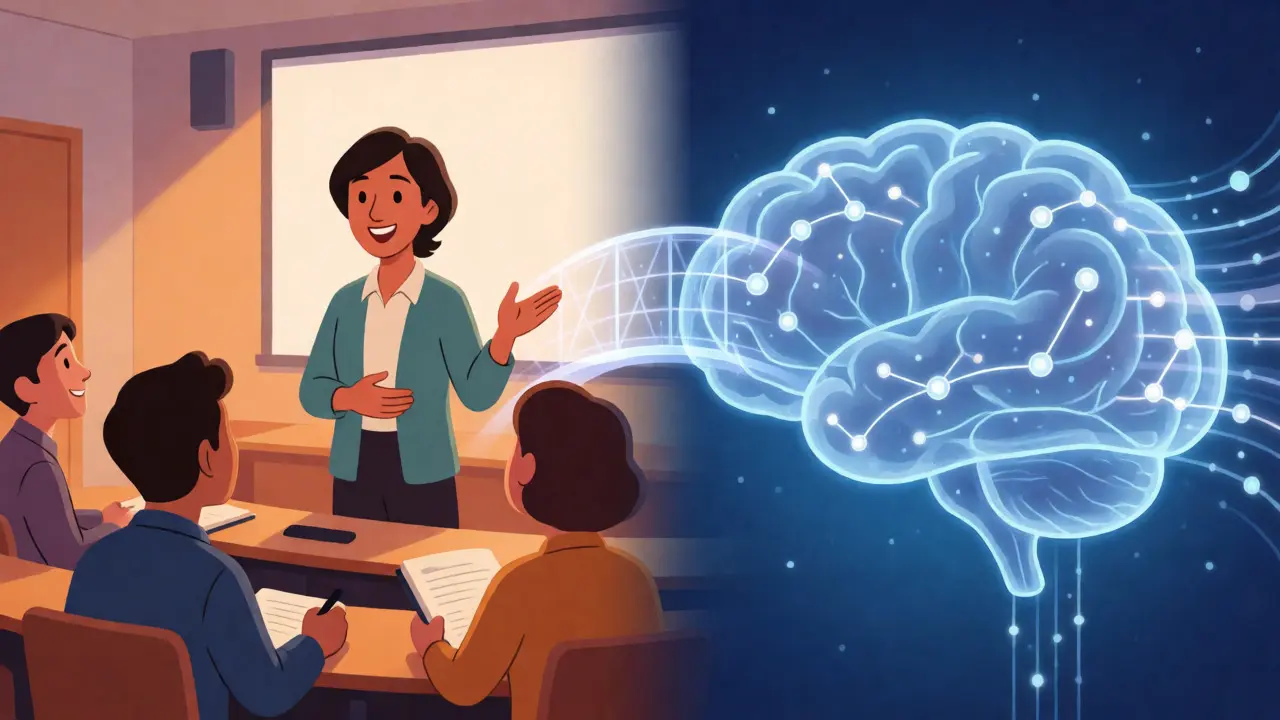
Then there’s the empathy gap. An AI can detect frustration from typing speed or backspace frequency, but it can’t tell if a student is having a bad day because of personal issues. It lacks the contextual awareness of a human teacher who notices a student looks tired. Blending AI efficiency with human insight remains the gold standard.
Implementing AI Tutors in Your Course
Ready to try this? Don’t overhaul your entire curriculum overnight. Start small. Pick one unit or assignment type that involves repetitive feedback. Maybe it’s weekly reflection journals or basic coding assignments. Integrate an AI tool there first.
Here’s a practical checklist for rollout:
- Define Clear Objectives: What exactly should the AI handle? Grammar? Logic errors? Content accuracy?
- Test with a Pilot Group: Use it with one section before going campus-wide.
- Train Students: Teach them how to interpret AI feedback. It’s a tool, not an oracle.
- Maintain Human Oversight: Spot-check AI decisions weekly. Correct any systematic errors in the model’s logic.
- Gather Feedback: Ask students if the feedback helped. Adjust settings based on their experience.
Remember, transparency is key. Tell students when they’re interacting with an AI. Explain how their data is used. Trust is fragile, especially when algorithms are involved.
The Future of Personalized Learning
We’re moving toward hyper-personalization. Imagine an AI that doesn’t just adapt to your knowledge gaps but also your mood, energy levels, and preferred learning times. Wearable tech could feed biometric data into the system, suggesting harder problems when you’re alert and easier reviews when you’re fatigued.
Integration with other tools will deepen too. Picture an AI tutor connected directly to your library database, pulling in fresh articles related to your current topic. Or linking to career services, showing you which skills you’re mastering that align with job market trends. The silos between learning, researching, and career planning are dissolving.
For now, though, the value proposition is clear: scale without sacrificing quality. AI tutoring systems don’t replace teachers. They amplify them. They handle the heavy lifting of assessment so educators can focus on inspiration. If you’re still drowning in grading stacks, it’s time to let the machines take some weight off your shoulders.
Can AI tutoring systems grade creative writing effectively?
Yes, but with caveats. Modern AI excels at mechanical aspects like grammar, syntax, and structure. For creative elements like tone, voice, and narrative arc, it provides suggestions rather than definitive judgments. Human review is still essential for high-stakes creative assessments to ensure nuanced critique.
Is student data safe with AI tutoring platforms?
Reputable platforms comply with regulations like FERPA in the US and GDPR in Europe. They anonymize data where possible and use encryption. However, always review the privacy policy of specific vendors to understand how long they retain data and whether it’s used to train broader models.
Do AI tutors reduce the need for human teachers?
No, they shift the role. Teachers spend less time on routine grading and more on mentoring, facilitating discussions, and addressing complex conceptual hurdles. The human element of motivation, empathy, and contextual understanding remains irreplaceable.
How much does an AI tutoring system cost?
Costs vary widely. Free options exist for individual users (like Khan Academy). Institutional licenses for schools can range from $5 to $50 per student annually, depending on features and support levels. Enterprise solutions for universities may involve custom pricing based on integration needs.
What happens if a student disagrees with the AI feedback?
Most systems allow students to appeal or request human review. This is a critical feature. It ensures that algorithmic errors don’t negatively impact grades and teaches students critical thinking by challenging automated assessments.
Bonnie Watt
August 30, 2026 AT 13:22Oh, please. Another tech bro trying to convince us that a robot can understand the human soul? I've seen these systems flag perfectly valid poetic license as "grammatical error" because some engineer in Silicon Valley thinks comma splices are a sin against humanity. It’s not about scaling; it’s about control. You’re just outsourcing your intellectual laziness to an algorithm that doesn’t know irony from a hole in the wall.
Dave Gibbeson
August 31, 2026 AT 20:13Listen up! Bonnie is missing the forest for the trees here. We are talking about freeing educators from the drudgery of grading so they can actually teach! If you're still doing this manually, you are wasting potential. These tools are robust, they are scalable, and they work. Stop resisting progress and start leveraging the data. Your students deserve better than delayed feedback, period.
Kim Edwards
September 1, 2026 AT 02:14I am literally screaming into the void right now because THIS IS EXACTLY WHAT HAPPENED TO ME LAST SEMESTER!! 😱 I had 40 essays due at midnight and by essay #12 my brain was melting out of my ears like wax candles in a furnace. The AI caught things I missed, but then it told me my thesis was "emotionally flat" which felt like a personal attack on my very existence! 🤯 But seriously, the relief was palpable. It’s terrifyingly good and slightly insulting all at once.
Sabrina Newland
September 3, 2026 AT 00:37i think its fascinating how we assume intelligence requires consciousness 🧠✨ maybe the ai sees patterns we cant see cause were too busy feeling things?? or maybe its just really good at mimicking what we think intelligence looks like... idk i just wonder if the students feel seen by the machine or just processed 🥺📚
Amara Akbar
September 3, 2026 AT 18:02It is wonderful to see such enthusiasm for educational technology. However, we must remain vigilant regarding the equity implications mentioned in the article. Not every student has equal access to high-speed internet or devices capable of running these sophisticated models. Furthermore, we should ensure that the pedagogical module does not inadvertently penalize neurodivergent students who may express ideas differently. Let us support both the innovation and the inclusivity.
Art HND
September 4, 2026 AT 20:06Garbage in garbage out. Bias is baked in. No empathy. Waste of time for humanities.
Elizabeth Brooks
September 6, 2026 AT 00:33Hey everyone, great discussion! Just wanted to add that when we used Turnitin Feedback Studio last year, the biggest win wasn't just the grammar check but the peer review prompts. It helped students engage with each others work way more effectively than before. We did have some issues with non-native speakers getting flagged for style rather than content errors though so definitely need to keep auditing those outputs!
Deb Kortyna, MBA
September 7, 2026 AT 02:27I find the comparison table particularly illuminating. It is crucial to distinguish between tools designed for rote memorization versus those facilitating critical analysis. Carnegie Learning’s approach to cognitive coaching seems far superior to the superficial gamification found in Duolingo Max for serious academic pursuits. One must be discerning in tool selection to avoid trivializing the learning process.
Bonnie Watt
September 8, 2026 AT 06:45Deb, you sound like a LinkedIn influencer having a stroke. "Discerning in tool selection." Please. You're just defending the status quo because you're afraid of being replaced by something cheaper than your tuition fees.
Deb Kortyna, MBA
September 10, 2026 AT 02:12My dear Bonnie, rudeness is not an argument. My point stands: efficacy matters more than novelty. And unlike you, I have actually implemented these systems in a corporate training environment, where results are measured in dollars, not feelings.
Mark Harvey
September 12, 2026 AT 01:48hey all just wanted to say i love seeing this debate happening honestly the tech is moving fast and its cool to see people thinking critically about it instead of just blindly adopting it or hating it keep the conversation going guys we got this 💪
Brandon Olvera
September 13, 2026 AT 15:31Why are we importing all this fancy software? American education system needs to fix its own foundations first. Throwing money at AI while our schools crumble is typical waste. Keep it domestic and simple.
alex kobri
September 13, 2026 AT 15:53the real question isnt if the ai works but what happens to the human connection when we automate the struggle learning is hard by design maybe we lose something essential when the friction disappears dont get me wrong im not against tech just cautious about losing the art of teaching itself