Best Language Learning Online Programs: Top Platforms and Methods for 2026
 Apr, 10 2026
Quick Wins for Your Language Journey
- Prioritize Speaking: Don't spend 90% of your time reading; focus on output from day one.
- Mix Your Media: Combine a structured course with a conversation partner and passive listening.
- Consistency Over Intensity: 20 minutes every day beats a five-hour marathon once a week.
- Accept Imperfection: Making mistakes is the only way to actually calibrate your brain to a new grammar system.
The Landscape of Modern Online Learning
To get a handle on how to learn today, we need to look at the different types of language learning online programs is a digital ecosystem consisting of software, live tutoring, and multimedia resources designed to teach a second language. Most platforms fall into three categories: gamified apps, structured academic courses, and immersive tutoring marketplaces. Each serves a different "job." If you just want to survive a vacation, an app is fine. If you're moving for a job, you need a professional program.
Take Duolingo, for example. It's essentially a game that teaches vocabulary through repetition. While it's great for keeping a streak alive, it often fails to teach you how to actually construct a complex thought. On the other hand, platforms like Babbel focus more on practical conversation and grammar rules that you'll actually use in a restaurant or office. The shift in 2026 has been toward "hyper-personalization," where AI doesn't just give you a generic lesson but adapts the vocabulary based on your specific profession or hobbies.
Comparing Top Learning Methods
Choosing a platform is only half the battle; you also need a method. Some people swear by the "Input Hypothesis," which suggests you should consume massive amounts of content you *almost* understand until the language just clicks. Others prefer the "Direct Method," which bans translation entirely and forces you to think in the target language from the first minute.
| Method | Primary Focus | Best For | Potential Pitfall |
|---|---|---|---|
| Gamification | Vocabulary & Habits | Casual Beginners | Lack of deep grammar |
| Immersive Tutoring | Speaking & Listening | Intermediate/Advanced | Can be expensive |
| Comprehensive Input | Listening & Reading | Natural Acquisition | Slow start in speaking |
| Academic/Structured | Grammar & Writing | Certification/Exams | Can feel boring/stiff |
The Power of 1-on-1 Tutoring Platforms
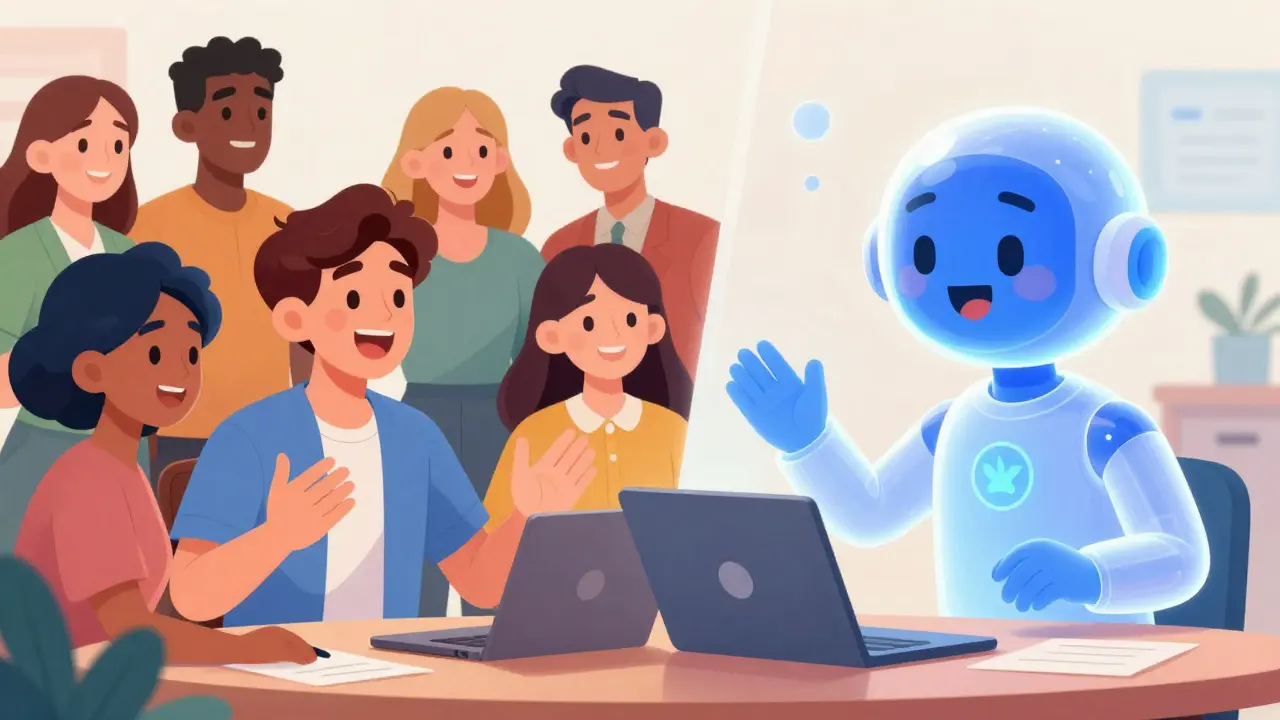
If you really want to break through the "intermediate plateau," you need a human. This is where italki and Preply come in. These are marketplaces that connect you with native speakers globally. Unlike a classroom, these sessions are tailored to you. If you're a doctor learning Spanish, you can spend your hour discussing medical terminology instead of talking about "the cat is under the table."
The real magic happens when you use these tutors for "active recall." Instead of letting the tutor lead, you try to describe your day, explain a complex opinion, or debate a news topic. This forces your brain to bridge the gap between knowing a word and being able to retrieve it in a split second. Pro tip: record your sessions. Listening back to your mistakes a week later is one of the fastest ways to fix persistent pronunciation errors.
Specialized Programs for Unique Needs
Not everyone learns for the same reason. For some, the goal is a professional certification like the DELE for Spanish or JLPT for Japanese. These require a much more rigorous approach than a mobile app. Programs that focus on these certifications usually include timed mock exams, intensive writing workshops, and deep dives into formal syntax.
Then there are those learning for heritage reasons-people who grew up hearing a language at home but can't speak or read it fluently. For this population, the focus shifts to "re-acquisition." They don't need to be told what a noun is; they need to align the sounds they already know with the written word and formal structure. Special programs for heritage learners often focus more on cultural nuances and advanced literacy than on basic greetings.
Integrating AI into Your Routine
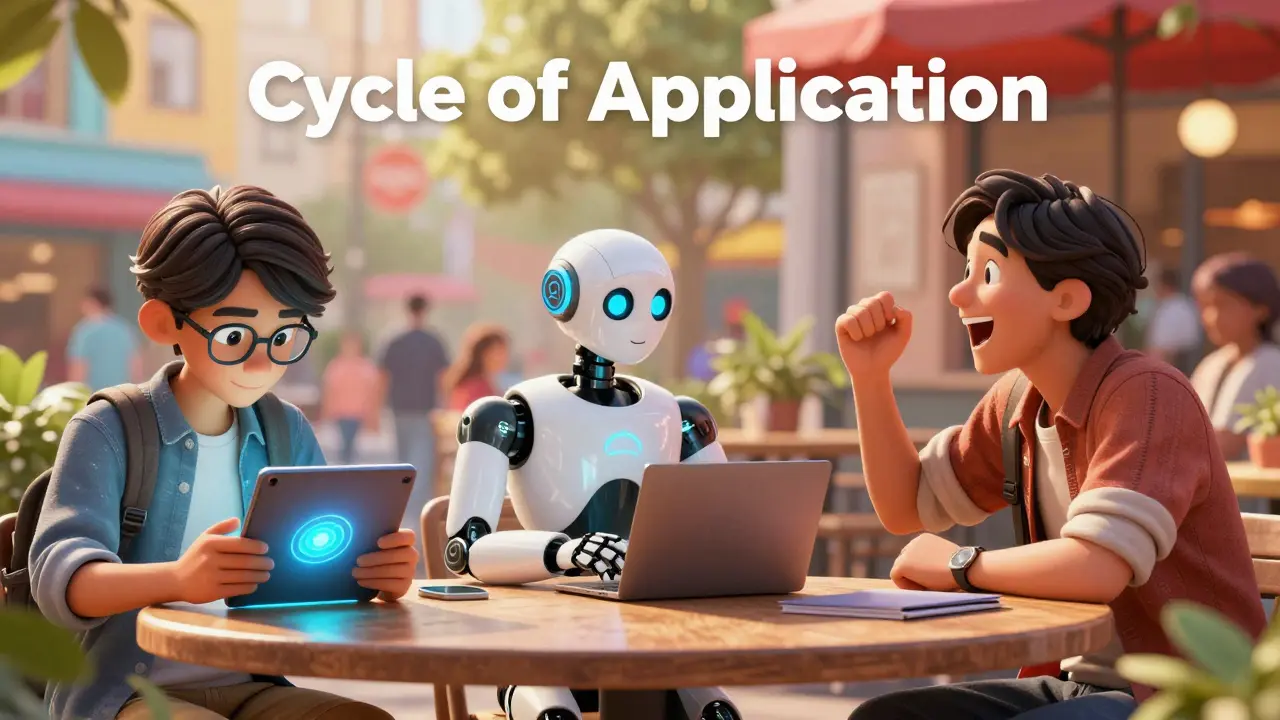
In 2026, AI has moved beyond simple chatbots. We now have AI-powered speaking partners that can simulate entire scenarios-like a stressful job interview in French or a dispute with a landlord in German-without the social anxiety of talking to a real person. These tools provide instant feedback on your grammar and suggest more natural ways to phrase things.
However, don't let the tech take over. The most successful learners use AI as a bridge, not a destination. Use an AI to practice a specific conversation, then take those learned phrases and test them out with a real person on a tutoring platform. This "Cycle of Application"-Learning $\rightarrow$ Simulating $\rightarrow$ Executing-is the fastest route to fluency.
Common Pitfalls and How to Avoid Them
The biggest trap is the "Fluency Illusion." This happens when you spend hours watching videos or using an app and *feel* like you're learning because you recognize the words. Recognition is not the same as production. You can understand a podcast but be unable to form a simple sentence. To fight this, implement a strict rule: for every hour of passive consumption (listening/reading), spend at least 30 minutes in active production (speaking/writing).
Another mistake is neglecting the "boring" parts of the language. Many people skip over gender markers or verb conjugations because they think they can just "get the point across." While that works for basics, it prevents you from ever sounding polished. Spend a small portion of your weekly time on the technicalities-the grammar bones that hold the language together-so your speaking doesn't hit a ceiling.
How long does it actually take to become fluent online?
Fluency depends on the language's difficulty relative to your own. For an English speaker, a language like Spanish might take 600-750 hours of quality study to reach a professional level (B2/C1). If you study 1 hour a day, that's about two years. However, using a mix of immersive tutoring and AI tools can compress this timeline by increasing the density of active speaking time.
Are free apps enough to learn a language?
Free apps are great for building a habit and learning basic vocabulary, but they are rarely enough for true fluency. They lack the spontaneous nature of real conversation and often skip the nuance of cultural context. To truly speak a language, you eventually need to move from "clicking buttons" to "creating sentences" with a live partner.
What is the best method for someone with very little time?
The "Micro-learning" approach is best. This involves replacing dead time-like commuting or waiting in line-with short bursts of high-intensity learning. Use a flashcard app like Anki for vocabulary during the day, and schedule two 30-minute tutoring sessions per week. The key is maintaining daily contact with the language to keep it in your short-term memory.
Do I need to learn grammar rules first?
Not necessarily. While some structure helps, many successful polyglots use an "inductive" approach: they learn phrases first and then figure out the grammar rules based on the patterns they see. Once you have a foundation of common phrases, studying the rules becomes much easier because you have a real-world context to apply them to.
How do I stay motivated after the initial excitement wears off?
Connect the language to a hobby you already love. If you love cooking, watch cooking videos in your target language. If you like gaming, join a foreign-language Discord server. When the language becomes a tool to enjoy your interests rather than a subject you're studying, the motivation becomes intrinsic and sustainable.
Next Steps for Your Learning Path
If you're just starting, don't buy five different subscriptions. Pick one structured platform for the basics and one tutoring service for speaking. Spend your first month building a streak and getting comfortable with the sounds of the language. Once you can introduce yourself and ask basic questions, start integrating "comprehensible input" by finding podcasts or YouTube channels specifically for learners of that language.
For those who have hit a plateau, try "Language Shadowing." This involves listening to a native speaker and repeating what they say exactly as they say it, with as little delay as possible. It forces your mouth to move in ways your native language doesn't require and bridges the gap between hearing a sound and being able to produce it naturally.
Michael Jones
April 10, 2026 AT 11:17just start speaking today!! dont wait for the perfect app or the perfect book just get out there and make mistakes because that is where the real growth happens man
E Jones
April 10, 2026 AT 21:25It is absolutely laughable that anyone believes these "AI-powered speaking partners" are for our benefit when in reality they are just massive data-harvesting vacuum cleaners designed by shadowy conglomerates to map the neural pathways of our linguistic cognition and eventually replace human thought with a sterilized, corporate-approved dialect that ensures we never question the systemic illusions we live in, and frankly, the idea that a bot can simulate a "stressful interview" is just a thin veil for a psychological experiment in compliance and submission to the machine god
James Boggs
April 12, 2026 AT 10:00I fully agree. Using native tutors is the most effective path.
selma souza
April 14, 2026 AT 05:57The assertion that one should "accept imperfection" is a dangerous gateway to sloppy linguistic habits. While the author suggests that mistakes calibrate the brain, I maintain that a rigorous adherence to grammatical precision from the inception of study prevents the solidification of errors that are nearly impossible to purge later in the learning process. Precision is not a luxury; it is the foundation of clear communication.
Lissa Veldhuis
April 14, 2026 AT 20:50omg please the grammar police are out in full force here lol like relax its just a language not a blood oath some of us actually want to talk to people instead of writing a thesis on where the adjective goes ugh so boring
Frank Piccolo
April 15, 2026 AT 11:23Most of these platforms are just toys for people who think they're cultured. If you aren't studying the classical texts or using a method that actually challenges the intellect, you're just playing a game. English is the only global language that actually matters anyway, so why bother with these digital crutches?
allison berroteran
April 15, 2026 AT 14:11I find it so fascinating how the intersection of technology and human connection evolves, and I truly believe that the "Cycle of Application" mentioned here offers a wonderful balance for those of us who feel a bit intimidated by the prospect of immediate immersion, as it allows for a gentle transition into the vulnerability of speaking a new language while maintaining a sense of hopeful progress toward a larger global understanding.
Gabby Love
April 16, 2026 AT 16:52Anki is a lifesaver for vocab.
Rahul U.
April 18, 2026 AT 01:43The point about heritage learners is very insightful! 🌟 It is often overlooked how different the journey is for those reclaiming their roots compared to those starting from zero. Using the sounds already present in one's memory is such a powerful shortcut. 🙏
David Smith
April 19, 2026 AT 14:53This is all just a fancy way of saying we're too lazy to actually move to another country. It's honestly depressing that we've replaced real human struggle with a subscription model. I've tried three of these apps and they all feel like the same recycled garbage wrapped in a different UI. Absolute joke.
Addison Smart
April 19, 2026 AT 18:00While I understand the frustration with digitalization, we must acknowledge that for many people in underserved communities or those with restrictive financial situations, these online tools are the only bridge available to cross cultural divides and foster genuine international peace through understanding, so it is important that we advocate for the accessibility of these tools while still encouraging the authentic human interaction that can only happen through a real conversation with a native speaker.
Buddy Faith
April 20, 2026 AT 05:06lol imagine paying for preply when you can just find a random discord server and hope for the best the whole industry is just a scam to keep you paying monthly for a streak that doesnt even matter
Michael Thomas
April 21, 2026 AT 20:28Apps are for kids. Get a real tutor.
Scott Perlman
April 22, 2026 AT 15:45keep going everyone you can do it
Abert Canada
April 24, 2026 AT 07:35I'm from Canada and honestly, learning French online is a nightmare because the accents vary so much, but the immersive tutoring part is the only thing that actually worked for me despite the cost being a total rip-off.
Xavier Lévesque
April 26, 2026 AT 00:42Oh sure, because a robot simulating a landlord dispute is exactly how I want to spend my Tuesday nights. Truly peak efficiency.
Thabo mangena
April 27, 2026 AT 06:15It is most heartening to see the emphasis placed on cultural nuances for heritage learners, as language is not merely a tool for communication but a sacred vessel for ancestral identity and community belonging.
Karl Fisher
April 27, 2026 AT 13:02I find the "intermediate plateau" to be such a quaint concept. In my experience, one simply needs a more refined palette for the language and a tutor who doesn't treat them like a child. I've found that high-level philosophical debate is the only way to truly polish one's speaking skills, though I suppose that's too advanced for most app users!
Barbara & Greg
April 28, 2026 AT 23:58We must consider the ethical implications of substituting human connection with artificial intelligence. To outsource the struggle of learning-which is where the moral growth and discipline reside-to a frictionless machine is to strip the process of its inherent value. True fluency is not about the efficiency of the transfer of data, but about the humility required to be a beginner in a foreign land, and by simulating this in a living room, we are merely indulging in a sterilized version of growth that lacks any true spiritual or ethical weight. If we remove the friction, we remove the humanity, and thus we are left with a hollow mimicry of communication that serves only the ego of the learner rather than the bridging of two distinct human souls in a shared space of mutual vulnerability and effort.