Bootcamp Readiness Tests: Aptitude and Learning Styles That Actually Matter
 Dec, 12 2025
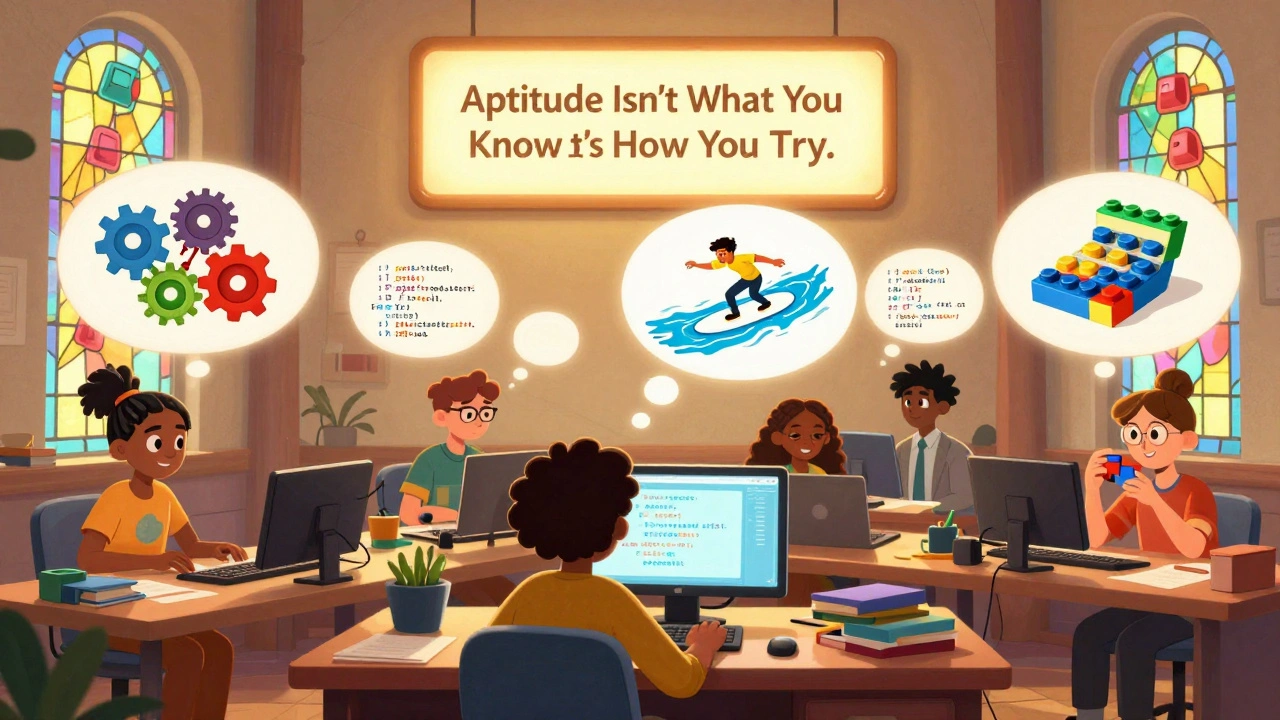
If you're thinking about enrolling in a coding bootcamp, you've probably heard the same advice over and over: "Just dive in." But here's the truth most people won't tell you-some people crash hard in the first week. Not because they're not smart. Not because they didn't study. But because they didn't match their natural way of learning to the bootcamp's pace and structure.
Why Most Bootcamp Readiness Tests Fail
Bootcamp readiness tests aren't just IQ quizzes. They're designed to spot mismatched expectations. A 2024 study by the Coding Bootcamp Research Collective tracked over 3,200 students across 47 programs. The results? Students who scored high on traditional aptitude tests but ignored their learning style were 3.2 times more likely to drop out by week three.Why? Because bootcamps don't teach like college. There's no syllabus you can review over the weekend. No professor who’ll re-explain a concept three times. You're expected to absorb complex ideas in hours, not weeks. If your brain needs space to process, or if you learn best by doing before understanding why, you’ll feel lost-even if you’re technically capable.
What Aptitude Really Means in a Bootcamp
Aptitude in this context isn’t about math skills or prior coding experience. It’s about how quickly you can solve unfamiliar problems under pressure. Think of it like learning to ride a bike: you don’t need to know how gears work to pedal-you just need to be willing to wobble, fall, and try again.Most bootcamp aptitude tests measure three things:
- Pattern recognition-Can you spot similarities between a new problem and one you’ve seen before, even if the context changed?
- Debugging mindset-When your code breaks, do you panic or start testing one small change at a time?
- Task persistence-Can you stick with a problem for 45 minutes without Googling the answer?
One applicant we spoke with, Maria from Phoenix, had never written a line of code. But when given a logic puzzle involving nested loops, she solved it in 12 minutes using pen and paper. She didn’t know what a loop was-but she understood how to break down a problem. She got into Hack Reactor. She graduated top of her class.
Learning Styles: The Hidden Key
You’ve probably heard of visual, auditory, kinesthetic learners. That’s not enough. In a bootcamp, you need to know how you learn under stress.Here’s what actually matters:
- Do you need to build something before you understand it? If yes, you’re a hands-on learner. Lectures won’t stick. You need to tweak code, break it, fix it, repeat.
- Do you need to hear it explained, then write it down? If yes, you’re a verbal processor. You’ll benefit from pairing with someone who explains things aloud.
- Do you freeze when the clock starts ticking? If yes, you might be a deep thinker in a fast-paced environment. That’s not a flaw-it’s a signal. You need structured practice with timed challenges.
A 2023 survey of 1,100 bootcamp graduates found that 68% of those who succeeded had intentionally adapted their study habits to match their learning style. Only 19% of those who ignored it made it past the midterm.
Real Readiness Tests You Can Try Right Now
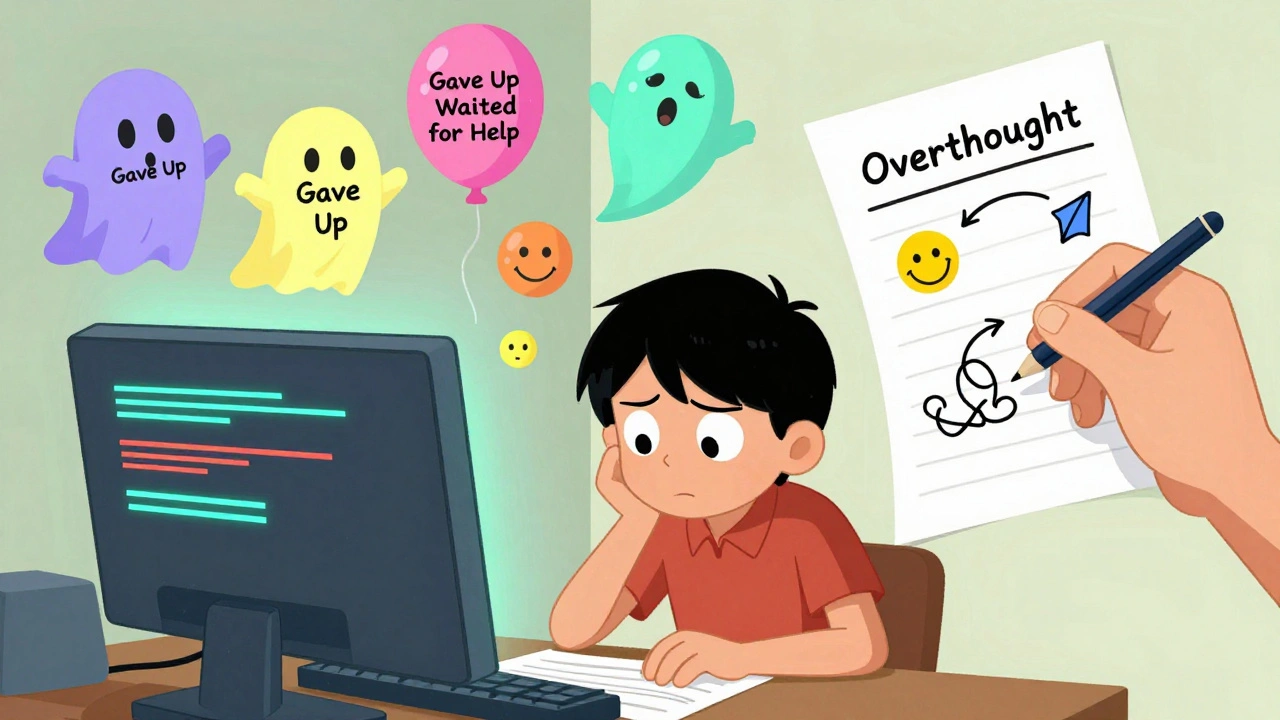
You don’t need to pay for a prep course. Here are three free, proven tests you can take today:- The 15-Minute Logic Challenge-Go to freeCodeCamp’s logic puzzles. Solve three problems. Time yourself. If you can finish them without looking up syntax, your aptitude is strong.
- The Teach-Back Test-Pick a simple concept like "what is a variable?" Explain it out loud as if teaching a 12-year-old. Record yourself. If you stumble, get confused, or use jargon, you’re not ready to absorb new concepts yet. Go back to basics.
- The 2-Hour Build-Use Replit or CodePen. Try to build a simple calculator with JavaScript. No tutorials. Just Google the syntax as you go. If you finish it, you’ve got the grit. If you quit after 40 minutes, you need to train your persistence first.
These aren’t pass/fail tests. They’re mirrors. They show you where your brain naturally lands-and whether that matches what a bootcamp demands.
What to Do If You’re Not Ready
If you bombed one of these tests, don’t panic. You’re not behind. You’re just misaligned.Here’s how to fix it:
- If you get overwhelmed by abstract concepts-Start with visual coding tools like Scratch or p5.js. Build games. Make art. Let your hands lead your understanding.
- If you quit when stuck-Practice the 10-Minute Rule: when you hit a wall, set a timer for 10 minutes. Try three different fixes. Then ask for help. This trains persistence without burnout.
- If you learn best by listening-Listen to podcasts like "Syntax" or "CodeNewbie" while walking. Then summarize what you heard to a friend. Active recall beats passive listening every time.
One student from Tempe, Jamal, took the 2-hour build and failed twice. He thought he wasn’t cut out for it. So he spent six weeks building tiny projects-first a button that changed color, then a todo list that saved to local storage. He didn’t touch a bootcamp curriculum. He just built. When he applied, he showed his GitHub. They accepted him on the spot.
What Bootcamps Don’t Tell You
Most bootcamps market themselves as "no experience needed." That’s true. But they’re not "no mindset needed."They want students who:
- Don’t wait to be told what to do next
- See errors as clues, not failures
- Can switch between big-picture thinking and tiny syntax details in seconds
That’s not something you learn from a YouTube video. That’s something you practice.
The best prep isn’t memorizing JavaScript syntax. It’s training your brain to stay calm when you don’t know the answer-and to keep moving anyway.
Final Check: Are You Ready?
Before you sign up, ask yourself these three questions:- Have I solved a problem I didn’t know how to solve, just by trying things?
- Do I get excited when I fix a bug, not just when the code works?
- Can I spend 90 minutes on one small task without checking my phone?
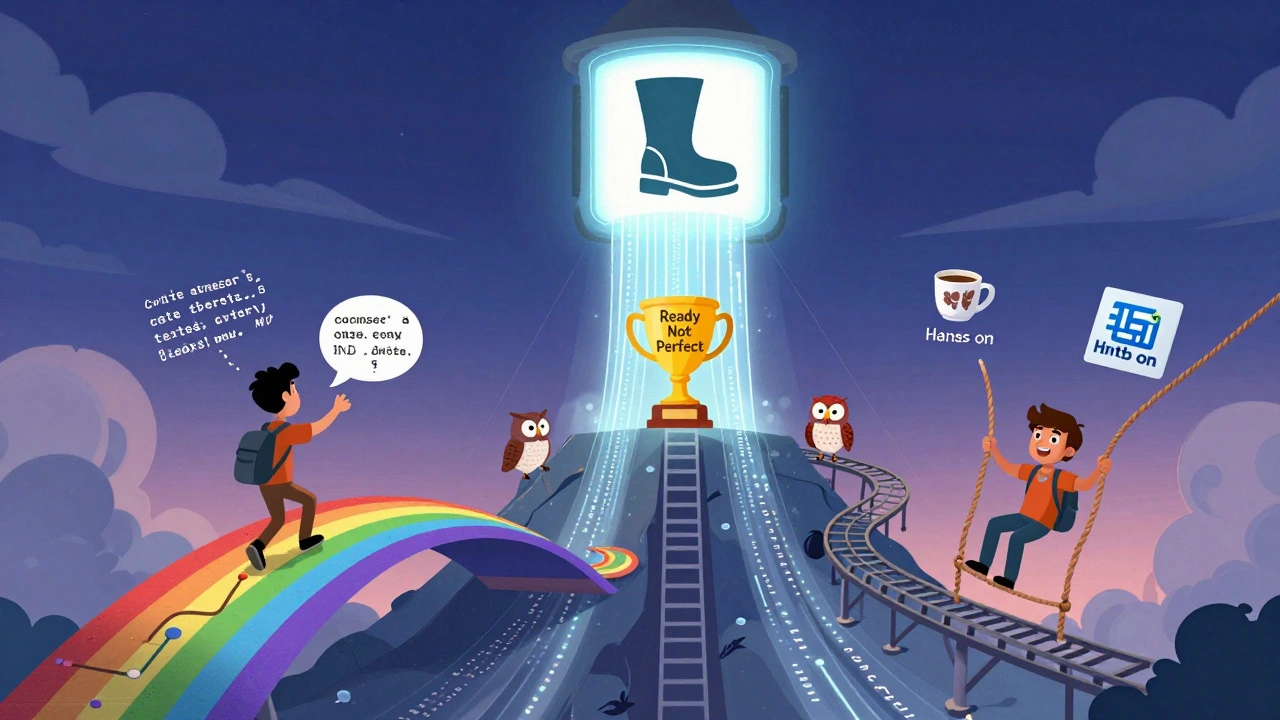
If you answered yes to at least two, you’re ready. Not perfect. Not expert. But ready.
Bootcamps aren’t for everyone. But they’re perfect for the kind of person who doesn’t wait for permission to learn. If you’re that person, the test isn’t about your knowledge. It’s about your willingness to keep going when you’re lost.
Do I need to know how to code before joining a bootcamp?
No. Most successful bootcamp students had zero coding experience before starting. What matters is whether you can solve problems logically, stay patient when things break, and keep trying even when you don’t understand everything right away.
Are aptitude tests for bootcamps accurate?
They’re not perfect, but they’re better than you think. The best ones don’t test what you know-they test how you think. If you can break down a confusing problem into small steps, you’re more likely to succeed than someone who memorized syntax but panics when things change.
Can I change my learning style to fit a bootcamp?
You can’t change your natural way of learning-but you can adapt how you study. If you’re a visual learner in a lecture-heavy bootcamp, make diagrams. If you’re slow to process, do shorter, more frequent practice sessions. Bootcamps don’t require you to become someone else-they require you to work smarter with who you already are.
What if I fail the readiness test?
Failing a readiness test doesn’t mean you can’t code. It means you need to prepare differently. Many people who "fail" end up succeeding after 4-8 weeks of targeted practice. Use the test as feedback, not a verdict.
How long should I prep before applying to a bootcamp?
There’s no fixed timeline. Some people prep for 2 weeks. Others take 6 months. The goal isn’t to learn everything-it’s to prove you can learn. Focus on building one small project, solving logic puzzles, and practicing persistence. That’s more valuable than any course.
Next Steps: What to Do Today
If you’re serious about a bootcamp, don’t wait. Do this right now:- Take the 15-minute logic challenge.
- Record yourself explaining a programming concept out loud.
- Try to build a simple calculator without looking up code.
Then ask yourself: Did I enjoy the struggle? Or did I want to quit? Your answer tells you more than any test score ever could.
anoushka singh
December 12, 2025 AT 19:15Madhuri Pujari
December 12, 2025 AT 19:43Sandeepan Gupta
December 13, 2025 AT 08:02Tarun nahata
December 14, 2025 AT 16:31Aryan Jain
December 14, 2025 AT 16:33Pramod Usdadiya
December 15, 2025 AT 17:35Aditya Singh Bisht
December 16, 2025 AT 10:27Agni Saucedo Medel
December 17, 2025 AT 10:16ANAND BHUSHAN
December 18, 2025 AT 10:43Indi s
December 19, 2025 AT 18:59Rohit Sen
December 20, 2025 AT 07:10Vimal Kumar
December 21, 2025 AT 01:08Amit Umarani
December 21, 2025 AT 13:49Noel Dhiraj
December 23, 2025 AT 03:32vidhi patel
December 23, 2025 AT 16:43Priti Yadav
December 24, 2025 AT 07:03Ajit Kumar
December 25, 2025 AT 03:11Diwakar Pandey
December 25, 2025 AT 17:50Jitendra Singh
December 26, 2025 AT 05:29