Building a Sustainable Online Learning Business Long-Term
 Mar, 8 2026
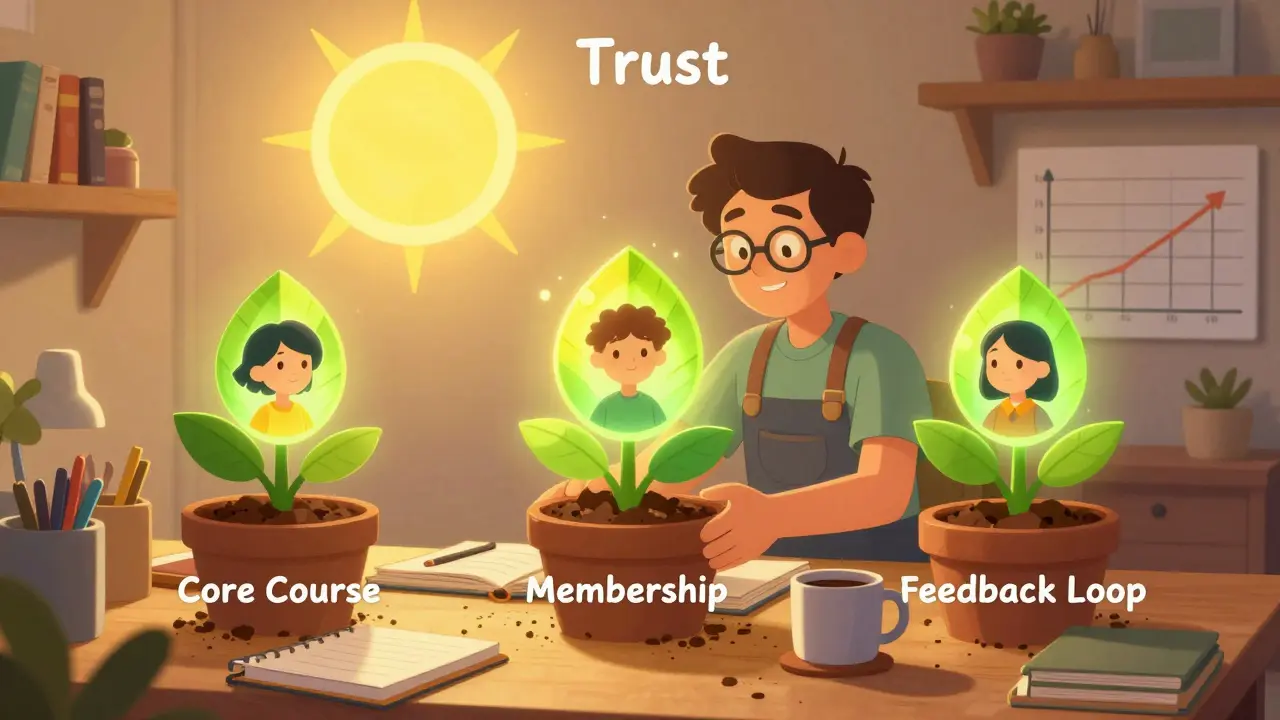
Most online learning businesses start with a great course and a lot of enthusiasm. But after six months, many crash. Why? They built a product, not a system. A one-time course sale doesn’t create a business. It creates a project. To build something that lasts, you need to think like a gardener-not a vendor. You plant seeds, nurture them, and let them grow over seasons. Here’s how to do it.
Start with a sticky core offering
Your first course shouldn’t be your only product. It should be your anchor. Think of it as the main dish that brings people in. But what makes a course sticky? It’s not just content. It’s outcomes. People don’t buy Python lessons. They buy the ability to land a job, build an app, or automate their job. If your course promises "learn Python," you’re competing with free YouTube videos. If it promises "land your first tech job in 90 days," you’re solving a real pain point.
Look at Duolingo. They didn’t win by offering the most lessons. They won by making learning feel like a game with daily streaks, rewards, and social pressure. You don’t need gamification to be sticky. You need consistency, clear progress markers, and a sense of community. A student who finishes your course and feels like they’ve changed their life will come back. They’ll refer others. They’ll buy your next thing.
Layer in recurring revenue streams
One-time sales are risky. What if a student never comes back? What if they forget about you? Recurring revenue isn’t optional anymore-it’s the backbone of sustainability. You don’t need a subscription model that costs $50/month. You need value that keeps people engaged.
Here are three proven models:
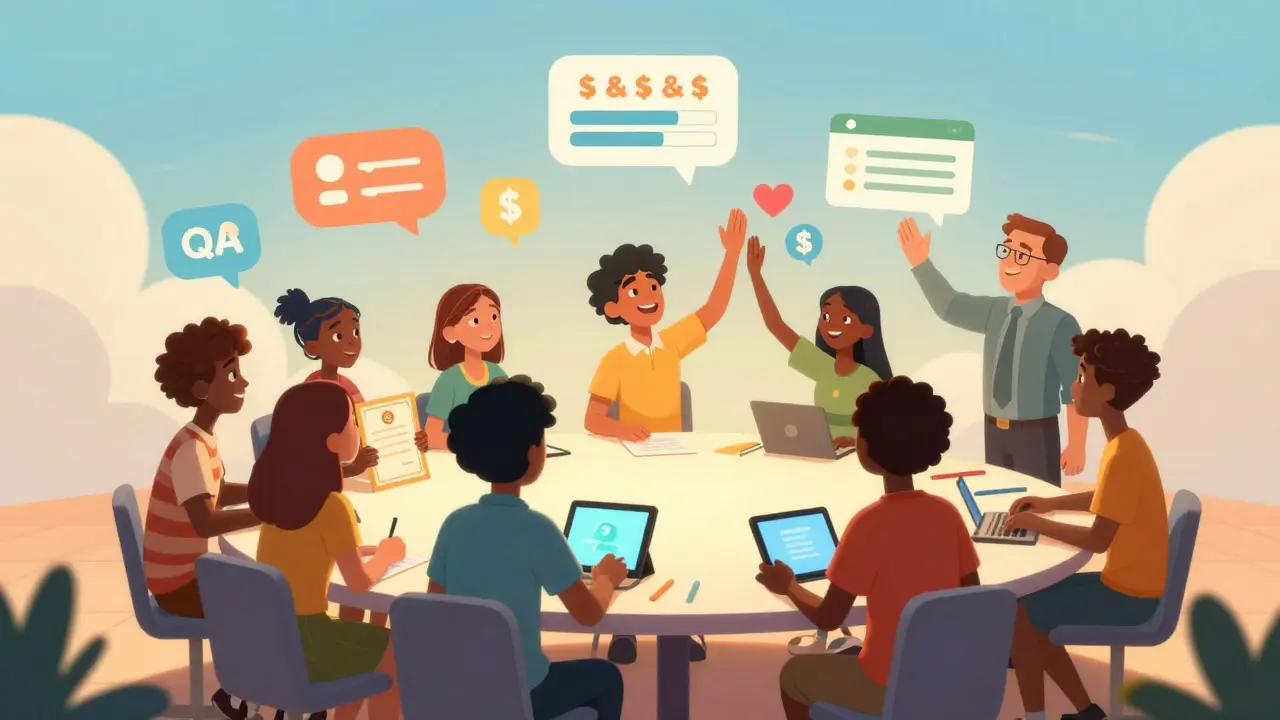
- Membership tiers: Offer a basic free community, then $15/month for live Q&As, feedback on projects, and updated content. Think of it as a book club with structure.
- Coaching add-ons: After someone finishes your course, offer 30-minute monthly check-ins. Not a full coach. Just someone who holds them accountable. $49/month. People pay for progress, not lectures.
- Exclusive content pipelines: Release one new mini-course, template, or tool every month. It doesn’t have to be huge. Just fresh. People pay to stay ahead.
These aren’t upsells. They’re natural next steps. A student who finishes your $97 course isn’t done. They’re just getting started. Your job is to meet them where they are next.
Pricing isn’t about cost-it’s about perceived value
Too many creators price based on hours spent. That’s backwards. Price based on transformation. If your course helps someone go from $30k/year to $70k/year, $497 feels cheap. If it just teaches them how to use Excel, $49 feels high.
Here’s what works in 2026:
- Pay-what-you-can for entry: Offer a free version with limited access. Then show them what’s possible with the paid version. Conversion rates jump 3x.
- Payment plans: Instead of $497 upfront, offer $99/month for 5 months. It lowers the barrier. People who can’t afford $500 can afford $100.
- Outcome-based pricing: "Pay $799 if you land a job. Pay nothing if you don’t." This sounds risky, but it builds insane trust. Only 12% of students don’t succeed-but those who do become your biggest advocates.
Studies from the Online Learning Consortium show that courses with outcome-based pricing have 47% higher completion rates. Why? Because the student’s skin is in the game.
Build a feedback loop that never stops
Most online courses are static. You record it once. Sell it forever. That’s a tombstone, not a product. The best learning businesses update constantly. They listen. They tweak. They ask.
Do this every quarter:
- Survey your students: "What’s one thing you wish we changed?" Keep it open-ended.
- Review your analytics: Which videos get skipped? Which quizzes have the lowest scores? That’s where you need to improve.
- Invite top students to a live Zoom: Just 15 minutes. Ask them: "What made you stick?" You’ll hear things no survey can capture.
One educator in Arizona started doing this after her completion rate dropped to 58%. She found out students felt isolated. So she added a weekly live discussion. Completion jumped to 89%. Revenue grew 200% in six months.
Don’t chase trends. Build trust.
Everyone’s talking about AI tutors, VR classrooms, and NFT certificates. Ignore them. Unless you’re building a tech startup, those aren’t your problem. Your problem is: Do people trust you? Do they believe you care? Do they think you’ll still be here in two years?
Trust is built in small ways:
- Reply to every comment on your course page-even if it’s "Thanks!"
- Share your own failures: "Here’s the lesson I failed at first."
- Update your bio: "I’ve helped 2,107 students get promotions since 2022." Numbers build credibility.
People don’t buy from experts. They buy from people who feel like they’re on their side.
What sustainability looks like in 2026
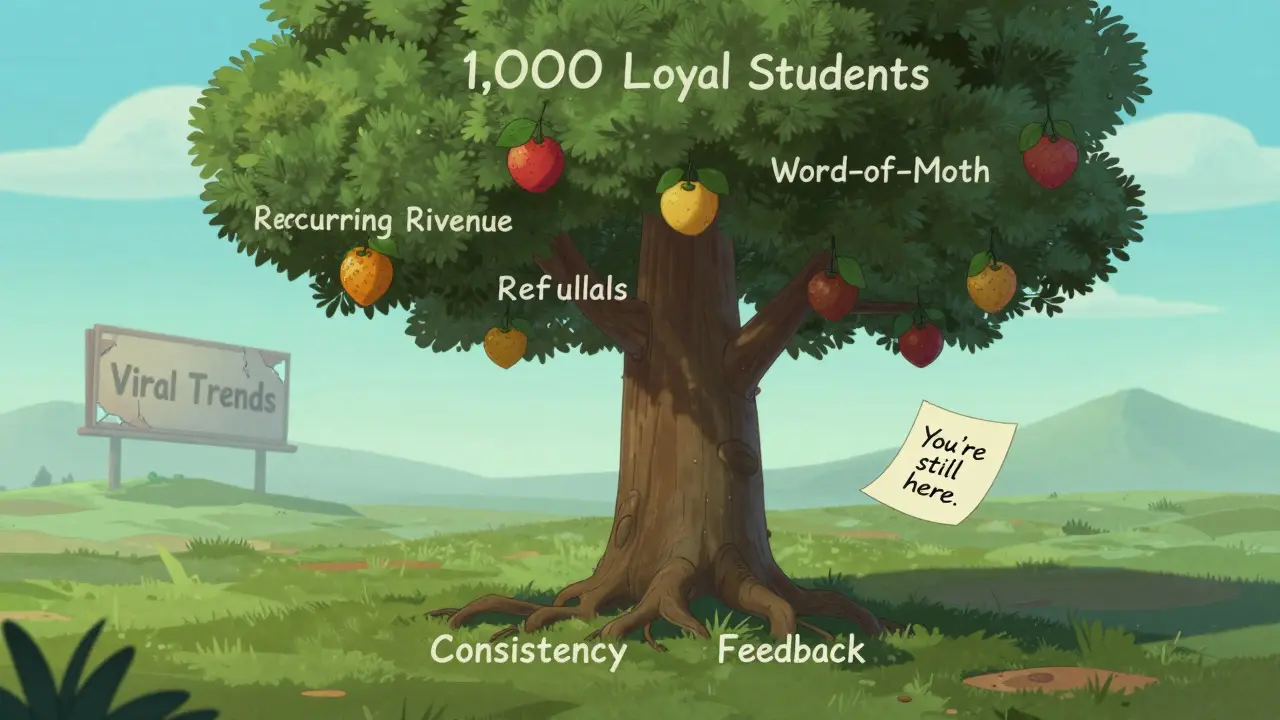
A sustainable online learning business doesn’t need 10,000 students. It needs 1,000 loyal ones. 1,000 people who show up every month. Who tell their friends. Who upgrade. Who stick around even when you’re not running ads.
Here’s what that looks like in practice:
- Monthly recurring revenue: $20,000 from 400 members paying $50/month
- Annual course sales: $80,000 from 200 new students
- Retention rate: 72% of students return for the next offering
- Referral rate: 35% of new students come from word-of-mouth
You don’t need to go viral. You need to go deep.
What to avoid
- Don’t create 50 courses. Create 5 great ones and keep improving them.
- Don’t chase TikTok trends. Build a newsletter that people look forward to.
- Don’t ignore customer service. One angry student can cost you 10 new ones.
- Don’t treat students like numbers. Send handwritten notes. Know their names.
| Aspect | Sustainable Model | Unsustainable Model |
|---|---|---|
| Revenue Source | Recurring memberships + upsells | One-time course sales |
| Student Engagement | Weekly interaction, live feedback | Pre-recorded videos only |
| Content Updates | Monthly improvements based on feedback | Never updated after launch |
| Marketing | Word-of-mouth, email, community | Ads, paid influencers |
| Long-Term Vision | 10-year roadmap with evolving offerings | Exit strategy or flip the business |
Next steps: Start small, think long
Right now, take your best course. Ask yourself:
- What’s the one transformation it delivers?
- Who’s the student who got the most out of it? What did they say?
- What’s one small thing you could add next month to keep them engaged?
You don’t need a new course. You need a new mindset. Build a business that lasts, not a product that sells.
Can I build a sustainable online learning business without a big audience?
Yes. A business with 500 highly engaged students who pay monthly is more sustainable than one with 10,000 one-time buyers. Focus on depth over breadth. A small group that trusts you will pay more, refer others, and stick around longer than a large group that forgets you after the first lesson.
How do I price my courses without undercharging?
Price based on outcomes, not effort. If your course helps someone earn an extra $15,000 a year, $497 is a bargain. Test pricing with a small group first. Offer three price points: basic, standard, and premium. See which one converts best. Most people choose the middle option-it feels safe and valuable.
What’s the easiest way to add recurring revenue?
Start with a simple membership. Charge $15-$30/month for access to live Q&As, downloadable tools, and updates. Use a platform like Mighty Networks or Circle. You don’t need fancy tech. You need consistency. Show up every week. Answer questions. Share one new tip. That’s enough to make people feel valued.
Should I offer free courses to build trust?
Only if you have a clear path to paid. A free course should act as a funnel, not a charity. Include a clear next step: "After this, join our paid community to get feedback on your project." Free is powerful-but only if it leads somewhere meaningful.
How long does it take to build a sustainable online learning business?
It takes 18 to 24 months. Most people give up before year two. The first year is about testing. The second is about refining. By month 18, you’ll know what works. By month 24, you’ll have systems, loyal students, and predictable income. Patience isn’t optional-it’s your strategy.
Soham Dhruv
March 10, 2026 AT 05:09Been running my coding bootcamp for 3 years now and this hit right in the chest
Used to chase new courses like they were sales targets
Now I just focus on keeping the same 200 students engaged with monthly live sessions and tiny updates
Turns out people dont care how fancy your platform is
They care if you remember their name and actually reply to their dumb questions
Also stopped using fancy analytics
Just ask them what they want next
Works way better than any algorithm
Bob Buthune
March 10, 2026 AT 08:04Ive been thinking about this for months and honestly the whole model feels kinda manipulative
Like we're turning education into a dopamine loop where people pay just to feel like they're not falling behind
Its not about learning anymore its about maintaining a streak
Like duolingo but for adults who are scared of being obsolete
And dont get me started on outcome based pricing
What happens when someone pays 799 and doesnt get the job
Do you just laugh and say well you shouldve tried harder
I mean sure its clever but its also kinda cruel
And dont even get me started on how we treat students like data points now
Its not a business its a Skinner box with a curriculum
Jane San Miguel
March 11, 2026 AT 15:02The notion that one can build a sustainable learning business without a robust content infrastructure is fundamentally misguided. The author conflates emotional resonance with pedagogical efficacy. A course is not a garden; it is a structured knowledge delivery system requiring iterative design, peer-reviewed curriculum, and measurable learning outcomes. The suggestion to rely on "weekly live discussions" as a primary retention strategy is statistically indefensible. One must consider cognitive load theory, spaced repetition, and mastery-based progression. Without these, one is merely curating a social club under the guise of education. Furthermore, outcome-based pricing is ethically dubious and legally perilous in jurisdictions with consumer protection statutes. One cannot contractually guarantee employment outcomes without violating FTC guidelines on deceptive advertising. This entire framework is dangerously reductive.
Kasey Drymalla
March 12, 2026 AT 10:48they dont want you to know this but every single one of these "proven models" is just a pyramid scheme repackaged as a course
the real money is in the membership tiers
because once you hook them with the free stuff
you got em
they pay month after month just to feel like theyre part of something
and then you upsell them coaching
and then you sell them your next course
and then you sell them your podcast
and then you sell them your retreat
its all just one big loop
and the people who fall for it
theyre the ones who still believe in the dream
and thats why they keep paying
they dont want to learn python
they want to believe someone cares
and thats why this works
and thats why its evil
Dave Sumner Smith
March 12, 2026 AT 21:57you think this is about education
its about control
they want you to think you need a membership
to stay relevant
but really they just want your money
and your data
and your attention
every time you log in
every time you click
every time you pay $15
youre feeding the machine
they track your clicks
they track your pauses
they track your rage when you fail a quiz
and then they sell it
and then they use it to make even more courses
that youll pay for
because you think you need them
but you dont
you just think you do
and thats how they win
Cait Sporleder
March 14, 2026 AT 10:12While the author's framework is compelling in its emphasis on relational pedagogy and longitudinal engagement, I find myself interrogating the epistemological underpinnings of the "sticky core offering" construct. The conflation of affective outcomes (e.g., "feeling changed") with pedagogical efficacy risks reducing education to an emotional transaction rather than a cognitive one. Furthermore, the reliance on qualitative feedback loops-such as Zoom check-ins-while emotionally resonant, lacks the methodological rigor necessary for scalable, replicable learning systems. One must question whether these interventions are truly improving learning outcomes, or merely enhancing perceived value through social validation. The statistical correlation between live discussions and increased completion rates (89%) is compelling, yet without controlled variables, it remains anecdotal. One wonders if the true driver of retention is not the content, but the ritual of communal accountability-a phenomenon more aligned with religious or cultic practices than educational theory. The suggestion to "send handwritten notes" is charming, but economically unsustainable at scale. Are we romanticizing scarcity, or genuinely optimizing for depth? The tension between humanization and scalability remains unresolved.
Paul Timms
March 14, 2026 AT 12:56Just wanted to say this is one of the clearest takes I've read in a long time.
Stop chasing new courses.
Start nurturing your people.
Simple.
But hard.
And worth it.
Jeroen Post
March 15, 2026 AT 00:51you think this is about learning
but its about power
the real power isn't in the course
its in the email list
its in the data
its in knowing who gives up
who keeps paying
who never replies
who always asks for more
they don't care if you learn
they care if you keep clicking
because that's how they predict you
and that's how they sell you
and that's how they control you
you're not a student
you're a data point in a machine
and the machine doesn't care if you succeed
it only cares if you keep feeding it
Nathaniel Petrovick
March 15, 2026 AT 12:12Love this. I started with one $97 course and thought I was done.
Turns out the real magic was just replying to every single comment.
Even the ones that just said "thanks".
Then I added a $20/month group for people who wanted feedback on their projects.
Not a coach. Just someone who says "keep going".
Now I have 300 people paying me every month.
And I still only work 15 hours a week.
It's not about being an expert.
It's about being there.
Thanks for saying this so clearly.
Honey Jonson
March 17, 2026 AT 02:48OMG YES THIS
I started my course last year and was about to quit
Then I just started asking my students what they wanted next
One said "I wish I had a checklist for my portfolio"
So I made a tiny pdf
And put it in the membership
Now 80 people pay $15 a month just for that and the monthly zoom
And guess what
I didnt even make it myself
I asked a past student to do it
And now she's helping me
Its not about being perfect
Its about being present
And listening
Even when its just one person saying "thanks" I cried when I saw my first recurring payment
It wasnt a big number
But it was real
And it kept coming
And that's the whole point