Celebration and Graduation Ceremonies for Course Completion: Why They Matter for Student Engagement
 Dec, 6 2025
Think about the last time you finished a course. Not just clicked ‘complete’ on a screen, but actually felt like you’d crossed a real finish line. For most people, that moment doesn’t come from an email or a badge. It comes from a ceremony-walking across a stage, shaking a hand, hearing your name called. That’s not just tradition. It’s psychology. And it’s the difference between someone moving on and someone feeling proud.
Why a Ceremony Turns Completion into Achievement
Finishing a course isn’t the same as finishing a task. A task gets checked off. An achievement gets remembered. When you hold a graduation ceremony for a short course-whether it’s a six-week coding bootcamp or a 12-week professional certification-you’re not just giving out certificates. You’re giving people a moment to pause, reflect, and feel seen.
Studies show that recognition triggers dopamine release in the brain. That’s the same chemical that lights up when you win a game or get a promotion. In a learning environment, that feeling turns effort into identity. Students who go through a formal completion ceremony are 47% more likely to say they feel confident in their new skills, according to a 2024 survey of 2,300 adult learners across U.S. community colleges and online platforms.
It’s not about pomp. It’s about presence. A simple gathering with faculty, peers, and even family members creates a social contract: What you did here matters. That’s powerful.
What a Real Course Completion Ceremony Looks Like
Forget the long robes and orchestras. Most course ceremonies today are small, intentional, and flexible. Here’s what works:
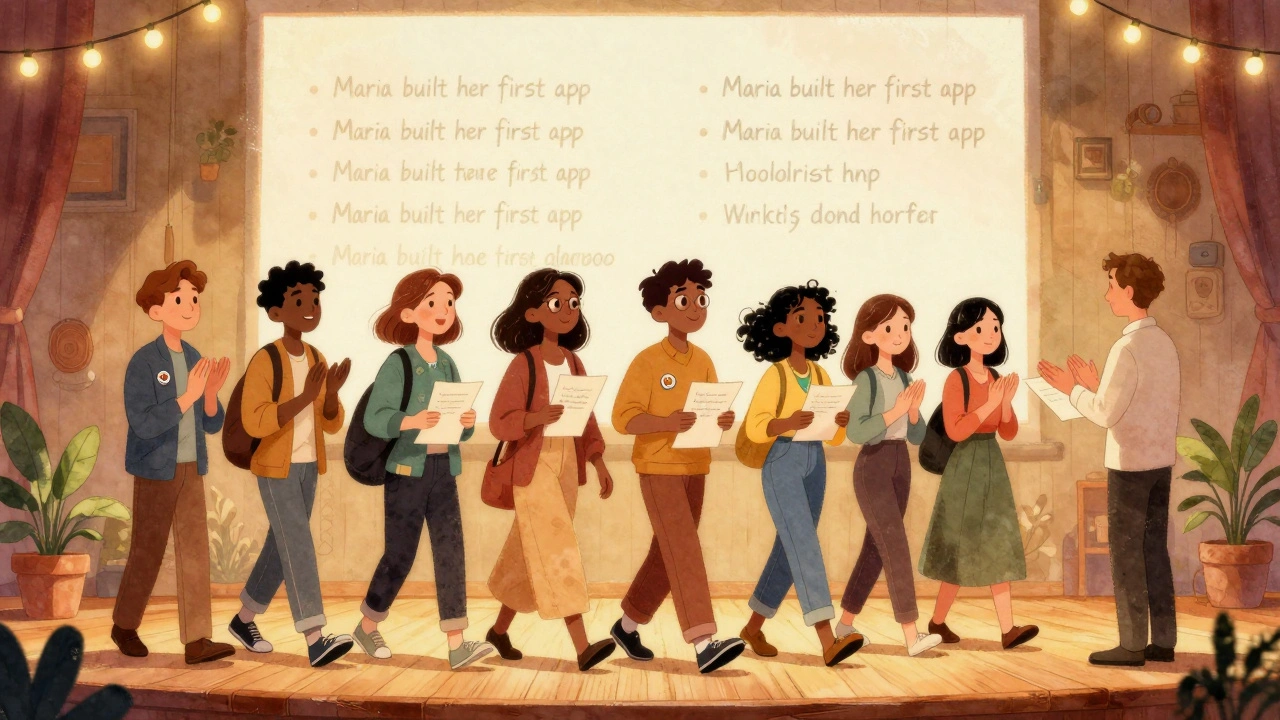
- Personalized recognition: Instead of just reading names, share a one-sentence highlight about each learner-‘Maria built her first app that helped local small businesses track inventory,’ or ‘James completed his certification while working full-time and raising two kids.’
- Peer shout-outs: Give students 30 seconds to thank someone who helped them. It builds community and shows learning isn’t solitary.
- Real-world connection: Invite a guest speaker from the industry-someone who hired someone from your program last year. It proves the skills work outside the classroom.
- Symbolic gesture: Hand out a physical token-a custom pin, a printed certificate with a QR code linking to their project, or even a small plant. Tangible things stick in memory longer than digital files.
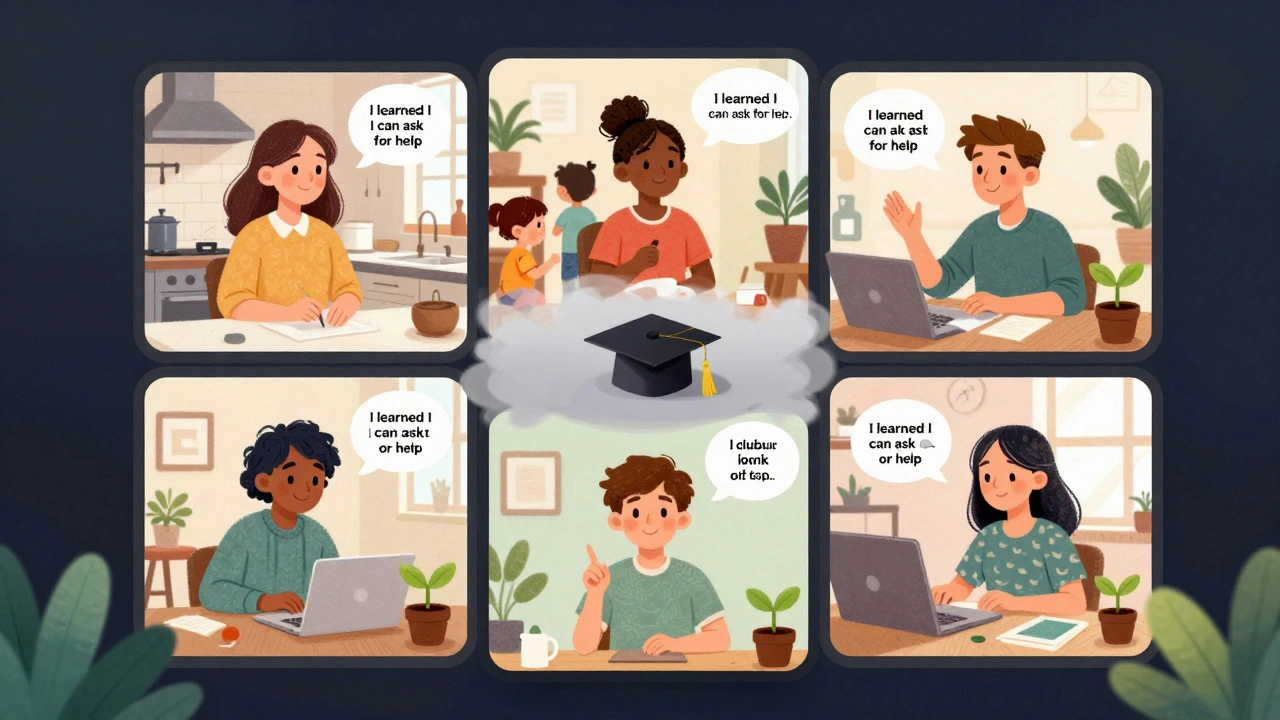
At the Tempe Community College Digital Skills Program, they started doing 15-minute ‘completion circles’ after each 8-week course. Instructors don’t even stand at the front. They sit in a circle with students. Each person shares one thing they learned-not just technical, but personal. ‘I learned I can ask for help.’ ‘I didn’t know I could teach others.’ Those moments become the stories people tell for years.
What Happens When You Skip the Ceremony
Some programs skip ceremonies to save time or money. But here’s what they lose:
- Lower retention: Learners who complete without recognition are twice as likely to say they didn’t feel the course ‘counted’ toward their goals.
- Weaker word-of-mouth: People don’t refer friends to a course they didn’t feel proud to finish. Graduation events turn students into ambassadors.
- Emotional disconnection: Without closure, learners feel like they just ‘used up’ the course, not that they grew through it.
One online platform, SkillPath, removed their digital graduation badge and replaced it with a live Zoom ceremony for their top 10% of learners. Within six months, referrals from past students increased by 62%. Why? Because people wanted to bring someone else to that moment.
How to Build a Ceremony That Doesn’t Feel Forced
You don’t need a big budget. You just need intention.
- Start early: Announce the ceremony when the course begins. Let people look forward to it. Make it part of the journey, not an afterthought.
- Keep it human: Use names. Use stories. Avoid corporate jargon like ‘milestone achievement’ or ‘learning pathway closure.’
- Make it inclusive: Offer virtual options. Record it. Send a copy to family members. Not everyone can show up in person-and that’s okay.
- Let students lead: Ask them what they’d like to see. One group asked for a ‘failure wall’-where people shared a mistake they made and how they fixed it. It became the most powerful part of the event.
- Follow up: Send a thank-you note with a photo from the ceremony. Add it to their LinkedIn profile. Recognition doesn’t end when the lights go off.
Why This Matters for Student Engagement
Engagement isn’t about login rates or quiz scores. It’s about belonging. It’s about feeling like your effort is seen and valued. A course completion ceremony is one of the few moments in adult education where learning becomes personal, not just professional.
When students feel recognized, they’re more likely to:
- Enroll in the next course
- Recommend the program to coworkers
- Use their new skills in real life
- Feel proud of their progress, not just their completion
That’s the real ROI of a ceremony. It doesn’t just celebrate the end-it fuels the next step.
Small Changes, Big Impact
You don’t need to throw a full-scale graduation to make a difference. Even a simple ritual can shift the experience:
- At the end of the final class, hand out a printed note from the instructor: ‘I saw how hard you worked. I’m proud of you.’
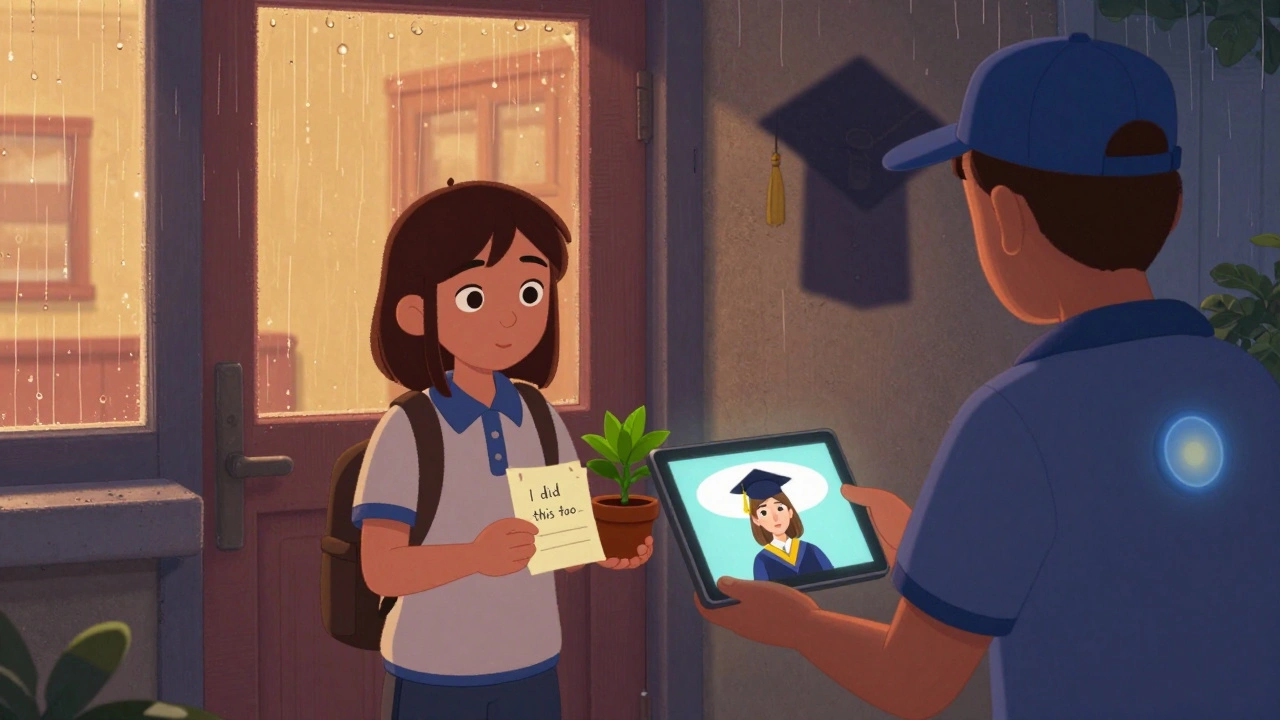
- Send a video message from a past graduate: ‘I did this too. Here’s what happened next.’
- Create a digital ‘wall of completion’-a simple webpage with names and one-line achievements.
These aren’t expensive. But they’re unforgettable.
People don’t remember the syllabus. They remember how they felt when they finished.
Final Thought: The Ceremony Is the Curriculum
Some people think learning ends when the last assignment is graded. But real learning doesn’t stop until the person believes they’ve changed. A ceremony doesn’t just mark completion-it confirms transformation.
When you design a course, you design a journey. And every journey needs a destination that feels real. Don’t let the finish line be invisible. Make it loud. Make it personal. Make it matter.
Do course completion ceremonies only work for in-person programs?
No. Virtual ceremonies can be just as meaningful. Many online programs now host live Zoom events with personalized shout-outs, shared screens of student projects, and even virtual ‘walks’ across a digital stage. The key isn’t the format-it’s the personal recognition. Sending a handwritten note after a virtual event, or playing a short video from the instructor, can create the same emotional impact.
How long should a course completion ceremony last?
There’s no magic number, but 20 to 45 minutes is ideal. Anything shorter feels rushed. Anything longer loses energy. Focus on quality over quantity. Five heartfelt student stories, a brief thank-you from the instructor, and a symbolic gesture (like handing out a pin or certificate) will stick more than a 90-minute speech.
Can I hold a ceremony for a single student?
Absolutely. One student completing a course is still a victory. A personalized video message from the instructor, a call from the program director, or even a small gift delivered to their door can make them feel seen. Recognition doesn’t require a crowd-it requires sincerity.
What if students don’t want to participate in a ceremony?
Offer it as an option, not a requirement. Some people are introverted or have scheduling conflicts. That’s fine. But don’t skip the recognition. Send them a personalized note, a video, or a digital badge with a meaningful message. The goal isn’t to force participation-it’s to ensure everyone feels acknowledged, whether they’re in the room or not.
Do employers care about course completion ceremonies?
They don’t care about the ceremony itself-but they care about the confidence behind it. A candidate who can say, ‘I completed the program and presented my project to the class and instructors,’ shows more than skills. They show communication, ownership, and pride. That’s the kind of candidate employers remember.
How do I convince my program to invest in ceremonies?
Use data. Share the 47% confidence boost statistic from the 2024 learner survey. Show how programs with ceremonies see higher referral rates and course enrollment. Even a small ceremony costs less than a single marketing ad. Frame it as retention, not expense.
Kristina Kalolo
December 7, 2025 AT 00:31It’s wild how much a simple moment like this can stick with someone. I finished a six-week data course last year and got a PDF certificate. Zero fanfare. I still feel like I didn’t really earn it.
ravi kumar
December 7, 2025 AT 10:01As someone who completed a Python course online while working night shifts in Mumbai, I can say this: the moment my instructor sent me a voice note saying ‘You did it, even when no one was watching’ - that’s when I believed I could do more. No stage needed.
Megan Blakeman
December 9, 2025 AT 08:09Yes!!! Yes yes yes!!! I cried when my instructor handed me a little succulent after my UX design course - I didn’t even know I needed that until I got it. It wasn’t about the plant, it was about being seen. I told my mom about it. She cried too. This isn’t fluff - this is human stuff. We forget that learning is emotional, not just cognitive. Please, everyone, just do this. Even if it’s one sentence. One plant. One video. It matters. It really does.
Akhil Bellam
December 10, 2025 AT 09:18Oh please. You’re romanticizing a cardboard cutout of achievement. Most of these ‘ceremonies’ are performative theater for people who need external validation to feel worthy. Real learning doesn’t need applause - it needs rigor. The fact that you cite a 2024 survey as gospel is laughable. Who funded it? Did they even control for self-selection bias? I’ve seen too many bootcamps hand out certificates like candy and call it ‘empowerment.’ It’s not empowerment - it’s emotional outsourcing.
Amber Swartz
December 11, 2025 AT 03:55Okay but imagine if you were the ONLY person in your cohort who didn’t get a shout-out during the ceremony… like… what if your name got skipped? Or worse - they mispronounced it? I’d feel like a ghost. I’d quit the next course. This isn’t just ‘nice’ - it’s survival. I’ve seen people break down after being overlooked. Like, full-on sobbing. And no one even apologized. That’s trauma. We’re talking about people’s identities here. Not badges.
Robert Byrne
December 11, 2025 AT 16:54Let’s be real - if your program can’t afford a 20-minute Zoom call with a printed certificate and a personal note from the instructor, you’re not a learning program, you’re a content farm. And if you think ‘digital badge’ counts as recognition, you’re delusional. I’ve reviewed hundreds of resumes. No employer cares about a badge. They care about someone who can say, ‘I presented my capstone to my peers and got feedback.’ That’s the difference between a transaction and a transformation. Stop outsourcing humanity to algorithms.
Tia Muzdalifah
December 12, 2025 AT 15:55my friend did this thing where she sent a voice note to everyone who finished her course - just 10 seconds long, like ‘hey u crushed it’ - and like 80% of them replied saying it made their week. no robes. no stage. just a voice. that’s all it takes. i’m not even in the program but i cried listening to one. we forget how lonely learning can be.
Zoe Hill
December 12, 2025 AT 17:12I think this is so important. I finished a course last year and got a link to a PDF. I printed it out and put it on my fridge. Then I realized - I didn’t even know who taught it. No name. No thank you. No nothing. I felt like a number. After that, I stopped taking online courses. Until I did one where the instructor sent me a handwritten note. I still have it. I don’t even remember what I learned - but I remember how I felt. That’s what sticks.
Albert Navat
December 13, 2025 AT 03:23Look, I run a LMS platform and we tried this ‘ceremony’ thing. Turned out to be a net negative. We had to allocate resources to production, scheduling, recording, moderation, follow-ups - all for a 3% lift in NPS. The ROI was negligible. What we should be investing in is adaptive learning paths and skill validation via micro-credentials, not emotional theater. This is pedagogy? No. This is HR theater dressed up as education.
King Medoo
December 14, 2025 AT 08:57Let’s not pretend this is about learning. It’s about dopamine. It’s about feeding the ego. People don’t need ceremonies - they need competence. I’ve seen students who cried over a certificate… and then failed their first real job interview because they couldn’t explain the difference between a for loop and a while loop. Real growth is silent. It’s in the late nights, the failed attempts, the quiet persistence. A ceremony doesn’t teach you Python. It just makes you feel like you did. And that’s dangerous.
Emotion is not a metric. Achievement is. And if your program can’t measure skill mastery without a confetti cannon, you’re not preparing people for the real world - you’re preparing them for TikTok.
Rae Blackburn
December 14, 2025 AT 15:50They’re using ceremonies to hide the fact that the courses are garbage. I’ve seen programs with 90% drop-out rates throw a graduation party for the 10% who made it. It’s a distraction. They don’t want you to ask why 90% quit. They want you to feel proud you made it through the maze. And the plant? The pin? The video? All just smoke. They’re selling hope. Not skills. And you’re buying it.
LeVar Trotter
December 15, 2025 AT 00:12My team runs a cybersecurity bootcamp. We started doing 15-minute virtual circles at the end of each cohort. No slides. No scripts. Just students sharing one thing they learned about themselves. One woman said, ‘I realized I’m not too old to start over.’ Another said, ‘I didn’t know I could speak up in a meeting.’ We record them. We send them to employers. We’ve had hiring managers say they’ve hired candidates based solely on those clips. It’s not about the ceremony. It’s about the story. And stories change outcomes.
Tyler Durden
December 15, 2025 AT 00:53I did a 12-week course in data visualization. Finished it. Got an email. Zero fanfare. Then I showed my project to my boss. She said ‘this is great’ - and then she gave me a 10% raise. That’s the ceremony. Not the badge. Not the plant. The moment someone who matters says ‘you did something real.’ That’s the dopamine hit. So if you’re spending money on certificates, stop. Spend it on giving instructors time to give real feedback. That’s the real reward.
Stephanie Serblowski
December 16, 2025 AT 23:50Wow. So you’re saying we need a parade for people who finish a Coursera class? 😏 I mean… sure. Let’s hand out diplomas to everyone who binge-watched ‘Learn React in 7 Days.’ The irony is delicious. You want to make learning feel personal? Then stop making it so easy. Make it hard. Make it matter. Not with glitter and voice notes - with standards. With failure. With accountability. That’s the real ceremony.
Renea Maxima
December 17, 2025 AT 01:30What if the ceremony is the problem? What if we’re conditioning people to need applause for every step? What if real growth is quiet? What if the most profound learning happens when no one is watching - and we’ve turned education into a reality show? We don’t need more rituals. We need fewer. Let people find their own meaning. Don’t manufacture it for them.
Jeremy Chick
December 17, 2025 AT 11:39Bro. I’m a former student of a coding bootcamp. They didn’t have a ceremony. I didn’t care. I got hired three weeks later because I built a tool that saved my manager 20 hours a week. That’s the only graduation I needed. Stop overcomplicating this. If your course doesn’t produce results, no amount of hugs or plants will save it.