CLE Online Requirements and Tools for Special Populations in 2026
 May, 1 2026
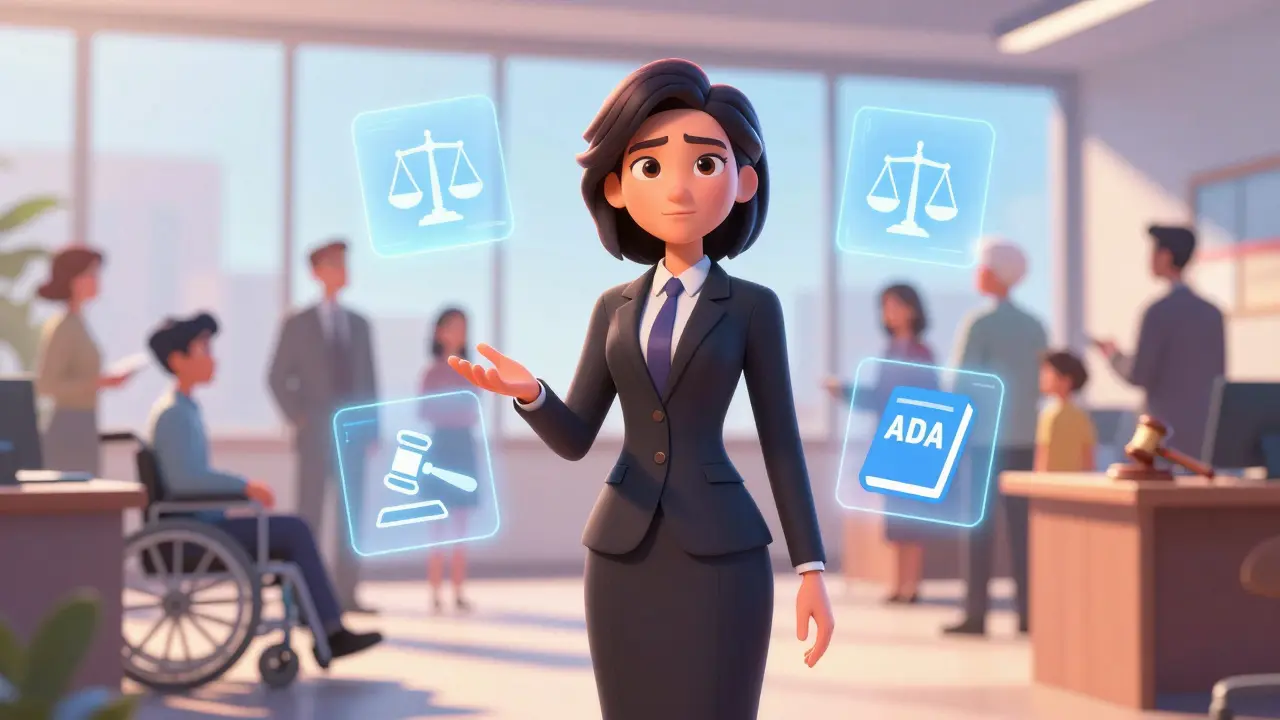
Law is not just a job; it is a privilege that requires constant upkeep. For attorneys representing special populations, this upkeep carries extra weight. Whether you are defending the rights of individuals with disabilities, advocating for non-native speakers, or supporting seniors facing elder abuse, your knowledge must be current. The traditional lecture hall often fails to meet the specific needs of these niche practice areas. This is where Continuing Legal Education (CLE) Online becomes more than a convenience-it becomes a necessity.
In 2026, the landscape of legal compliance has shifted. State bars are increasingly recognizing that one-size-fits-all training does not work for specialized advocacy. You need tools that adapt to your schedule and content that speaks directly to the unique challenges of vulnerable clients. This guide breaks down exactly what you need to know about CLE requirements, the best digital tools available, and how to ensure your training translates into better outcomes for those who rely on you.
Understanding CLE Requirements for Niche Practice Areas
Most lawyers view CLE as a checkbox exercise. You log hours, submit proof, and move on. But when you work with special populations, the stakes are higher. A misunderstanding of the Americans with Disabilities Act (ADA) or a misstep in cross-cultural communication can cost a client their freedom or their dignity. Therefore, understanding the nuance in CLE requirements is critical.
While every state bar sets its own rules, there is a growing trend toward "substantive" credit categories. Many jurisdictions now require specific hours in ethics, bias reduction, and cultural competency. For example, California and New York have long mandated bias elimination training. In 2026, more states are following suit, specifically targeting implicit bias against marginalized groups. If you represent special populations, you cannot simply take a generic corporate law course to fill your quota. You need courses that address:
- Cultural Competency: Understanding the social contexts of diverse communities.
- Disability Law Updates: Keeping pace with evolving interpretations of the ADA and Section 504.
- Ethical Obligations: Navigating conflicts of interest and confidentiality when clients have limited capacity.
Check your state bar’s website regularly. Look for keywords like "mandatory," "ethics," and "specialized practice." Ignoring these nuances can lead to disciplinary action, which is the last thing any advocate needs.
The Shift to Asynchronous Learning Platforms
Gone are the days when you had to sit through a three-hour seminar on a Friday evening. The rise of asynchronous learning has transformed how legal professionals upskill. For attorneys working with special populations, this flexibility is invaluable. These cases often involve unpredictable court dates, emergency hearings, and late-night crisis management. Rigid scheduling is a barrier to professional growth.
Modern CLE platforms offer self-paced modules that allow you to learn during downtime-between depositions, while waiting for witnesses, or even late at night. However, not all platforms are created equal. When evaluating an online CLE provider, look for interactivity. Passive video watching leads to low retention rates. Effective platforms use quizzes, scenario-based learning, and interactive simulations to reinforce key concepts.
For instance, a module on communicating with deaf clients should not just list sign language interpreters. It should simulate a courtroom interaction where you must decide whether to request an interpreter, how to position them, and how to direct questions. This type of active engagement ensures that the knowledge sticks when you need it most.
Essential Tools for Accessible Legal Training
If you are part of a special population yourself-perhaps you have a visual impairment, hearing loss, or neurodivergence-the accessibility of the CLE platform matters just as much as the content. In 2026, accessibility is no longer a nice-to-have feature; it is a standard expectation. Here are the essential tools and features you should look for in any online CLE toolset:
| Feature | Benefit for Learners | Technical Standard |
|---|---|---|
| Screen Reader Compatibility | Allows visually impaired users to navigate text and menus independently. | WCAG 2.1 AA Compliance |
| Captions and Transcripts | Ensures deaf or hard-of-hearing users access audio content accurately. | SRT/VTT File Support |
| Adjustable Text Size & Contrast | Helps users with low vision or cognitive processing disorders read comfortably. | CSS Customization |
| Keyboard Navigation | Enables users with motor impairments to operate the interface without a mouse. | ARIA Labels |
Beyond these technical specs, consider the user experience (UX). Is the interface cluttered? Are instructions clear? Poor UX can create unnecessary barriers for anyone, but it disproportionately affects those with cognitive disabilities. Choose platforms that prioritize clean design and intuitive navigation.

Leveraging AI for Personalized Learning Paths
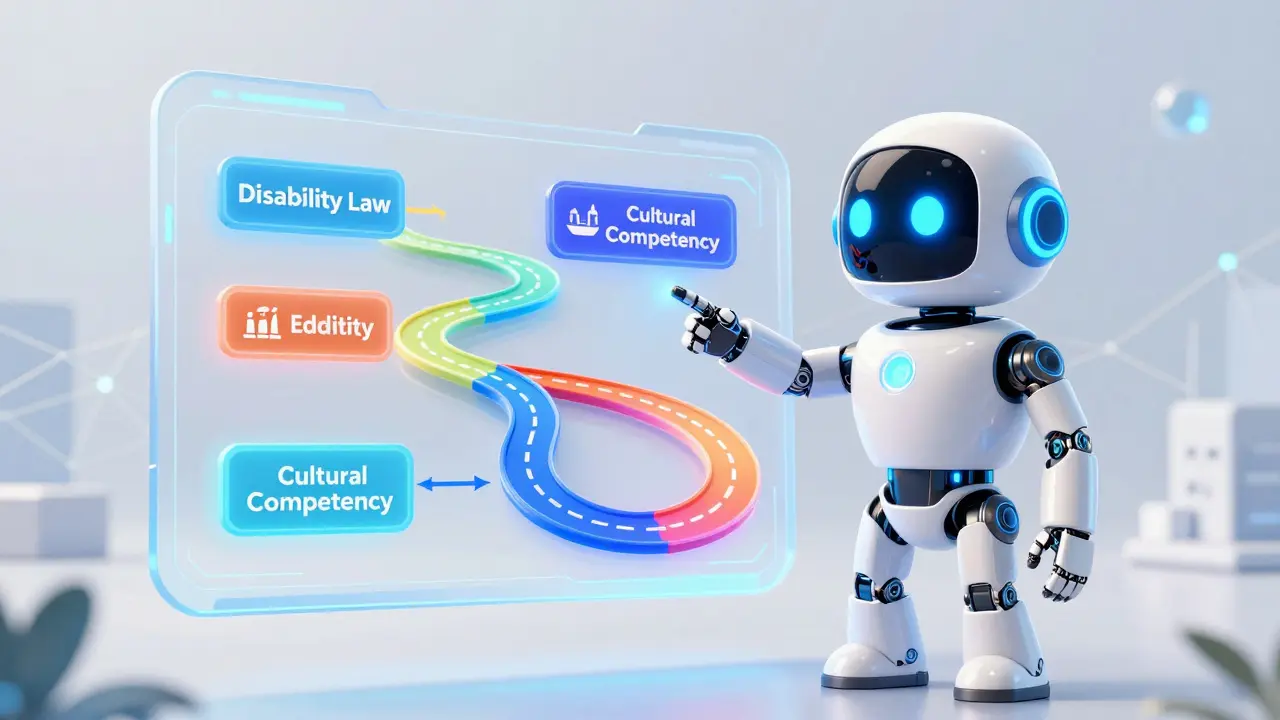
Artificial Intelligence (AI) is reshaping education across all sectors, and legal training is no exception. In 2026, advanced CLE platforms use AI algorithms to tailor content to your specific needs. Instead of browsing hundreds of generic courses, the system analyzes your practice area, past performance, and learning goals to recommend relevant modules.
For attorneys focusing on special populations, this personalization is powerful. Imagine an AI-driven platform that notices you frequently handle immigration cases involving unaccompanied minors. It could automatically suggest updated courses on trauma-informed interviewing techniques or changes in federal asylum policy. This proactive approach saves time and ensures you stay ahead of curveballs.
However, be cautious. AI recommendations can sometimes fall into echo chambers, reinforcing existing biases. Always verify the credibility of the source material. Look for courses authored by recognized experts in disability rights, civil liberties, or international human rights law. Cross-reference AI suggestions with official bar associations or reputable legal organizations to ensure accuracy.
Building a Community Through Virtual Networking
One common complaint about online CLE is the lack of networking opportunities. Traditional seminars allow you to meet peers, share war stories, and build referral networks. Can online learning replicate this? Yes, if done right.
Look for platforms that offer virtual roundtables, discussion forums, or live Q&A sessions with instructors. These features foster a sense of community among advocates for special populations. Sharing experiences with colleagues who understand the unique challenges of representing elderly clients or individuals with mental health issues can be incredibly validating and educational.
Consider joining specialized LinkedIn groups or Slack channels dedicated to your niche. Combine your formal CLE studies with informal peer support. This hybrid approach maximizes both your professional development and your emotional resilience-a crucial asset in high-stress legal fields.
Avoiding Common Pitfalls in Online CLE
While online CLE offers many benefits, it also comes with traps. Here are three common pitfalls to avoid:
- Multitasking Too Much: Watching a CLE video while answering emails might save time, but it hurts retention. Dedicate focused blocks of time for learning, especially for complex topics like procedural changes in special needs trusts.
- Ignoring Feedback Loops: If a quiz question stumps you, don’t just guess and move on. Review the explanation. Understanding why you were wrong is often more valuable than getting the right answer.
- Choosing Cheap Over Quality: Some providers offer cheap credits to boost numbers. Ensure the content is substantive and taught by qualified practitioners. Your license depends on it.
Additionally, keep detailed records. While most platforms auto-report to state bars, technical glitches happen. Maintain a personal log of completed courses, dates, and certificates. This simple habit can save you from frantic scrambling before renewal deadlines.
Future-Proofing Your Legal Career
The legal field is evolving rapidly. With advancements in technology, changing demographics, and increasing awareness of social justice issues, the demand for specialists in serving special populations will only grow. By investing in high-quality, accessible, and personalized online CLE, you are not just meeting requirements-you are future-proofing your career.
You are positioning yourself as an expert who understands the intersection of law, technology, and human rights. This expertise makes you indispensable to clients and attractive to firms looking to expand their impact. Embrace the tools available today, stay curious, and continue learning. Your clients deserve nothing less.
Are online CLE credits accepted by all state bars?
Most state bars accept online CLE credits, but policies vary. Some states limit the number of online hours allowed per year or require certain ethics courses to be taken in person. Always check your specific state bar’s guidelines before enrolling in a course.
How do I find CLE courses specifically for special populations?
Search for courses using keywords like "disability law," "elder law," "immigration rights," or "cultural competency." Reputable providers often categorize courses by practice area. Additionally, organizations like the National Disability Rights Network or local bar associations often host specialized webinars.
What is WCAG 2.1 AA compliance in the context of CLE?
WCAG 2.1 AA refers to Web Content Accessibility Guidelines. In CLE, it means the platform meets standards for accessibility, such as providing captions for videos, ensuring color contrast is sufficient for readability, and allowing keyboard navigation. This is crucial for attorneys with disabilities.
Can I get CLE credits for attending conferences?
Yes, many state bars award CLE credits for attending approved conferences, workshops, and seminars. Both in-person and virtual conferences can count towards your requirements, provided they are pre-approved by your jurisdiction.
How often do CLE requirements change?
Requirements can change annually or biennially depending on your state. Major shifts, such as new mandatory ethics topics, usually occur every few years. It is wise to review your state bar’s continuing education rules at least once a year to stay compliant.
Jeanie Watson
May 1, 2026 AT 16:23Another day, another list of things I don't have time to read.
Seriously though, who has the bandwidth for this?
Tom Mikota
May 2, 2026 AT 09:11Oh look at all these commas and semicolons in the original post... it’s exhausting just reading about it! ;)
I mean, seriously, do we really need a whole guide on how to take online classes? It’s not like we’re in kindergarten anymore. But sure, let’s pretend that clicking 'next' is some kind of intellectual feat.
Mark Tipton
May 3, 2026 AT 00:09The narrative presented here is fundamentally flawed because it ignores the overarching surveillance state implications of AI-driven CLE platforms.
When you allow an algorithm to dictate your learning path based on your practice area, you are essentially feeding data into a system that could be used against you or your clients later. The 'personalization' mentioned is merely a Trojan horse for data harvesting by Big Tech firms who have no interest in justice, only in profit margins and user profiling. We must remain vigilant against this digital panopticon that seeks to standardize thought under the guise of convenience. True legal advocacy requires independent critical thinking, not algorithmic suggestions.
Adithya M
May 4, 2026 AT 02:01You are completely missing the point here. The accessibility features listed are basic requirements, not extras. If a platform does not meet WCAG 2.1 AA standards, it is simply unusable for many professionals. Stop treating accessibility as a luxury feature when it is a fundamental right for disabled attorneys. We need strict enforcement, not just suggestions.
Jessica McGirt
May 5, 2026 AT 11:25This is a fantastic breakdown of the current landscape. I particularly appreciate the emphasis on cultural competency and bias reduction. As someone who works with non-native speakers, I can attest that generic ethics courses often fail to address the nuanced power dynamics at play. It is crucial that we advocate for more specific training modules that reflect real-world scenarios rather than theoretical abstractions.
Donald Sullivan
May 6, 2026 AT 16:55Look, I’m tired of hearing about how great online CLE is supposed to be. Half the time the videos buffer, the quizzes are broken, and the content is recycled from five years ago. Bar associations care more about collecting fees than actually helping us improve our skills. It’s a scam designed to keep us compliant while we burn out trying to serve people who can’t pay us enough.
Tina van Schelt
May 7, 2026 AT 13:10I love the idea of virtual roundtables! It feels so much more organic than sitting in a sterile conference room. Building a community around shared struggles makes the heavy lifting of advocacy feel a bit less lonely. Plus, swapping war stories over coffee (even if it's virtual) is the best part of the job.
Ronak Khandelwal
May 9, 2026 AT 12:46✨ This is such an important conversation! 🌟 We need to remember that technology should empower us, not replace human connection. The AI recommendations are cool, but nothing beats the wisdom gained from mentoring and being mentored. Let’s keep pushing for inclusive spaces where everyone’s voice is heard! 💪📚
Jeff Napier
May 11, 2026 AT 00:31the whole concept of mandatory CLE is bogus. if you cant learn on your own you dont belong in law. also the ai thing is probably just big brother watching us. wake up sheeple.
Sibusiso Ernest Masilela
May 11, 2026 AT 13:33How quaint. You think a few online modules will solve systemic issues? Please. The average attorney lacks the intellectual fortitude to engage with complex disability law without hand-holding. This 'guide' is a insult to those of us who have mastered the art of advocacy through rigorous traditional study. Do not mistake convenience for competence.
Daniel Kennedy
May 11, 2026 AT 22:55Let’s cut through the noise here. Whether you prefer online or in-person, the bottom line is client outcomes. If asynchronous learning helps you handle crisis cases better, then use it. Don’t get bogged down in ideological debates about 'real' education. Focus on what works for your practice and your clients. That’s the only metric that matters.
Taylor Hayes
May 13, 2026 AT 06:17I totally get the frustration with multitasking during CLE. I’ve been there too. But finding even small pockets of time to truly engage with the material can make a huge difference. It’s about balance, not perfection. We’re all doing our best in a tough system.
Sanjay Mittal
May 14, 2026 AT 23:01In India, we are seeing similar trends with remote legal education gaining traction. The key challenge remains ensuring quality control. Many providers offer low-cost credits that lack depth. It is essential for bar councils to enforce stricter accreditation standards to maintain professional integrity.
Mike Zhong
May 16, 2026 AT 17:57The philosophical underpinning of this argument is weak. It assumes that compliance equals competence. It does not. A lawyer can check every box and still be morally bankrupt. We need to focus on character development, not just knowledge acquisition. The system is broken because it prioritizes metrics over humanity.
Jamie Roman
May 18, 2026 AT 01:34I’ve spent hours scrolling through various platforms looking for something that actually resonates with my practice in elder law, and it’s frustratingly difficult to find high-quality content that isn’t just fluff. When I finally find a course that dives deep into the ethical dilemmas of capacity assessment, it’s worth the investment, but the hunt itself is exhausting. I wish there was a centralized database that vetted these courses more rigorously so we didn’t have to waste time filtering out the mediocre stuff ourselves. It feels like we’re expected to be both practitioners and curriculum designers, which is a lot to ask on top of everything else we juggle daily.
Salomi Cummingham
May 18, 2026 AT 17:53I must say, the dramatic shift towards asynchronous learning has been quite the journey for many of us. While the flexibility is undeniably beneficial, one cannot help but feel a sense of loss regarding the spontaneous interactions that occur in physical seminars. Those fleeting moments of connection often spark ideas that linger long after the session ends. Nevertheless, adapting to this new reality is essential, and perhaps we can find ways to recreate that sense of community in digital spaces, albeit with more effort and intentionality.