Cloud Computing Certifications: AWS, Azure, and Google Cloud Guide
 Aug, 11 2026
Getting a cloud computing certification is one of the fastest ways to boost your salary and job security in tech. But with three major players dominating the market-Amazon Web Services (AWS), Microsoft Azure, and Google Cloud Platform (GCP)-it’s easy to feel stuck. Which one should you pick? Do you need all of them? And more importantly, will they actually help you land that senior role or freelance contract?
The short answer is: it depends on where you want to work and what kind of problems you like solving. There is no single "best" certification. Instead, there is the best certification for your specific career path. Let’s break down the differences, costs, and value of each so you can make a smart move without wasting time or money.
Why Cloud Certifications Matter in 2026
You might wonder if certifications are still relevant when experience is king. The truth is, for cloud roles, they act as a crucial filter. Hiring managers receive hundreds of applications for a single DevOps or Cloud Architect position. A certification proves you have a baseline understanding of the platform's terminology, services, and best practices.
According to industry reports from late 2025 and early 2026, companies running multi-cloud strategies are actively looking for professionals who understand at least two platforms. However, starting with one deep dive is usually smarter than skimming the surface of three. Certifications validate your expertise to HR algorithms and give you the confidence to navigate complex infrastructure during interviews.
Amazon Web Services (AWS): The Market Leader
AWS is the oldest and most widely used cloud provider, holding roughly 31-32% of the global market share as of 2026. It has the largest ecosystem, meaning more third-party tools, community support, and job openings compared to its competitors.
If you are just starting out, the AWS Certified Cloud Practitioner is an entry-level credential designed for non-technical roles like sales, marketing, or management to understand basic cloud concepts. It doesn’t require hands-on coding, but it gives you the vocabulary to speak with engineers.
For technical roles, the AWS Certified Solutions Architect - Associate is the gold standard for beginners in cloud architecture, focusing on designing distributed systems using EC2, S3, and VPCs. This is often the first cert people aim for because it opens doors to junior architect and developer roles. The exam focuses heavily on cost optimization, security, and high availability.
- Best for: Generalists, startups, and anyone wanting the highest number of job opportunities.
- Difficulty: Moderate. The exams are scenario-based, not just memorization.
- Cost: $100 for Practitioner, $150 for Associate level.
Microsoft Azure: The Enterprise Choice
Microsoft Azure is the second-largest cloud provider, deeply integrated with existing Microsoft enterprise software like Active Directory, Office 365, and Windows Server. If you are working in a large corporation that already uses Microsoft products, Azure is likely their cloud platform of choice.
The Azure Fundamentals (AZ-900) is a beginner-friendly exam covering core cloud concepts, Azure services, pricing, and SLAs. Like the AWS Practitioner, it is great for non-technical staff. However, Azure’s technical track starts with the Azure Administrator Associate (AZ-104), which is focused on managing identities, governance, storage, compute, and virtual networks.
Azure certifications are known for being very detailed about identity management and hybrid cloud scenarios. If your day-to-day involves mixing on-premise servers with cloud resources, Azure is often the smoother fit. The integration with GitHub Actions and Visual Studio also makes it popular among .NET developers.
- Best for: Enterprise environments, hybrid cloud setups, and .NET developers.
- Difficulty: Moderate to Hard. AZ-104 requires practical knowledge of portal navigation and PowerShell.
- Cost: $99 per exam voucher.
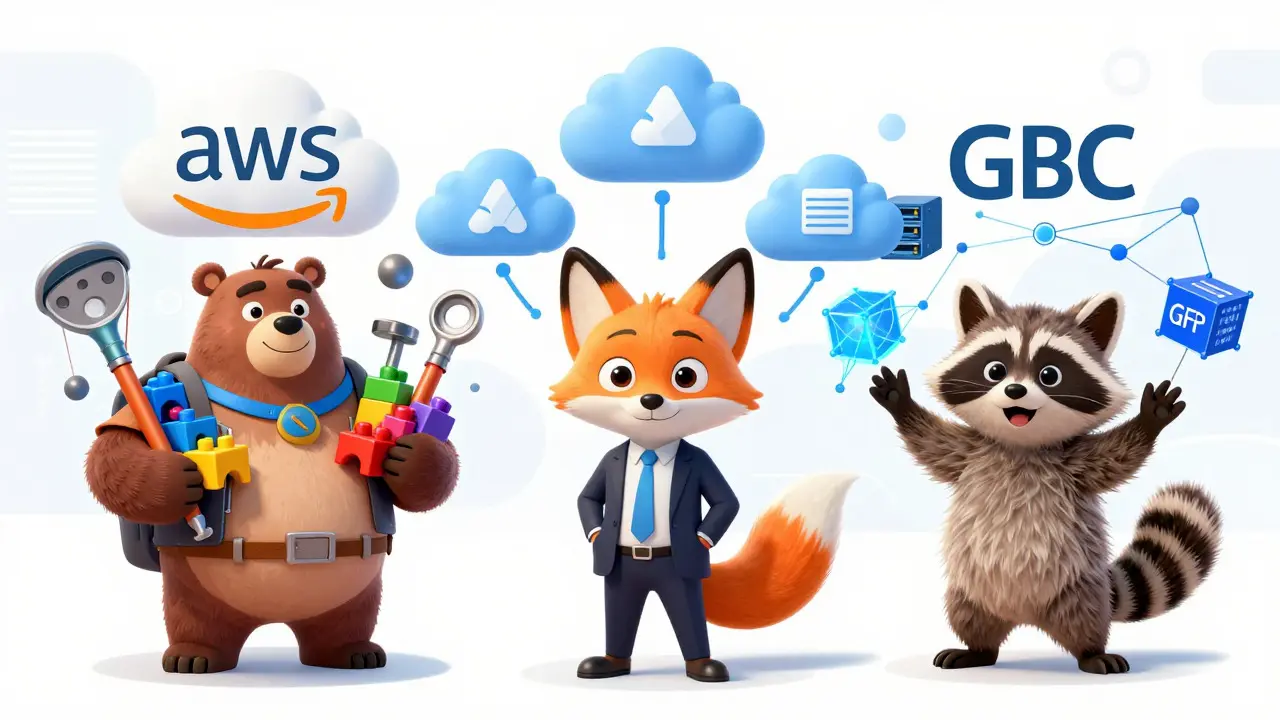
Google Cloud Platform (GCP): The Data & AI Specialist
Google Cloud Platform is the third major player, known for its strengths in data analytics, machine learning, and container orchestration via Kubernetes. While it has a smaller market share (~10%), it dominates specific niches like big data processing and AI model training.
Google skipped the "Fundamentals" hype train for a while, but now offers the Cloud Digital Leader, which is a business-focused certification for those who need to understand how GCP drives digital transformation. For technicians, the Associate Cloud Engineer is the primary entry point, testing your ability to deploy applications, manage enterprise solutions, and monitor performance.
GCP certifications are generally considered harder conceptually because they assume you know Linux and networking basics. They don’t hold your hand as much as AWS or Azure. If you love Kubernetes (K8s), GCP is the native home of this technology, making its certifications highly valuable for DevOps engineers specializing in containers.
- Best for: Data scientists, ML engineers, Kubernetes experts, and modern tech startups.
- Difficulty: Hard. Exams are strictly performance-based and scenario-heavy.
- Cost: $125 for Associate level.
Comparison: AWS vs. Azure vs. GCP
| Feature | AWS | Azure | Google Cloud |
|---|---|---|---|
| Market Share | ~32% | ~23% | ~10% |
| Entry-Level Exam | Cloud Practitioner | AZ-900 | Digital Leader |
| Technical Entry Exam | Solutions Architect Assoc. | Azure Admin Assoc. (AZ-104) | Associate Cloud Engineer |
| Primary Strength | Broadest Service Catalog | Enterprise Integration | Data/AI & Kubernetes |
| Certification Cost | $100 - $300 | $99 - $165 | $125 - $350 |

How to Choose Your First Certification
Don’t guess. Look at your current job or the jobs you want. Open LinkedIn or Indeed and search for "Cloud Engineer" in your city. Filter by the last month. What do you see? If 70% of the postings mention AWS, start there. If they talk about hybrid environments and Active Directory, look at Azure.
Also, consider your background. Are you a Windows sysadmin? Azure will feel familiar. Are you a Linux nerd who loves open source? GCP or AWS might be better fits. If you are completely new to IT, the AWS Cloud Practitioner or Azure AZ-900 are low-risk investments to test the waters.
Study Tips That Actually Work
Reading the official documentation is good, but it’s not enough. You need hands-on practice. Here is a realistic study plan:
- Create a Free Tier Account: All three providers offer free tiers. Sign up immediately. Break things. Delete things. Learn how billing works so you don’t get charged unexpectedly.
- Use Labs: Platforms like Whizlabs, TutorialsDojo, or A Cloud Guru provide sandboxed environments. Doing 50+ practice labs is more valuable than reading 500 pages of theory.
- Take Practice Exams: Buy a reputable practice test bundle. Aim for 85%+ consistently before booking the real exam. These tests teach you how to interpret tricky question wording.
- Focus on Architecture, Not Just Commands: Exams rarely ask "What command creates an S3 bucket?" They ask, "Which solution provides the most durable and cost-effective storage for infrequently accessed data?" Think like an architect, not just a user.
FAQ
Is it worth getting certified in all three clouds?
For most people, no. It is expensive and time-consuming. Start with one master certification (like AWS Solutions Architect). Once you are comfortable, adding a second certification (like Azure Administrator) makes you a "multi-cloud" professional, which is highly valued. Only go for the third if your specific job requires it or you are aiming for a top-tier architect role.
Which cloud certification is easiest to pass?
The AWS Cloud Practitioner and Azure AZ-900 are generally considered the easiest because they are foundational and non-technical. Among technical certs, opinions vary, but many find the AWS Solutions Architect Associate slightly more straightforward than the GCP Associate Cloud Engineer due to the abundance of study materials available for AWS.
Do cloud certifications expire?
Yes. Most associate and professional certifications from AWS, Azure, and GCP expire after three years. To keep them active, you must retake the exam or complete continuing education credits. This ensures your knowledge stays up-to-date with rapidly changing cloud technologies.
Can I get a cloud job without a degree?
Absolutely. Cloud roles are skills-based. A combination of hands-on projects, a strong portfolio (GitHub), and relevant certifications can outweigh a traditional computer science degree. Many successful cloud engineers started in helpdesk or sysadmin roles and moved up through certifications.
What is the average salary increase after getting a cloud certification?
While salaries vary by location and experience, studies consistently show that certified professionals earn 10-25% more than their non-certified peers. In 2026, senior cloud architects with multiple certifications often command six-figure salaries in major tech hubs.