Community-Driven Content: AMAs, Panels, and Showcases for Social Learning
 May, 10 2026
The Shift from Lecture to Conversation
Remember when online education meant watching a recorded lecture and taking notes? Those days are fading fast. Today, the most valuable lessons often happen in the comments section, during a live chat, or while scrolling through user-generated projects. This is Social Learning, defined as a process where people learn from each other through observation, imitation, and modeling within a community context. It transforms passive consumption into active participation.
At the heart of this shift is Community-Driven Content, which refers to educational material created, curated, or validated by the participants themselves rather than solely by institutional experts. Instead of a single expert broadcasting truth, you have a network of peers sharing experiences, failures, and breakthroughs. Three formats dominate this space: Ask Me Anything (AMA) sessions, expert panels, and member showcases. Each serves a distinct purpose in building trust, deepening understanding, and fostering belonging.
AMAs: Breaking Down the Ivory Tower
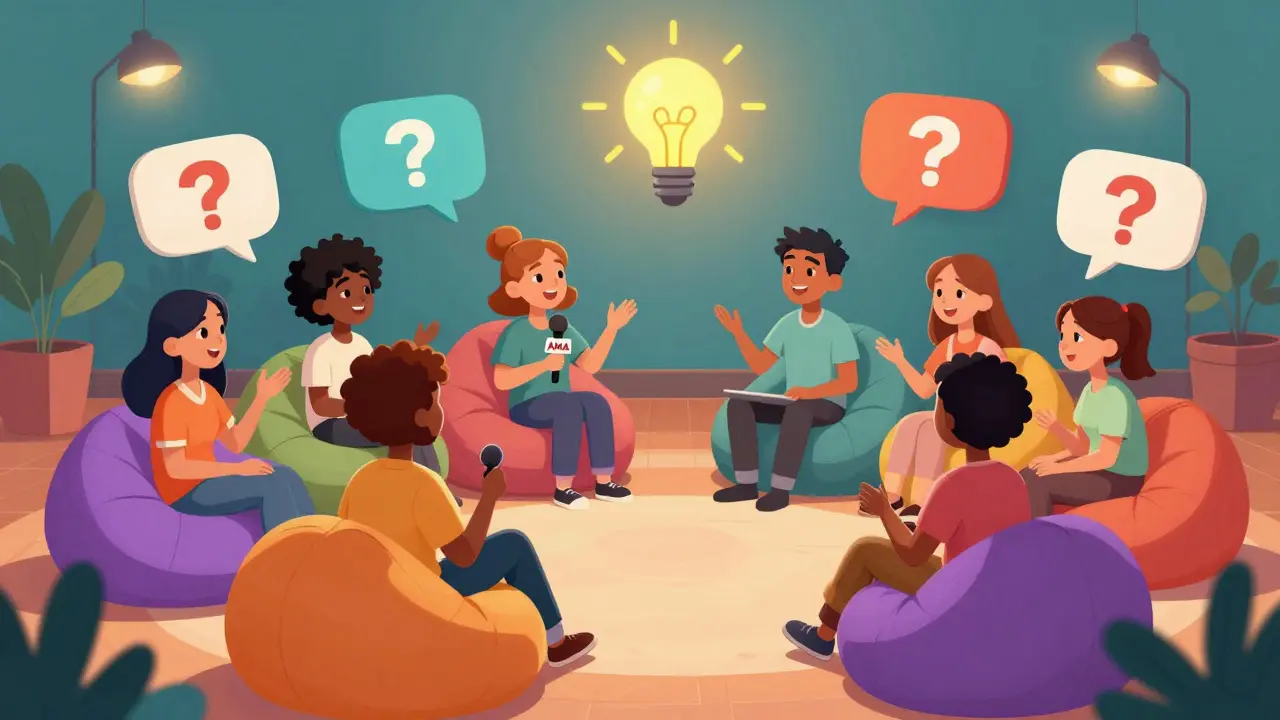
An Ask Me Anything (AMA) session is a live or asynchronous Q&A format where an expert answers unfiltered questions from the audience. Unlike polished webinars, AMAs thrive on authenticity. They strip away the script and reveal the human behind the expertise.
Why do AMAs work so well for social learning? First, they address specific pain points. When a learner asks, “How did you handle scope creep in your last project?” and get a real answer, that information sticks better than a generic textbook definition. Second, they democratize access. A student in Nairobi can ask the same question as a manager in New York. The barrier isn’t geography; it’s curiosity.
To run a successful AMA, avoid these common pitfalls:
- Over-preparing answers: If every response sounds rehearsed, readers lose trust. Allow for pauses, corrections, and “I don’t know yet” moments.
- Ignoring the chat: The value isn’t just in the host’s answers but in how other participants react. Encourage side conversations.
- Poor moderation: Without clear guidelines, AMAs can derail into arguments or spam. Set ground rules upfront.
Consider the difference between a traditional interview and an AMA. In an interview, the journalist controls the narrative. In an AMA, the community does. This shifts power dynamics and makes learners feel heard, which boosts engagement and retention.
Panels: Capturing Multiple Perspectives
While AMAs focus on one voice, Expert Panels bring together three to five professionals with diverse backgrounds to discuss a shared topic. Panels shine when complexity demands multiple viewpoints. No single person holds all the answers to systemic challenges like remote team management or ethical AI development.
The magic of panels lies in disagreement. When Panelist A argues for strict data privacy and Panelist B emphasizes innovation speed, viewers witness critical thinking in action. They see how trade-offs are negotiated in real time. This mirrors workplace dynamics far more accurately than a monologue ever could.
Effective panel design requires careful curation:
- Diverse roles: Include not just executives but also practitioners, critics, and newcomers.
- Clear moderation: The moderator must keep the conversation balanced, ensuring quieter voices aren’t drowned out.
- Structured flow: Start with broad themes, then drill down into specifics. Avoid jumping randomly between topics.
A poorly moderated panel feels like four people talking over each other. A well-run one feels like a masterclass in collaborative problem-solving. Recordings of these sessions become evergreen resources because they capture nuance that static articles miss.

Showcases: Learning by Seeing What Others Build
If AMAs provide insight and panels provide perspective, Member Showcases offer visual proof of what’s possible through peer-created work. Whether it’s a coding portfolio, a marketing campaign draft, or a language journal, showcases turn abstract goals into tangible examples.
Showcase-driven learning taps into observational learning theory. We learn by seeing others succeed-and fail. When a designer shares their iterative sketches alongside the final product, viewers understand the messy middle part of creation. That transparency reduces imposter syndrome and normalizes struggle.
Key elements of effective showcases include:
- Contextual storytelling: Don’t just post the result. Explain the challenge, constraints, and decisions made.
- Feedback loops: Enable constructive comments. Peer review improves both the creator’s skills and the reviewer’s analytical abilities.
- Curation criteria: Highlight quality without gatekeeping. Rotate features to give emerging members visibility.
Platforms like GitHub, Behance, and even LinkedIn have built massive communities around showcasing work. But the educational value spikes when those platforms add structured reflection prompts or guided critique frameworks.
Combining Formats for Maximum Impact
No single format solves every learning need. The most powerful social learning ecosystems blend AMAs, panels, and showcases strategically. Think of them as complementary tools in a toolkit.
| Format | Best For | Production Effort | Scalability | Engagement Driver |
|---|---|---|---|---|
| AMA | Deep dives into specific issues | Low | High | Authenticity & Access |
| Panel | Complex, multi-angle topics | Medium | Medium | Diverse Perspectives |
| Showcase | Visual inspiration & skill demonstration | Variable | Very High | Tangible Results |
Imagine a monthly cycle: Week 1 hosts an AMA with a senior developer discussing debugging strategies. Week 2 runs a panel featuring developers, testers, and product managers debating tech debt. Week 3 highlights three junior devs’ recent projects with peer feedback. Week 4 opens the floor for community-submitted questions to seed next month’s AMA. This rhythm keeps content fresh and ensures continuous interaction.

Measuring Success Beyond Metrics
Traditional education measures success via test scores. Social learning resists easy quantification. Engagement metrics-likes, views, attendance-are useful but incomplete. True impact shows up in behavior changes: Are members applying techniques discussed in panels? Are they referencing showcase examples in their own work? Do they initiate unsolicited collaborations?
Look for qualitative signals:
- Increased comment depth: Longer, more thoughtful replies indicate deeper processing.
- Cross-format participation: Members who attend AMAs, watch panels, AND submit showcases are highly engaged.
- Peer mentoring emergence: When experienced users start guiding newcomers organically, the community has matured.
Also track sentiment. Use simple surveys after major events asking, “Did this change how you approach your work?” Even a small percentage of “yes” responses signals meaningful impact. Remember, social learning builds relationships first, skills second. Trust enables knowledge transfer.
Common Pitfalls to Avoid
Not all community-driven initiatives succeed. Many falter due to poor execution or misaligned expectations. Here’s what to watch for:
Ghost towns: Launching AMAs or showcases without an active base leads to silence. Seed initial activity with invited guests or staff contributions before opening to the wider public.
Token diversity: Inviting panelists from different departments but ignoring their actual differing opinions creates false harmony. Authentic conflict drives learning; performative unity kills it.
Lack of follow-up: Publishing a showcase without inviting feedback turns it into a vanity project. Always pair creation with reflection opportunities.
Ignoring accessibility: Live AMAs and panels exclude those in different time zones or with hearing impairments unless transcribed and archived. Plan for inclusive delivery from day one.
Building Your Own Community-Led Program
Starting doesn’t require huge budgets. Begin small. Pick one format aligned with your audience’s immediate needs. If your group struggles with isolation, launch weekly AMAs. If they crave practical examples, curate biweekly showcases. Document everything. Iterate based on feedback.
Recruit champions early. Identify enthusiastic members willing to lead discussions or share work publicly. Reward them visibly-not necessarily monetarily, but through recognition and amplified reach. Their energy fuels others’ participation.
Create lightweight rituals. A recurring hashtag for showcase submissions. A fixed Tuesday slot for AMAs. Predictability lowers cognitive load and builds habit. Over time, these rituals become cultural touchstones that define your community identity.
Finally, resist perfectionism. Early AMAs will have awkward silences. First showcases may lack polish. That’s okay. Imperfection invites empathy and encourages experimentation. The goal isn’t flawless content-it’s connected learners growing together.
What is the difference between social learning and traditional e-learning?
Traditional e-learning relies on pre-recorded, instructor-led content delivered individually. Social learning emphasizes peer-to-peer interaction, collaboration, and knowledge co-creation within a community. While e-learning focuses on content consumption, social learning prioritizes relationship-building and experiential exchange.
How do I choose between hosting an AMA, panel, or showcase?
Choose AMAs when you want direct access to expert insights on specific problems. Opt for panels when tackling complex issues requiring multiple viewpoints. Select showcases when visual demonstrations or real-world examples will inspire or clarify concepts. Consider your audience’s current stage: beginners benefit most from showcases, intermediates from AMAs, and advanced learners from panels.
Can community-driven content replace formal training programs?
Not entirely. Formal training provides foundational structure and compliance assurance. Community-driven content excels at contextual application, troubleshooting, and emotional support. The ideal approach combines both: use formal courses for core competencies and supplement with social learning for nuanced, situational mastery.
How do I encourage shy members to participate in AMAs or showcases?
Start with low-stakes options like anonymous question submission for AMAs. For showcases, invite written reflections instead of public presentations initially. Celebrate small contributions publicly. Create safe spaces where mistakes are framed as learning opportunities. Gradually increase visibility as confidence grows.
What tools are best for managing community-driven content?
For AMAs, platforms like Slack, Discord, or Circle offer real-time interaction with searchability. Panels work well via Zoom or YouTube Live with recording capabilities. Showcases thrive on dedicated portfolio sites like Behance, GitHub Pages, or custom WordPress installations with gallery plugins. Choose tools that integrate easily with your existing workflow and prioritize accessibility features.