Correctional Education Online: Balancing Security and Access
 Oct, 31 2026
Imagine trying to take a college exam, but your laptop doesn't have a hard drive, no USB ports, and the screen is locked behind reinforced glass. This isn't a sci-fi movie scenario; it's the reality for thousands of incarcerated students navigating online correctional education. For years, higher education inside prison walls was limited to paper packets mailed back and forth by volunteer professors. Today, technology has changed the game, but it hasn't come without a massive fight over safety versus opportunity.
If you're an educator, administrator, or policy maker looking at this space, you know the tension is real. Prisons are designed to contain risk. The internet is designed to connect. Merging these two opposing forces requires more than just plugging in a router. It demands specialized hardware, strict data governance, and a fundamental rethink of what "access" means in a controlled environment. Here’s how the system actually works, where the bottlenecks are, and why getting it right matters for everyone involved.
The Core Conflict: Containment vs. Connectivity
At its heart, correctional education faces a paradox. To educate effectively, you need open access to information-libraries, journals, collaborative tools. To maintain security, you need closed systems that prevent contraband introduction and unauthorized communication. Traditional computers are security nightmares in a cell block. They have removable parts (hard drives, RAM) that can be disassembled and hidden as contraband. They have ports (USB, HDMI) that can be used to smuggle in tiny items or connect unauthorized devices.
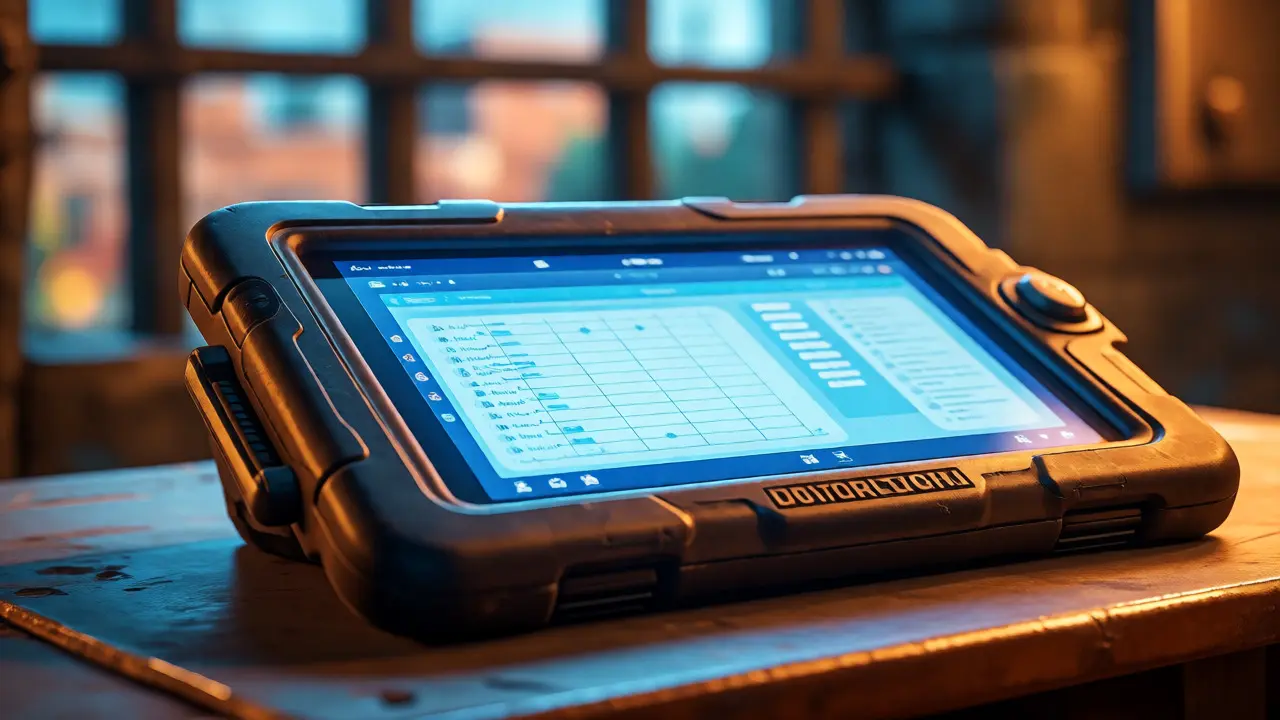
This is why you won't see standard Dell or HP desktops in most maximum-security facilities. Instead, the industry relies on ruggedized, sealed units. These aren't just tougher cases; they are fundamentally different architectures. We're talking about devices with no moving parts, solid-state storage soldered directly to the motherboard, and ports that are either non-existent or physically blocked. The goal is to create a device that functions like a computer but behaves like a brick when someone tries to break it apart.
| Feature | Standard Consumer Laptop | Correctional-Grade Device |
|---|---|---|
| Hard Drive | Removable HDD/SSD | Soldered eMMC or SSD (No removal) |
| Ports | USB-A, USB-C, HDMI, Audio Jack | None or Proprietary Locked Ports |
| Keyboard | Mechanical/Membrane with gaps | Sealed membrane or virtual keyboard |
| Durability | Fragile plastic/metal chassis | Rubberized, impact-resistant casing |
| Network | Wi-Fi/Ethernet | Closed Intranet or Filtered Wi-Fi |
How Secure Digital Learning Actually Works
You might assume inmates have free rein of the web. That’s rarely true. Most correctional facilities use a tiered approach to digital access. At the lowest level, there’s offline access. Students download course materials, textbooks, and assignments onto their devices via a secure kiosk system. Think of it like a library book drop, but digital. You plug your device into a station, upload your work, and download new chapters. No live internet connection required.
The next tier up is managed intranets. Some states have built internal networks that connect educational institutions within the prison system. Students can email professors, submit assignments, and participate in discussion boards, but they cannot browse the open internet. This allows for asynchronous learning without the risks of social media distractions or unmonitored chat rooms.
The highest tier, which is still relatively rare, involves filtered public internet access. Here, students can access specific educational domains like Coursera, edX, or university portals. But even here, the traffic is heavily monitored. Every keystroke might be logged. Every website visit is whitelisted. If a student tries to go to a news site or a shopping portal, they hit a wall. This precision filtering is crucial because bandwidth in prisons is often shared among hundreds of users, and unrestricted browsing would crash the network instantly.

The Role of Proctoring and Identity Verification
One of the biggest hurdles in online degree programs is proving who is actually taking the test. In a traditional classroom, the professor sees the face. In a prison cell, that’s harder. Cheating concerns are amplified in correctional settings due to the potential for outside assistance. How do you ensure the person typing the essay isn’t having a family member write it during visitation?
Institutions solve this through rigorous proctoring solutions. Some use biometric verification, requiring fingerprint scans before login. Others rely on video proctoring, though cameras are tricky in cells where privacy is already nonexistent and angles are limited. A common compromise is timed assessments combined with plagiarism detection software that flags unusual writing patterns. However, the gold standard remains synchronous video exams, where a proctor watches the student type in real-time. This requires stable bandwidth, which brings us back to infrastructure challenges.
Barriers Beyond the Hardware
Security is only half the battle. Even if you hand every inmate a secure tablet, other barriers persist. First is cost. Who pays for the device? Many programs rely on grants from organizations like the Andrew W. Mellon Foundation or state-level corrections budgets. When funding dries up, devices sit unused because maintenance contracts expire.
Second is digital literacy. Not all incarcerated individuals grew up with smartphones. For older populations, navigating a touch interface or managing cloud files can be daunting. Effective programs don’t just provide tech; they provide training. Peer tutors often play a critical role here, helping classmates troubleshoot basic issues since IT support staff cannot enter housing units freely for minor glitches.
Third is curriculum alignment. Not every subject translates well to online delivery. Chemistry labs require physical equipment. Nursing clinicals require patient interaction. Programs that succeed tend to focus on humanities, business, computer science, and social sciences-fields where theoretical knowledge can be assessed remotely. Trying to force a hands-on trade skill into a purely online format usually leads to frustration for both students and instructors.

Why This Matters for Reentry Success
Let’s look at the data. According to the RAND Corporation, incarcerated individuals who participate in correctional education are 43% less likely to recidivate than those who don’t. That’s a huge number. It suggests that education isn’t just a nice-to-have perk; it’s a public safety strategy. When people leave prison with a degree or certificate, they have better job prospects, higher self-esteem, and stronger social networks.
Online education scales this impact. Physical classrooms in prisons are limited by space, staffing, and security logistics. An online platform can serve hundreds of students across multiple facilities simultaneously. A single professor at a state university can teach a section of students spread across three different prisons. This efficiency lowers the cost per student and expands reach to rural facilities that might never get a visiting lecturer.
Best Practices for Implementation
If you’re rolling out a program, don’t start with the most complex setup. Start small. Pilot a single cohort with a robust support structure. Ensure that the hardware vendor provides on-site repair services, not mail-in repairs, which can take weeks and disrupt coursework.
- Involve Corrections Staff Early: Officers are the gatekeepers. If they feel the technology threatens their authority or adds workload, they will resist. Show them how it reduces paperwork or improves behavior management.
- Focus on Offline Capabilities: Assume the internet will go down. Design courses that can be completed entirely offline if necessary, syncing later.
- Standardize Devices: Don’t mix Android tablets with Windows laptops unless you have a strong IT team. Uniformity simplifies troubleshooting and content delivery.
- Plan for Graduation: What happens to the device when a student is released? Can they keep it? Do they lose access to their cloud accounts? Plan the transition now to avoid losing academic records.
The landscape of correctional education is shifting from pen-and-paper to pixel-perfect screens. It’s messy, expensive, and fraught with regulatory hurdles. But the payoff-a safer society and transformed lives-is worth the engineering headaches. As we move further into 2026, the question isn’t whether prisons should adopt online learning, but how quickly they can do it without compromising the very security that defines their existence.
Can prisoners use the regular internet for school?
Generally, no. Most correctional facilities restrict access to a closed intranet or a whitelist of educational websites. Full open-internet access is rare due to security concerns regarding unauthorized communication and contraband smuggling via digital means.
What kind of computers are used in prison education programs?
Specialized correctional-grade devices are used. These typically feature sealed casings, no removable hard drives, no USB ports, and impact-resistant designs to prevent disassembly and contraband concealment.
How is cheating prevented in online prison exams?
Institutions use a combination of timed tests, plagiarism detection software, and sometimes live video proctoring. Biometric logins may also be used to verify identity, ensuring the enrolled student is the one completing the assessment.
Do inmates pay for online education devices?
Cost structures vary. Some programs provide devices for free through grants or state funding. Others require inmates to purchase the device themselves using commissary funds or earn credits toward it through participation in the program.
Is online education effective for reducing recidivism?
Yes. Studies, including those by the RAND Corporation, indicate that correctional education significantly reduces the likelihood of reoffending. Online formats help scale this effect by making education accessible to more inmates across various facilities.
SHANNON GRUBER
November 2, 2026 AT 01:01Whatever. Another article trying to justify spending tax dollars on fancy tablets for people who couldn't stay out of trouble the first time.
Sherri Jones
November 3, 2026 AT 12:55Actually, the data shows a significant return on investment! 📉 Recidivism drops by 43% according to RAND studies. It's not just about kindness; it's about public safety and economic efficiency. 🎓💼 We need to view this as infrastructure, not charity.
Howard Hurd
November 4, 2026 AT 07:53Liberal nonsense. 🇺🇸 If they wanted education, they wouldn't have committed crimes. Give them hard labor instead. That builds character. 🛠️
Prayagraj Medicose
November 4, 2026 AT 13:31Wake up sheeple!! The government doesn't want you to know that these 'secure' devices are actually listening to everything you say inside those cells!!! 🕵️♂️ They are harvesting biometric data to build a database that controls us all when we get out. The soldered drives aren't for security, they're for surveillance! 👁️ Don't let them fool you with the 'no internet' story. There is always a backdoor. Always.
Liam Whelan
November 5, 2026 AT 17:18honestly i think its cool that they are trying to adapt tech for such a unique enviroement... kinda sad tho that basic stuff like usb ports causes so many issues 😔 but yeah good point about the contraband risk
LoriBeth Blair
November 7, 2026 AT 14:20You people really don't understand how prisons work. It's not a college campus. You can't just hand out iPads because it sounds nice. Security protocols exist for a reason. If an inmate disassembles a device and hides a piece in their shoe, that's a weapon or contraband. Simple as that. Stop pretending there's an easy fix.
Kieran Mitchell
November 9, 2026 AT 08:35Oh, please!!! Do not tell me that 'security' is the only barrier here!!! It is ALWAYS about control!!! Control over information!!! Control over hope!!! If a prisoner learns to code, they might realize the system is rigged against them!!! And THAT is what terrifies the administration!!! Not some tiny USB stick!!! It is the power of knowledge!!! 💥🔥😱
Bryce Imbriale
November 9, 2026 AT 19:05Love the energy here guys but let's look at the bright side!!! Imagine being able to finish your degree while serving time??? That changes EVERYTHING for reentry!!! No more stigma of just having a rap sheet!!! Now you have a portfolio!!! A network!!! A future!!! Let's keep pushing for better hardware and less red tape!!! 🚀💪✨
Lauren Martin
November 9, 2026 AT 23:31The pedagogical framework described here is fundamentally flawed due to its failure to address the socio-economic disparities inherent in digital literacy acquisition. By assuming a baseline of technological fluency among incarcerated populations, the authors ignore the systemic exclusion that precedes incarceration. Furthermore, the reliance on asynchronous, whitelisted intranets creates a walled garden that mimics the very confinement it seeks to alleviate intellectually. This isn't just a technical challenge; it's a structural reproduction of carceral logic within the educational sphere. Until we decouple access from surveillance capitalism, these programs will remain performative gestures rather than transformative tools.
Tommy Cahyadi
November 10, 2026 AT 09:05Yeah, great. So now we're paying for their Netflix accounts too? Wait, no, they can't even browse news. Sounds like a very expensive way to read PDFs. 🙄
Brad Walker
November 10, 2026 AT 11:22We are merely shadows on the wall of Plato's cave, watching flickering images of 'education' projected onto the reinforced glass of our own making. The tablet is not a window; it is a mirror reflecting our inability to truly connect. To educate the imprisoned is to educate ourselves on the nature of freedom, which is, ultimately, an illusion shared by all. The hard drive is sealed, yes, but so is the soul. 🌑🤯
william mcstay
November 10, 2026 AT 22:00My taxes. My money. My rules. If they want school, they pay for it. Full price. No subsidies for lawbreakers. End of discussion.