Crisis Management and Business Continuity Training: What Works Today
 Mar, 21 2026
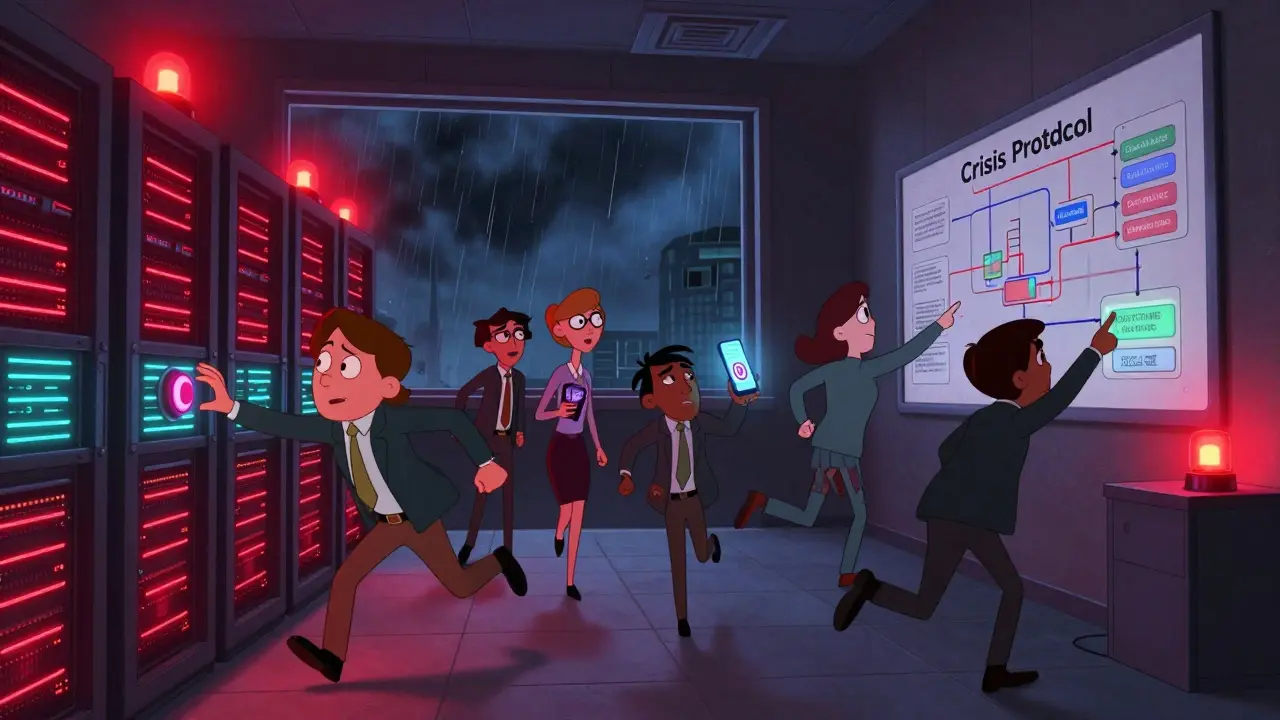
When a server farm goes down in the middle of the night, or a supply chain breaks because of a storm, or a data breach hits right before quarter-end - it’s not the problem that kills companies. It’s the lack of preparation. Companies that survive crises don’t just have backup plans. They have teams trained to act fast, think clearly, and lead under pressure. That’s where crisis management and business continuity training makes the difference.
Why Training Isn’t Optional Anymore
In 2024, the average cost of a business disruption lasting more than 48 hours was $4.3 million, according to a study by the Ponemon Institute. That’s not a typo. And 68% of those disruptions were caused by events companies claimed they were "prepared for." The truth? Preparation without training is just paperwork.
Think about it. You can have the best disaster recovery plan ever written. But if your team doesn’t know who to call, what systems to switch to, or how to communicate with customers during a crisis, that plan gathers dust. Training turns policies into muscle memory.
Organizations that run regular crisis simulations report 72% faster response times and 50% fewer communication breakdowns during real events, based on data from the Business Continuity Institute. That’s not luck. That’s practice.
What’s Actually in This Training?
It’s not a one-day workshop with a PowerPoint and a coffee break. Effective crisis management and business continuity training includes four core components:
- Role-specific drills - Not everyone needs to know how to restore a database. But the IT lead does. The PR manager needs to know how to draft a public statement in under 15 minutes. The training is sliced by function, not by department.
- Realistic scenarios - No more "what if the power goes out?" That’s too vague. Real drills use events based on your industry: a ransomware attack on a hospital, a warehouse fire in a logistics company, a regulatory audit gone wrong for a financial firm.
- Communication protocols - Who speaks to the media? Who talks to employees? Who updates the board? These aren’t guesses. They’re written, rehearsed, and tested. Teams use pre-approved templates, contact trees, and encrypted channels.
- Post-event reviews - After every drill, there’s a 90-minute debrief. Not a blame session. A "what worked, what broke, what we’ll fix" session. These reviews become the living update log for your continuity plan.
One manufacturing plant in Ohio started running monthly 30-minute crisis simulations after a fire shut down their main production line in 2023. They trained just five key roles: plant manager, safety officer, logistics lead, IT systems admin, and communications coordinator. Within six months, their recovery time dropped from 14 hours to under 4. That’s $2.1 million in saved production losses in one year.
Common Mistakes That Make Training Useless
Most companies think they’re doing crisis training because they’ve got a binder. They’re not. Here are the five biggest mistakes:
- Training everyone the same way - You don’t need the marketing team to troubleshoot your backup server. Focus on the people who actually hold the keys.
- Using hypotheticals - "What if a hurricane hits?" is not useful. "What if the flood takes out your primary data center in Atlanta?" - now you’re talking.
- Skipping communication drills - Over 80% of failures during crises come from miscommunication, not technical failure. Yet most training ignores this.
- Doing it once a year - Skills fade. People forget. Procedures change. Quarterly drills are the minimum. Monthly for high-risk teams.
- Not involving leadership - If the CEO doesn’t sit through a drill, they won’t understand the pressure. And they won’t fund the right tools.
A tech startup in Austin skipped leadership involvement in their training. When a cloud provider went down, the CEO called the CTO at 3 a.m. and asked, "Can we just move to another provider?" The CTO had no answer because the backup process had never been tested. They lost $800,000 in revenue in 72 hours.
Who Should Be Trained? (And Who Doesn’t Need To Be)
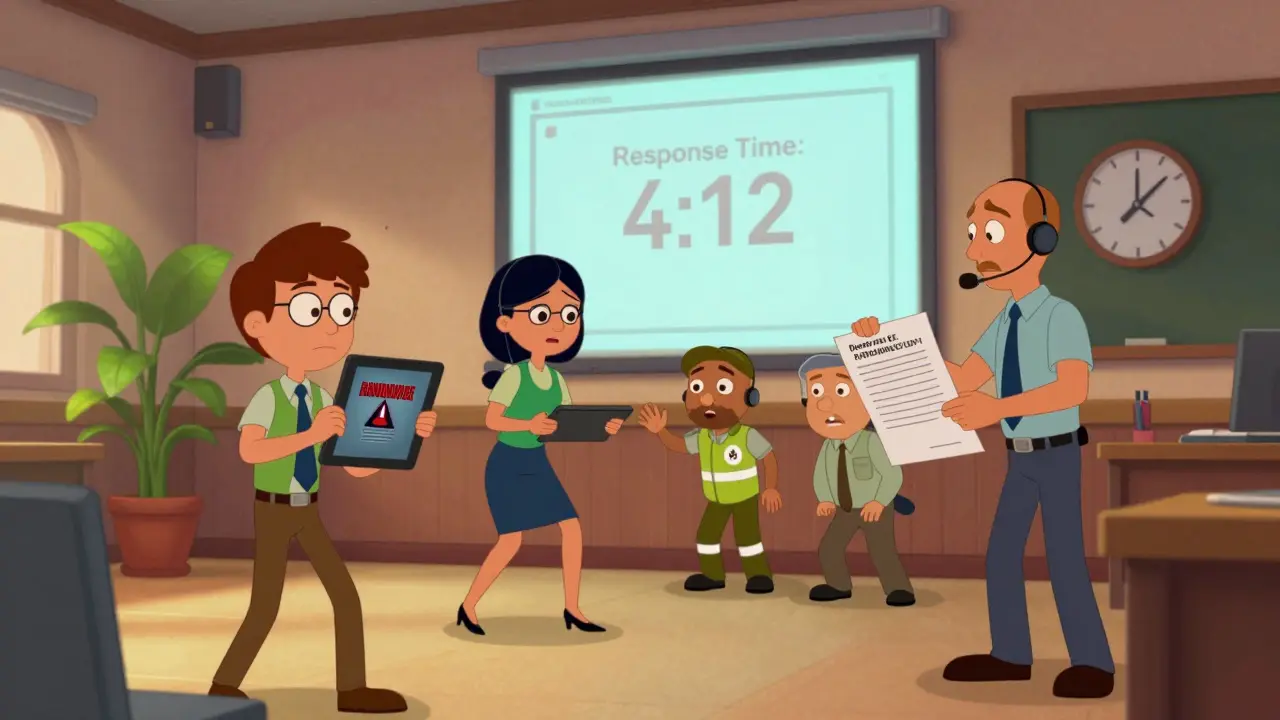
Not every employee needs to be a crisis expert. But everyone should know their role. Here’s the breakdown:
- Must train: Crisis response team (core 5-7 people), IT and security leads, HR, legal/compliance officers, communications and PR staff, senior operations managers.
- Should be aware: All employees - through a 10-minute annual refresher on where to go, who to contact, and how to check for updates.
- Don’t need training: Contractors or temporary staff who don’t handle critical systems or customer data.
At a mid-sized healthcare provider in Phoenix, they trained only 11 people. But those 11 were the ones who controlled patient records, emergency contacts, backup power, and patient care coordination. During a cyberattack in late 2025, they restored services in 90 minutes. The rest of the staff got a text: "We’re working on it. Please don’t call the front desk."
How to Start - Even With a Small Budget
You don’t need a $50,000 consultant. Here’s how to build a real training program with $5,000 or less:
- Identify your top 3 risks. What’s most likely to break? A cyberattack? A key vendor failing? A regulatory fine? Pick the top three.
- Build a 30-minute scenario for each. Use free tools like Google Docs for communication templates, Slack for mock alerts, and Zoom for the drill. No fancy software needed.
- Run one drill per quarter. Start with just one team. After the first one, ask: "What broke? What worked? What surprised us?"
- Record it. Film the drill (with permission). Review it together. It’s painful. It’s necessary.
- Update your plan. Change one thing after every drill. That’s how it stays alive.
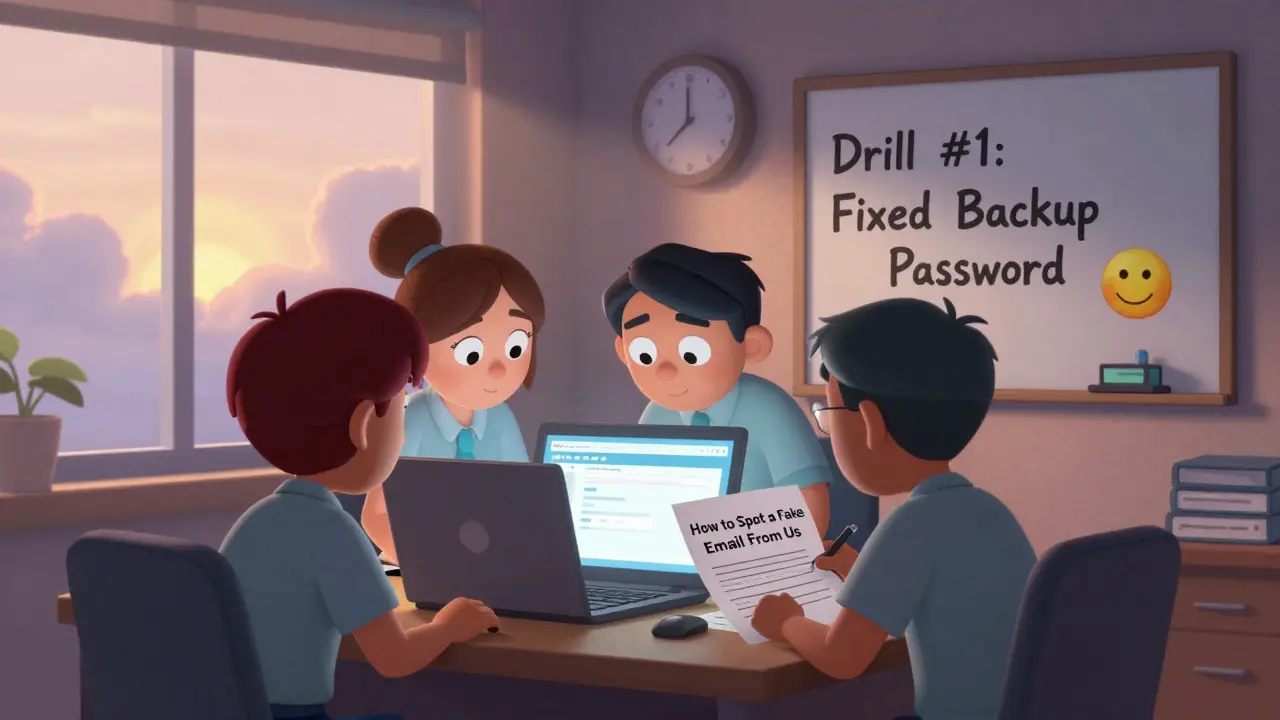
A small accounting firm in Tempe started with this. They ran a drill simulating a ransomware attack. They discovered their backup system didn’t work because the password had expired. They fixed it. Then they ran another drill. This time, they realized their clients didn’t know how to verify if an email was real. So they added a one-pager to every client invoice: "How to Spot a Fake Email From Us."
What Success Looks Like
Success isn’t having zero incidents. It’s having incidents that don’t destroy you.
After two years of quarterly drills, a regional retailer in Colorado had a major warehouse fire. Their team activated their continuity plan. Backup inventory was shipped from a regional hub within six hours. Customer service used pre-written messages. Employees knew where to report. Sales dropped 12% - not 60%. They recovered fully in three weeks.
That’s what training does. It doesn’t prevent disasters. It prevents panic. It replaces chaos with clarity. And in a crisis, clarity is the most valuable asset you have.
How often should crisis management training be done?
Critical teams should train at least quarterly. For high-risk industries like healthcare, finance, or logistics, monthly drills are common. Even if you only do one drill per year, make sure it’s real, recorded, and followed by a detailed review. The goal isn’t frequency - it’s retention. If people forget what to do by the next quarter, you’re not training - you’re checking a box.
Can small businesses afford this kind of training?
Yes - and they need it most. Small businesses are 50% more likely to shut down permanently after a major disruption than large ones. You don’t need expensive software. Start with free tools: Google Workspace for documentation, Slack for communication drills, Zoom for simulations. Focus on your top two risks. Train your core three people. Do one 30-minute drill every three months. That’s it. The cost isn’t money - it’s time. And that time saves your business.
What’s the difference between crisis management and business continuity training?
Crisis management is about immediate response: who speaks, what systems you switch to, how you protect people. Business continuity is about recovery: how you get back to normal operations, restore services, and keep serving customers. You need both. One handles the fire. The other rebuilds the house. Most training programs focus on one and ignore the other - that’s why so many companies recover slowly.
Should employees be evaluated during training?
Not in a grading sense. But yes - you should track performance. Did they contact the right person within 5 minutes? Did they use the correct communication template? Did they avoid panic language? These are measurable behaviors. Use checklists, not scores. The goal isn’t to punish - it’s to improve. After each drill, give feedback. Then let them try again.
Is crisis training only for IT or operations teams?
No. IT and operations are critical, but they’re not enough. Legal needs to know how to respond to regulatory inquiries during a breach. HR needs to handle employee safety and communication. Marketing and PR need to control the public narrative. Finance needs to manage cash flow if revenue drops. Everyone who touches customer trust, legal liability, or core operations must be trained. It’s not about your job title - it’s about your role in the chain.
What Comes Next
If you’ve never run a drill, start this month. Pick one scenario. Pick three people. Pick one hour. Make it real. Record it. Review it. Fix one thing. Do it again in 90 days. That’s how resilience is built - not in boardrooms, but in quiet rooms with a laptop, a timer, and a team ready to learn.
Michael Thomas
March 21, 2026 AT 10:15Abert Canada
March 21, 2026 AT 22:58Xavier Lévesque
March 22, 2026 AT 18:09Thabo mangena
March 22, 2026 AT 20:27Karl Fisher
March 22, 2026 AT 20:28Buddy Faith
March 24, 2026 AT 03:50Scott Perlman
March 24, 2026 AT 21:15Sandi Johnson
March 26, 2026 AT 10:05Eva Monhaut
March 28, 2026 AT 06:35Chuck Doland
March 28, 2026 AT 21:04Madeline VanHorn
March 30, 2026 AT 09:36Glenn Celaya
March 31, 2026 AT 17:07Wilda Mcgee
April 1, 2026 AT 14:00Chris Atkins
April 3, 2026 AT 03:14Jen Becker
April 5, 2026 AT 01:59