Data Privacy for AI-Driven Learning Analytics: A 2026 Compliance Guide
 Jul, 21 2026
Imagine a scenario where an AI algorithm predicts that a high school student is at risk of dropping out based on their login times and quiz scores. The system flags them for intervention. Sounds helpful, right? But what if that same system also inferred the student’s socioeconomic status or health conditions from subtle patterns in their writing style? Suddenly, the line between helpful insight and invasive surveillance blurs.
This is the reality of data privacy in modern education. As institutions adopt Learning Analytics to personalize education, they are handling massive amounts of sensitive information. With the rise of generative AI and machine learning models, the volume and sensitivity of this data have exploded. For educators, administrators, and ed-tech developers, navigating this landscape in 2026 requires more than just good intentions; it demands a robust framework for compliance, ethics, and technical security.
The Evolution of Student Data in the Digital Age
To understand the current challenges, we need to look at how student data has changed. Ten years ago, "student data" mostly meant grades, attendance records, and basic demographic information stored in a Student Information System (SIS). Today, it includes clickstream data, keystroke dynamics, facial recognition metrics from proctoring software, and even biometric data from wearable devices used in physical education classes.
Learning Analytics relies on this granular data to build predictive models. These models help identify struggling students early, recommend personalized resources, and optimize curriculum delivery. However, the more data you collect, the higher the risk. In 2026, the average K-12 district collects over 50 distinct data points per student daily. This isn't just administrative overhead; it's a privacy liability waiting to happen if not managed correctly.
The shift from static records to dynamic behavioral tracking means traditional privacy policies are often obsolete. Institutions must now consider real-time data processing and the potential for re-identification of anonymized datasets. When you combine multiple non-sensitive data points-like library book checks-out and cafeteria purchases-you can often pinpoint an individual with startling accuracy.
Key Regulatory Frameworks Governing EdTech Privacy
Navigating legal requirements is the first step in building a compliant AI-driven learning environment. In the United States, two primary laws dominate the landscape: the Family Educational Rights and Privacy Act (FERPA) and the Children's Online Privacy Protection Act (COPPA).
FERPA protects the privacy of student education records. It gives parents certain rights with respect to their children's education records and transfers those rights to students when they turn 18 or attend a postsecondary institution. Crucially, FERPA defines "school officials" and "legitimate educational interests." If your AI vendor needs access to student data to provide a service, they must be considered a school official with a legitimate interest, or have a detailed Data Sharing Agreement (DSA) in place.
COPPA applies to online services directed at children under 13. It requires verifiable parental consent before collecting personal information. Many AI-driven tutoring platforms fall into this category. Failure to comply can result in fines exceeding $50,000 per violation. Beyond federal laws, state-level regulations like California's Student Online Personal Information Protection Act (SOPIPA) add another layer of complexity, prohibiting the commercial profiling of students.
| Regulation | Target Audience | Key Requirement | Penalty for Non-Compliance |
|---|---|---|---|
| FERPA | K-12 & Higher Ed | Protects education records; requires consent for disclosure | Loss of federal funding |
| COPPA | Children under 13 | Verifiable parental consent for data collection | Up to $50,000 per violation |
| SOPIPA | California Students | Prohibits commercial profiling and targeted advertising | Up to $7,500 per day |
| GDPR (if applicable) | EU Citizens | Right to be forgotten; data minimization | Up to 4% of global turnover |
Technical Strategies for Privacy-Preserving AI
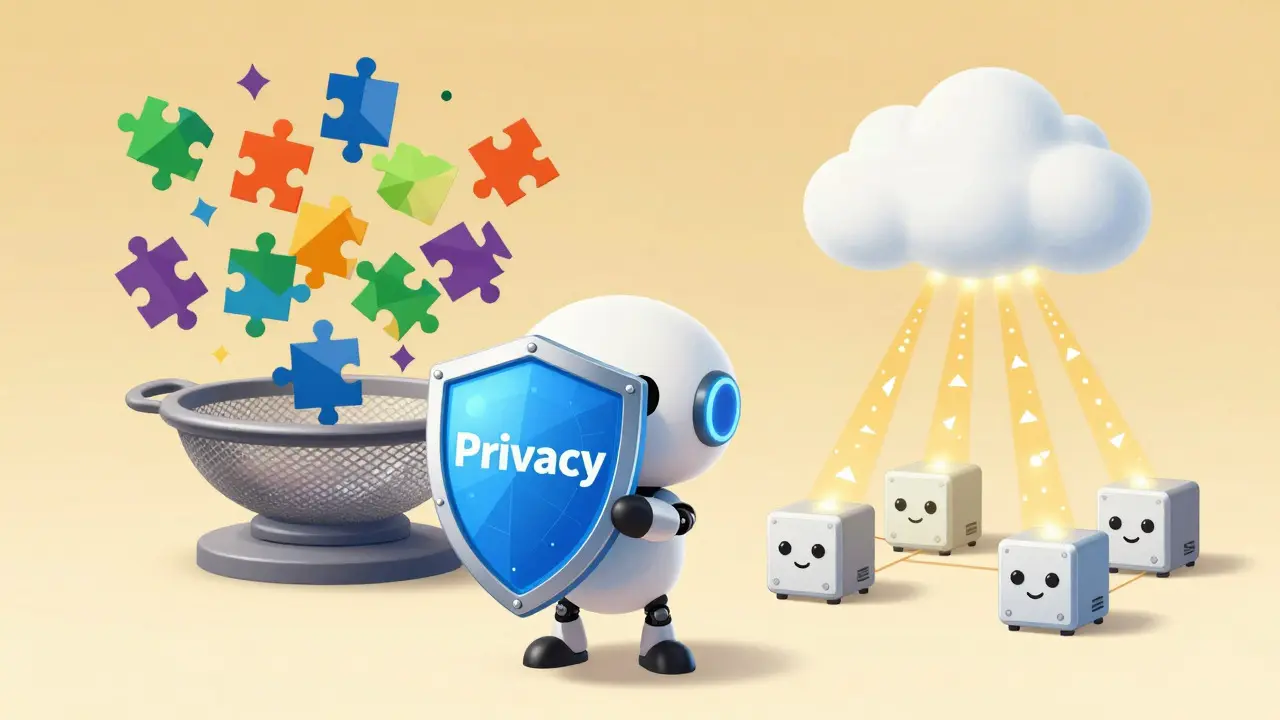
Legal compliance is necessary but not sufficient. You need technical safeguards to protect data at rest and in transit. Here are three critical strategies for implementing AI-driven learning analytics without compromising privacy.
1. Data Minimization and Anonymization
The best way to protect data is to not collect it in the first place. Apply the principle of Data Minimization. Ask yourself: Does this AI model really need to know the student's home address? Probably not. Collect only what is strictly necessary for the educational outcome. For data that must be collected, use anonymization techniques. Remove direct identifiers like names and student IDs. Use k-anonymity or differential privacy to ensure that individual records cannot be isolated within a dataset.
2. Federated Learning
Federated Learning is a game-changer for privacy. Instead of sending raw student data to a central server for AI training, the model is sent to the local device (e.g., the school's server or the student's tablet). The model learns from the local data and sends only the updated parameters (weights) back to the central system. This means the raw data never leaves the secure local environment. It’s particularly useful for districts that want to benefit from large-scale AI insights without pooling sensitive student records.
3. Encryption and Access Controls
All data must be encrypted both in transit (using TLS 1.3) and at rest (using AES-256). Implement strict role-based access control (RBAC). Teachers should only see data relevant to their students. Administrators should see aggregated trends, not individual profiles unless there is a documented educational need. Audit logs should track every access event, creating a transparent trail for accountability.
Ethical Considerations Beyond Compliance
Just because you can predict a student’s future performance doesn’t mean you should share that prediction with everyone. Ethical AI in education requires transparency and fairness.
Algorithmic Bias is a significant risk. If historical data reflects past inequalities-such as lower expectations for minority students-the AI will learn and perpetuate these biases. For example, an AI might flag students from certain zip codes as "high risk" simply because of correlation, not causation. Regular bias audits are essential. Test your models against diverse datasets to ensure fair outcomes across gender, race, and socioeconomic lines.
Transparency is key. Students and parents should know what data is being collected, how it’s being used, and who has access to it. Avoid "black box" algorithms. Where possible, use explainable AI (XAI) techniques that provide clear reasons for recommendations. If an AI suggests a remedial course, it should explain why: "This recommendation is based on three missed assignments in algebra," not just "The system says so."
Best Practices for Schools and EdTech Providers
Implementing a privacy-first culture takes effort. Here is a checklist for stakeholders:
- Conduct Data Protection Impact Assessments (DPIAs): Before deploying any new AI tool, assess the risks to student privacy. Identify potential harms and mitigation strategies.
- Review Vendor Contracts: Ensure your Data Sharing Agreements explicitly prohibit vendors from selling data or using it for advertising. Specify data retention periods and deletion protocols.
- Train Staff and Students: Educators need to understand the basics of data privacy. Students should be taught digital citizenship, including how their data is used online.
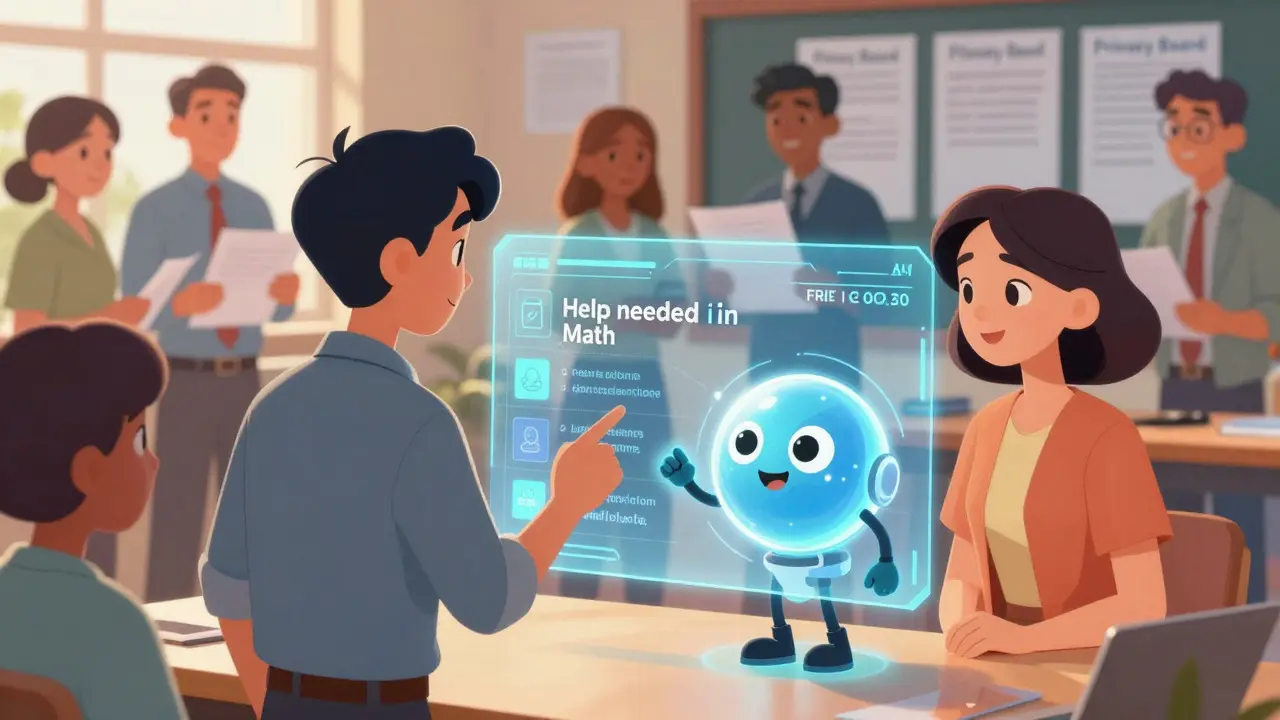
- Establish a Privacy Board: Create a cross-functional team including IT, legal, educators, and parent representatives to oversee AI initiatives.
- Regular Audits: Perform annual security and privacy audits. Check for vulnerabilities, review access logs, and update policies as technology evolves.
The Future of Privacy in AI Education
Looking ahead to 2027 and beyond, we can expect stricter regulations and more advanced privacy technologies. Zero-knowledge proofs may allow AI to verify credentials or competencies without revealing underlying data. Blockchain could provide students with self-sovereign identity solutions, giving them control over their own educational records.
The goal isn't to stop innovation but to guide it responsibly. By prioritizing data privacy, schools can build trust with families and create safer, more effective learning environments. Remember, trust is the foundation of education. Once lost, it’s hard to regain. Protect student data as if it were your own.
What is the biggest risk of using AI in learning analytics?
The biggest risk is the unintended inference of sensitive personal information. AI models can uncover patterns that reveal a student's health, socioeconomic status, or family situation without explicit consent, leading to privacy violations and potential discrimination.
How does FERPA apply to third-party AI tools?
Under FERPA, third-party AI vendors must be classified as "school officials" with a legitimate educational interest. This requires a formal Data Sharing Agreement that limits how the vendor uses, stores, and shares student data. They cannot use the data for marketing or sell it to other parties.
Can AI predictions about students be biased?
Yes, AI models can inherit biases present in historical training data. If past data reflects systemic inequalities, the AI may unfairly flag certain groups of students as "at-risk." Regular bias audits and diverse training datasets are necessary to mitigate this.
What is federated learning in education?
Federated learning is a technique where AI models are trained locally on devices (like school servers) rather than sending raw data to a central cloud. Only the learned insights (model updates) are shared, keeping sensitive student data secure and private.
How can schools ensure transparency with parents?
Schools should provide clear, jargon-free explanations of what data is collected, why it’s needed, and how it’s used. Annual privacy notices, open forums, and accessible dashboards showing data usage can help build trust and ensure parents understand the benefits and risks.