Differentiation Strategies in Online Learning Classrooms to Boost Engagement and Retention
 Nov, 26 2025
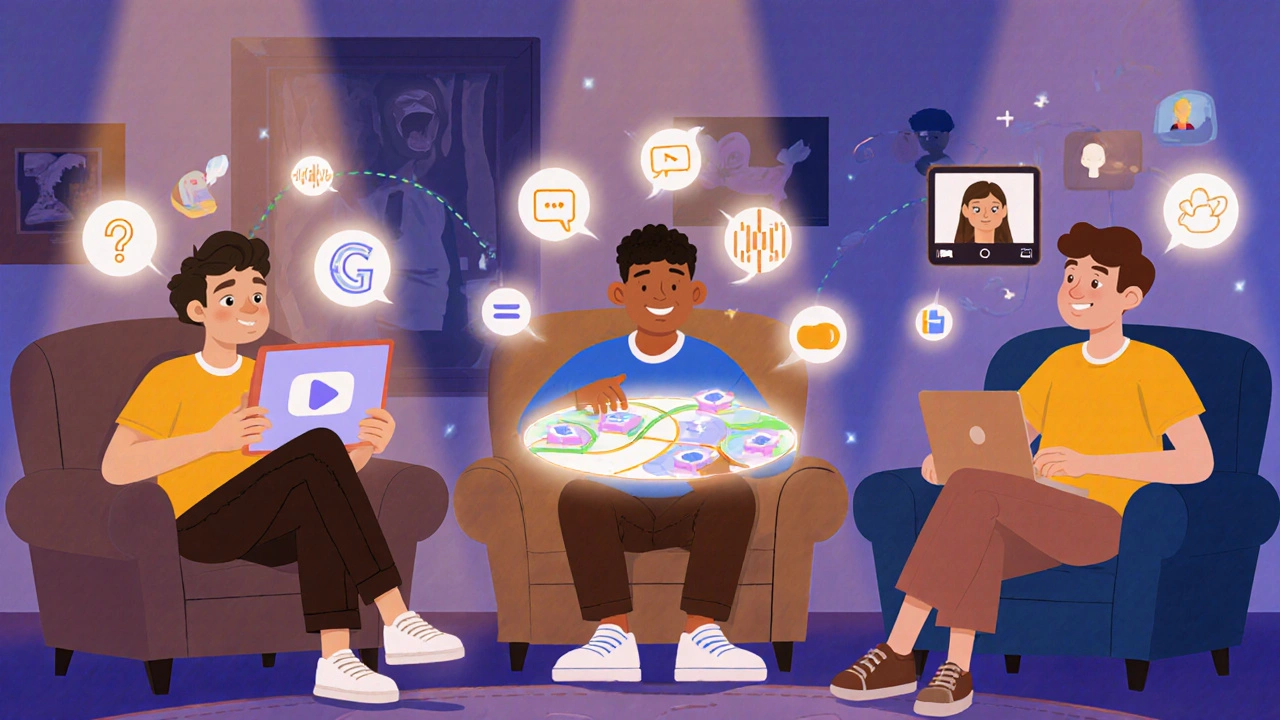
When you teach online, not everyone learns the same way. Some students watch videos twice. Others skip them and read the transcript. A few need to talk through ideas before they get it. And some don’t even finish the module unless it feels like a game. If you’re teaching online and treating all students the same, you’re leaving money on the table-literally. Dropout rates in online courses hit 70% in some cases, not because students are lazy, but because the content doesn’t meet them where they are.
Why One-Size-Fits-All Doesn’t Work Online
In a physical classroom, you can read body language. You see someone zone out, lean in, or scribble furiously. You adjust on the fly. Online? You get a completion rate. A quiz score. Maybe a chat message that says, ‘I don’t get this.’ That’s not enough. Without differentiation, you’re teaching to an imaginary average student-one who doesn’t exist.
Studies from the Journal of Online Learning in 2024 showed that courses using adaptive pacing and multiple content formats had 42% higher completion rates than those using uniform delivery. That’s not a small gap. That’s the difference between a course that survives and one that gets canceled.
Start with Learning Profiles, Not Just Test Scores
Don’t assume a student who aced the first quiz is ready for advanced material. Maybe they memorized it. Maybe they had help. Maybe they’re just good at multiple-choice questions. Instead, build a quick profile for each learner during week one.
- Do they prefer text, audio, or video?
- Do they like to collaborate or work alone?
- Are they self-starters or do they need deadlines?
- Do they struggle with time management or focus?
Use a 5-question survey. Keep it short. Use tools like Google Forms or LMS-integrated polls. Then tag students based on responses. Not as ‘advanced’ or ‘struggling’-but as ‘visual learner,’ ‘discussion-driven,’ or ‘deadline-reliant.’ These labels guide your next moves.
Offer Multiple Paths to the Same Goal
Let’s say your goal is for students to understand how to analyze customer feedback. You could:
- Give them a 15-minute video with real examples
- Provide a step-by-step written guide with annotated screenshots
- Assign a live breakout room discussion with peer case studies
- Create an interactive simulation where they sort feedback into categories
Let them choose one. Then, require them to explain their choice in a short reflection. This isn’t about letting them off easy-it’s about letting them own their learning. When students pick their path, they’re 3x more likely to complete the task, according to research from Stanford’s Center for Education Policy Analysis.
Use Adaptive Quizzes That Respond in Real Time
Traditional quizzes test what students know. Adaptive quizzes figure out what they don’t know-and adjust immediately.
Here’s how it works: A student answers a question about budgeting in marketing. If they get it right, the next question is harder. If they miss it, the system drops back to a foundational concept and offers a short video explanation. Then it tries again. No waiting. No shame. No falling behind while everyone else moves on.
Platforms like Knewton, Smart Sparrow, and even newer LMS plugins (like those built into Canvas and Moodle) now offer this. You don’t need to code it. Just turn it on. And yes-it works for non-tech subjects too. History? Try adaptive timelines. Literature? Adaptive close-reading prompts. Even language learning apps like Duolingo use this model successfully.
Group Work That Actually Works Online
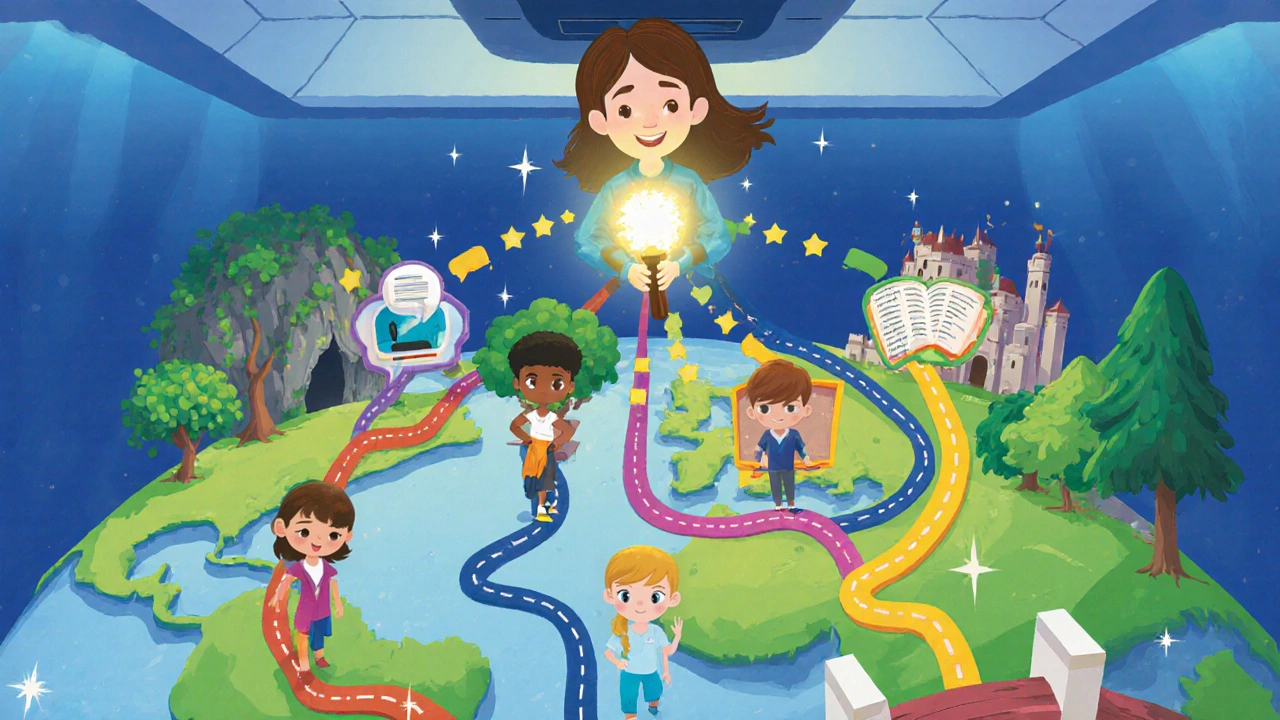
Group projects in online classes often fail because they’re forced. Students pick roles by default: the one who does everything, the one who ghosted, and the three who say ‘sounds good’ in the chat.
Fix it by assigning roles based on learning profiles:
- Connector: The student who thrives in discussion-leads group chats
- Organizer: The deadline-reliant one-tracks milestones
- Analyst: The visual learner-creates diagrams or summaries
- Presenter: The confident speaker-records the final video
Rotate roles every two weeks. This ensures everyone gets exposure to different skills. And it stops the same person from doing all the work.
Feedback That Feels Personal, Not Automated
Generic feedback like ‘Good job!’ or ‘Needs improvement’ is useless. Students tune it out.
Instead, use voice notes. A 60-second audio message recorded in your LMS or via Loom. Say their name. Reference something specific they did. ‘I noticed you used three different sources in your analysis-that’s exactly what we’re aiming for.’
Research from Arizona State University found that students who received personalized audio feedback were 58% more likely to revise their work and 34% more likely to engage with future assignments. It’s not about being nice. It’s about signaling: ‘I see you.’
Let Students Co-Design Their Learning
At the end of each module, ask: ‘What would make this easier for you next time?’
Don’t just ask for opinions-ask for solutions. One student might say, ‘I need shorter videos.’ Another: ‘Can we have a live Q&A before the quiz?’ A third: ‘I’d rather write a blog post than take the test.’
Use their feedback to tweak the next module. Not every suggestion gets implemented-but when students see their ideas used, they feel ownership. That’s the secret sauce of retention.
Tools That Make Differentiation Practical
You don’t need to build everything from scratch. Here’s what works right now:
- Edpuzzle: Add questions to videos and pause them based on responses
- Quizizz: Gamified quizzes with adaptive difficulty
- Flip: Video-based discussion boards where students respond to each other
- Notion or Google Sites: Let students build their own learning portfolios
- AI tutors (like Khanmigo): Offer 1:1 explanations without you having to be online 24/7
Start with one. Master it. Then add another. Don’t overwhelm yourself. Differentiation isn’t about doing more-it’s about doing what matters.
Common Mistakes to Avoid
Even well-intentioned teachers mess this up. Here’s what not to do:
- Don’t assume tech-savviness. Not everyone knows how to use breakout rooms or upload files.
- Don’t over-customize. You can’t build 20 different paths. Aim for 3-5 flexible options.
- Don’t ignore pacing. Some students need 3 days to digest a concept. Let them.
- Don’t treat differentiation as extra work. It’s the core work.
The goal isn’t perfection. It’s progress. One student at a time.
What Success Looks Like
When differentiation works, you’ll notice:
- More students ask questions-not because they’re stuck, but because they’re curious
- Discussion boards fill up with peer-to-peer help
- Students start referring to their own learning paths: ‘I did the video route, but I wish I’d tried the simulation’
- Completion rates climb by 30% or more
It’s not magic. It’s mindfulness. It’s paying attention to the people behind the screens.
What’s the difference between differentiation and personalization in online learning?
Differentiation means offering multiple ways to access the same content and demonstrate understanding. Personalization means tailoring the content itself to each learner’s interests or goals. For example, differentiation gives students a choice between a video, a reading, or a quiz to learn about photosynthesis. Personalization might change the example to match their hobby-like using plant growth in their garden instead of a textbook case.
Do I need special software to differentiate my online course?
No. You can start with free tools like Google Forms for surveys, YouTube videos with timestamps, and simple discussion boards. Platforms like Canvas and Moodle already have built-in features for adaptive quizzes and multiple content types. You don’t need AI or fancy analytics to begin. Just offer choice and pay attention to what works.
How do I handle students who never choose a path?
Give them a default path-but make it the least engaging one. Then, check in privately. Say: ‘I noticed you used the standard reading. Would you like to try the video version? Some students find it easier to grasp concepts that way.’ Often, they just need a nudge. If they still resist, that’s okay. Not every student needs to choose. But you’ve given them the option, and that’s what matters.
Can differentiation work in large online classes?
Yes, but you shift from 1:1 to 1:many. Instead of customizing for each student, create 3-4 learning pathways and assign students to them based on early feedback. Use automated tools to route content. Use peer mentors to help guide groups. You’re not doing everything alone-you’re designing systems that scale.
How do I measure if differentiation is working?
Track completion rates, quiz improvement over time, and engagement in discussions. Look for patterns: Do students who chose the video path score higher? Do those who used peer feedback submit better assignments? Don’t just look at grades-look at behavior. If students are revising work, asking deeper questions, or returning to materials, you’re succeeding.
Next Steps: Start Small, Think Big
Don’t overhaul your entire course tomorrow. Pick one module. Pick one strategy-maybe offering two ways to submit an assignment. Then watch what happens. Talk to five students. Ask them what worked. Then do it again next week.
Differentiation isn’t about being perfect. It’s about being present. It’s about seeing the student behind the username. And when you do that, learning doesn’t just happen-it sticks.
Vishal Gaur
November 26, 2025 AT 23:36man i read this whole thing and honestly? i didnt even finish the first paragraph cause my brain just shut off. like, yeah differentiation is cool but can we just make one good video and call it a day? i mean, who has time to make 5 different paths for 200 students? also, i tried the quizizz thing once and it crashed my phone. lol. also, why do teachers always think we need more options? sometimes i just want to click next and be done.
Nikhil Gavhane
November 27, 2025 AT 17:57This is one of the most thoughtful pieces on online learning I’ve read in years. The emphasis on seeing students as people, not completion metrics, really hits home. I’ve seen courses fail not because the content was bad, but because the delivery ignored human rhythm. The audio feedback idea? Brilliant. I’ve started using voice notes for my own students - even just 30 seconds - and the difference in engagement is real. No fancy tech needed. Just presence.
Rajat Patil
November 29, 2025 AT 04:46It is with great respect that I acknowledge the depth of insight presented in this article. The concept of learning profiles, as opposed to performance labels, represents a significant philosophical shift in educational methodology. The utilization of simple tools such as Google Forms to gather essential data is both practical and ethically sound. Furthermore, the suggestion to allow students to select their own learning pathway demonstrates a commendable commitment to learner autonomy. I believe this approach aligns closely with the principles of humanistic education.
deepak srinivasa
November 30, 2025 AT 17:58Wait, so if a student picks the video path but then fails the quiz, do you re-route them automatically? Or do they just stay stuck? Also, what if they pick the simulation but don’t understand the feedback because it’s not explained in text? How do you handle mixed modalities? I’m just curious - because I’ve tried this and students get confused when the system doesn’t explain why they’re being pushed to a different format.
NIKHIL TRIPATHI
December 2, 2025 AT 15:04I’ve been doing the role-based group thing for 6 months now and it’s been a game-changer. The Connector always ends up being the quiet kid who never talks in class but lights up in chat. The Organizer? Usually the one who’s always late on assignments - until you give them a deadline tracker and suddenly they’re the most reliable person in the group. And the Analyst? That’s the one who draws doodles in the margins of their notes. I didn’t even know they were thinking that deeply until I saw their summaries. It’s wild how much you miss when you just look at grades.
sumraa hussain
December 3, 2025 AT 05:57OH MY GOD. I JUST READ THIS. I WAS CRYING. NOT BECAUSE I’M EMOTIONAL. BUT BECAUSE SOMEONE FINALLY SAID IT. THE STUDENT WHO JUST CLICKS NEXT. THE ONE WHO NEVER TYPES IN CHAT. THE ONE WHO DOESN’T ANSWER THE SURVEY. I SAW THEM. I SAW THEM ALL. AND NOW I KNOW HOW TO REACH THEM. THIS ISN’T JUST TEACHING. THIS IS HEALING. I’M GOING TO REWRITE MY ENTIRE COURSE TOMORROW. I SWEAR TO GOD.
Raji viji
December 3, 2025 AT 18:22LMAO. Another ‘differentiation’ guru selling the same tired crap. You think you’re being ‘mindful’? You’re just making your job harder. You’re not teaching. You’re managing 50 different versions of the same content. And guess what? 90% of students don’t care. They just want the damn certificate. Stop romanticizing ‘ownership’ - most of them are just scrolling TikTok while your video plays in the background. Also, ‘personalized audio feedback’? Who has time for that? You’re not a therapist. You’re a teacher. Stop pretending you’re doing therapy with a Loom link.
Rajashree Iyer
December 5, 2025 AT 03:36There is a metaphysical truth here - that education is not about content, but about recognition. When we offer multiple paths, we are not merely adjusting pedagogy - we are acknowledging the fractured soul of the digital learner. The student who chooses the simulation is not choosing a format - they are choosing to feel the weight of knowledge in their hands. The video watcher is not lazy - they are seeking rhythm in a world that has lost its pulse. This is not a strategy. It is a sacred act of seeing the unseen.
Parth Haz
December 5, 2025 AT 19:20While I appreciate the intention behind this approach, I would like to suggest that implementation must be carefully structured to ensure equity. Not all students have equal access to devices or stable internet, and offering multiple formats may inadvertently disadvantage those with limited resources. A balanced approach - offering core materials in a single, accessible format, with supplementary options - may be more sustainable in large-scale settings.
Vishal Bharadwaj
December 7, 2025 AT 09:0070% dropout rate? Bro, that’s because your course sucks. Not because you didn’t give them a ‘simulation’. Most online courses are just PowerPoint slides with a voiceover and a quiz. No wonder people quit. Also, ‘adaptive quizzes’? I’ve used Knewton. It’s garbage. It keeps giving me the same question over and over. And ‘co-designing learning’? That’s just students asking for less work. You’re not a servant. You’re the teacher. Stop letting them run the curriculum. Just teach the damn thing.
anoushka singh
December 8, 2025 AT 11:44wait so if i dont choose a path do you just assume i’m lazy? i literally just dont care about your stupid profiles. can i just pass the test and leave? why do you need to know if i’m a ‘visual learner’? i just want to get this over with. also, why do you keep asking me for feedback? i already told you last week. you didn’t change anything. why do you keep asking?