Diversity, Equity, and Inclusion (DEI) Training for Organizations
 Mar, 19 2026
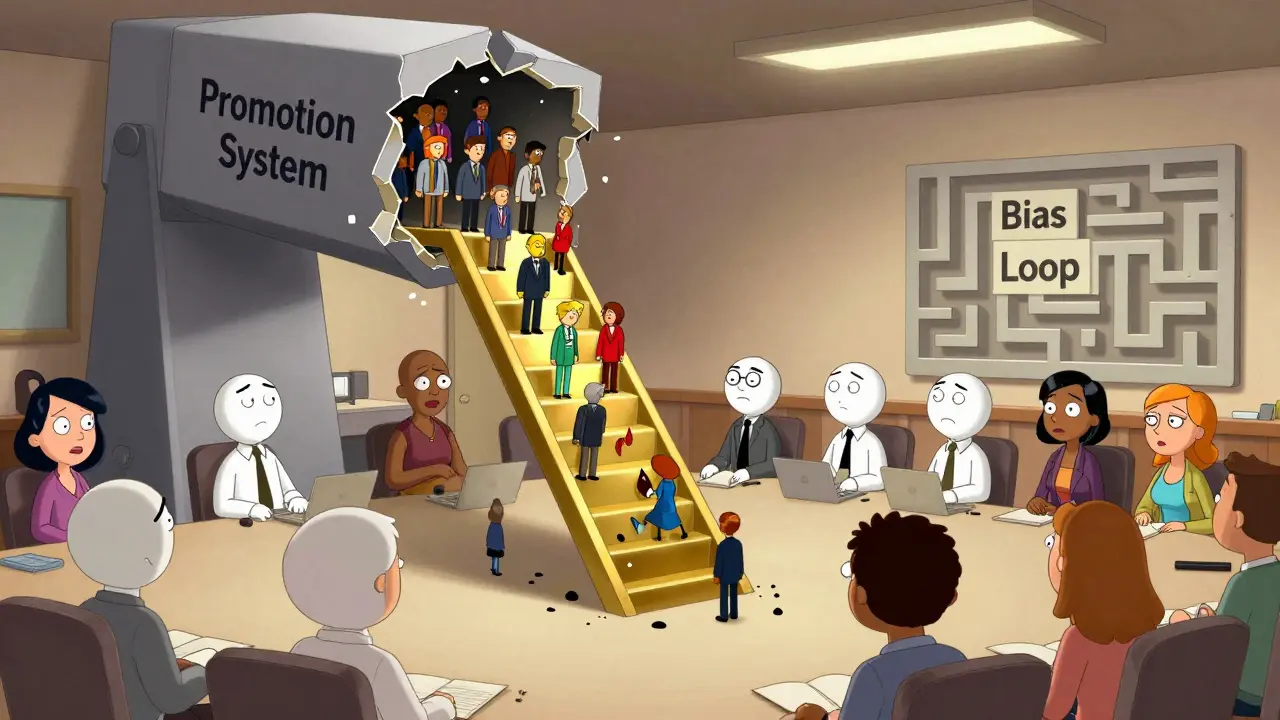
Most companies think DEI training is just another checkbox. They run a one-hour Zoom session every year, hand out a PDF, and call it done. But if your team still doesn’t feel safe speaking up, or if your promotion rates for women and people of color haven’t budged in three years, then your DEI training isn’t working. Real change doesn’t come from a PowerPoint slide. It comes from systems that actually hold people accountable - and from leaders who show up differently every day.
What DEI Training Actually Means
DEI stands for Diversity, Equity, and Inclusion. But too often, organizations mix these up. Diversity is about who’s in the room. Equity is about whether everyone has the same shot at success. Inclusion is about whether people feel like they belong.
Let’s say you hire five people from different backgrounds. That’s diversity. But if only the white men get promoted, or if the women are always asked to take meeting notes while the men lead discussions - that’s not equity. And if the new hires stay quiet because they’re afraid of being judged, that’s not inclusion.
True DEI training doesn’t just teach people to say the right things. It shows them how to notice when the system is rigged - and how to fix it.
Why Most DEI Programs Fail
A 2023 study from Harvard Business Review looked at over 800 companies that spent an average of $150,000 a year on DEI training. The results? Only 12% saw any measurable improvement in representation or retention. Why?
- They trained people instead of fixing processes.
- They treated bias like a personal flaw, not a structural problem.
- They didn’t tie DEI goals to performance reviews or bonuses.
- They let managers opt out.
Imagine you run a factory. You notice a lot of workers are getting hurt. So you hold a safety seminar. But you never fix the broken guardrail. You never replace the faulty machine. You just tell people to be more careful. That’s what most DEI training looks like.
Real change happens when you change the rules - not the people.
What Works: The 4 Pillars of Effective DEI Training
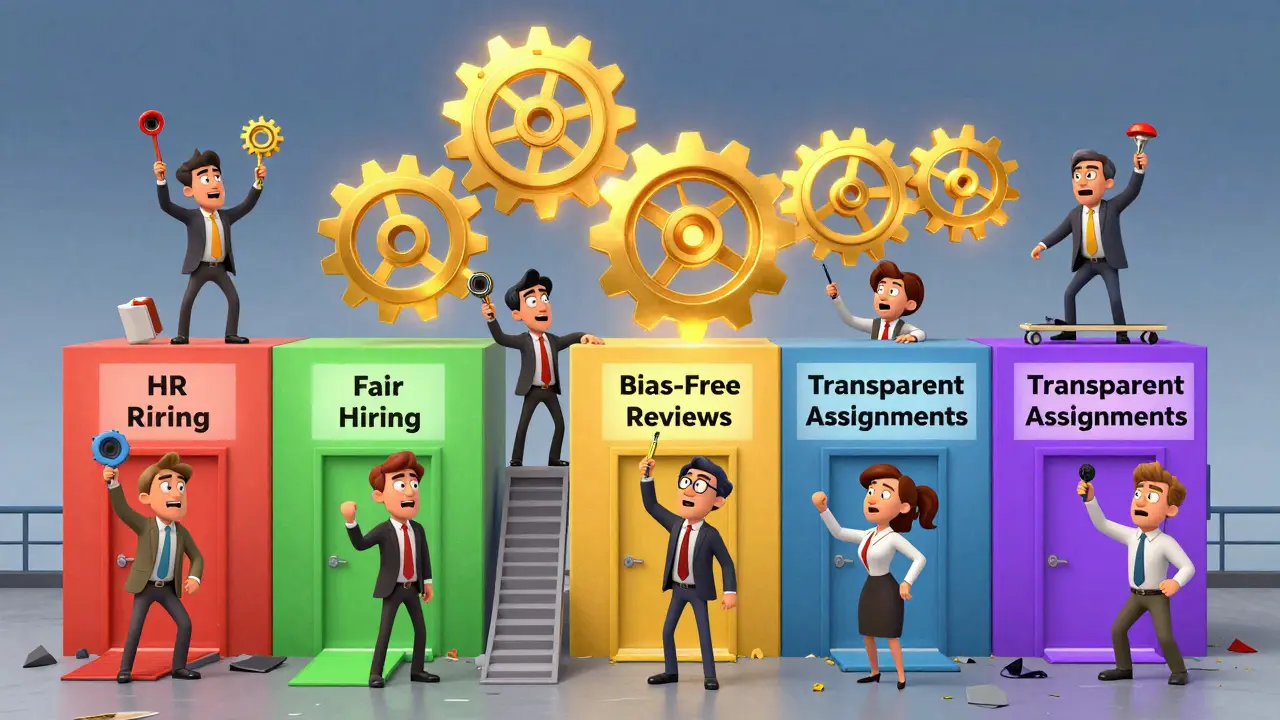
Companies that actually move the needle on DEI don’t rely on one-off workshops. They build four core systems:
1. Data-Driven Accountability
Start by measuring what matters. Track hiring rates, promotion rates, pay gaps, and retention by gender, race, age, and disability status. If you can’t measure it, you can’t fix it.
For example, a tech firm in Austin noticed that women in engineering were leaving at twice the rate of men. They dug deeper and found that women weren’t being invited to client meetings or given high-visibility projects. Once they changed how assignments were handed out - not by manager preference, but by a transparent rotation system - retention improved by 40% in 18 months.
2. Mandatory, Role-Specific Training
Not everyone needs the same training. HR teams need to learn how to audit job descriptions for biased language. Managers need to learn how to give fair feedback. Recruiters need to understand how resume screening algorithms can accidentally screen out names that sound "ethnic."
One company in Tempe replaced their generic "Unconscious Bias" module with six different tracks:
- For recruiters: How to reduce name and school bias in screening
- For managers: How to give equitable performance reviews
- For team leads: How to create psychological safety in meetings
- For executives: How to allocate budgets fairly across teams
- For employees: How to speak up without fear
- For contractors: How to build inclusive vendor relationships
Each track took 90 minutes. All were required. No exceptions.
3. Inclusion Through Action, Not Speech
Forget the "safe space" conversations. What matters is what people do.
Instead of asking employees to share personal stories, ask them:
- "What’s one policy that makes you feel excluded?"
- "What’s a meeting practice that silences people?"
- "What’s a promotion decision that felt unfair?"
Then, act on the answers. If people say they’re never asked to lead projects, start assigning them. If they say feedback is vague, train managers to use specific, behavior-based language.
One company in Seattle saw a 60% drop in turnover after they implemented a monthly "Inclusion Sprint" - a 30-minute team meeting where anyone could propose one change to a policy or process. They implemented 87% of the suggestions within 30 days.
4. Leadership Ownership
DEI can’t be someone else’s job. If your CEO doesn’t talk about it in all-hands meetings, if your CFO doesn’t tie bonuses to DEI outcomes, if your board doesn’t ask for quarterly metrics - then it’s not real.
At a Fortune 500 company in Chicago, every executive’s bonus was tied to two DEI metrics: retention of underrepresented groups and pay equity across departments. The result? In two years, promotion rates for Black employees increased by 32%. For women in leadership, it went up by 41%.
What to Avoid
Some DEI practices look good on paper - but backfire in practice.
- Don’t force people to share trauma. Asking someone to explain why they’re "different" puts them on the spot. It’s not therapy. It’s work.
- Don’t rely on voluntary ERGs. Employee Resource Groups are great - but they shouldn’t be the main engine of change. They’re support networks, not solutions.
- Don’t blame individuals. Saying "You’re biased" shuts people down. Saying "Here’s how our system creates bias, and here’s how to fix it" opens the door.
- Don’t use buzzwords. "Allyship," "belonging," "cultural competency" - these mean nothing if they’re not tied to action.
Real Results: A Case Study
A mid-sized healthcare provider in Phoenix had high turnover among nurses of color. Their DEI team ran a survey. The top complaint? "No one ever asks me what I think."
They didn’t run a sensitivity training. They didn’t bring in a speaker. Instead, they did three things:
- Changed shift planning: Every nurse had to be invited to the weekly planning meeting - no exceptions.
- Added a "voice tracker": Managers had to log who spoke in meetings and who got assigned tasks.
- Created a "no silence" rule: If someone didn’t speak for two meetings in a row, their manager had to check in with them privately.
Within six months, retention of nurses of color improved by 58%. Engagement scores went up. Patient satisfaction scores rose too.
They didn’t change hearts. They changed systems.

Where to Start
If your DEI training feels empty, start here:
- Collect data. Look at your last 12 months of hiring, promotions, and exits by demographic.
- Find one broken process. What’s one thing that consistently disadvantages a group?
- Fix it. Change the rule. Don’t train people to behave better - change the system so they don’t have to.
- Measure again in 90 days.
- Repeat.
You don’t need a big budget. You don’t need consultants. You just need to stop pretending that a 30-minute video will fix decades of inequality.
DEI Isn’t a Program. It’s a Practice.
It’s not something you do once a year. It’s something you do every day - in how you assign work, how you give feedback, how you hire, how you promote.
Companies that win at DEI aren’t the ones with the most posters on the wall. They’re the ones who stopped asking, "How do we make people more inclusive?" and started asking, "How do we make our systems fair?"
That’s the only training that lasts.
Is DEI training legally required?
No, DEI training is not legally required in the U.S. at the federal level. However, companies can face legal risks if they don’t address discrimination or harassment - and DEI training is one way to reduce those risks. Some states, like California and New York, require certain types of bias training for managers. But even where it’s not required, courts and regulators look favorably on organizations that actively work to prevent discrimination.
How often should DEI training happen?
Annual training is not enough. Research shows that people forget what they learn in one-off sessions within 30 days. Effective organizations offer refreshers every 6-9 months. They also integrate DEI into regular meetings, onboarding, and performance reviews - so learning is continuous, not episodic.
Can DEI training backfire?
Yes. When training feels like punishment, or when it focuses on guilt rather than change, it can create resentment. Training that labels people as "biased" without offering tools to improve often leads to pushback. The most successful programs avoid shaming and instead focus on systems, behaviors, and solutions.
What’s the difference between DEI and unconscious bias training?
Unconscious bias training focuses on individual attitudes - the idea that everyone has hidden prejudices. DEI training goes further. It addresses systemic issues: hiring practices, promotion criteria, pay structures, team dynamics. You can have unconscious bias training without DEI - but you can’t have real DEI without addressing the systems that reinforce bias.
How do I measure if DEI training is working?
Don’t measure satisfaction surveys. Measure outcomes: Are underrepresented groups being hired at higher rates? Are they staying longer? Are they getting promoted? Are pay gaps shrinking? If your numbers aren’t moving, your training isn’t working - no matter how many people said they "loved" the workshop.
Nathaniel Petrovick
March 20, 2026 AT 11:53Paul Timms
March 20, 2026 AT 17:40Sally McElroy
March 21, 2026 AT 05:38Cait Sporleder
March 22, 2026 AT 00:05Angelina Jefary
March 22, 2026 AT 11:40Honey Jonson
March 23, 2026 AT 02:25Destiny Brumbaugh
March 23, 2026 AT 17:48Sara Escanciano
March 24, 2026 AT 01:25Antwan Holder
March 24, 2026 AT 08:11Jeroen Post
March 25, 2026 AT 22:46Jason Townsend
March 27, 2026 AT 18:16Elmer Burgos
March 29, 2026 AT 11:29