Edge Computing for Low-Latency VR/AR Course Delivery
 Aug, 5 2026
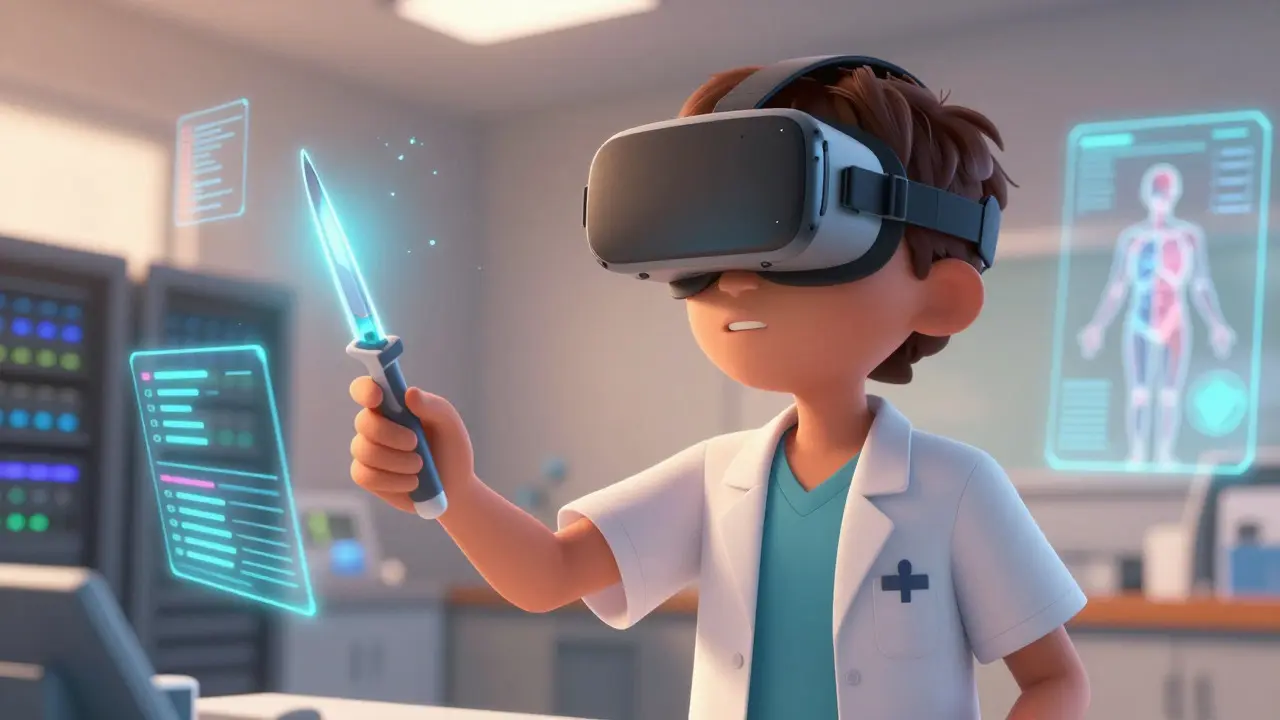
Imagine putting on a virtual reality headset to practice a complex surgical procedure. You reach out with your controller to grab a digital scalpel. If there is even a slight delay-a lag of just 20 milliseconds-your hand moves before the screen does. The illusion breaks. You feel sick. In traditional cloud-based setups, this lag was a dealbreaker for serious training. But now, Edge Computing is changing the game by processing data right where it happens, making real-time, high-fidelity VR and AR education actually possible.
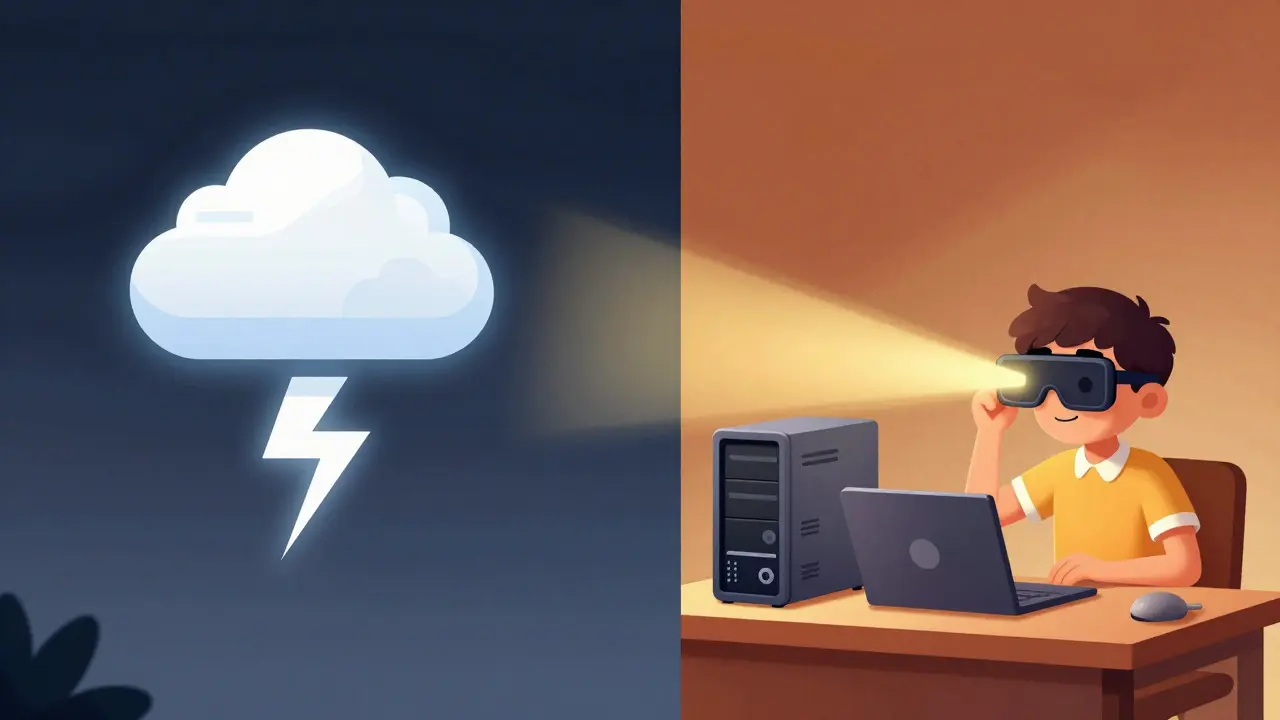
We are no longer talking about futuristic concepts. By 2026, institutions are deploying edge infrastructure to deliver immersive courses that feel instant. This shift solves the biggest problem in immersive learning: latency. When you move your head, the image must update immediately. Cloud servers located hundreds of miles away simply cannot keep up. Edge nodes, placed locally or regionally, cut that travel time down to fractions of a millisecond.
Why Latency Kills Immersive Learning
To understand why we need edge computing, we first have to look at what happens when latency creeps in. In standard web browsing, a half-second delay is annoying but manageable. In Virtual Reality (VR), a technology that creates a simulated environment replacing the user's real-world surroundings, it causes motion sickness. Your eyes see movement later than your inner ear feels it. This sensory mismatch triggers nausea and disorientation.
For educational purposes, this is unacceptable. If a student is learning assembly line robotics via Augmented Reality (AR), they need precise visual feedback. If the AR overlay lags behind their physical movements, they might make errors in judgment. Studies in human-computer interaction suggest that for comfortable VR usage, motion-to-photon latency should stay under 20ms. Traditional centralized cloud architectures often struggle to maintain this consistency due to network congestion and distance.
Edge computing brings the compute power closer to the device. Instead of sending raw sensor data from the headset to a distant data center and waiting for a response, the data is processed at the "edge" of the network-perhaps on a local server in the school building or a regional hub nearby. This proximity drastically reduces round-trip time.
How Edge Architecture Supports VR/AR Courses
The architecture for low-latency delivery relies on a hybrid model. Not everything needs to be processed at the edge. Here is how the workload splits:
- Real-Time Rendering & Physics: These tasks happen at the edge node. Calculating collisions, lighting, and physics simulations requires immediate feedback. Offloading this from the headset’s limited battery and processor extends session times and improves graphics quality.
- User Input Processing: Hand tracking, eye tracking, and voice commands are analyzed locally. This ensures that when a student looks at an object in AR, the system reacts instantly.
- Data Storage & Analytics: Long-term records, course progress, and historical performance data can still reside in the central cloud. This keeps the edge nodes lean and focused on speed.
This separation allows educators to create complex, multi-user environments. Imagine a classroom where ten students interact with the same virtual engine block. Each student sees changes made by others in real-time. Without edge computing, synchronizing these states across a global network would result in jittery, unsynchronized experiences.
| Feature | Centralized Cloud | Edge Computing |
|---|---|---|
| Latency | High (50-100ms+) | Ultra-Low (<10ms) |
| Bandwidth Usage | High (Raw video streams) | Low (Processed instructions) |
| Motion Sickness Risk | High | Minimal |
| Offline Capability | Poor | Good (Local caching) |
| Scalability | Easier for static content | Better for dynamic interactions |
Use Cases: Where Edge Makes a Difference
Not every online course needs VR. However, for skills requiring spatial awareness and manual dexterity, edge-powered immersive tech is transformative.
Medical Training: Surgical simulations require haptic feedback. If a student feels resistance when cutting virtual tissue, that signal must be generated instantly. Edge servers process the physics engine locally, ensuring the haptic gloves respond in sync with the visual display. This precision helps build muscle memory without risking patient safety.
Industrial Safety: Factories use AR glasses to train workers on machinery maintenance. An overlay highlights hot surfaces or moving parts. If the worker turns their head, the warning labels must stick to the objects in real-time. Edge computing ensures these overlays remain anchored accurately, preventing accidents during training.
Soft Skills & Roleplay: Corporate training often uses VR for public speaking or negotiation practice. AI-driven avatars react to the student’s tone and body language. Processing these AI responses at the edge reduces the pause between the student’s statement and the avatar’s reaction, creating a more natural conversation flow.
Challenges in Deployment
While the benefits are clear, implementing edge infrastructure isn't plug-and-play. Schools and corporations face several hurdles.
Hardware Costs: You need robust edge servers. Unlike simple web hosting, these machines require powerful GPUs to handle rendering offload. For smaller institutions, the upfront capital expenditure can be steep. However, managed edge services are emerging, allowing schools to rent capacity rather than buy hardware.
Network Reliability: Even with edge nodes, the connection between the headset and the local server must be stable. Wi-Fi 6E and 5G private networks are becoming standard requirements. Interference in crowded campuses can still disrupt sessions, so site surveys are essential before rollout.
Content Compatibility: Not all VR learning modules are built for edge streaming. Developers need to optimize assets for bandwidth efficiency. Old Unity or Unreal Engine projects may need refactoring to split logic between client and edge server effectively.
Future Trends: AI at the Edge
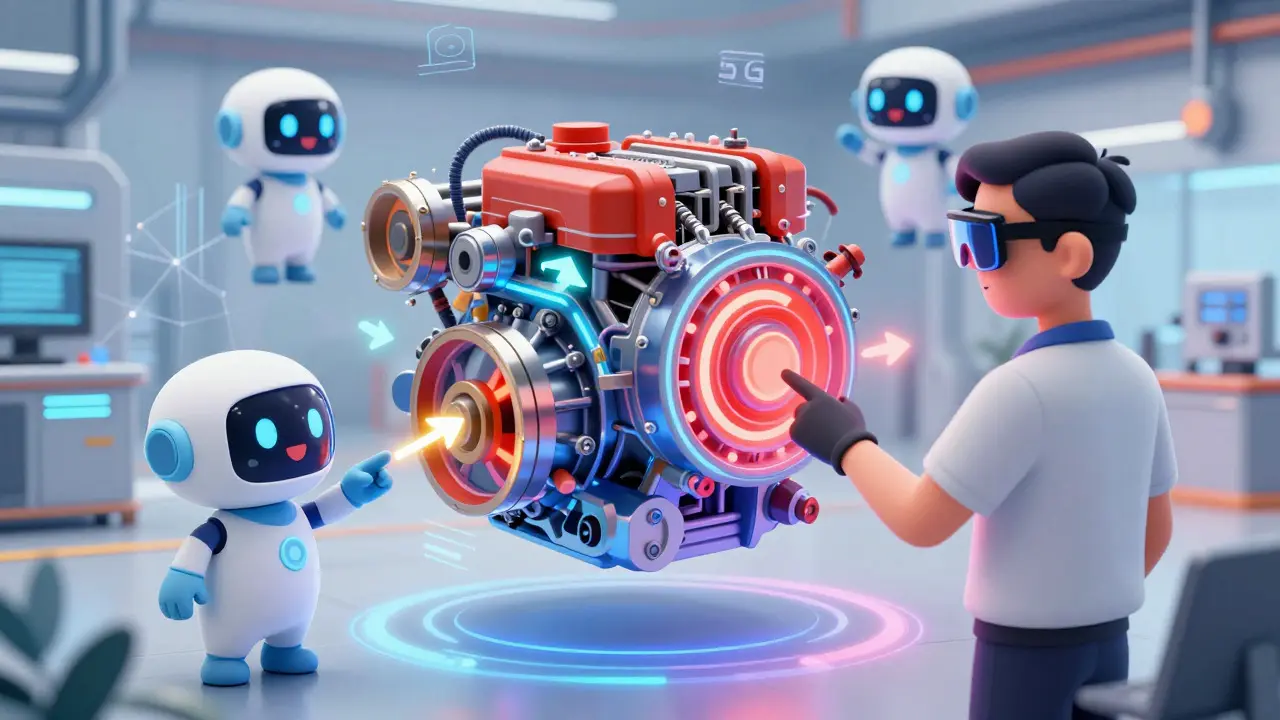
By 2026, the integration of Artificial Intelligence into edge nodes is accelerating. We are seeing "smart edges" that don't just render graphics but also analyze learner behavior in real-time.
Imagine an AR chemistry lab where the edge AI notices a student consistently mixing reagents in the wrong order. It doesn't wait for the end-of-course report. It intervenes immediately, highlighting the correct sequence on the virtual bench. This adaptive learning capability is only possible because the AI model runs locally, analyzing video feeds and input data without sending sensitive biometric information to a distant cloud.
Furthermore, 5G advancements continue to shrink latency windows. As mmWave frequencies become more widespread in urban educational hubs, the tether between mobile AR devices and edge servers will become virtually invisible. We are moving toward a future where immersive learning is as seamless as reading a textbook, but infinitely more engaging.
Getting Started with Edge-Enabled Learning
If you are an educator or IT administrator looking to adopt this technology, start small. Don't try to migrate your entire curriculum overnight. Identify one high-value, high-risk skill set-like emergency response or equipment repair-and pilot a single module.
Partner with vendors who offer turnkey edge solutions. Look for platforms that provide pre-built edge orchestration tools. Ensure your campus network supports high-density wireless connections. Finally, gather qualitative feedback from students regarding comfort and presence. If they mention feeling dizzy or noticing lag, revisit your edge node placement and bandwidth allocation.
The transition to edge computing for VR/AR is not just a technical upgrade; it is a pedagogical leap. It removes the friction between intent and action, allowing learners to focus entirely on the skill they are mastering. As the technology matures, the distinction between physical and digital practice will blur, offering unprecedented opportunities for experiential education.
What is the ideal latency for VR education?
The industry standard for comfortable VR usage is under 20 milliseconds (ms) of motion-to-photon latency. Ideally, edge computing setups aim for less than 10ms to ensure zero perceptible lag, which prevents motion sickness and maintains immersion.
Do I need 5G for edge computing in VR?
While not strictly mandatory, 5G or Wi-Fi 6E is highly recommended. These technologies provide the high bandwidth and low jitter necessary for streaming high-resolution VR content from edge nodes to wireless headsets without compression artifacts or drops.
Can edge computing work offline?
Yes, one of the key advantages of edge computing is local processing. If the connection to the central cloud is lost, the local edge server can still host VR sessions and process data, allowing classes to continue uninterrupted. Data can sync back to the cloud once connectivity is restored.
Is edge computing expensive for schools?
Initial setup costs can be higher than traditional cloud hosting due to the need for local GPU servers. However, costs are decreasing with managed edge services. Over time, reduced bandwidth fees and increased training efficiency often offset the initial investment.
What types of courses benefit most from edge VR?
Courses requiring real-time interaction, such as medical surgery simulations, industrial machinery operation, hazardous material handling, and soft-skills roleplaying with AI avatars, benefit most. These scenarios demand immediate feedback loops that only edge computing can reliably provide.