Essential Skills for Online Instructors: A Practical Checklist
 Mar, 6 2026
Teaching online isn’t just about recording videos and posting assignments. It’s a whole different skill set than standing in front of a classroom. If you’ve made the switch from in-person to virtual teaching, you’ve probably noticed that what worked before doesn’t always cut it now. Students disengage faster. Technical issues pop up out of nowhere. And without body language or eye contact, it’s harder to tell who’s following along and who’s checked out.
Master the Tech - Before You Teach
You don’t need to be an IT specialist, but you do need to know your platform inside and out. Whether you’re using Zoom, Google Classroom, Canvas, or Moodle, spend time with it before your first live session. Test the screen sharing, mute/unmute controls, breakout rooms, and chat functions. Try recording a practice lesson and watch it back. Do you speak too fast? Is the lighting okay? Is the audio clear?
One instructor in Texas started losing students after the first month. She didn’t realize her microphone was picking up keyboard clicks and background noise. Once she switched to a USB mic and used a noise-canceling app, her student retention jumped by 40%. Tech isn’t just a tool - it’s part of your teaching presence.
Build Connection Without Being in the Same Room
People learn better when they feel connected. In a physical classroom, that happens naturally - a nod, a smile, a quick chat before class. Online, you have to create that intentionally.
Start every session with a personal check-in. Ask one question: “What’s one thing you’re looking forward to this week?” or “What’s been your biggest challenge lately?” Don’t make it mandatory, but make it inviting. Students who answer once are twice as likely to return.
Use names. Not just in announcements, but in real time. “Thanks, Maria, for that insight,” or “Jamal, you brought up a great point about feedback.” It signals you see them. And when students feel seen, they show up.
Structure Lessons for Attention Spans
The average attention span online is under 10 minutes. That doesn’t mean your 90-minute class is doomed - it means you need to break it up.
Use the 5-10-3 rule: Every 5 to 10 minutes, change the activity. Switch from lecture to poll, to breakout discussion, to a quick writing prompt. After 3 minutes of silence, someone’s scrolling. Keep momentum.
A biology teacher in Florida stopped doing hour-long lectures and started doing 7-minute mini-lessons followed by a 3-minute peer quiz. Her pass rate went from 68% to 89% in one semester. Structure isn’t about control - it’s about respect for how people actually learn.
Design Assignments That Actually Get Done
Too many online courses fail because assignments feel like busywork. Students don’t submit because they don’t see the point. Or they submit last-minute because the instructions are vague.
Ask yourself: Does this assignment connect to something real? Can students use it outside of class? A history teacher replaced a traditional essay with a podcast script where students interviewed a family member about a historical event. Submissions went up 70%. Engagement soared because it mattered to them.
Also, be crystal clear on expectations. Use a simple checklist:
- What exactly should they turn in?
- How long should it take?
- What does a good job look like? (Include an example)
- When is it due? (And remind them 2 days before)
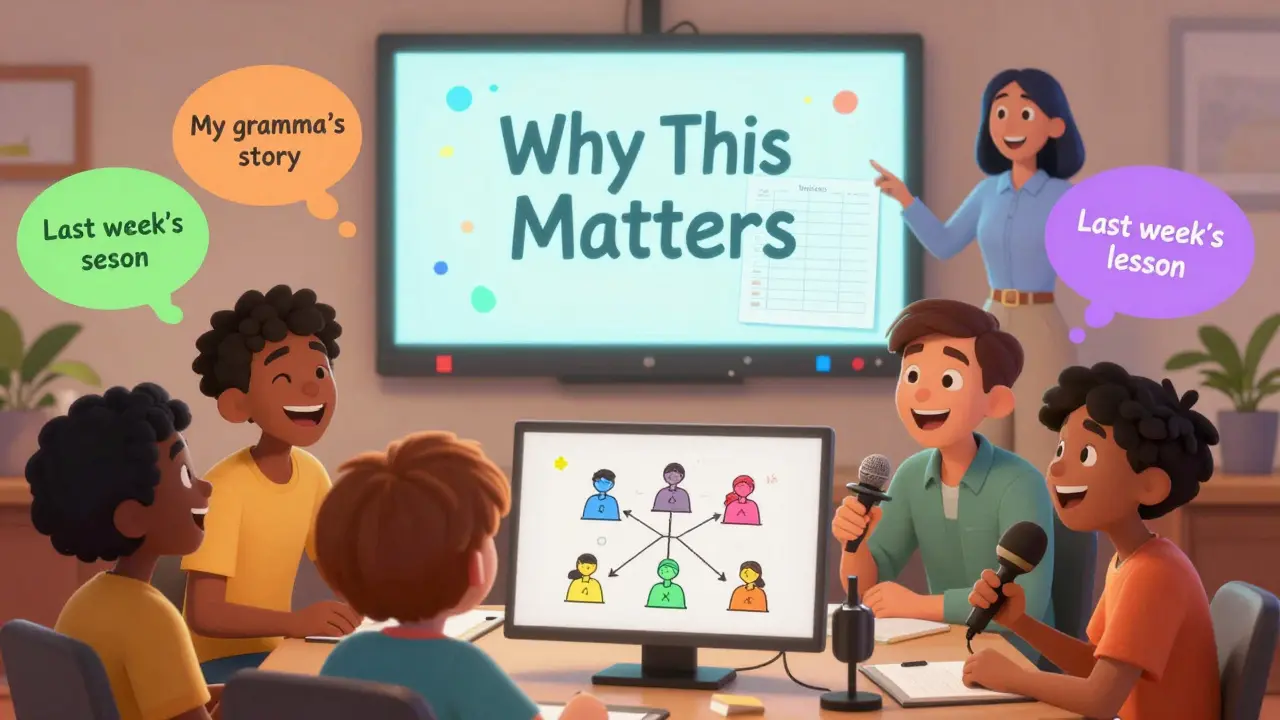
One instructor started adding a one-sentence “Why this matters” to every assignment. Students stopped asking, “Do we really need to do this?”
Respond Fast - But Thoughtfully
Feedback is the lifeline of online learning. If it takes three days to get a reply, students assume you don’t care. If it’s generic - “Good job!” - they assume you didn’t read it.
Set a rule: respond to all submissions within 48 hours. Even if it’s just a quick voice note: “I liked how you connected the theory to your job. Next time, try adding one example from Week 3.”
Use audio feedback when you can. It’s 3x more personal than text. A study from Stanford found students who received audio feedback were 52% more likely to revise their work. Your tone, pacing, and emphasis matter more than you think.
Know When to Step Back
It’s tempting to overmanage. To reply to every forum post. To send daily reminders. To micromanage deadlines. But that’s not support - it’s dependency.
Build in space for autonomy. Let students choose their project topics. Let them submit late with a short reflection. Let them fail - and then recover.
A coding instructor in Seattle stopped requiring daily logins. Instead, she offered weekly office hours and a simple “I’m stuck” button. Student confidence rose. Dropout rates fell. Sometimes, the most powerful teaching move is letting go.
Track What Really Matters
Don’t just track completion rates. Track engagement. Ask: Who’s participating? Who’s asking questions? Who’s helping others?
Use simple metrics:
- Forum participation rate
- Assignment revision rate
- Attendance consistency
- Feedback response quality
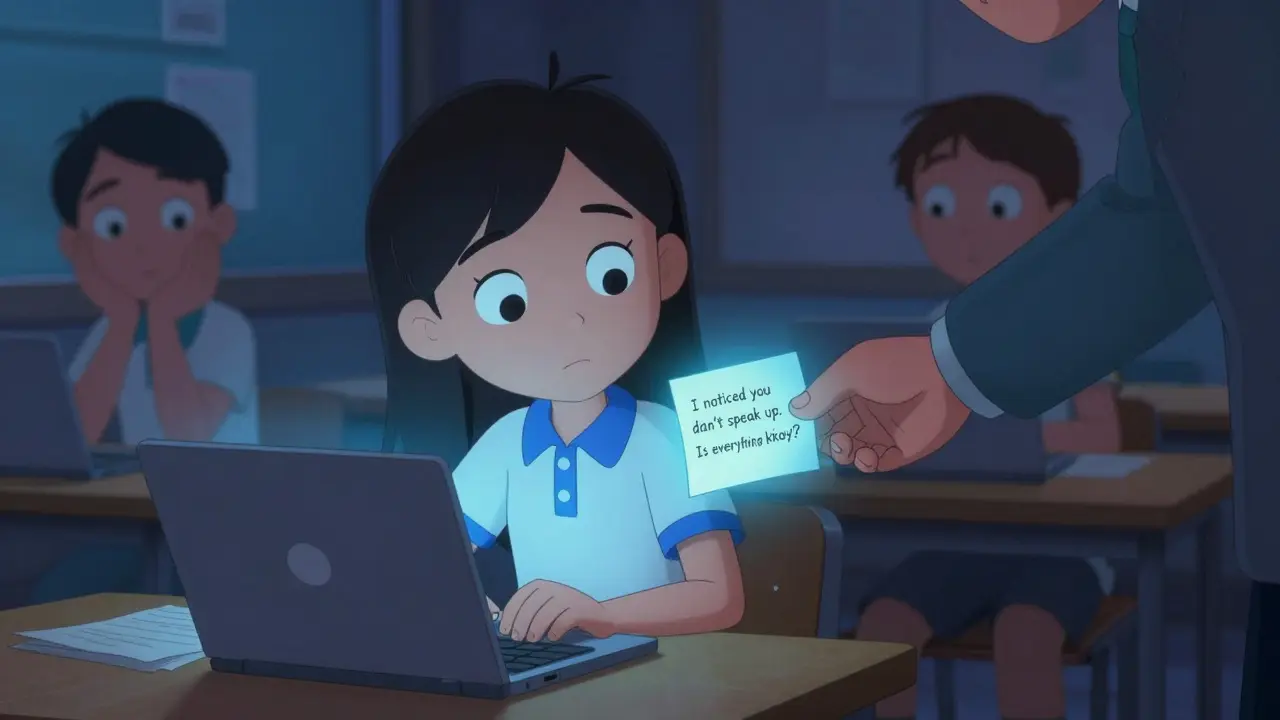
One instructor started keeping a “quiet student” list. She reached out to the top three each week with a personal note: “I noticed you didn’t speak up. Is everything okay?” Three of them later emailed her to say they’d been dealing with anxiety and didn’t know how to ask for help.
Success isn’t just about grades. It’s about who you reach when they’re not shouting.
Keep Improving - One Lesson at a Time
There’s no perfect online course. Only evolving ones. After every session, ask yourself: What worked? What fell flat? What did I learn about my students?
Keep a one-page reflection log. Not a journal. One page. Three bullet points:
- One thing that went well
- One thing to change
- One insight about a student
Do this for 10 weeks. You’ll start seeing patterns. You’ll know which students need more structure. Which ones thrive with freedom. Which topics spark real curiosity.
Teaching online isn’t about being flawless. It’s about being present. Adaptable. Human.
sonny dirgantara
March 7, 2026 AT 15:06Lauren Saunders
March 7, 2026 AT 22:27Andrew Nashaat
March 8, 2026 AT 15:35Gina Grub
March 9, 2026 AT 03:11Nathan Jimerson
March 9, 2026 AT 17:03Sandy Pan
March 11, 2026 AT 12:30Eric Etienne
March 12, 2026 AT 07:55Dylan Rodriquez
March 12, 2026 AT 22:53Amanda Ablan
March 13, 2026 AT 22:29Kendall Storey
March 15, 2026 AT 00:10Ashton Strong
March 16, 2026 AT 12:58Steven Hanton
March 17, 2026 AT 05:12michael T
March 17, 2026 AT 15:47Christina Kooiman
March 19, 2026 AT 14:06Stephanie Serblowski
March 20, 2026 AT 04:29Renea Maxima
March 21, 2026 AT 20:59Jeremy Chick
March 22, 2026 AT 02:35Sagar Malik
March 22, 2026 AT 04:31