How to Create Engaging Online Course Content That Converts: A Complete Guide
 Aug, 2 2026
You’ve spent weeks recording videos, writing slides, and building quizzes. You hit publish, wait for the enrollments to roll in, and... crickets. Or worse, a few sign-ups who drop out after lesson one. The problem isn’t your expertise. It’s your packaging. Creating an online course that actually converts browsers into buyers-and keeps them watching until the end-requires more than just hitting record on Zoom.
Most creators treat course creation like a lecture series. They dump information and hope for the best. But learners today are distracted, skeptical, and busy. To win their attention and their wallets, you need to shift from "teacher" mode to "guide" mode. This means designing content that solves specific problems quickly, feels interactive, and delivers tangible value at every step.
Quick Summary / Key Takeaways
- Solve one painful problem: Vague topics don't convert. Specific outcomes do.
- Design for the commute: Keep video lessons under 10 minutes to respect attention spans.
- Show, don't just tell: Use screen shares, real-world examples, and downloadable assets.
- Build trust early: Offer a free preview or mini-course to prove your teaching style works.
- Iterate based on data: Watch where students drop off and fix those modules immediately.
Define Your Transformation, Not Just Your Topic
The biggest mistake new course creators make is focusing on what they know rather than what the student needs. You might be an expert in Python programming, but if your course title is "Learn Python," it’s too broad. Nobody buys a course to "learn Python." They buy it to "automate Excel spreadsheets" or "build a portfolio website."
To create engaging content, start with the end in mind. What is the single most valuable transformation your student will experience? Write this down as a promise. For example: "Go from zero coding knowledge to building a functional blog in 30 days." This clarity drives every piece of content you create. When you write your sales page, your module titles, and your video scripts, they all ladder up to this promise.
If you can’t state the outcome in one sentence, your content will feel scattered. Scattered content leads to confused students, and confused students refund their purchases. Be ruthless about scope. If a topic doesn’t directly help achieve that main goal, cut it or move it to a bonus section. Focus builds authority. Authority builds trust. Trust drives conversions.
Structure for Engagement: The Bite-Sized Approach
Attention spans are shrinking. In 2026, the average viewer has less patience than ever. Long, hour-long lectures are a relic of traditional education. For online courses, shorter is better. Aim for video lessons between 3 to 7 minutes. This technique, often called micro-learning, reduces cognitive load and makes progress feel faster.
Think about how you consume content on social media. You scroll through short clips. Apply that same rhythm to your course structure. Break complex topics into small, digestible chunks. Instead of one 45-minute video on "SEO Basics," create five 8-minute videos covering keyword research, on-page optimization, meta tags, internal linking, and technical SEO checks.
This structure also helps with completion rates. When a student sees a short video, they think, "I can watch that while my coffee brews." They click play. Once they finish, they feel a sense of accomplishment. That dopamine hit encourages them to click the next video. Momentum is key to keeping students engaged throughout the entire curriculum.
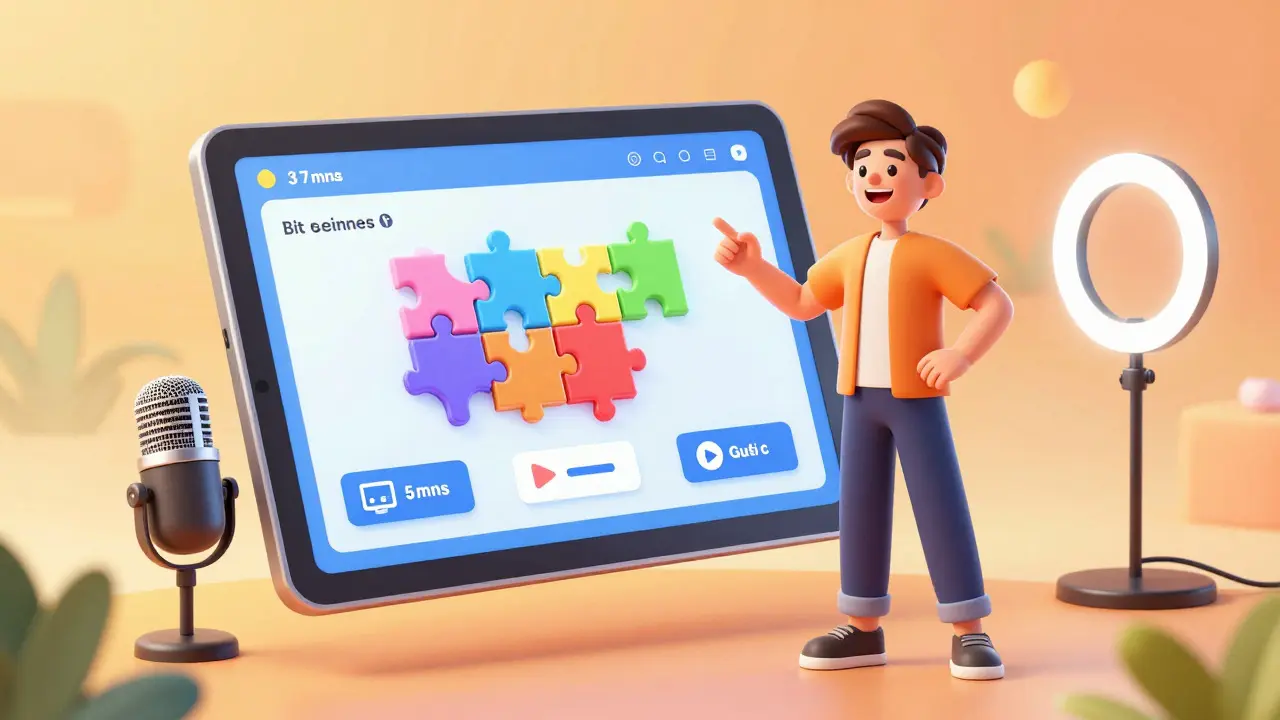
Production Value: Good Enough vs. Perfect
Here’s a secret: Students don’t care if your camera is a $2,000 cinema lens. They care if they can hear you clearly and see what you’re demonstrating. Audio quality is non-negotiable. Bad audio causes frustration within seconds. Invest in a decent USB microphone like the Blue Yeti or Rode NT-USB before you upgrade your camera.
For visuals, consistency matters more than high definition. Use a simple background, ensure good lighting (natural light from a window works wonders), and keep your text overlays readable. If you’re teaching software, use screen recording tools like OBS Studio or Camtasia. Highlight your cursor movements so students don’t lose track of where you’re clicking.
Don’t get stuck in "tutorial hell" trying to perfect your editing skills. Your first course doesn’t need Hollywood effects. It needs clear instruction. Over-polishing delays launch. Launching allows you to get feedback. Feedback allows you to improve. Prioritize clarity over cinematic flair.
Interactive Elements: Moving Beyond Passive Watching
Passive watching leads to passive learning. To truly engage students, you need to force them to interact with the material. This doesn’t mean complicated quizzes that feel like school tests. It means practical application.
After every major concept, include a "Do This Now" task. These should be low-friction actions. For example, if you’re teaching graphic design, ask students to change the color palette of a sample file. If you’re teaching marketing, have them draft three email subject lines. Provide a checklist or a template they can fill out. This bridges the gap between theory and practice.
Use your Learning Management System (LMS) features wisely. Platforms like Teachable, Kajabi, or Thinkific allow you to embed quizzes, surveys, and resource downloads. Use these to break up video content. A well-placed quiz can reinforce memory retention by up to 50% compared to re-reading notes alone.
Creating Irresistible Lead Magnets and Previews
Conversion starts before someone enters your checkout page. You need to prove your value upfront. One of the most effective strategies is creating a free mini-course or a comprehensive lead magnet. This could be a PDF checklist, a webinar recording, or a single free module from your paid course.
When designing your free content, give away your best secrets. Don’t hold back the good stuff hoping they’ll pay for it. If your free content is mediocre, people will assume your paid course is too. Show them exactly how you teach. Match the tone, the pacing, and the visual style of your paid offering. This creates a seamless transition from free user to paying customer.
Include a strong call-to-action (CTA) at the end of your free content. Explain what they’ve missed by not joining the full course. Use scarcity ethically-like limited-time bonuses or cohort-based start dates-to encourage immediate action. But remember, the primary driver must be value, not pressure.
Leveraging Social Proof and Community
People buy from people they trust. Integrate social proof directly into your course content and sales funnel. Share testimonials, case studies, and success stories. If you’re just starting out and don’t have testimonials yet, offer beta spots at a discount in exchange for honest feedback and reviews.
Consider adding a community element. A private Facebook group, Slack channel, or Discord server can significantly increase perceived value. Knowing they have access to you and other students makes the course feel like a membership rather than a static product. Engagement in the community often correlates with higher completion rates and fewer refunds.
| Strategy | Impact on Engagement | Effort Required |
|---|---|---|
| Long-form Lectures | Low (High dropout rate) | Medium |
| Micro-learning Modules | High (Better retention) | High (More editing) |
| Text-only Guides | Medium (Depends on writer) | Low |
| Interactive Quizzes/Tasks | Very High (Active learning) | Medium |
| Community Access | High (Support & accountability) | High (Moderation needed) |
Optimizing for Conversion: The Sales Funnel
Your course content is only half the battle. The way you present it determines whether people buy. Your sales page should mirror the structure of your course. Use module titles as bullet points of benefits. Instead of saying "Module 1: Introduction," say "Module 1: Set Up Your Workspace in 10 Minutes."
Address objections head-on. Common fears include "Is this beginner-friendly?" or "Will I have time?" Answer these questions clearly. Offer a money-back guarantee to reduce risk. A 30-day refund policy signals confidence in your product and removes the barrier to entry for hesitant buyers.
Finally, follow up. Most people won’t buy on the first visit. Use email automation to nurture leads. Send them tips related to your course topic, share student wins, and remind them of the transformation awaiting them. Consistent, valuable communication turns cold traffic into warm prospects.
Next Steps and Troubleshooting
If your enrollment numbers are low, check your messaging. Are you talking about features or benefits? If your completion rates are low, look at your video lengths and interactivity. Are students getting bored? Try breaking up long videos and adding more practical tasks. Remember, course creation is iterative. Launch, listen, learn, and improve. Your first version doesn’t have to be perfect; it just has to be helpful.
How long should an online course video be?
Ideally, keep videos between 3 to 7 minutes. This aligns with modern attention spans and allows students to fit learning into their busy schedules. Longer videos should be broken down into smaller segments focused on single concepts.
What is the best platform to host an online course?
Popular options include Teachable, Kajabi, and Thinkific. Choose based on your budget and technical comfort. Kajabi offers all-in-one marketing tools, while Teachable is known for its ease of use. Self-hosting with WordPress gives more control but requires more maintenance.
How do I price my online course?
Price based on the value of the transformation, not the hours spent creating. Research competitors in your niche. Beginner courses might range from $50-$200, while specialized professional development courses can command $500-$2,000+. Start lower to gather testimonials, then raise prices.
Do I need a big audience to sell a course?
No. You don’t need thousands of followers. A small, engaged audience of 100-500 people who trust your expertise is enough to launch successfully. Focus on building relationships and solving specific problems for a narrow niche rather than chasing viral growth.
How can I prevent student churn?
Engage students actively. Send weekly emails with tips, host live Q&A sessions, and create a community space for discussion. Ensure your content delivers quick wins early on so students see immediate value. Regularly update content based on feedback to keep it relevant.