How to Handle Diverse Learning Needs at Scale with Adaptive Learning Strategies
 Mar, 28 2026
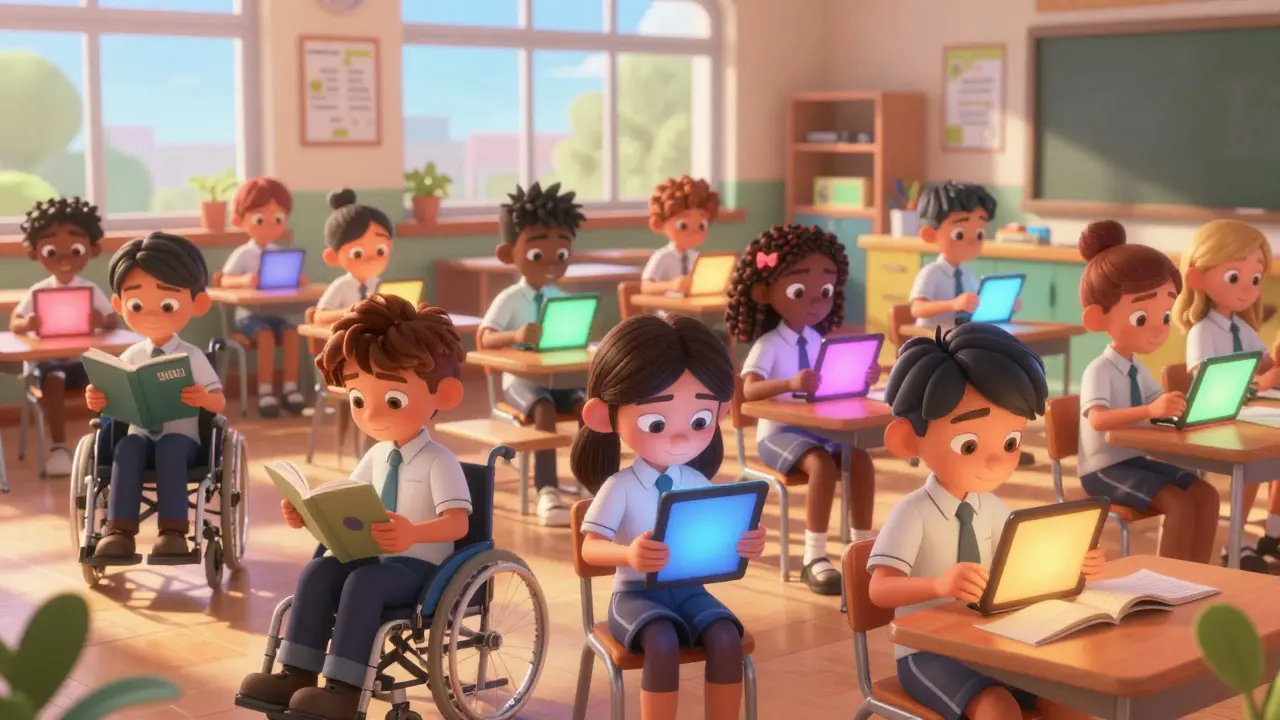
Imagine walking into a classroom where thirty students have completely different goals. Some struggle with reading speed, while others finish assignments in minutes. Now picture managing this for three thousand students across multiple campuses. That is the reality of modern education. The old method of teaching everyone the same thing at the same time simply breaks under pressure. You need a system that bends without snapping.
This is where technology meets pedagogy. We aren’t just talking about putting computers in front of kids. We are building environments where content shifts to match the person using it. This approach solves the core tension between quality and quantity in education.
The Reality of Scaling Diversity
Scale usually means volume. In education, it often implies losing the personal touch. When you add another hundred students, the individual attention drops. However, diverse needs don’t just mean special education requirements. It encompasses different languages, cognitive processing speeds, cultural backgrounds, and prior knowledge bases.
Adaptive Learning is a teaching method that uses computing to determine the optimal learning path for each student. Also known as Adaptive Education Technology, it relies on algorithms that adjust difficulty and content delivery in real-time. Companies utilizing these platforms report significant gains in engagement because the work feels right-sized for the learner every day.Without this, you risk creating a system where advanced learners get bored and struggling learners fall behind before anyone notices. The goal is to maintain equity across the board.
Leveraging Intelligent Systems
Technology has moved past simple quizzes. Modern systems act more like personal tutors. They watch how a student interacts with material. Do they pause? Do they re-read? Do they rush through video segments?
| Feature | Traditional Method | Adaptive Approach |
|---|---|---|
| Pacing | Fixed for all | Variable per student |
| Feedback | Delayed grades | Immediate insights |
| Content Path | Linear progression | Non-linear branching |
When a platform detects a misunderstanding in algebra, it shouldn’t just say "wrong." It should serve up a practice problem that targets that specific gap. Maybe the issue isn’t math logic but vocabulary definitions within the problem statement. A smart system identifies the root cause rather than the symptom.
Artificial intelligence powers this engine. It processes vast amounts of interaction data. It doesn’t guess; it predicts. If a student misses three similar problems in a row, the system intervenes before frustration sets in. This proactive measure keeps retention high.
Implementing Universal Design Frameworks
Tech alone isn’t magic. You still need human design principles. Universal Design for Learning (UDL) provides the blueprint. It asks creators to offer multiple ways to engage, represent, and express knowledge.
Universal Design for Learning is a framework for improving and optimizing teaching and learning for all people based on scientific insights into how humans learn. Also known as UDL Framework, it emphasizes flexibility in curriculum design to remove unnecessary barriers.In practice, this means offering text-to-speech alongside reading assignments. It means allowing video responses instead of essays for assessments. When combined with intelligent systems, UDL scales effortlessly. You provide the options; the software ensures accessibility compliance automatically.

Data Analytics as a Compass
You cannot fix what you cannot measure. In small groups, you can spot trends by watching faces. In large populations, you need dashboards. Effective systems turn raw clicks into actionable stories.
Data Analytics is the process of inspecting, cleaning, transforming, and modeling data to discover useful information. In education, Educational Data Mining, it helps administrators track progress toward institutional goals.Look for patterns in disengagement. Are students dropping off at a specific module? Is there a demographic skew in test scores within that module? These are signs of bias or poor design. Good analytics flag these issues instantly. They allow leadership to pivot strategy weekly, not annually.
However, data privacy remains critical. Students and families need to trust that their performance history stays secure. Compliance with regulations like GDPR or FERPA is non-negotiable when handling sensitive learning records. Encryption and transparent data policies build that trust.
Supporting the Educator
Teachers worry that automation removes their role. It shouldn’t. The shift is from instructor to coach. Instead of lecturing for forty-five minutes, they circulate with tablets to help individuals who flagged for support.
A Learning Management System (LMS) serves as the central hub. It connects the adaptive tools with the teacher’s workflow.
Learning Management System is software used to plan, implement, and assess a specific learning process. Commonly referred to as LMS, it manages user registration, tracking, reporting, and grading.If the dashboard tells a teacher, "Student X is stuck," the teacher can step in with a warm conversation. The machine handles the rote practice; the human handles the motivation and complex reasoning. This division of labor frees up time for relationship building, which is irreplaceable.

Balancing Access and Equity
Digital tools can widen gaps if hardware access isn’t equal. A student without reliable internet cannot benefit from cloud-based adaptation. Schools must audit device access before rolling out software.
Equity also involves representation. Content libraries should reflect diverse voices. If an adaptive system primarily pulls from Western-centric datasets, students from other backgrounds might feel alienated. Curating inclusive content libraries ensures every learner sees themselves in the material.
Furthermore, accessibility features like screen readers must work seamlessly. You cannot ask students to download separate apps for accessibility. The solution must be baked into the core experience. This ensures that a student with visual impairments gets the same adaptive benefits as peers.
Continuous Improvement Loops
The work never ends. Algorithms improve with more data, but pedagogical understanding evolves too. What worked in 2024 might need tweaking by late 2026. Establish regular review cycles where teachers critique the recommendations made by the system.
If teachers consistently override the system’s suggestions, the algorithm needs calibration. Collaboration between instructional designers and software engineers ensures the product stays aligned with educational science. Treat your platform as a living ecosystem that requires maintenance.
Can adaptive learning replace teachers?
No, it augments them. The technology handles personalization of content delivery, freeing teachers to focus on mentoring, emotional support, and complex conceptual guidance that machines cannot replicate.
Is this expensive to implement?
Initial costs for software and infrastructure are significant. However, long-term savings come from reduced remediation rates and higher graduation metrics. Many institutions view it as an efficiency investment.
What happens if the internet goes down?
Robust systems offer offline modes. Progress syncs when connectivity returns. Planning for low-connectivity scenarios is essential for equitable deployment in rural areas.
Does it work for special needs students?
Yes, when designed with accessibility standards in mind. Adaptive platforms often excel here by providing infinite variations of content formats suited for different cognitive profiles.
How do we measure success?
Track metrics like time-to-mastery, dropout rates, and student self-efficacy surveys. Look for improvements in engagement levels alongside academic performance gains.
Indi s
March 28, 2026 AT 21:22Technology helps a lot here but we cannot forget feelings. Students feel lonely sometimes even when connected. A screen cannot hold a hand during hard moments. It is good that systems warn teachers about struggles. Teachers know when eyes look sad immediately. Computers see data numbers instead of faces. People see pain directly without waiting. We need both working together really well. If the system says wrong it is fine. But it needs to explain why clearly every time. Kids get frustrated easily these days constantly. We must keep patience high always regardless. Equity means giving everyone help they need exactly. This includes emotional support too often forgotten sadly. Schools are trying hard to find balance now.
We hope the humans stay involved in the process. The goal is better learning for everyone.
Jason Townsend
March 29, 2026 AT 04:26they collect way too much data on kids. privacy is gone. companies sell this info eventually. trust is broken right now.
Elmer Burgos
March 30, 2026 AT 12:47i hear your concern about privacy but regulations exist. FERPA protects student records legally. schools follow strict guidelines for data use. most platforms encrypt everything properly. we just need to verify compliance standards regularly.
Agni Saucedo Medel
March 30, 2026 AT 16:31This sounds amazing! 🚀 Every kid deserves their own path. It makes me so happy to see schools getting smarter. 😊📚 Education should fit the child not the other way around. We love technology helping teachers! ✨
Rohit Sen
March 30, 2026 AT 16:35Emoji usage trivializes complex educational policy discussions. We require serious discourse here. This platform is not a playground for casual expression. Pedagogical shifts demand rigorous analysis. Do not mistake accessibility for innovation. Real change requires structural overhaul not digital candy.
Angelina Jefary
March 30, 2026 AT 20:42The term "adaptive learning" is frequently misused in press releases. True adaptation requires algorithmic transparency. Vendors rarely publish source code for review. You cannot optimize what you cannot inspect. Accuracy depends on open methodology standards.
Diwakar Pandey
April 1, 2026 AT 15:44That is a valid observation regarding vendor opacity. Transparency builds trust with parents too. Open API standards would help verification processes. We should encourage schools to demand audits.
Tyler Springall
April 2, 2026 AT 13:44Such tools cater to mediocrity rather than excellence. Mass education dilutes high caliber thinking naturally. Standardized algorithms enforce average performance metrics. Elite intellects require bespoke curricula beyond software capabilities. The masses will remain manageable while the gifted stagnate.
Jasmine Oey
April 3, 2026 AT 02:04Its scary how machines decide our future now. The big brother vibe is strong here folks. They watch every click and pause we make. We lose our souls to the servers. Privacy is dead anyway honestly.
Sally McElroy
April 3, 2026 AT 22:58The philosophical implications are staggering!!! Education defines humanity!! We shape minds through curriculum choices!!! Are we outsourcing moral development??? Absolutely not!!!! We must retain control!!!!!
Jennifer Kaiser
April 4, 2026 AT 05:41Moral development remains a deeply human endeavor indeed. Algorithms can suggest paths but values come from relationships. We need to guard against automation bias in grading. Ethics boards should oversee these implementations closely.
Destiny Brumbaugh
April 4, 2026 AT 21:33US schools lead the world in tech adoption. Other nations lag behind us big time. Our kids deserve the best tools available. Import restrictions on foreign software should increase. Protect american students first.
Vimal Kumar
April 5, 2026 AT 06:56Diverse backgrounds bring strength to classrooms globally. Collaboration across borders improves outcomes significantly. Sharing resources helps struggling regions immensely. Let us work together on accessibility standards.
ANAND BHUSHAN
April 6, 2026 AT 12:33Good points made about the internet access gap.
TIARA SUKMA UTAMA
April 7, 2026 AT 08:53Hardware access remains a critical bottleneck issue. Rural areas lack basic connectivity infrastructure. Software updates mean nothing without stable power grids. Policy makers ignore physical realities completely.
Marissa Martin
April 8, 2026 AT 16:13I worry that poor design reinforces existing biases unconsciously. Students may internalize negative feedback loops. Silent failures hide until graduation rates drop. We need independent oversight committees.
Indi s
April 9, 2026 AT 10:31Oversight helps catch bad patterns early enough. Regular reviews prevent long term damage. Teachers flagging issues manually adds another layer. Community involvement keeps systems honest overall.
Sara Escanciano
April 10, 2026 AT 14:56Stop pretending these systems fix everything fundamentally. Schools need funding not gimmicks. Investment in teacher salaries solves far more problems. Tech bands aid does not cure rotting foundations. Demand real budget changes now.