Immersion vs. TPR: Which Language Teaching Method Actually Works?
 Apr, 4 2026
Quick Takeaways: The Essentials
- Immersion mimics natural acquisition by surrounding the learner with the target language.
- TPR focuses on the "listen and act" phase, reducing stress for beginners.
- Immersion is a broad educational philosophy, while TPR is a specific instructional technique.
- Combining both creates a low-stress environment that speeds up speaking confidence.
How the Immersion Method Works in the Real World
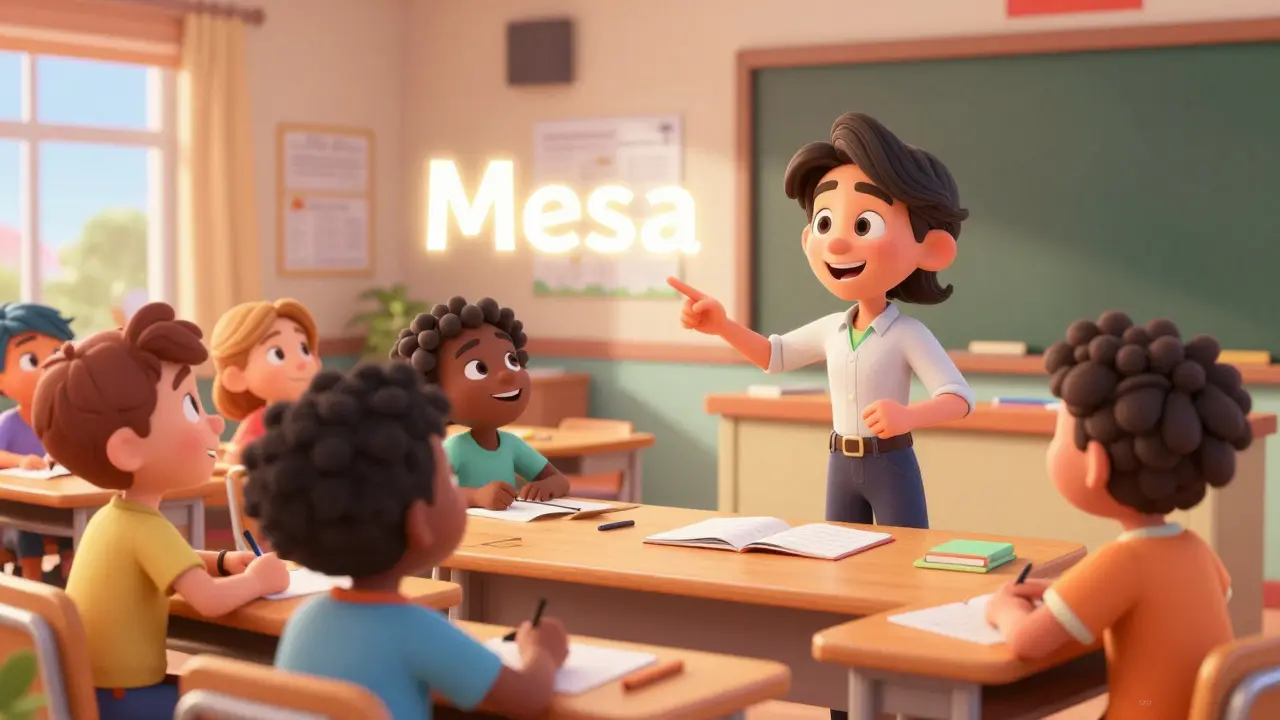
Immersion isn't just about moving to Paris to learn French. In a classroom setting, it means the target language is the only tool available for communication. Instead of saying "The word for table is 'mesa'," the teacher points to a table and says "Mesa." The brain is forced to make a direct connection between the object and the new word, bypassing the translation phase in your head. This is critical because translation is a bottleneck; if you always translate from English to Spanish, you'll always have a split-second delay in your speech.
There are different levels of this. Some schools use partial immersion, where only art and music are taught in the second language. Others go for full immersion, where everything from math to history is delivered in the target tongue. The goal is to reach a state of Language Acquisition, which is different from learning. Learning is a conscious effort (like studying a textbook), while acquisition is a subconscious process (like how you learned your first language).
One common pitfall in immersion is the "silent period." Many students feel paralyzed because they can't express complex thoughts. However, research into the Immersion method shows that this period is actually when the brain is most active in mapping the language. Forcing a student to speak too early can create anxiety, which actually shuts down the parts of the brain responsible for learning. The trick is providing enough visual cues and context so the student feels safe in the environment.
Breaking Down Total Physical Response (TPR)
If immersion is the environment, Total Physical Response is the tool. Developed by James Asher, TPR is based on the idea that we learn language by reacting to it physically. Think about how a parent tells a toddler, "Pick up your toys," while gesturing toward the floor. The child doesn't need a dictionary; they see the action and hear the words simultaneously.
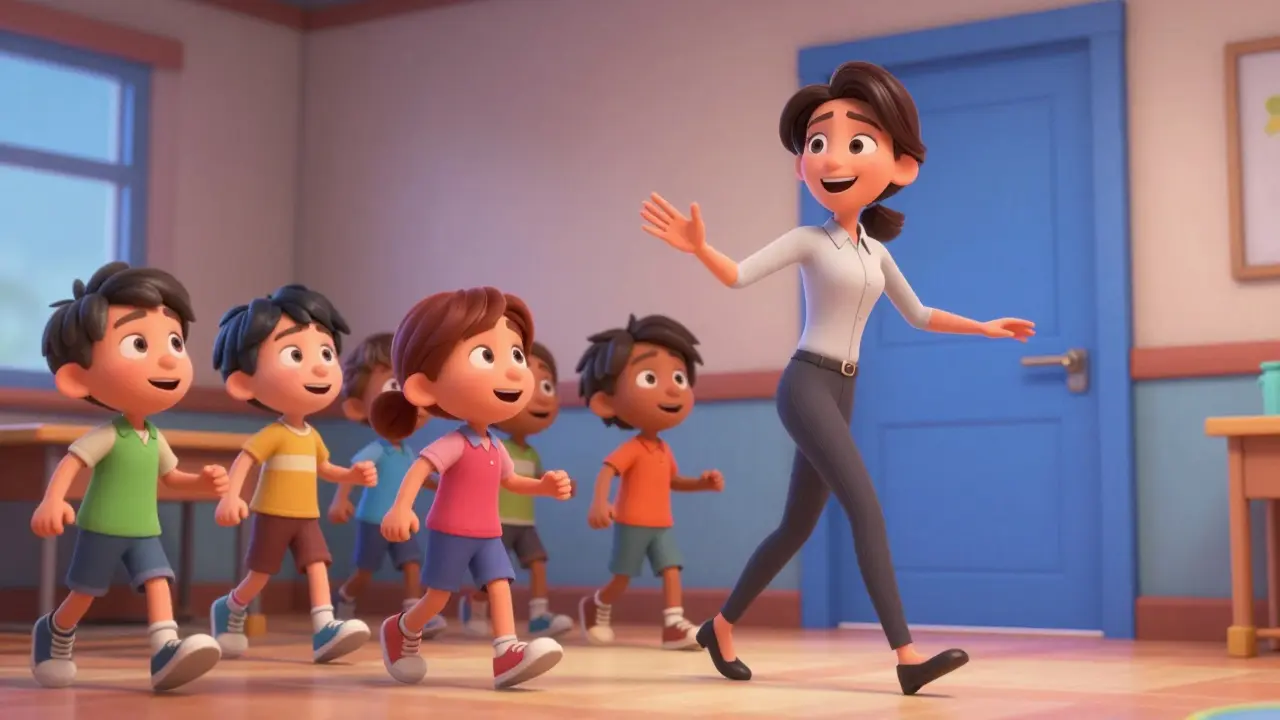
In a TPR lesson, the teacher gives a command, and the students perform the action. For example, if the goal is to learn directions, the teacher says "Walk to the door" and physically walks there. The students follow. There is no pressure to speak immediately. This mirrors the natural order of human speech: listening, then understanding, then speaking, and finally writing.
This method is a lifesaver for beginners because it eliminates the fear of making a mistake. When you're just moving your body, you can't "say" something wrong. This lowers the Affective Filter-a psychological barrier created by anxiety or lack of confidence that blocks language input from reaching the brain's processing center. By the time a TPR student is asked to speak, they already have a massive library of understood sounds and meanings stored in their head.
| Feature | Immersion Method | Total Physical Response (TPR) |
|---|---|---|
| Primary Goal | Full fluency and academic proficiency | Immediate comprehension and basic vocabulary |
| Student Role | Active participant in all subjects | Responder to physical commands |
| Cognitive Load | High (requires constant processing) | Low (focuses on listening and doing) |
| Best Use Case | Long-term education / Full-time programs | Beginners / Young learners / Specific vocab |
| Timing of Speech | Encouraged throughout (after silent period) | Delayed until comprehension is solid |
Blending the Two: The Hybrid Strategy
You don't have to choose one over the other. In fact, the most effective language courses use TPR as a bridge to get students comfortable within an immersive environment. Imagine a first-grade classroom in a Spanish immersion school. The teacher doesn't start by lecturing on the history of Spain. Instead, they use TPR to establish a set of "classroom survival" commands: "Sit down," "Open your books," "Listen." Once the students can navigate the physical space of the room through TPR, the teacher can introduce more complex immersive concepts.
This hybrid approach prevents burnout. Pure immersion can be exhausting for a beginner-it's like being thrown into the deep end of a pool. TPR is the floatation device. It gives students a win every few minutes ("I knew I had to stand up!"), which releases dopamine and keeps them engaged. As the student's confidence grows, the teacher slowly fades out the physical gestures and increases the linguistic complexity.
Common Pitfalls and How to Avoid Them
One of the biggest mistakes teachers make with TPR is staying in the "command phase" too long. If you spend six months just telling students to "Touch your nose" or "Point to the window," they'll get bored. TPR is a gateway, not the destination. You have to transition from simple commands to "story-telling TPR," where students act out a narrative. For example, instead of just "Walk," you create a scene: "You are walking through a dark forest, you see a giant spider, you jump back in fear!" This pushes the language into the realm of abstract thought and emotion.
With immersion, the danger is the "comprehensible input" gap. If a teacher speaks at a native speed without visual aids, the students aren't immersed-they're just confused. For immersion to work, the language must be Comprehensible Input, a term coined by Stephen Krashen. This means the language is just one level above the student's current ability, supported by gestures, pictures, and context. If a student doesn't understand anything, they aren't learning; they're just hearing noise.
Practical Steps for Implementing These Methods
If you're a learner or a teacher, here is how to actually put this into practice without feeling overwhelmed:
- Build a Command Library: Start with 10 basic physical actions. Use them exclusively for a week. Don't translate them; just do them.
- Create "Language Zones": If you can't do full immersion, create a zone (like the kitchen or a specific hour of the day) where only the target language is allowed.
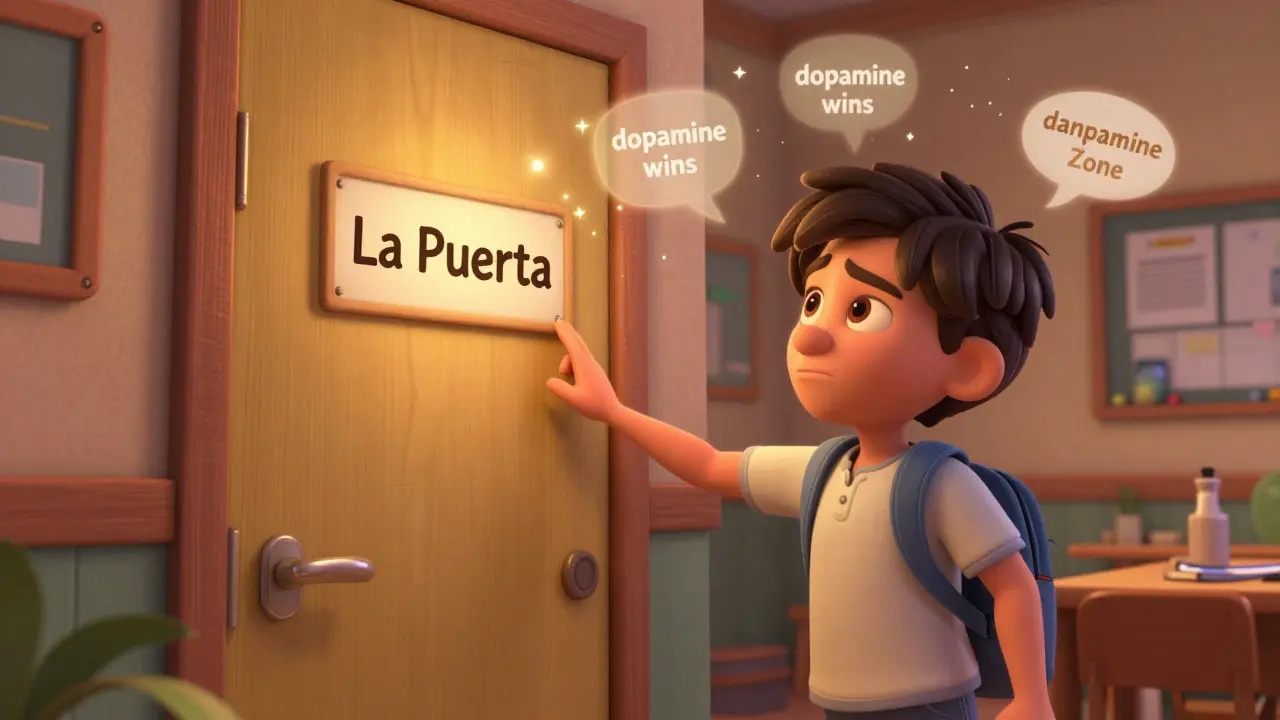
- Use Visual Anchors: Label everything in your environment. When you use TPR to say "Touch the door," make sure there's a physical label on the door that says "La Puerta."
- The 80/20 Rule: Aim for 80% target language and 20% native language for critical instructions. This prevents the total frustration that leads to students quitting.
- Gradual Release: Start with: Teacher commands $\rightarrow$ Students act $\rightarrow$ Students command $\rightarrow$ Students speak spontaneously.
Is immersion better than traditional grammar-based learning?
For speaking and listening fluency, yes. Immersion forces the brain to process language in real-time, which builds a faster intuitive connection. However, traditional grammar study is often better for writing and high-level academic accuracy. The best results usually come from a balance of both.
Can adults use TPR, or is it just for kids?
Adults can absolutely use TPR. While it might feel "childish" at first, the biological mechanism is the same. Moving your body while learning a word creates a stronger neural pathway than just reading it. The key is to use adult-relevant contexts-like acting out a business meeting or a travel scenario-rather than just "touch your head."
How long does the "silent period" last in immersion?
It varies wildly. Some students start speaking a few phrases in weeks, while others might stay silent for months. This is normal. The silent period is a phase of active listening. Trying to force a student out of this phase too early can actually increase anxiety and slow down overall progress.
What is the main risk of using only the Immersion method?
The biggest risk is "cognitive overload." If the input isn't comprehensible, students can shut down mentally. This is why combining immersion with TPR or visual aids is essential-it provides the scaffolding needed to make the immersion meaningful rather than frustrating.
Does TPR help with reading and writing?
Not directly. TPR is specifically designed for the listening and speaking domains. However, once a student has a strong physical and auditory understanding of a word, they can map the written form to that meaning much faster than someone who has never heard the word used in context.
Next Steps for Your Language Journey
If you're feeling stuck with your current progress, try shifting your focus. If you've been staring at grammar tables for months, stop. Spend a week using TPR techniques-find a video series that uses these methods or create your own physical cues for new vocabulary. If you're already comfortable with the basics, push yourself into a "micro-immersion" experience. Change your phone's OS language to your target language. It's a small step, but it forces your brain to stop translating and start functioning in the new language.
Remember, the goal isn't to be perfect; it's to be understood. Whether you're using a high-intensity immersion program or simple physical responses, the key is consistency and a willingness to look a little silly while you're learning. That's where the real growth happens.
Raji viji
April 5, 2026 AT 05:45Absolute joke to call this a 'strategy' when most people just end up sounding like a broken record. Immersion is basically just throwing a toddler into a shark tank and hoping they learn to swim before they get eaten alive. Total physical response is just glorified charades for adults who can't handle a textbook. It's all cute until you realize you can't actually write a coherent email because you spent six months 'acting out' a walk in the park. This is the kind of fluffy pedagogy that makes modern schooling a circus of incompetence.
Nikhil Gavhane
April 7, 2026 AT 05:19I think it's wonderful how these methods focus on the emotional side of learning. Removing the fear of failure is such a game changer for anyone who has ever felt intimidated by a new language.
Vishal Bharadwaj
April 8, 2026 AT 12:52krashen is’t exactly the gold standard here lol. the whole comprehenisble input thing is way overblown by people who want a quick fix. you can't just 'acquire' a language by listening to noise if you dont have the core grammar logic mapped out first. honestly most of these immersive schools just produce kids who speak a weird hybrid dialect and can't actually spell a single word correctly in the target langauge. its a total scam to make it feel easier than it actually is.
Sandeepan Gupta
April 9, 2026 AT 05:29I would suggest adding a specific focus on phonetic training alongside TPR. While physical movement helps with vocabulary, the muscle memory for pronunciation is a separate hurdle. If you combine the physical action of the word with an exaggerated articulation of the sound, you create a dual-sensory anchor that makes the word stick much faster. For those struggling with the 'silent period', try recording yourself and playing it back while performing the action to bridge that auditory gap.
Madhuri Pujari
April 9, 2026 AT 10:54Oh wow, look at us discovering that 'gestures' help people understand things!!! Truly ground breaking stuff here!!!! I'm sure the 'experts' are shaking in their boots now that we've realized pointing at a table while saying 'mesa' works... what a revelation!!!!
Vishal Gaur
April 9, 2026 AT 15:16i tried something like this once back in college but the teacher was just too slow and i felt like i was wasting my time because we spent like three whole weeks just standing up and sitting down which is just... i mean... why would i pay tuition to do stuff i can do for free at home by just looking in a mirror while i talk to myself it just felt really inefficient and honestly the whole vibe of the class was just kind of depressing if you actually wanted to learn the hard parts of the language
Rakesh Dorwal
April 11, 2026 AT 03:50Interesting stuff. Makes me wonder who actually funded the research for these methods. Probably some globalist agenda to erase native linguistic boundaries so we all just blend into one giant controllable mass. But hey, if it helps us beat the competition in the global market, I'm all for it as long as we keep our own culture strong!
sumraa hussain
April 13, 2026 AT 03:18man this is just wild... imagine the chaos of a whole class just jumping around like crazy because the teacher said there is a giant spider!!!! absolute madness!!!! love it!!!!
NIKHIL TRIPATHI
April 13, 2026 AT 18:26I can definitely see the value in the hybrid approach. Using TPR as a bridge makes the transition to full immersion way less scary.
pk Pk
April 13, 2026 AT 23:46Exactly! You have to push through the discomfort. The only way to grow is to embrace the silliness. If you're too proud to act out a sentence, you're too proud to learn a language. Get out there and make mistakes!
Shivani Vaidya
April 14, 2026 AT 03:32it is most agreeable to consider the psychological comfort of the student. a peaceful environment facilitates better learning
Rajashree Iyer
April 14, 2026 AT 22:22The 'silent period' is a metaphor for the soul's hesitation to speak its truth in a foreign tongue. We are all just echoes of a language we have not yet mastered, drifting in the void between understanding and expression! It's a poetic dance of the mind!
Rubina Jadhav
April 15, 2026 AT 11:55I think this is a good way to learn.
Rajat Patil
April 17, 2026 AT 04:11I believe that we should all be patient with those who find the immersion process difficult. It is a very brave thing to try to speak a new language.
Parth Haz
April 18, 2026 AT 00:12The integration of physical movement is quite a promising development in pedagogy. It is encouraging to see a shift toward more holistic learning experiences.
deepak srinivasa
April 19, 2026 AT 09:06I wonder if these methods work differently for tonal languages compared to Romance languages. Does the physical movement help with the pitch change or is that still a separate mental hurdle?
anoushka singh
April 20, 2026 AT 22:21Eh, looks okay but I'm too lazy to actually try the command library thing. Just gonna keep using my app and hoping for the best haha.
Tarun nahata
April 22, 2026 AT 16:52Let's goooo! This is the kind of energy we need! Shake off the dust and start moving! Your brain will literally explode with new connections if you just get up and start acting out your vocab! Total game changer!
pk Pk
April 23, 2026 AT 04:26That is the spirit! Consistency is the only thing that separates a beginner from a fluent speaker. Keep that fire burning and don't let the boring textbooks win!