Inclusive Imagery: Representation and Diversity in Course Media
 Feb, 15 2026
When you open a course module and see images of people who look nothing like you, it doesn’t just feel off-it makes you wonder if this course was made for someone else. That’s the quiet truth behind inclusive imagery in course media. It’s not about checking a box. It’s about making every learner feel like they belong before they even click play.
Why Imagery Matters More Than You Think
Think about the last time you saw a textbook with only white, able-bodied, cisgender men in every photo. Even if the content was great, the visuals whispered: You don’t belong here. That’s not accidental. It’s the result of outdated templates, lazy stock photo choices, and teams that never asked who their learners really are.
Research from the University of Michigan in 2024 found that learners from underrepresented groups were 42% more likely to drop out of online courses when the course media showed no one who looked like them. Not because the lessons were hard. Because they felt invisible.
Images aren’t decoration. They’re signals. A photo of a Black woman using a tablet while wearing a hijab says: This course is for you. A video showing a nonverbal student using a communication device says: Your way of learning is valid. These aren’t nice-to-haves. They’re foundational to engagement.
What Does Inclusive Imagery Actually Look Like?
It’s not just adding one person of color to a group shot. Real inclusive imagery means showing diversity across multiple dimensions:
- Race and ethnicity - Not just one token person, but multiple identities represented naturally.
- Disability - People using mobility aids, hearing devices, screen readers, or communicating in ASL.
- Gender identity - Nonbinary, trans, and gender-nonconforming individuals shown without stereotypes.
- Age - Learners in their 60s, 70s, and beyond-not just 20-somethings in hoodies.
- Body type - People of all sizes, not just thin or "ideal" bodies.
- Cultural context - Clothing, homes, environments that reflect real lives, not generic "world" backdrops.
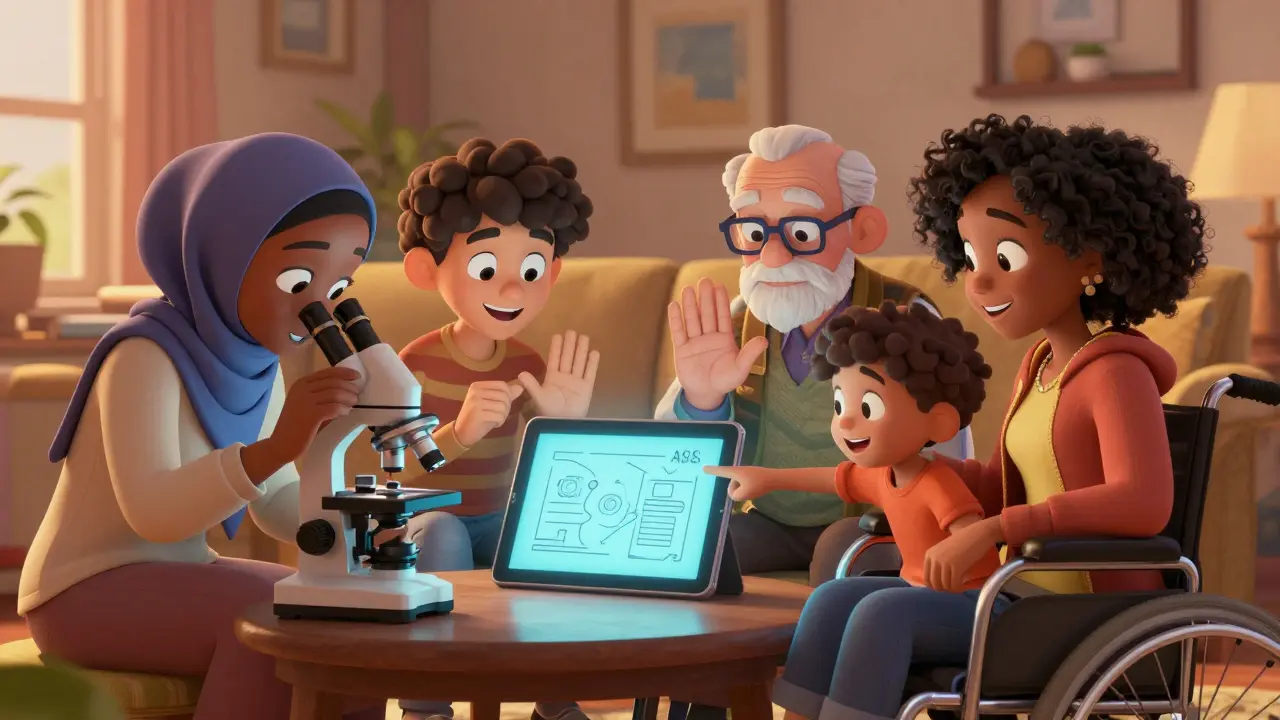
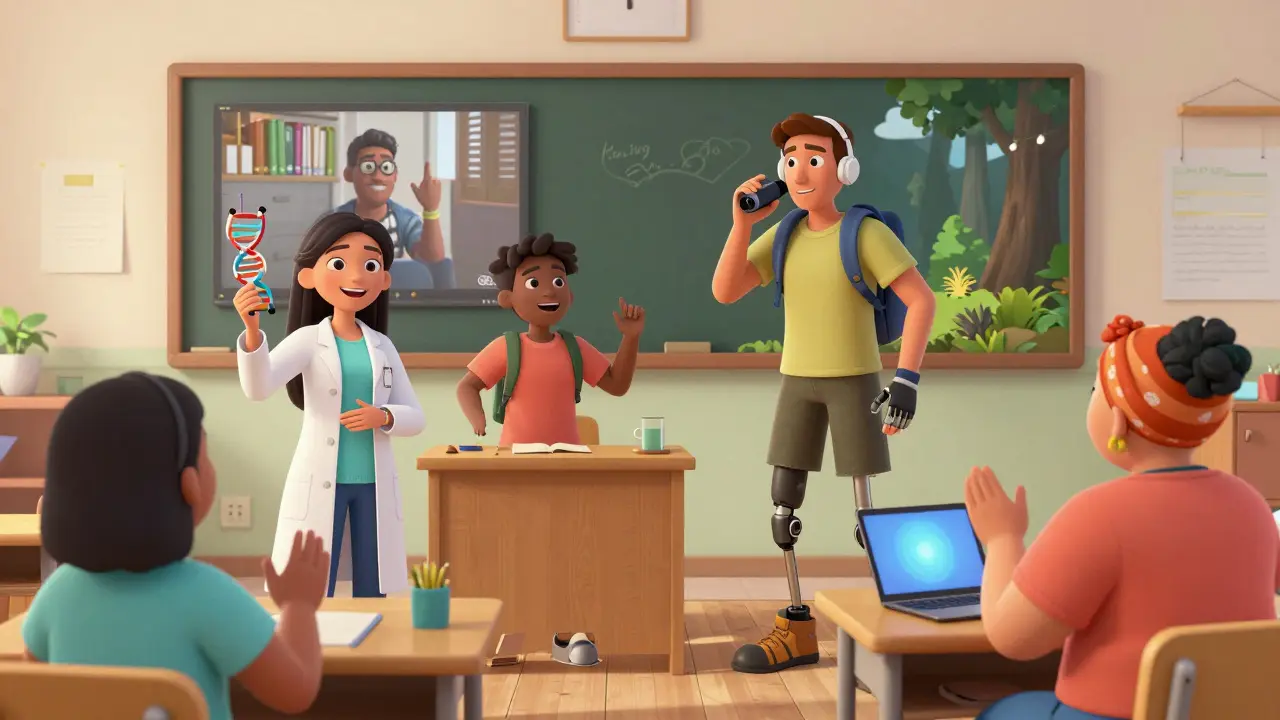
And here’s the key: diversity must be authentic. Stock photos of people posing awkwardly with wheelchairs or holding books while staring blankly into the camera? Those backfire. Real diversity means real moments: a grandmother learning to use a tablet with her grandchild, a man with a prosthetic leg hiking while listening to a lecture, a nonbinary student leading a virtual group discussion.
How Course Creators Are Getting It Wrong
Too many teams still use "diversity filters" in stock photo sites and call it done. Or they pick images based on what feels "safe"-the same smiling, middle-class faces repeated across every course.
Some creators think, "We’re not targeting that audience," so they skip representation entirely. But who decides who "belongs" in a course? A course on financial literacy shouldn’t only show wealthy professionals. A coding course shouldn’t assume all learners are young men in tech hubs.
And then there’s the myth: "We can’t find diverse images." That’s just not true anymore. Platforms like Unsplash, Getty Images’ Diversity Collection, and The Representation Project now offer thousands of authentic, royalty-free photos. You just have to look beyond the first page of results.
Real Examples That Work
One university redesigned their biology course after feedback from students. They replaced generic lab photos with images of:
- A Latina scientist in a hijab adjusting a microscope
- A deaf student signing while explaining DNA replication
- An older man with Parkinson’s using voice-to-text software to complete a lab report
Enrollment from underrepresented groups jumped 31% in one semester. Completion rates rose too. Students wrote in: "I finally felt like I could be a scientist."
Another example: a corporate compliance course used real employees from different departments as models. A warehouse worker, a remote customer service rep, a nonbinary manager-all filmed in their actual workspaces. The course didn’t just feel more real. It felt more trustworthy.
How to Build Inclusive Media From Scratch
If you’re designing a course, here’s how to start:
- Map your audience - Who are your learners? Use enrollment data, surveys, and feedback. Don’t guess.
- Review every image - Ask: Does this reflect someone who’s actually taking this course? If not, swap it.
- Work with real people - Hire models from the communities you’re representing. Pay them fairly. Let them help choose how they’re shown.
- Include alt text - Every image must describe who’s in it and what they’re doing. "A Black woman in a wheelchair using a laptop with voice assistant enabled" is better than "woman working."
- Test with diverse learners - Show draft media to people outside your usual circle. Ask: "Do you see yourself here?" If the answer is no, change it.
And don’t forget accessibility. High contrast, readable fonts, captioned videos, and audio descriptions aren’t optional. They’re part of inclusive imagery too.
The Ripple Effect
When learners see themselves in course media, they don’t just stay enrolled-they speak up. They lead study groups. They become mentors. They apply for jobs they thought were "not for people like them."
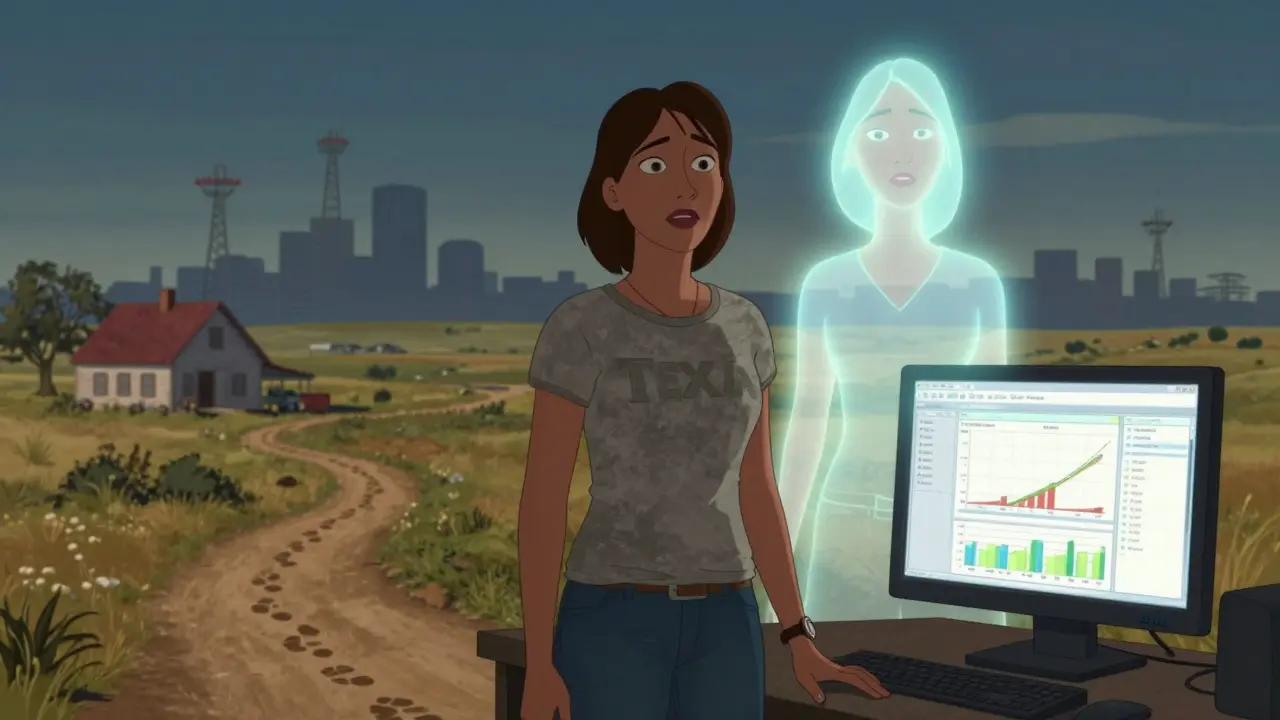
One learner from a rural community in Texas told her course team: "I never thought I’d be a data analyst. But then I saw a woman from my town in the video. I thought-she did it. Maybe I can too."
That’s the power of representation. It doesn’t just make courses more welcoming. It changes lives.
What’s Next?
Inclusive imagery isn’t a trend. It’s becoming a standard. Platforms like Coursera and edX now require diversity guidelines for course approval. Accreditation bodies are starting to include media representation in quality reviews.
The next big shift? Learners will start asking: "Where are the people like me?" before they even enroll. And courses that ignore that question won’t just fall behind-they’ll be left behind.
It’s time to stop thinking of diversity as a risk. It’s the most powerful tool you have to make learning stick.
Why is inclusive imagery important in online courses?
Inclusive imagery signals to learners that they belong. When students see people who look like them-across race, gender, ability, age, or background-they’re more likely to engage, stay enrolled, and succeed. Studies show dropout rates drop significantly when learners feel represented. It’s not just about fairness-it’s about effectiveness.
Can I use stock photos for inclusive imagery?
Yes, but only if you choose them carefully. Many stock sites still offer stereotypical or tokenized images. Look for platforms that prioritize authenticity-like Getty’s Diversity Collection or Unsplash’s curated inclusive tags. Avoid images where people look posed, awkward, or out of context. Real moments beat perfect poses every time.
How do I know if my course media is truly inclusive?
Ask yourself: Do the images reflect the actual diversity of your learners? If you’re unsure, survey your students. Also, test your media with people outside your usual audience. If someone says, "I don’t see myself here," take that seriously. True inclusion means showing multiple identities-not just one "token" example.
What if my course is about a niche topic with limited diversity in the field?
Even in narrow fields, diversity exists. A course on aerospace engineering might have few women, but there are women in the field-and they’re learning. Show them. Use real stories, even if they’re not from your institution. Representation isn’t about the current workforce-it’s about who could join it. Your media can help create that future.
Is inclusive imagery only about visuals?
No. It includes audio, video, and text too. Audio descriptions for visual content, captions for spoken words, clear language for non-native speakers, and avoiding biased metaphors all count. Inclusive media means every sensory channel welcomes everyone-not just the images.
Aryan Jain
February 15, 2026 AT 07:11Nalini Venugopal
February 15, 2026 AT 20:10Pramod Usdadiya
February 17, 2026 AT 00:20Aditya Singh Bisht
February 17, 2026 AT 17:22Agni Saucedo Medel
February 18, 2026 AT 10:42ANAND BHUSHAN
February 18, 2026 AT 23:51Indi s
February 20, 2026 AT 12:45Rohit Sen
February 21, 2026 AT 13:50Vimal Kumar
February 23, 2026 AT 07:50Amit Umarani
February 24, 2026 AT 16:47Noel Dhiraj
February 25, 2026 AT 14:42vidhi patel
February 26, 2026 AT 22:21Priti Yadav
February 27, 2026 AT 18:21Ajit Kumar
March 1, 2026 AT 06:17Diwakar Pandey
March 2, 2026 AT 08:22Geet Ramchandani
March 3, 2026 AT 14:58Pooja Kalra
March 5, 2026 AT 07:15Sumit SM
March 6, 2026 AT 23:06Jen Deschambeault
March 7, 2026 AT 17:28Cait Sporleder
March 9, 2026 AT 05:42