Leadership Development Programs for Managers: A Practical Guide
 Oct, 14 2026
Here is the uncomfortable truth about most leadership development programs: they often fail because they treat managers like students rather than practitioners. You don't need another slide deck on "what makes a good leader." You need tools that work when your top engineer quits two days before a deadline or when sales and marketing are at each other's throats. If you are a manager looking to level up, or an HR director trying to justify a budget, this guide cuts through the noise. We will look at what actually works in modern corporate training, how to pick the right program, and why the old classroom model is dying.
Why Traditional Training Fails Modern Managers
Think back to the last mandatory workshop you attended. Was it useful? Probably not. The biggest issue with traditional manager training is the disconnect between theory and application. You sit in a room, learn about emotional intelligence, and then return to a desk where no one cares about your active listening skills because the quarterly targets are missed.
Modern workplaces move too fast for static learning. According to the Association for Talent Development, companies with comprehensive training programs have 218% higher income per employee. But that stat only holds if the training sticks. It doesn't stick if it's just a one-off event. Effective leadership development is continuous, contextual, and deeply personal. It’s less about memorizing frameworks and more about changing behavior under pressure.
The Core Components of Effective Leadership Development
If you are evaluating programs, ignore the glossy brochures. Look for these three pillars instead. Without them, you are just buying expensive coffee breaks.
- Experiential Learning: This isn't role-playing with actors. It means real-world simulations, stretch assignments, and cross-functional projects. For example, putting a technical lead in charge of a budget review forces them to learn financial literacy by doing, not by reading.
- Personalized Coaching: Generic advice is useless. High-impact programs pair managers with coaches who understand their specific industry challenges. An IT manager needs different support than a retail store manager. Personalization drives engagement.
- Peer Accountability: Managers learn best from other managers. Cohort-based models create safe spaces to discuss failures without fear of judgment. When you hear a peer struggle with the same difficult conversation you had yesterday, the lesson becomes real.
Types of Leadership Development Programs Compared
Not all programs are created equal. Your choice depends on your company size, budget, and immediate pain points. Here is a breakdown of the most common formats available in 2026.
| Format | Best For | Cost Structure | Time Commitment | Key Limitation |
|---|---|---|---|---|
| Executive Coaching | Senior leaders with specific blind spots | High ($5k-$20k per person) | Low (1 hr/week) | Expensive; hard to scale |
| Cohort-Based Workshops | Mid-level managers needing peer networks | Medium ($1k-$3k per person) | Medium (Monthly sessions) | Scheduling conflicts; generic content risk |
| Online Micro-Learning | Distributed teams with tight schedules | Low (Subscription based) | Very Low (10 mins/day) | Low completion rates; lacks depth |
| Mentorship Programs | High-potential employees (HiPos) | Low (Internal resource) | Variable | Quality varies wildly; mentor burnout |

How to Choose the Right Program for Your Team
Selecting a vendor feels like dating. You need to ask the right questions before you commit. Don't just look at the curriculum. Look at the outcomes.
First, define the problem. Are your managers bad at feedback? Or are they struggling with strategic thinking? These require different solutions. If it's feedback, you need behavioral drills. If it's strategy, you need case studies and exposure to senior leadership.
Second, check for measurement capabilities. How will you know it worked? Good programs track leading indicators (like participation and skill assessment scores) and lagging indicators (like team retention rates and promotion velocity). If a vendor can't show you data from past clients, walk away.
Third, consider the tech stack integration. In 2026, nobody wants another login portal. Does the platform integrate with Slack, Microsoft Teams, or your existing LMS? Friction kills adoption. If it takes three clicks to start a lesson, people won't do it.
Soft Skills Are the New Hard Skills
We used to think technical expertise made you a manager. Now, we know that technical expertise gets you hired, but soft skills keep you promoted. The World Economic Forum lists analytical thinking, creative thinking, resilience, and flexibility as top skills for 2027. Leadership development must focus on these human-centric abilities.
Consider empathy. It sounds fluffy until you realize that empathetic managers reduce turnover by up to 50%. Training programs that teach active listening and conflict resolution directly impact the bottom line. They help managers navigate hybrid work dynamics, where reading body language is harder and communication gaps widen.
Another critical area is adaptability. Markets shift overnight. A manager trained in rigid command-and-control structures will crumble when a project pivots mid-sprint. Modern programs use agile methodologies in their training design itself, teaching managers to iterate on their own leadership style just as they would a software product.
Implementing a Program That Actually Sticks
You bought the program. Now what? Implementation is where most initiatives die. To ensure longevity, follow this simple rollout plan:
- Pilot with a small group: Test the program with ten enthusiastic managers. Gather feedback and tweak the content before rolling out to everyone.
- Secure executive sponsorship: If the CEO doesn't care, the middle managers won't either. Have leaders share their own learning moments publicly.
- Embed into performance reviews: Make leadership development part of the annual review criteria. Ask managers to present what they learned and how they applied it.
- Create social reinforcement: Use internal channels to celebrate wins. Did a manager resolve a major conflict using a new technique? Highlight it in the company newsletter.
The Future of Manager Training
Looking ahead, artificial intelligence is reshaping how we learn. AI-driven platforms can now simulate difficult conversations, allowing managers to practice firing someone or negotiating a raise in a low-stakes environment. These tools provide instant feedback on tone, pacing, and clarity.
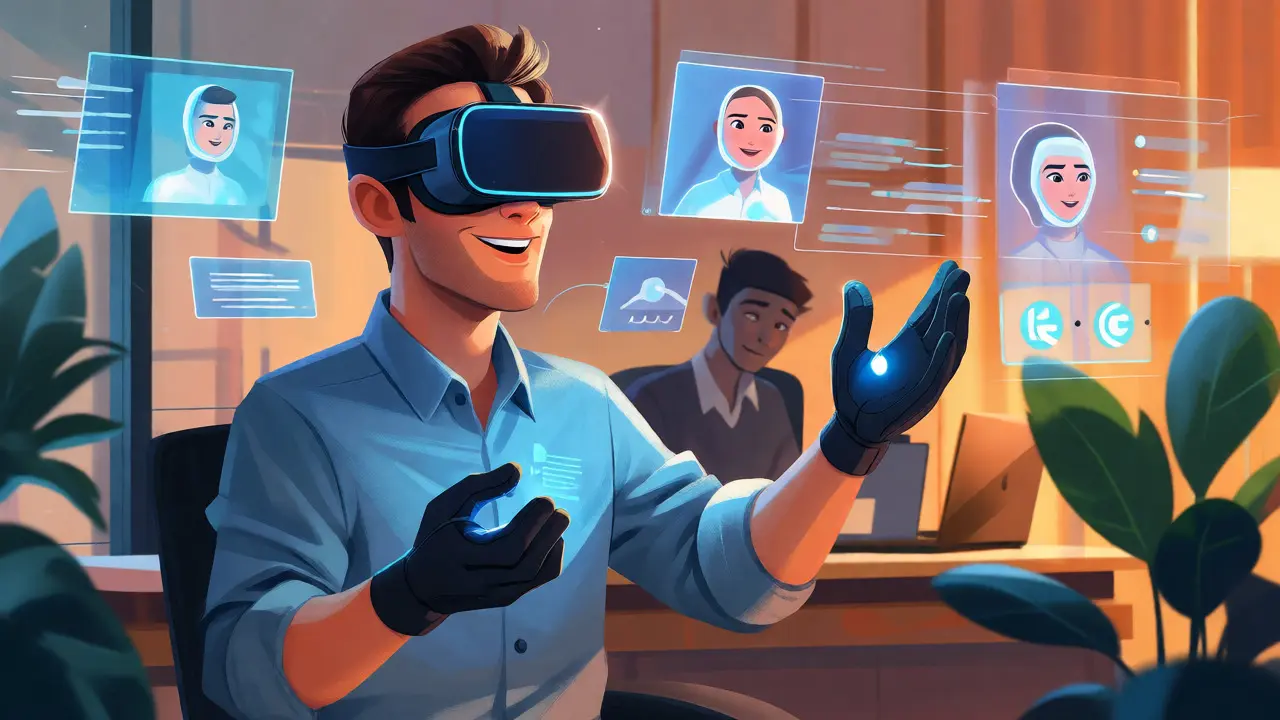
However, technology cannot replace human connection. The future of leadership development is hybrid: digital tools for knowledge acquisition and human coaching for behavioral change. As remote work remains standard, virtual reality (VR) simulations may become common for practicing public speaking or crisis management. But remember, the core of leadership remains unchanged: it is about influencing people toward a shared goal. No algorithm can fully replicate the trust built between a manager and their team.
Frequently Asked Questions
How long does a typical leadership development program last?
Most effective programs run between six months to a year. Shorter workshops rarely produce lasting behavioral change, while programs longer than 18 months often see participant fatigue. The sweet spot allows time for managers to apply lessons in real work scenarios and reflect on the results.
Can online courses replace in-person coaching?
They can supplement, but rarely replace, in-person or live virtual coaching. Online courses are excellent for delivering foundational knowledge and frameworks. However, coaching provides personalized feedback and accountability, which are critical for changing deep-seated habits. A blended approach usually yields the best ROI.
What is the average cost per manager for leadership training?
Costs vary widely based on format. Self-paced online modules might cost $200-$500 per person. Cohort-based workshops typically range from $1,000 to $3,000. One-on-one executive coaching can exceed $10,000 annually. Companies should weigh these costs against the expense of replacing a poorly managed team member, which can be 1.5x to 2x their annual salary.
How do I measure the ROI of leadership development?
Track both qualitative and quantitative metrics. Quantitative measures include employee retention rates, internal promotion rates, and productivity gains. Qualitative measures involve 360-degree feedback scores and employee engagement surveys. Comparing pre- and post-program data helps isolate the impact of the training.
Is leadership training necessary for individual contributors?
Yes, especially for high-potential employees. Early exposure to leadership concepts helps individual contributors develop influence without authority. It prepares them for future managerial roles and improves their ability to collaborate across teams, making them more valuable regardless of their title.