Learning Styles Myth: What Evidence Says About Course Design
 Nov, 14 2026
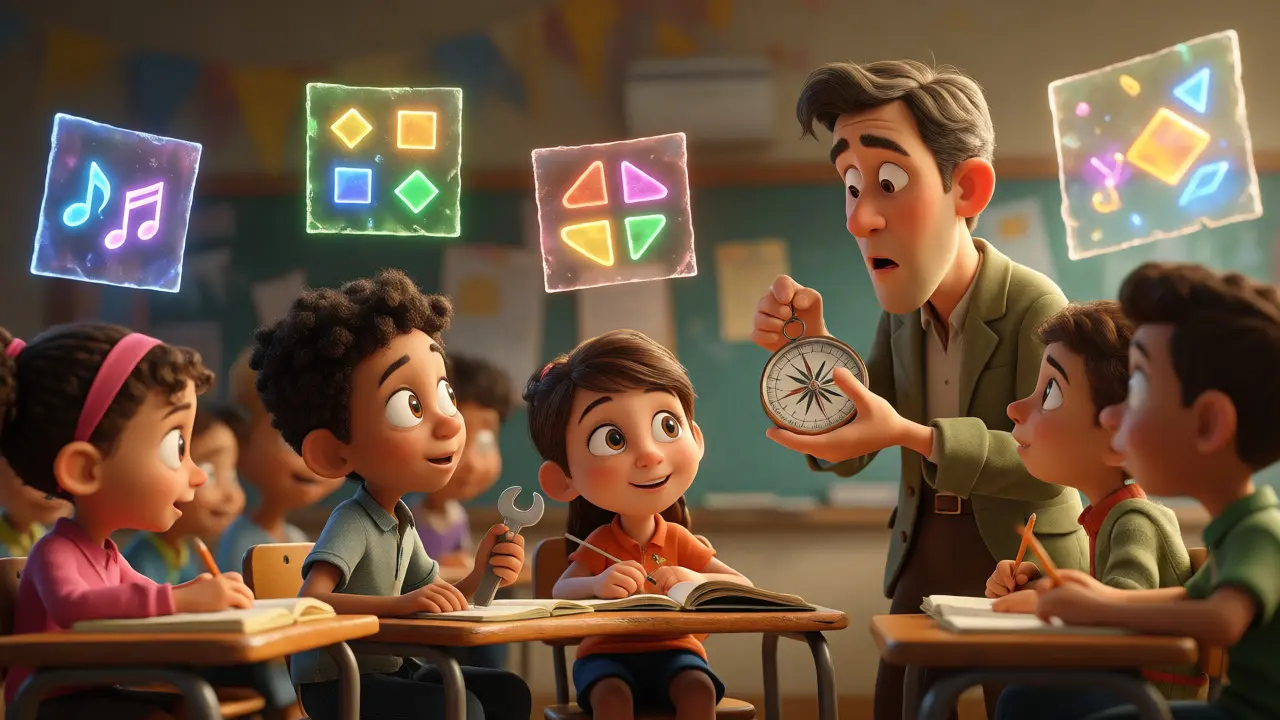
You’ve probably heard it a thousand times: some people are visual learners, others are auditory, and if you don’t match the teaching style to the student’s preference, they’ll fail. It sounds intuitive. It feels right. But here is the kicker: decades of rigorous research show that matching instruction to learning style preferences has almost zero impact on actual learning outcomes. If you are designing courses, building adaptive learning platforms, or just trying to study better, clinging to this myth might be costing you time and money.
The real story isn’t about how students like to learn; it’s about how the brain actually processes information. While students have clear preferences for how they receive content, these preferences rarely dictate their success. Instead, effective course design relies on principles that work for everyone, regardless of whether someone prefers diagrams or podcasts. Let’s break down what the evidence actually says, why the VARK model is so popular despite its flaws, and what you should do instead when building modern educational experiences.
The Persistence of the Learning Styles Myth
Why does this idea stick around? Because it validates us. When a teacher tells you, "You’re a kinesthetic learner," it explains your past struggles without blaming your effort. It offers a simple identity label. The VARK model, developed by Neil Fleming in the late 1980s, categorizes learners into four types: Visual, Aural/Auditory, Read/Write, and Kinesthetic. Surveys consistently show that over 90% of educators believe in learning styles. Yet, when researchers put these beliefs to the test in controlled experiments, the results were underwhelming.
A landmark review by Pashler, McDaniel, Rohrer, and Bjork (2008) examined years of studies looking for the "meshing hypothesis"-the idea that matching teaching method to learning style improves performance. They found very little evidence to support it. Students who preferred visual instructions didn’t necessarily perform better with visual materials than those who preferred text. In fact, many students performed well across all modalities. The disconnect between belief and reality is stark. We love the narrative because it feels personalized, but personalization based on static labels often misses the mark.
What Actually Drives Learning Outcomes
If learning styles aren’t the key, what is? Cognitive science points to several robust principles that matter far more than student preferences. These are not optional extras; they are fundamental mechanisms of how human memory works. Ignoring them leads to poor retention, no matter how much you tailor the font size or background color.
First, consider multimedia learning. Richard Mayer’s research suggests that combining words and pictures helps most people understand complex concepts better than words alone. This isn’t because half the class is "visual"; it’s because our brains process verbal and visual information through separate channels. Using both reduces cognitive load. So, adding a diagram to explain a biological process helps the auditory learner too, even if they prefer lectures. The medium matters less than the alignment between the content type and the concept being taught.
Second, active recall beats passive consumption every time. Whether you read a chapter, watch a video, or listen to a podcast, you only truly learn when you retrieve information from your memory. Testing yourself, answering questions, or explaining a concept to someone else strengthens neural pathways. Passive listening feels easier, which is why auditory learners might prefer it, but it doesn’t lead to durable knowledge. Active engagement is universal.
Key Evidence-Based Principles vs. Learning Style Preferences
| Feature | Learning Style Preference (e.g., VARK) | Evidence-Based Principle |
|---|---|---|
| Goal | Match delivery mode to student identity/preference | Match delivery mode to content complexity and cognitive load |
| Efficacy | Low to negligible impact on final grades or retention | High impact on long-term retention and transfer |
| Flexibility | Rigid; assumes students cannot adapt to other modes | Flexible; encourages multimodal engagement for all |
| Design Implication | Create parallel tracks for different "types" | Integrate text, audio, and visuals strategically |
The Role of Adaptive Learning in Modern Course Design
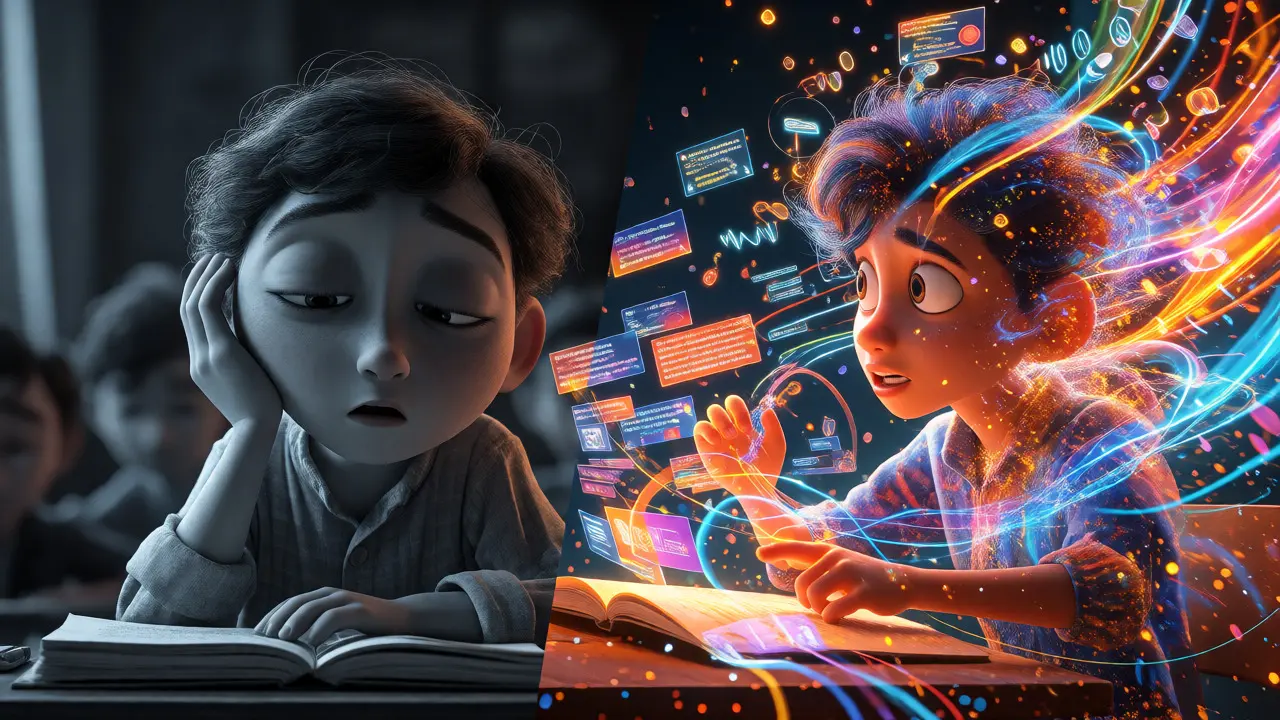
This is where things get interesting for tech-driven education. If we stop sorting students into fixed buckets, how do we personalize learning? Enter adaptive learning. Unlike learning styles, which assume a static preference, adaptive systems use real-time data to adjust difficulty and pacing. They don’t care if you say you’re a "visual learner." They care if you got the last three questions wrong.
Adaptive algorithms can detect when a student is struggling with a specific concept, such as quadratic equations or verb conjugations. If a student fails a quiz question, the system might offer a short video explanation, then a practice problem, then another quiz. This is responsive, not prescriptive. It addresses the gap in understanding, not the alleged gap in sensory preference. Companies like Knewton and McGraw-Hill Connect have built platforms around this logic. The result? Better efficiency. Students spend time only on what they haven’t mastered yet.
Moreover, adaptive learning supports spaced repetition. This technique involves reviewing material at increasing intervals. It combats the forgetting curve, a phenomenon first described by Hermann Ebbinghaus in the 19th century. By scheduling reviews automatically, adaptive tools ensure that knowledge sticks long after the course ends. This works for everyone. You don’t need to be an "auditory learner" to benefit from hearing a term again two days later; your brain simply needs the reminder to strengthen the trace.
How to Design Courses Without Falling for the Myth
So, what should you actually do? If you’re an instructor or a course designer, drop the idea that you must provide three versions of every lesson. That creates unnecessary workload and dilutes focus. Instead, follow these practical steps:
- Analyze the Content, Not the Student: Ask yourself, "What is the best way to teach this specific concept?" For a geography lesson, maps (visual) are essential. For poetry, reading aloud (aural) adds nuance. For surgery training, hands-on practice (kinesthetic) is non-negotiable. The content dictates the medium, not the student's label.
- Multimodality is Key: Provide multiple representations of the same core information. Pair a lecture slide with a transcript and a summary infographic. This isn't about catering to types; it's about redundancy that aids comprehension for everyone. If one channel fails (e.g., bad audio), another saves the day.
- Prioritize Interaction: Build in frequent low-stakes quizzes. Use discussion boards where students must explain concepts in their own words. Force retrieval. Make them think. Passive watching is the enemy of deep learning.
- Offer Choice, Not Labels: Allow students to choose how they demonstrate mastery. Can they write an essay, record a podcast, or build a prototype? This respects their strengths and interests without claiming that their input method determines their output capability.
Common Pitfalls in Implementing Learning Science
Even when designers know the evidence, implementation errors creep in. One common mistake is "decoration overload." Adding irrelevant images or sounds just to make a course look "multimodal" can actually hurt learning. If a slide about photosynthesis includes a decorative clip-art sun that has no instructional value, it distracts the eye. This violates the coherence principle of multimedia learning. Keep it clean. Only add media if it clarifies meaning.
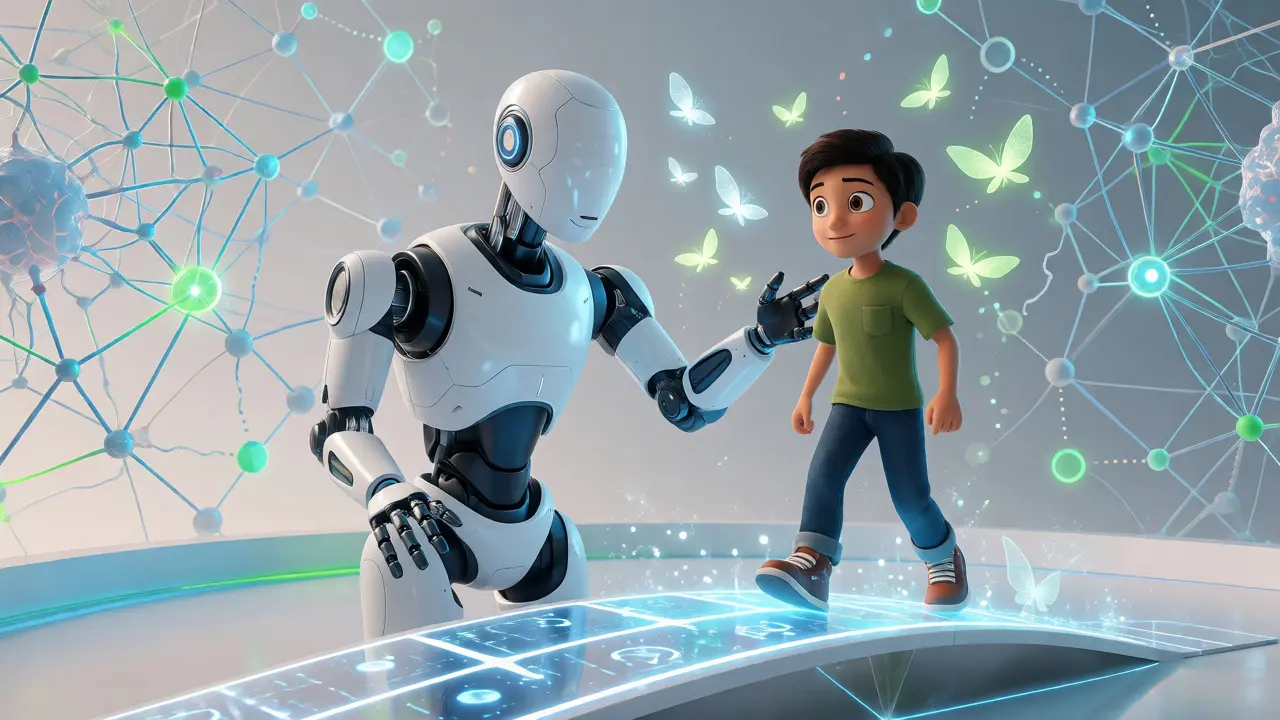
Another pitfall is assuming that technology solves pedagogy. Buying an adaptive platform won’t fix a poorly structured curriculum. If the underlying logic of the course is flawed, the algorithm will just help students navigate the confusion faster. Always start with clear learning objectives. Define exactly what a student should be able to do by the end. Then, build assessments that measure those skills. Finally, layer in adaptive support to guide them there.
Also, beware of confirmation bias among instructors. Teachers often see students who engage well with their preferred style and conclude, "See, it works!" But correlation isn’t causation. Those students might be high-achievers regardless of modality. Rigorous testing requires control groups, which classroom anecdotes rarely provide.
The Future of Personalized Education
As we move further into 2026, the conversation is shifting from "learning styles" to "learner agency" and "cognitive ergonomics." We are moving away from labeling humans as fixed entities toward viewing them as dynamic systems that respond to feedback. Neuroscience continues to refine our understanding of attention and memory, but the core message remains consistent: challenge is good. Comfort is often misleading.
Effective course design today looks less like a menu of options for different personality types and more like a smart tutor. It presents information clearly, checks for understanding immediately, and adjusts the path based on performance. It empowers students to take ownership of their learning strategies rather than waiting for the perfect delivery format. By focusing on evidence-based practices like active recall, spaced repetition, and coherent multimedia, you create environments where anyone can succeed, regardless of how they describe themselves.
Is the VARK model completely useless?
Not entirely. While it doesn't predict academic success, knowing your preferences can help with self-regulation. If you know you get bored easily with long texts, you might proactively seek out summaries or discussions. It serves as a tool for self-awareness, not a prescription for instruction.
Should I stop using videos in my courses?
No. Videos are powerful tools, especially for demonstrating processes or showing emotion. However, they should be used because they suit the content, not because your students claim to be "visual learners." Ensure videos are concise and paired with active tasks to prevent passive consumption.
How does adaptive learning differ from traditional differentiation?
Traditional differentiation often pre-sorts students into groups based on perceived abilities or styles. Adaptive learning uses real-time performance data to dynamically adjust the next step for each individual. It is reactive and data-driven, whereas traditional methods are often proactive and assumption-based.
Do learning styles affect professional development training?
The same principles apply. Adults benefit from relevant, challenging, and interactive content. While adults may have strong preferences for how they consume information, forcing a strict style-match often reduces efficiency. Blended approaches that combine reading, discussion, and practice yield better ROI for corporate training.
What is the biggest takeaway for online educators?
Focus on clarity and engagement. Reduce extraneous cognitive load by keeping designs clean. Use active learning techniques like quizzes and discussions to force retrieval. Trust the science of memory over the popularity of personality labels.