Lifetime vs Expiring Certificates: Policy Design Considerations for Course Credentials
 May, 22 2026
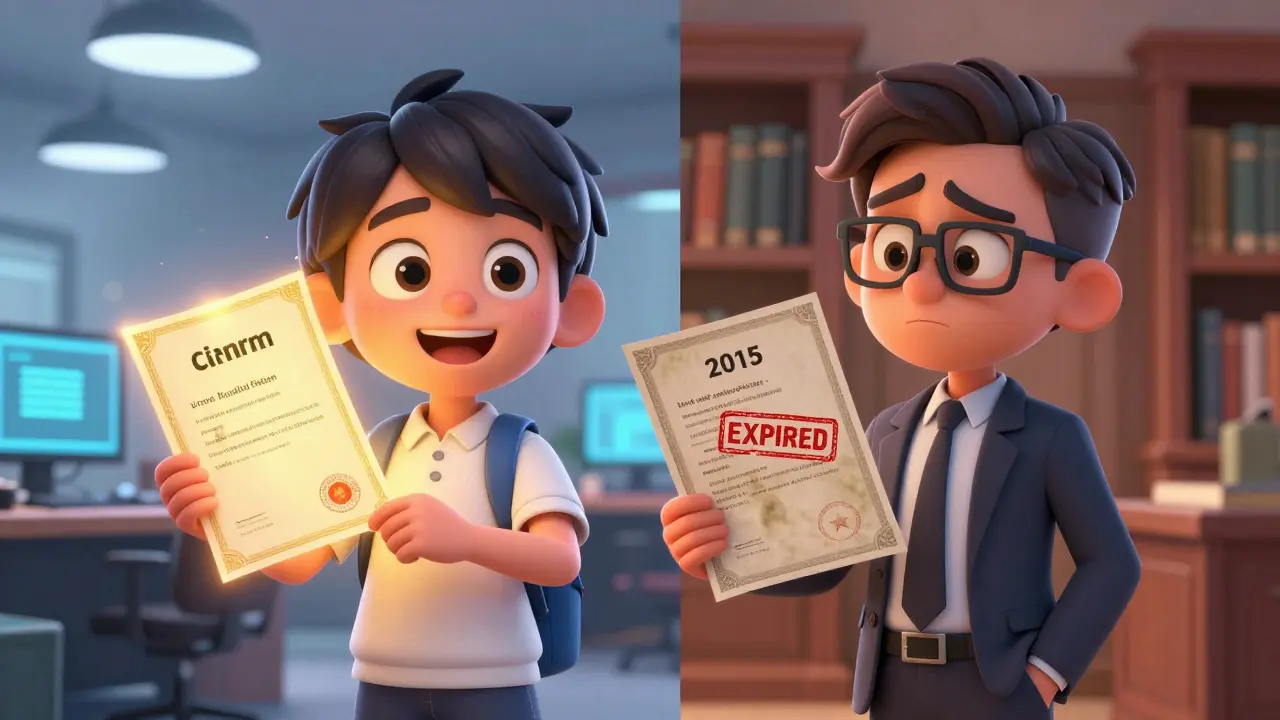
Imagine spending three months mastering a new skill, only to find your certificate useless two years later because it expired. Now imagine the opposite: holding a certification from 2015 that claims you are an expert in modern cloud security, despite technology changing completely since then. This is the core dilemma facing educational institutions and employers today. Should course credentials be lifetime achievements or time-bound validations? The answer isn't simple, and getting it wrong can hurt both learners and organizations.
The Case for Lifetime Certificates
Lifetime certificates represent a traditional view of education: once you learn something, you own that knowledge forever. This approach works well for foundational concepts that rarely change. For example, a certificate in basic accounting principles or classical literature analysis holds value indefinitely because the underlying frameworks remain stable.
From a learner's perspective, lifetime credentials offer psychological security. You invested time and money, so receiving a permanent badge feels like fair compensation. It also simplifies administrative overhead for issuing organizations. There's no need to track renewal dates, send reminder emails, or manage re-certification workflows.
However, this model assumes static knowledge. In fields like healthcare, cybersecurity, or software development, this assumption fails dramatically. A nurse certified in patient care protocols from twenty years ago might not know current safety standards. Similarly, a developer with a lifetime certificate in HTML 4.0 would struggle with modern web applications using React or Vue.js.
Why Expiring Certificates Exist
Expiring certificates address the reality that knowledge decays. Research in cognitive psychology shows that without regular reinforcement, skills deteriorate over time. More importantly, industries evolve faster than individual learning cycles. Technology companies release new versions every few months. Medical guidelines update annually based on new research. Legal regulations change with elections and court decisions.
Employers increasingly prefer expiring credentials because they signal current competence. When you see a Project Management Professional (PMP) certification, you know the holder has maintained their knowledge through continuing education units (CEUs). This reduces hiring risk significantly.
The expiration model creates accountability loops. Professionals must engage in continuous learning to maintain their status. This benefits everyone except those who want to coast on outdated qualifications. Organizations issuing these certificates often require proof of ongoing work experience or additional coursework before renewal.
| Feature | Lifetime Certificates | Expiring Certificates |
|---|---|---|
| Administrative Cost | Low (one-time issuance) | High (ongoing tracking) |
| Knowledge Freshness | Unverified over time | Regularly validated |
| Learner Motivation | Decreases after completion | Sustained through renewal requirements |
| Employer Trust | Varies by field stability | Generally higher in dynamic fields |
| Best For | Foundational/historical subjects | Technical/regulatory professions |

Designing Effective Renewal Policies
If you choose expiring certificates, how long should they last? Six months seems too short, causing unnecessary churn. Ten years feels too long, allowing significant knowledge gaps. Most successful programs settle on two to five year cycles. CompTIA Security+ expires every three years. AWS certifications last one year due to rapid platform changes. These durations reflect industry velocity.
Renewal mechanisms matter just as much as duration. Simple fee payments create zombie certifications where people pay without learning. Better approaches include:
- Continuing Education Units (CEUs): Require specific hours of relevant training
- Portfolio Reviews: Demonstrate applied skills through real projects
- Stackable Micro-Credentials: Earn smaller badges that count toward renewal
- Peer Assessment: Have colleagues verify ongoing competence
The best policies balance rigor with accessibility. If renewal costs exceed $500 or require full re-examination, professionals will abandon the credential entirely. This defeats the purpose of maintaining quality standards.
Hybrid Approaches Gaining Traction
Innovative organizations are blending lifetime and expiring models. Some issue permanent base certificates while adding timestamped endorsements for specialized skills. Others create tiered systems where foundational knowledge remains valid indefinitely, but advanced specializations require periodic updates.
Digital badges offer technical flexibility here. Unlike paper certificates, digital credentials can display issuance dates, expiry information, and evidence of renewal activities. Blockchain-based verification adds another layer of trust by creating immutable records of when and how skills were validated.
Consider the difference between knowing Python syntax (relatively stable) versus understanding current machine learning libraries (rapidly evolving). A hybrid model could certify programming fundamentals permanently while requiring annual updates for AI/ML specializations.
Legal and Ethical Considerations
Certain professions face legal mandates regarding certification validity. Nurses, doctors, lawyers, and financial advisors must renew licenses regularly to practice legally. These requirements exist because public safety depends on current knowledge. Educational programs supporting these careers should mirror regulatory expectations.
Ethically, issuing lifetime certificates in fast-changing fields misleads employers and potentially harms end-users. Claiming expertise in outdated methodologies violates professional integrity standards. Conversely, making renewal impossible for legitimate reasons (career breaks, health issues) raises equity concerns.
Transparent communication about what each certificate represents helps manage expectations. Clearly stating whether a credential validates historical achievement or current capability prevents misunderstandings during hiring processes.
Implementation Checklist for Educators
Before deciding between lifetime and expiring models, evaluate these factors:
- Analyze subject volatility: How quickly does core knowledge become obsolete?
- Survey employer preferences: What do hiring managers actually value?
- Calculate administrative capacity: Can you support ongoing renewal management?
- Review competitor offerings: What standards have industry leaders established?
- Test pilot programs: Try both approaches with small cohorts first
- Gather alumni feedback: Understand long-term career impacts
Document your decision rationale clearly. Future stakeholders will appreciate understanding why certain choices were made, especially if circumstances change later.
How long should professional certificates expire?
Most effective expiration periods range from 1-5 years depending on field velocity. Technical certifications like cloud computing typically expire annually due to rapid platform changes. Healthcare and finance certifications usually last 2-3 years to align with regulatory update cycles. Foundational academic subjects may warrant longer periods or lifetime validity.
Can I convert lifetime certificates to expiring ones retroactively?
Yes, but communicate changes clearly and provide transition periods. Offer existing holders grace periods or simplified renewal paths. Sudden policy shifts damage trust and may face legal challenges if certificates were marketed as permanent. Consider grandfather clauses for early adopters while implementing new standards prospectively.
What makes renewal requirements fair and achievable?
Fair renewal balances rigor with accessibility. Include multiple pathways like CEUs, portfolio reviews, or peer assessments rather than single exam retakes. Keep costs reasonable ($50-200 typical range). Provide clear timelines and advance notifications. Allow exceptions for documented hardships like medical leave or military service.
Do employers really check certificate expiration dates?
Increasingly yes, especially in regulated industries. HR departments use automated screening tools that flag expired credentials. Technical hiring managers specifically look for recent certification activity as evidence of continued learning. Expired certificates don't necessarily disqualify candidates, but current ones demonstrate commitment to staying current.
How do digital badges handle expiration differently?
Digital badges embed metadata including issuance and expiration dates directly into the credential file. They can link to verifiable evidence of renewal activities. Some platforms automatically notify holders approaching deadlines. Unlike paper certificates, digital badges can display dynamic status indicators showing whether credentials remain active or require attention.